Self Control

Interesting to read in Wired that exercising self-control carries a cognitive penalty which makes you more likely to develop a ‘bad mood’ and lose it with someone else. As Wired has it:

In a series of clever studies, the Northwestern psychologists David Gal and Wendy Liu demonstrate that the exertion of self-control doesn’t just make it harder for us to contain our own anger – it also make us more interested in watching anger-themed movies, or thinking about anger-related information, or looking an angry facial expressions. In other words, acts of self-control haven’t just exhausted the ego – they actually seem to have pissed it off.

I used to often get spiky at the end of the working day. The waifs and strays who came to unburden themselves would often get a sharp-tongued salvo as I hiccupped some bile.

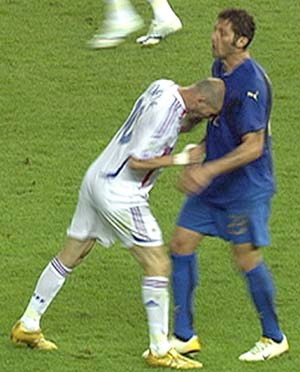
I always kind of admired Zinedine Zidane for head butting Materazzi in the World Cup finals in 2006. I could relate to it in a strange way. A bit of brain science suggests Zidane and I aren’t just occasionally spiky, like everyone else we just have finite reserves of self-control.

One more reason it’s good to keep in touch with those emotions. Too much self-control and you’re en route to head-butting someone.

Masterly Inaction

Along with its kissing cousin ‘benign neglect’, ‘masterly inaction’ was one of the useful survival tricks I learnt in the Civil Service. At least some of the impossible things you are asked to do get forgotten. Likewise, some of the huge problems you foresee are happily overtaken by ‘Events dear boy’.

But I always felt it was weak, passive and a sin of omission to indulge in masterly inaction. Having read my Primo Levi, and more recently visited and bourne witness to Auschwitz-Birkenau myself, the imagined sound of Alsatians barking and people standing by as great evil is perpetrated, haunt me. My omissions – especially when they potentially left people to get hurt – felt completely different in scale, but not completely different in kind.

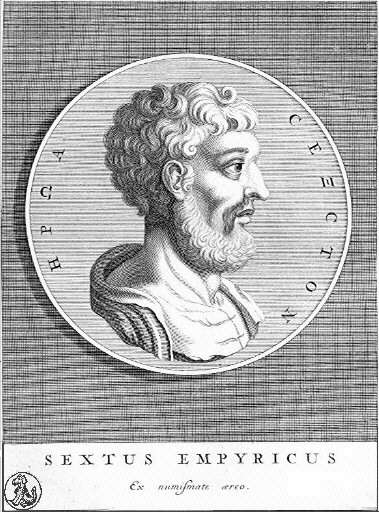
‘Cynic’ was the school of Hellenic philosophy many senior Civil Service folk seemed to subscribe to. A sour worldliness, combined with acerbic wit, which allowed clever people to stand by and allow things they knew were wrong to pass them by. But perhaps more charitably they might have been ‘Skeptics’.

I’ve been reading this week about the Pyrrhonian Skeptics for whom the answer is not to jape or snipe, but simply to say ‘I know too little’ and ‘I do not know enough to judge’. Perhaps my judgements of those around me were too quick and too harsh.

Further back in my career, working in France, I had a piece of 360 degree feedback which sticks with me: “John could take a little more time making his decisions, which would save him time in justifying them”. That hurt. But it probably wasn’t wrong. I conflated leadership with decisiveness – two different things.

I read a while ago, that studies suggest, we should follow our gut, not our head, on things we have a lot of experience of. The corollary is we should have a good think, and get some facts and other views, before deciding on what we don’t know much about. The paradox is smart experienced people tend to do the opposite – think themselves out of their well-grounded judgements and over-confidently shoot from the hip when they know too little.

I’m not there yet, but perhaps I’m coming round to the view that ‘masterly inaction’ is not always a sin of omission. Sometimes as true sceptics would say, ‘I know too little’ and ‘I cannot judge’. So I conclude that to act may not always be the best course of action. However, appropriate ‘masterly inaction’ should not be framed by cynicism or cowardice, but by a healthy scepticism about one’s own capacity to make things better – and not inadvertently worse.

Dismal Science

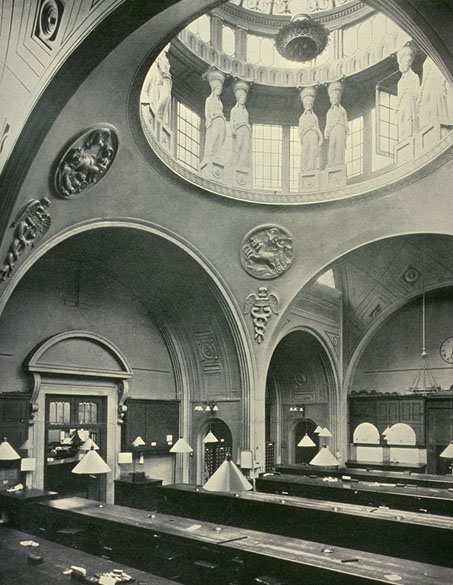
I attended an event this week in a bizarre location – Sir John Soane’s museum. Sir John rose to prominence in the 19th Century as a visionary architect and collector of antiquities and art. Most famously he designed the beautiful vaulted ‘counting rooms’ (pictured) for The Bank of England, where the first paper money was printed to pay for the Napoleonic Wars. More of printing money anon.

Sir John also decided his children would be architects and his children’s children would be architects. Thereby the science of architecture would be brought to a peak of perfection within a matter of a few generation of Soanes. It didn’t quite work out that way. 

His son went to prison for fraud, had children with his inappropriate wife and then even more inappropriately had some with her sister. He also wrote a thinly disguised satirical attack on his father in a contemporary journal which on reading provoked his mother to take to her bed and expire. A lesson to us all – our children may achieve many things in life, but they are unlikely to do our bidding.

The conversation piece for the evening was what can business and policy makers do to help the UK economy grow by an extra 1%. On a £1 trillion annual UK turnover and with the power of compound interest, over time, that would make us all better off by an unfathomably large number of billions of pounds. Seems like a good idea. But ultimately I came away feeling 1) we don’t really know how to turn a macro idea into the micro reality 2) even if we did, what would ‘go under the wheels’ of ‘concentration’ and competitiveness in the process. 

I’m no socialist, but the words fairness or equality didn’t feature once, nor did wellbeing, happiness or sustainability. Of course economists will tell you they are all ‘priced in’ in the cash value we place on things. But all economists also know that much of what we value in social and cultural value is missed by the ‘dismal science’.

As I texted my other half on the way home:

All very worthy, abstract macro-economics and a list of things for government to do. When will these people learn that money ain’t the only measure that matters and government is clueless and incompetent in managing it anyway. Viva culture and social ties, they are our only and best hope.

Yesterday’s flattening of Japan under a wall of water shakes the myth of our invulnerability like a Tokyo office block. The smoke and the more lethal invisible cloud spreading from a crippled nuclear plant today serves as a reminder of our hubris. 

Humanity clings to the planet in interdependent and fragile ways. If we make our big choices for the future on 1%s of £trillions I fear we’re missing the point. Much like Sir John Soane’s project to perfect architecture – ‘events’ and what matters to real people have a habit of getting in the way of the best laid plans.

Cricket as Life

Part of the joy of cricket is that it is a game of the mind, the weather and the soil, as well as the body. On the face of it, it’s a lot of time for a sometimes indeterminate result. Many find it dull.

Even as a player, there were times when as I stood out on the boundary rope, I yearned for it to all be over. As a spectator, I infamously slept through one of the great days of English cricket at The Oval when Devon Malcolm improbably ripped through the South African batting line-up having been earlier smacked on the helmet by a bouncer. Sweet revenge, but I snored through it. Shame on me.

As any cricket lover knows though, the interplay between clouds, sun, wind, rain and pitch can transform a game in a matter of minutes. Batsmen steadily accumulating; then some swing, the ball hitting a crack in the pitch, a hot-headed heave or a lazy defence and it’s game on.

But perhaps more interesting are the mind games. Sometimes people play the reputation, not the player. A reputedly hard-hitting batsmen comes out and fielders are pre-emptively pushed to the ropes. The opening bowler returns and batsmen get fidgety. A ‘joke bowler’ comes on and a batsman doesn’t know whether to slog or block and oops they’re out.

Some great cricketers – notably bowlers – continued to master the minds of batsmen, even when their bowling lost its rip. Ian Botham was the best example I’ve seen – just the sight of his shaggy mane in his twilight years got good batsmen playing bad shots.

Many good cricketers are only good in certain circumstances. On certain pitches against certain players. Some good players were destroyed by a nemesis – Andrew Hilditch hooking and holing out to Ian Botham again and again is the most memorable example for me. The difference between good and great is getting results in all conditions against all types of player.

As a spin bowler myself, there were days when I knew I was evenly matched with a batsman. The pitch, ball and match situation meant I couldn’t get him out unless he did something rash. And, if I deviated from line and length, he’d soon knock me out of the attack. Precision and mind games are what’s left.

Four ‘dot balls’ in an over and you know on number five he’ll try to hit you over your head. Do you float it to tempt him – and risk a boundary if he connects? Or squirt an ugly ball low and flat and work for a maiden so the other bowler gets a go at the other increasingly frustrated batsman? Two consecutive raps on the pads and the embarrassment and physical smarting mean he’ll surely try to smack you. Do you pitch right up to try and york him – risking overpitching and gifting a free hit. It’s 90% in the mind 10% in the execution when you’re evenly matched.

But there are times also when the pitch is doing nothing, the ball is dead, your fielders are dropping catches and runs are ticking along. On those days you just need to stick at it, keep putting it up there, don’t lose your head and trust to luck that something will happen. Cricket is often as much endurance and luck as mental chess.

And so it is with life. All too often we take a view whether to attack or defend based on the person we face. We decide if they are fiery, defensive, tricky or predictable and choose a posture accordingly. This can be a big mistake.

Even the most unpredictable bowler can produce a surprise good ball, and the most reliable the odd bad one. Playing the ball – comment, question, proposal or decision – on it’s merits, not based on who says it, is the great player’s art.
Redrawing Lines

Learning to listen and learning to care for people hasn’t always been my forte. I’ve always read the data: the expressions, the fleeting emotion crossing someone’s face, the tic which tells all. But for much of my life I tended to routinely discard it. At work, for well over a decade, I pretty much thought emotions were to be ignored or surpressed – in favour of a pseudo-objective norm of ‘professional workplace behaviour’.

In the private sector this was a good protection mechanism against loss, and having to do bad things to people. People all around me were regularly ‘fed to the huskies’ in round after round of redundancies in in the late 1990s and I had to do some of it. Later in the Civil Service, you were always one honest comment away from a newspaper headline or a grievance procedure, so wise to stick to the party line.

Latterly, helped by a bit more more experience, some professional advice and two lovely children, I’ve learnt that my emotions and feelings – and my assumptions about those of others – condition nearly everything that happens to and around me. Best start using that data then.

So now I very much do. And through practice and a certain amount of inner calm, I can read and help people with their problems. It used to take me a huge mental effort – a short ’emoting’ session would leave me shattered. I’ve got better at it now. A few techniques help. But also tuning in to my own emotions, rather than using my head to respond, gets a far better result for much less effort.

The problem is I’ve become so good at it, that I’m now in demand. A steady stream of people regularly check in with me to unburden themselves, complain of injustices or moan about the world going to the dogs. Of course it’s nice to help. It’s also flattering to think I can. But sometimes I give too much. And sometimes to the wrong people.

This week a friend and I discussed emotional intelligence and a penny dropped – it’s time to redraw some boundaries with people I work with. I’m at work to get a job done and my emotional energy is the most precious resource I have. Sometimes helping people emotionally doesn’t help get the job done. And it takes it out of me. I need to spend my emotional energy more wisely at work and use it sparingly where it is most needed – to make a difference. 

But more importantly I need to save more of it for me – to invest it where it pays the richest return – in my friends and family. And that means redrawing some lines.