Death Becomes Us

20120419-085621.jpg

I’m reading the ‘Death’ edition of the redoubtable Philosophy Now magazine. And a bone-rattlingly good read it is too. Death dissected through metaphor, thought experiments, cool logic and rational argument.

The core issue, this issue: as medical technology advances should we prepare for immortality or stick with three score and ten? Imagine a typical lifetime of 300 years, the necessary absence of children, the ceaseless marinating in one’s own juices.

As always with philosophy there are no easy answers, but plenty of better ways of thinking about the problem. I remember reading the last half chapter of Julian Barnes ‘A history of the world in 10 1/2 chapters‘ at university as suggested by my philosophy tutor.

It perfectly captures the problem of eternal life – and heaven. Once you’ve had sex with everyone, studied and discussed everything, got your golf handicap down to a straight 18 (‘holes in one’ all the way round) and scared yourself at the ‘Hell’ theme park, what’s left to do.

Easy to say with the expectation of a good few years ahead, but I’m with Aquinas – the human animal makes no sense outside or beyond nature’s limits. Philosophy has always wrestled with it, but ‘death becomes us’.

As Seneca said its not so much the shortness of life, it’s not properly filling it, which is the tragedy.

Powerpoint like an Egyptian

20120418-142623.jpg

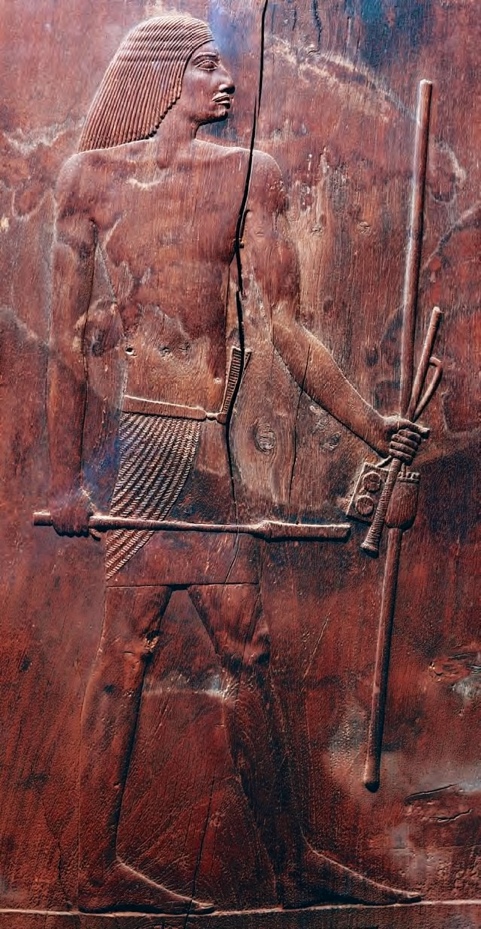
Why did ancient Egyptians have two left feet? Ernst Gombrich provides a fascinating answer in ‘The Story of Art’ – to make sure you had two good feet in the afterlife.

The art of the Pharoahs’ is in some senses very realistic. But lack of perspective and ‘side on’ angles can make it seem flat and naive to modern eyes. But that’s because it was governed by very formal rules of representation, scale and geometric placement.

A brief ‘naturalistic’ period, under Tutankhamen’s sun worshipping father, shows Egyptian artists absolutely could do portraiture. But once sun worship was banished, it was back to the formal rules of representation and proportion which lasted for 3000 years.

And why? Because the Egyptian artist was capturing the ‘ideal type’, the ‘essence’ or essential attributes of the person, duck, fish, foot or god portrayed. Thus key features for the afterlife – a full eye and two shoulders or the plumage of a wild fowl – were shifted, twisted, rotated or brought forward to ensure their ‘ideal attributes’ were clearly represented and hence captured and assured – in the version of the person or fowl which persisted into the afterlife.

20120418-195141.jpgEgyptian tomb art was more like designing a powerpoint slide than painting a picture. Placement, the right relative scale and the mix of images, words and sidebars to tell a story were the point. And a bit like ‘cutting and pasting’ onto a powerpoint slide, if necessary, images of birds or fish were ‘pasted’ on top of backgrounds to make sure their key attributes were visible and preserved.

The reason, then, for two left feet is that the ‘arches’ of the foot are more ‘essential’ than the outside – hence two ‘ideal’ feet are portrayed – arches facing out.

20120418-142727.jpgI’d have been laughing in ancient Egypt with my love of powerpoint. But what would the Egyptians have made of clip art? Surely sacrilege. Then as now.

Pigeon Toed

20120205-122024.jpg

Cat sat
Glancing sideways
Next to pigeon toes
Facing skywards
A scatter of feathers
Betrays the act
The plump bird
Too often at seed
Had not heard
Soft paws
Presage sharp claws
At his final feed.

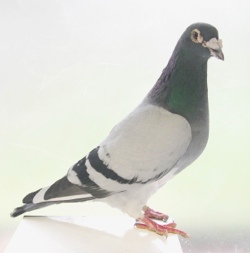
Cleaning the fish tank, my eye was caught by a handsome cat looking over his shoulder at me through the back door. Stone me! Feet up, flat on its back, is the greedy pigeon which spends most of his time in our back garden chomping on scatters of birdseed. It’s a cat eat pigeon world.

Eventually I shooed the tabby off as he was playing with the lifeless body. But the dispatched bird needed dispatching. The missus having toed it and returned indoors, indicated such matters were clearly down to me. A food bag reversed and the pigeon was quickly bagged and binned.

As the kids exclaimed ‘yeuugh’ I was struck by life’s rich pattern. I used to be ‘nesh’ on insects, muck and vermin – dead or alive. I’d probably have dithered with a shovel in years gone by.

Today I just picked it up and bagged it. Last week I enthusiastically stuffed my hand down the drain in pursuit of congealed fat, without so much as a ‘by your leave’. Dealing with a dog, a family home and two kids certainly lessens the standing on ceremony. I find ‘yeuugh’ much less toe curling these days.

The Fear of Dying

20111224-222302.jpgA good friend’s mother died last week. But we went to the footie together on Wednesday, as we’d planned despite – and because of it.

We didn’t talk much about it, but talking to others, one of the things in anyone’s head when parents die is: who will I turn to when I need some help? Some advice? Some love? Someone to be unconditionally proud of me?

Then there’s the realisation – I’m next. No-one can bear the thought of burying their own child, so the inescapable conclusion has to be that the least worst outcome is – I go next.

When I was worried about cancer 18 months ago I read David Servan-Schrieber’s excellent book Anticancer. Since then I’ve recommended it to four people – two diagnosed, one with a brother diagnosed and one with a terminal friend.

There’s a chapter I’ve mentioned to all four which describes the six worst fears about dying. I found it hard to read – it made my heart beat faster and feeling of anxiety rise in my chest. I knew I’d want to read it again – but couldn’t bring myself to do it, until today, remembering my friend.

Servan-Schreiber himself died this year, which feels strange. In a way he was speaking in the abstract when I read it last – now he’s been there and done it. This time though, the chapter didn’t make me anxious at all. The cloud of cancer has lifted from over my head. But also writing and reading Montaigne and others on death has defused the bomb for me – at least for now.

I feel calmer at the prospect of death, not least because I now have some answers for the six greatest fears:

1) The fear of suffering: as Montaigne convincingly tells, Mother Nature gives us all we need to cope at the end – dehydration, delirium, distance, departure.

2) The fear of nothingness: people and increasingly science concur: Oxygen depletion automatically creates a welcoming white light to which we are drawn, leaving only an eternal moment to reflect on the unique trace on the universe we have left with our lives.

3) The fear of dying alone: Servan-Schreiber quotes someone else’s advice: ‘Escape the prison of positive thinking’, accept time’s up and make your peace with those around you so they can cope with being near.

4) The fear of being a burden: Servan-Schreiber makes a good point, that in death rather than being ‘useless’ we become pioneers and guides for everyone close to us – we’re all going on this journey.

5) The fear of abandoning your children: an enormous amount of resourcefulness has already been carefully placed there – love, confidence, care – which they will draw on their whole lives.

6) The fear of unfinished stories: as Mike Oldfield says in ‘The living years’ – say it now, say it loud. Say the things you always wanted to say and do the things you wanted to do – or get over them. I reckon I’ve already had a good knock and said most of what I need – so far – to say to those who matter the most.

‘Pretty, act young, be fearless’ – as ‘Scorpios’, my choice of funeral music goes. I still have my folks though, so perhaps I’m kidding myself.

Note to Self

20111217-121831.jpgI came upon a terse description of ‘identity’ this week in a longer piece by neuroscientist Terrence W. Deacon of USC Berkeley:

An intrinsic tendency to maintain a distinctive integrity against the ravages of increasing entropy as well as disturbances imposed by the surroundings.

He was describing the way molecules come together in sympathetic, then symbiotic relationships to form ‘auto-catalytic’ processes – where one chemical reaction feeds, and is fed by another. But deliberately he was defining ‘self’ in a way which embraces chemicals, bodies and minds.

I watched a chilling piece on the news last night about Alzheimer’s, with an awareness raising TV ad portrays sufferers fading through transparency to invisibility. Another of Deacon’s definitions – intended for chemicals, is as true of minds:

To be truly self-maintaining, a system must contain within it some means to ‘remember’ and regenerate those constraints determining its integrity which would otherwise tend to dissipate spontaneously.

Which leads me to the conclusion that:

After Aristotle, as moral animals, we are what we repeatedly do.

After Aquinas and McCabe, as linguistic animals, we are what we think, say and write.

And after Deacon, as forgetful animals – sometimes helpfully, sometimes tragically – we are what we can remember against the ravages of entropy, the environment and time.

All the more reason to write the odd reminder I think.