Plus ça change

20121006-200928.jpg

An article in the New Scientist suggests that the pace of human innovation may appear rapid for short periods, but over the longer term is generally quite slow. Why? Simple, we keep on forgetting things.

Apparently technological innovations are as prone to extinction as woolly mammoths and sabre-tooth tigers. More innovations and technical advances have been lost than kept through history – forcing the proverbial wheel to be re-invented many times.

Scattered populations, expertise confined to a few and lost records mean great ideas go missing. Indeed science has yet to find a way of ensuring everything we know today isn’t lost, when today’s digital memories and readers become obsolete.

There is evidence though, that the pace of discovery and innovation has indeed increased in recent centuries – due to words, books and libraries. Ideas are saved more easily thanks to greater population density and stronger networks for knowledge transfer – the Internet just being the latest and greatest.

But in recent decades it seems that some forms of innovation might actually be slowing down. How could that be?

One reason is young people have to spend so much time learning what has already been discovered, they have no time to think of anything new. Most schoolchildren will never get beyond 19th century physics and chemistry, as that’s what they’ll be tested on. But maybe a grounding in the ‘Great experiments’ isn’t such a bad idea. It’s certainly fun.

On a strangely reassuring trip down memory lane this morning, we went to look at a school for my son. A charming older boy showed us round a large campus with a nice well used, ‘lived in’ feel.

And memories of my own school days were reignited by the whiff of a Bunsen burner and two boys messing about in goggles with a tripod, gauze and beaker, setting fire to things in the chemistry lab.

Happy days. I remember Russell Cross’s wooden pencil case being surreptitiously filled with sulphuric acid and his pens and pencils dissolving nicely before he and the teacher could save them.

Then the occasion that entire back lab bench managed to change into their P.E. kit and retake their places – apparently attentive for a good five minutes – before being rumbled.

Finally the bungled experiment where nitric acid went in the beaker instead of hydrochloric, generating thick brown vapours and an evacuation – to general delight – as the potion was stuffed in the fume cupboard to boil off poisonously.

Each generation needs its turn at dissecting bull’s eyes, making hair stand on end with the van de Graaf generator and of course setting fire to things with Bunsen burners.

There may not be much scientific innovation but messing about in the lab is an important rite of childhood passage. In this safety conscious age many schools don’t let kids get ‘hands on’ with the old science favourites. I liked today’s school all the more for still letting them.

Dining Alone

20120924-210511.jpg

For possibly the first time in my adult life, I went to a restaurant last week and ate alone. What came over me?

As a kid I loved restaurants. When we moved to Holland for my Dad’s work, I went to the Eurotel restaurant, all by myself – aged 9 – to have dinner and my very own portion of sauté potatoes – smilingly served in an oval stainless steel dish. Mmmm.

Pace adult life: travelling the world on business and subsequently living in France. A world of opportunity. But if I found myself alone, I’d never deviate from room service and TV dinners. Eating solo, whatever the city, whatever the food – it just felt wrong.

My regular – but unusually absent – lunching partner sent me a quote from Epicurus in response to the photo above:

“We should look for someone to eat and drink with before looking for something to eat and drink, for dining alone is leading the life of a lion or wolf”.

He asked me which I was: lone wolf or feasting lion? I’m not sure I was either. But facing an uncomfortable afternoon in a management meeting, I thought ‘what the hell’, I need some blood sugar, I’ve got one hour, I don’t want anyone in my face – lets have a tasty plate in preparation and quiet contemplation.

Epicurus might have raised an eyebrow but it was fine. Nobody stared at me. I didn’t howl or roar. I just quietly and quite contentedly devoured.

What gets measured…

20120922-135313.jpg

I’d consider myself to have better than average self-discipline. But I have to concede – what gets measured gets done.

And it needs measuring often. I didn’t see off my half stone of blubber until I started counting exactly what I was eating throughout each day. I didn’t make the healthy changes to my daily routine (and still don’t) unless I tick them off every night.

And at work – where someone once said: ‘We all want to know precisely how we’re going to be measured, but absolutely not be measured precisely’, I’ve decided to bite the bullet, commit to some challenging targets and see if I can fire up people to measure and hit them.

My latest measuring gizmo is the Nike FuelBand: steps, activity and calories counted as you go. It syncs with an iPhone – so there’s instant data and no hiding. And it colour codes your progress all through the day…

The good thing about constant measurement is small stuff gets done a bit more often – which over time can add up to big changes.

Humans are lousy estimaters, expert self-deceivers and eternal optimists. These are three of our vital survival skills – but they don’t always get the job done.

Chameleon

20120916-190545.jpg

I read this week that science has discovered when a lizard re-grows a tail – having dropped the original to escape a predator – what grows back is not the same. It looks the same. But the new tail has a cartilage tube instead of vertebra and very little sensation except at the tip. A pale imitation.

This reminded me of a conversation with a good friend on Friday – who’s looking very lean. What you expect to see conditions how you view what you are seeing. I saw ‘thin’, thought ‘he’s ill’ and started worrying. But on closer inspection he is actually in tip top shape.

We had our ’25 years on’ University reunion yesterday, along with ’40 years on’, ’50 years on’ and ‘past counting’. My year all looked older. Not a lot older – you’d still recognise us on the fresher’s photo. But inescapably older.

The classes of 1972 and 1962 though were in a different league – much much older. I couldn’t help wondering how we’ll see each other when we are that group. How much will we see each other’s age, how much will we still see the people we were aged 18?

Talking to folk I’ve not seen in years, I was surprised by what they expected from me. Of course everyone remembers you as you were, not as you are. I was famously grumpy, but I’m not now. It’s funny how people couldn’t quite cope with that. They all prefer the cheerier 21st century me, but couldn’t quite believe it.

What we expect to see conditions what we do ‘see’ even when all the evidence is to the contrary. People can look the same and be very different, look different but still be the same. I can still do grumpy, but I’ve found a happy colourful chameleon has more fun than a grumpy one.

Average White Male

20120908-150127.jpg

Shock news from the Harvard Business Review this week: men who are ‘agreeable’ suffer a 20% deficit in earnings versus those who are ‘disagreeable’. Add this to one earlier in the year, where men who are slim also suffer a 20% deficit – and I’m in trouble.

Average height costs me another 15-20%. And entering the jobs market in a recession (1990) means a £200,000 lifelong deficit versus those who entered the labour market in a ‘boom’. Any more ‘deficits’ and I’ll be paying my employer for the privilege of working my nuts off.

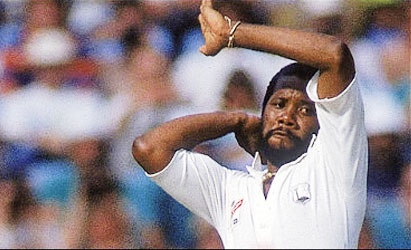
My remedy – West Indies cricket of the 1970s and 80s. Master your sense of injustice, focus on what you are great at, forget the conventional wisdom and play to win.

Joel Garner, Michael Holding and Curtly Ambrose were very tall. Malcolm Marshall was average height, but the most feared fast bowler of them all. Viv Richards took whatever blows were necessary, before whacking everything and everyone all around the ground with controlled power and aggression.

Finally Clive Lloyd. He captained in virtual silence – an inclination of the head, a quiet word. Total authority. His loping, slightly stooped walk to the middle, enough to make the whole crowd pause and pay attention.

The Harvard Business Review says if I respect the average, I lose. So like the great West Indians – time to change the rules of average white males.