Montaigne on Virtue

20120410-112035.jpgThree hundred and one dailylit.com episodes of Essays in and Michel de Montaigne serves up another view I 100% agree with, five centuries on. When it comes to ethics the the answer is staring you in the face – in the bathroom mirror.

To ground the recompense of virtuous actions upon the approbation of others is too uncertain and unsafe a foundation, especially in so corrupt and ignorant an age as this.

“What before had been vices are now manners.” – Seneca

You yourself only know if you are cowardly and cruel, loyal and devout: others see you not, and only guess at you by uncertain conjectures, and do not so much see your nature as your art; rely not therefore upon their opinions, but stick to your own:

“Thou must employ thy own judgment upon thyself; great is the weight of thy own conscience in the discovery of virtues and vices: which taken away, all things are lost.” – Cicero

Or as my son’s preferred sage Master Yoda might say: the keeper of your own conscience are you.
Amor Fati

20120324-205709.jpg

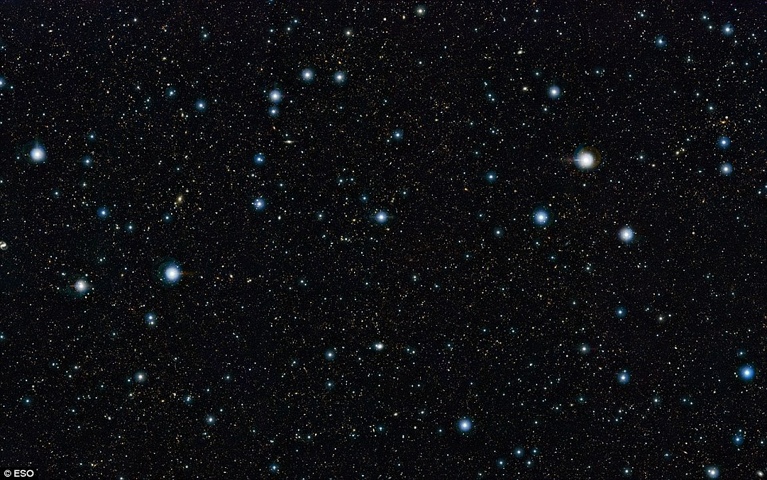
This week, my mind was briefly boggled by this most detailed ever picture from a space telescope. It purports to show 200,000 galaxies.

Our nearest star – on the most optimistic estimates – would take some 10,000 years to visit. And that’s one star, in the billion, in one galaxy, of the 200,000, you can see in this picture. Make you feel just a little insignificant.

On the same day into my inbox dropped a relevant entry, in the self-styled ‘Intellectual Devotional’ I get by email from dailylit.com. Duff title but there is the odd cracker in there.

‘Transcendent Significance’ is a good one. We all like to think our lives have a transcendent significance. Hence narcissism, religion, artistry, poetry, politics… and Nietzsche.

Why Nietzsche? Because one answer to transcendent significance according to the Intellectual Devotional is:

The doctrine of “eternal recurrence”, which posits that the universe has been recurring, and will continue to recur ad infinitum, in a self-similar form. Rooted in Indian and Egyptian philosophy, and taken up by the Pythagoreans and Stoics, with the fall of antiquity and the spread of Christianity, the concept of was gradually lost.

Enter Nietzsche who gave “eternal recurrence” a second chance, as a reason to affirm life in the face of a world without God:

“My formula for human greatness is amor fati: that one wants to have nothing different, not forward, not backward, not in all eternity. Not merely to bear the necessary, still less to conceal it… but to love it.”

I’m not sure I can go the whole hog on Nietzsche – and want nothing different in all eternity. But I can have a decent crack at wanting nothing different in the here and now.

Is there a better place in those 200,000 galaxies? Maybe, but probably not. Has there been a better time to live in human history? Almost certainly not. Healthy happy middle age on planet earth in the 21st century has its compensations. Amor fati – what’s not to like?

Strawberry

20111113-150850.jpgI’ve discovered Philosophy Now via Kindle. And a find it is too. This month’s edition delves into the Philosophy of Mind which I studied twenty odd years ago. What’s new? Quite a lot. But, also, quite a lot is not.

Neuroscience is the new 200lb gorilla on the scene. Is philosophy, contemplation and introspection irrelevant when you have brain scanners and MRI? The argument cuts both ways. Reductionism says its a simple case of describing something complex. I used to agree, now I’m less sure.

Before cosmology we harboured intuitive, and often mystical, beliefs to explain sun, moon and stars. Then telescopes were invented and we moved on to facts and evidence. Aristotle imagined ‘biles and humours’ drove the body, until medicine discovered intricate circulatory and nervous systems. Reductionists say we’ll get over our belief in ‘consciousness’, ‘intentions’ and ‘ideas’ once the science advances enough to describe ‘brain states’ better.

The alternate thesis – much more where Aquinas, Kierkegaard and Nietzsche might land – is that describing a TV’s wiring misses what’s on screen. The ’emergent phenomenon’ is a living feeling being, living a unique life, intimately connected to other living feeling beings, all equally unique but interdependent with each other.

It comes down to complexity in the end. A computer or iPhone full of data apparently weighs fractionally more than an empty one. But it is only fractionally more. I read the entire ‘weight’ of data contained in the Internet could easily be stored in the mass of a strawberry. But the ‘knowledge’ exists in myriad computers, data centres and browsers interlinked with myriad minds.

In one way a strawberry already contains a nearly perfect dataset to describe humans. In its DNA it describes carbon-based life, an oxygen rich atmosphere, the rise of flowering plants – and who knows, maybe, some clues to cultivation. It is already bursting with data, just of a ‘natural’ flavour.

And this is the point for me. Let’s imagine we could load the entirety of human culture, knowledge and experience into a strawberry and fire it into space. Billions of years on, when our planet has long since expired, suppose an alien civilisation finds it. From which would they learn more about living as a human being – reading the data locked in the atomic structure of the strawberry, or simply eating it?

In Praise of ‘Prudentia’

20111028-170621.jpg

The virtue of ‘Prudentia’
In Aquinas’s teaching,
Is ‘practical wisdom’ in
Choice and decision.

It’s a Bayesian thing,
Not just logical stages.
Which a life of experience
And virtue engages.

Grounded in reason
But felt in the boots,
You can’t teach Pudentia,
We must find our own routes

Each person’s is different,
Our wisdom’s our own.
When we try to describe it
The words struggle to form.

But don’t deconstruct it,
The details mislead.
If you try to explain it,
Confidence bleeds.

Invest in Prudentia.
Your gut’s not often wrong.
Thought, experience, emotion
In symphony belong.

I’ve spoken in praise of ‘Prudentia’ twice today. The first time was inviting someone to really use their ‘practical reason’ in designing something. That meant acknowledging complexity, personalities and what we’re trying to do – and really, based on their experience and judgement, coming up with something that has a fighting chance of working.

The second was in acknowledging and appreciating a way forward I’d not thought of. On the face of it I had ruled it out, but on reflection it had a good deal to commend it.

Not everything in life is rational, simple or binary. As someone said to me yesterday, probability is rarely 0 or 1. ‘Prudentia’ is our Bayesian gift for dealing with complexity – practical wisdom.

Philia

I do feel – and feel is the right word – that Herbert McCabe’s ‘On Aquinas’ deserves a wider audience. So many important themes, from so many thinkers, rendered limpid in a thesis all of his own.

Of course there’s Aristotle in there. And as the title suggests, we are constantly accompanied by Aquinas. But, for me, it’s Herbert McCabe who shines through as having put together his own picture of what constitutes the human condition, in what I’d take as a summation of his life’s work.

I noted yesterday that people read more pulp fiction on Kindles than they’d dare have on their bookshelf or be seen reading in public. But the opposite is also the case. Truth is I’d never have found Herbert McCabe or bought his book without the web, connected devices and impulsive instant gratification via electronic delivery.

McCabe makes a powerful case for ‘philia’, mutual care and fellow-feeling, as the right basis for our relationships – not the functional rights and duties of justice and the law.

Justice is the minimum duty we owe to ‘strangers’, ‘philia’ is the care, respect, love, friendship, reasonable accommodation and interdependence we have with other people which constitute ‘humanity’ and ‘society’. Laws imperfectly capture the statutory minimum, ‘philia‘ is the gold standard for people, politics and society.

Stood on a grey suburban station platform this morning (the car’s bust again) I looked at the different shapes and sizes of punters, mums and pinstriped professionals all focused on getting their train. There were moments of ‘philia’. A shy ‘See you tomorrow‘ to the man serving a women her daily coffee, a jolly exchange between Ticket Collector and middle aged vamp.

Through the lens of ‘philia’ people look different. We judge less, tolerate more and look beyond face value. McCabe was right to remind us of this.