Cathedral or Cave II

Whew, I’ve been hard at it recently. And as so often: intractable problems, helping people who are struggling and taking on more than I should; all of which have taken their toll.

But also – as increasingly often these last ten years – I’ve caught myself just in time…

Flagging, tired and increasingly irascible, I had the good sense to book this Friday off and as I texted to a great friend, here’s what I did with it:

For my part I walked the hound and then slept from 9.30am to 11.40am with the dog by my side, and then again from 2.30pm to 5.50pm similarly. I feel a deep basin of fatigue has been considerably drained. My biggest problem in life has always been that I need more sleep than most people.

I also coughed the other truth about myself last weekend – I like people; but they tire me out. And very very helpfully, I have been excused some social outings subsequently.

Which reminded me of this – written eight years ago…

I’m more cave than cathedral I increasingly think. I need more sleep and more time alone than most people:

Cathedral or Cave?

I imagine Aristotle, like the Acropolis, as more Cathedral. The reclusive poet Emily Dickinson would be more cave. Montaigne, perhaps old Paris; earthy rumbustious streets and deep reflective catacombs. 

I’ve been toying with Nietzsche’s idea that our ‘will to power’ is either expressed in the real world or forcibly turned in.

For him, we create a complex inner life in proportion to the scale of our drive we cannot express externally. It’s an interesting thought.

Complex interesting people tend to have a good deal of both – rich inner lives and fulfilling outer ones. But not always. Nietzsche credits civilisation with curbing the capacity to express our animal instincts externally – driving them inwards. This unexpressed energy drives our inner lives – our conscience, guilt and creativity.

I think regularly about the balance of inner and external. I don’t feel I have the ‘will to power’ for a full ‘Cathedral’ in the external world. Too much competition, conflict, one-upmanship and strife in seeking grandeur. I fear I’d lose my health, precious time with my family and my happiness if I allowed a ‘grand projet’ or personal aggrandisement to consume me. 

Talking to a friend – who is a decade older than me – this week, I felt a bit guilty. He has real fire in his belly for systemic reform, transformational change and the great debates of public policy. I said I’m just not attracted to any of that right now. 

We talked about using our talents and our responsibility to improve the lot of others…

He started his career as a lone residential social worker – on a tough housing estate. Beer bottles bounced off the cage that surrounded his outpost all night.

That’s where his fire still comes from. It drives him to want to improve the scaffolding and superstructure of the nation’s health and social care system.

I don’t have that. I’m more a family chapel with a good sized intellectual cellar. My projects are more local and small scale – my family, the people around me.

But never say never. The world is an unpredictable place. Gaudi started with lamp posts and squat schoolhouses, so I suppose you never really know what you might build one brick at a time.

Pieper on Prudence

Josef Pieper turns out to be my kind of ethicist: straightforward, practical and direct.

What he sets out on ‘prudence’ (aka Thomas Aquinas’s prudentia or ‘practical wisdom’) chimes entirely with what I think ‘good’ looks like in working life.

Here’s what Pieper has to say:

The first prerequisite for the perfection of “prudence” is providentia, foresight.

By this is meant the capacity to estimate, with a sure instinct for the future, whether a particular action will lead to the realization of the goal.

But foresight is often something you ‘feel’ and can be hard to explain to young idealists, literal-minded folk and powerful ideologues.

A reasonable sense of what will work (and won’t) is like a sixth sense. It’s not about ease or difficulty; it’s a ‘felt sense’ of a workable path through.

As Pieper points out:

At this point the element of uncertainty and risk in every moral decision comes to light.

In the decisions of which by their very nature prudence is concerned; with things concrete, contingent, and future (singularia, contingentia, futura) there cannot be that certainty which is possible in a theoretical conclusion.

Then he quotes Thomas Aquinas.

“Non potest certitudo prudentiae tanta esse quod omnino solicitudo tollatur.”

The certitude of prudence cannot be so great as completely to remove all anxiety.

As Pieper rightly says:

A profound statement, this!

He goes on:

Man, then, when he comes to a decision, cannot ever be sufficiently prescient nor can he wait until logic affords him absolute certainty.

If he waited for that, he would never come to a decision; he would remain in a state of inconclusiveness.

The combination of a ‘felt sense’, the difficulty of unpacking the many factors and years of experience which underpin it – and the inevitable risk it may not turn out to be right – is what prudentia feels like, I believe.

So what to do? Pieper concludes:

The prudent man does not expect certainty where it cannot exist, nor on the other hand does he deceive himself by false certainties.

And, after all, as a man of faith Pieper suggests hope springs eternal:

The decisions of prudence receive “practical” assurance and reinforcement from several sources:

  • from the experience of life as it has been lived;
  • from the alertness and healthiness of the instinctive capacity for evaluation;
  • and from the daring and humble hope that the paths to man’s genuine goals cannot be closed to him.

In sum, Pieper makes a strong case for: thought, listening to your instincts and to others, timely action, accepting anxiety – and the ‘daring and humble’ hopefulness of pursuing genuine goals.

Prudentia is not a bad guide for working and family life.

Heat and Pain

Much disquiet at work this week, some of it highly practical; more of it to do with how people are feeling.

My contribution was to characterise my job as seeking and feeling operational ‘heat and pain’ and checking in with everyone that we think it’s proportionate and justified.

If all you do is react to ‘heat and pain’ you never change anything. But if you create too much of it – or create it needlessly – you can do a lot of damage and stop helpful progress dead in its tracks.
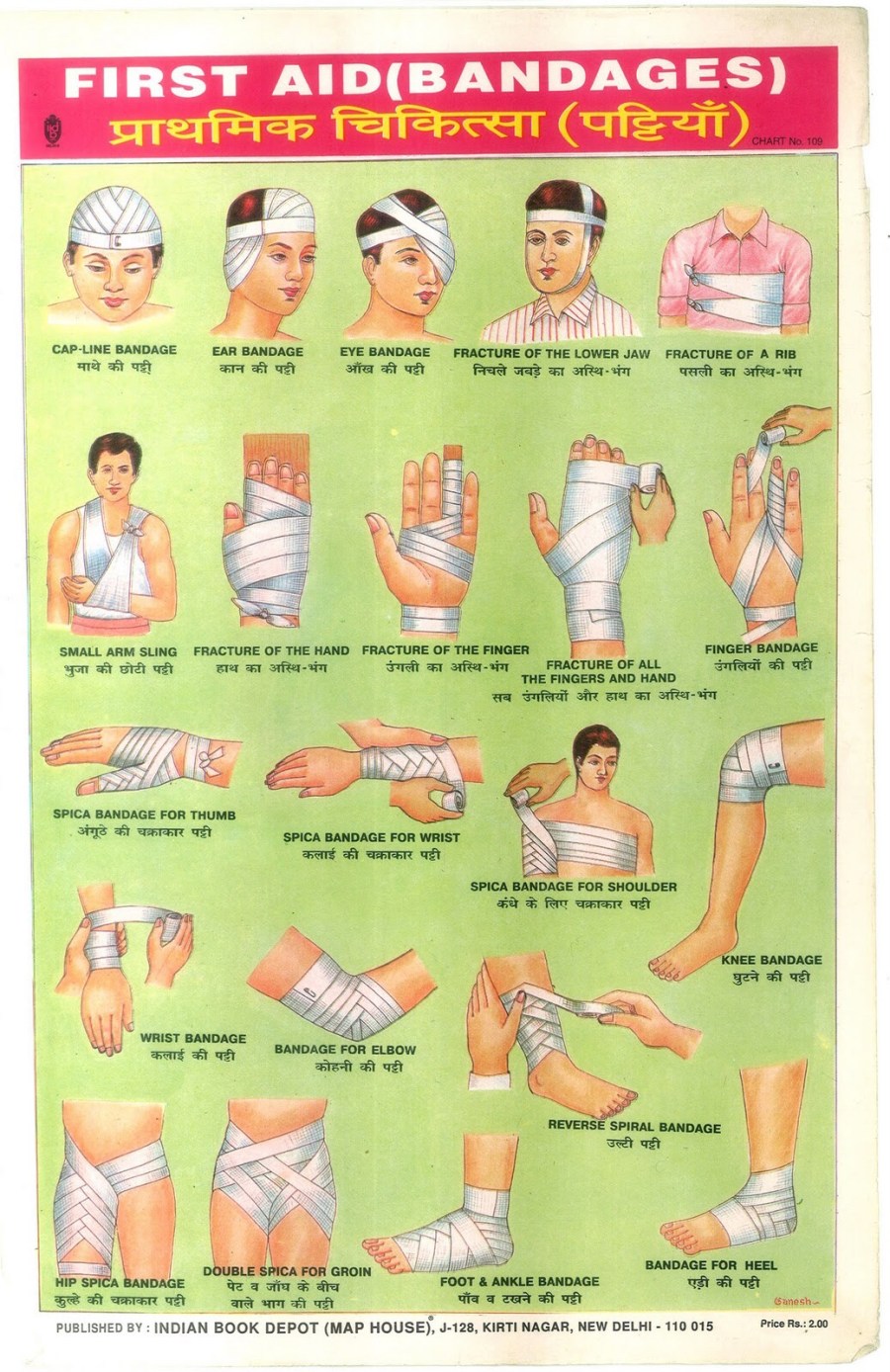
In one exchange I pointed out to someone the importance of ‘bedside manner’… Telling someone the facts of how badly broken their leg is – and how you’re going to screw bolts into it in five places – may have seemed to them the most important thing… but people also want you to rub their hand and show them you care.

In the big rooms, where ‘big people’ talk ‘big decisions’, all to often any sense of how it ‘feels’ and what ‘heat and pain’ it’s causing is absent.

I felt out, explained to people and fixed a lot of heat and pain this week – especially with a big heave on Friday. I’ll fix some more next week.

That’s the job.

Jar Mitzvahs

Knitting together from several sources: it’s well worth celebrating life’s small moments of joy…

A friend of Tim Ferriss recommends a ‘Jar of Awesome’ – a Mason Jar (as above) into which everyone in the family drops little paper slips, to celebrate small happinesses…

Not sure that would work in our house. I think we’d be arguing with each other and scrumpling up each other’s slips of paper in no time.

Plus ‘Awesome’ may be overstating it. Small blessings, kindnesses and happy moments are more up my street.

As so often Chris Croft is a voice of practical good sense. He recommends a small notebook to jot down happy moments through the day; then recap and write three more at bedtime.

So I’ve now got a list on my iPhone titled ‘Jar Mitzvahs’, my virtual jar-cum-notebook of daily moments, and memories, and things to be thankful for.

And as Chris Croft suggests I’ve found some recurring themes…

…cooking, activities with the kids, chucking stuff for the dog to fetch, sunshine. But there are also a few I wouldn’t have noticed if I hadn’t written them down… kind words, being appreciated and just rubbing along with folk at work.

Happiness isn’t that complicated; it breaks out every time you clear the clouds from your head.

Brevity

brɛvɪti – noun

1. Concise and exact use of words in writing or speech.

(Concision, succinctness, economy of language, shortness, briefness, pithiness, incisiveness, crispness, compactness, compression.)

2. Shortness of time.

(Transience, transitoriness, ephemerality, impermanence; e.g. “the brevity of human life.”)

As we process through life, there is ever more we have seen; and a good deal more we have done. It’s easy to forget how much.

Indeed there’s good evidence that’s why older people struggle to remember things – not necessarily cognitive decline; just more to sift through in the back catalogue of the mind.

Still, looking at someone’s CV the other day, I was in sympathy with Marcus Aurelius’ advice:

Don’t be a person of too many words and too many deeds….

The encapsulation of anything – and certainly a person’s CV – should be readily achievable in no more than two pages.

And reflecting on life with perhaps my finest friend this week, Marcus Aurelius’s fuller advice is also well put:

“Don’t act grudgingly, selfishly, without due diligence, or to be a contrarian. Don’t overdress your thought in fine language. Don’t be a person of too many words and too many deeds…. Be cheerful, not wanting outside help or the relief others might bring. A person needs to stand on their own, not be propped up.” —MARCUS AURELIUS, MEDITATIONS, 3.5

Enough said.