Redrawing Lines

Learning to listen and learning to care for people hasn’t always been my forte. I’ve always read the data: the expressions, the fleeting emotion crossing someone’s face, the tic which tells all. But for much of my life I tended to routinely discard it. At work, for well over a decade, I pretty much thought emotions were to be ignored or surpressed – in favour of a pseudo-objective norm of ‘professional workplace behaviour’.
In the private sector this was a good protection mechanism against loss, and having to do bad things to people. People all around me were regularly ‘fed to the huskies’ in round after round of redundancies in in the late 1990s and I had to do some of it. Later in the Civil Service, you were always one honest comment away from a newspaper headline or a grievance procedure, so wise to stick to the party line.

Latterly, helped by a bit more more experience, some professional advice and two lovely children, I’ve learnt that my emotions and feelings – and my assumptions about those of others – condition nearly everything that happens to and around me. Best start using that data then.

So now I very much do. And through practice and a certain amount of inner calm, I can read and help people with their problems. It used to take me a huge mental effort – a short ’emoting’ session would leave me shattered. I’ve got better at it now. A few techniques help. But also tuning in to my own emotions, rather than using my head to respond, gets a far better result for much less effort.

The problem is I’ve become so good at it, that I’m now in demand. A steady stream of people regularly check in with me to unburden themselves, complain of injustices or moan about the world going to the dogs. Of course it’s nice to help. It’s also flattering to think I can. But sometimes I give too much. And sometimes to the wrong people.

This week a friend and I discussed emotional intelligence and a penny dropped – it’s time to redraw some boundaries with people I work with. I’m at work to get a job done and my emotional energy is the most precious resource I have. Sometimes helping people emotionally doesn’t help get the job done. And it takes it out of me. I need to spend my emotional energy more wisely at work and use it sparingly where it is most needed – to make a difference. 

But more importantly I need to save more of it for me – to invest it where it pays the richest return – in my friends and family. And that means redrawing some lines.

Belisarius

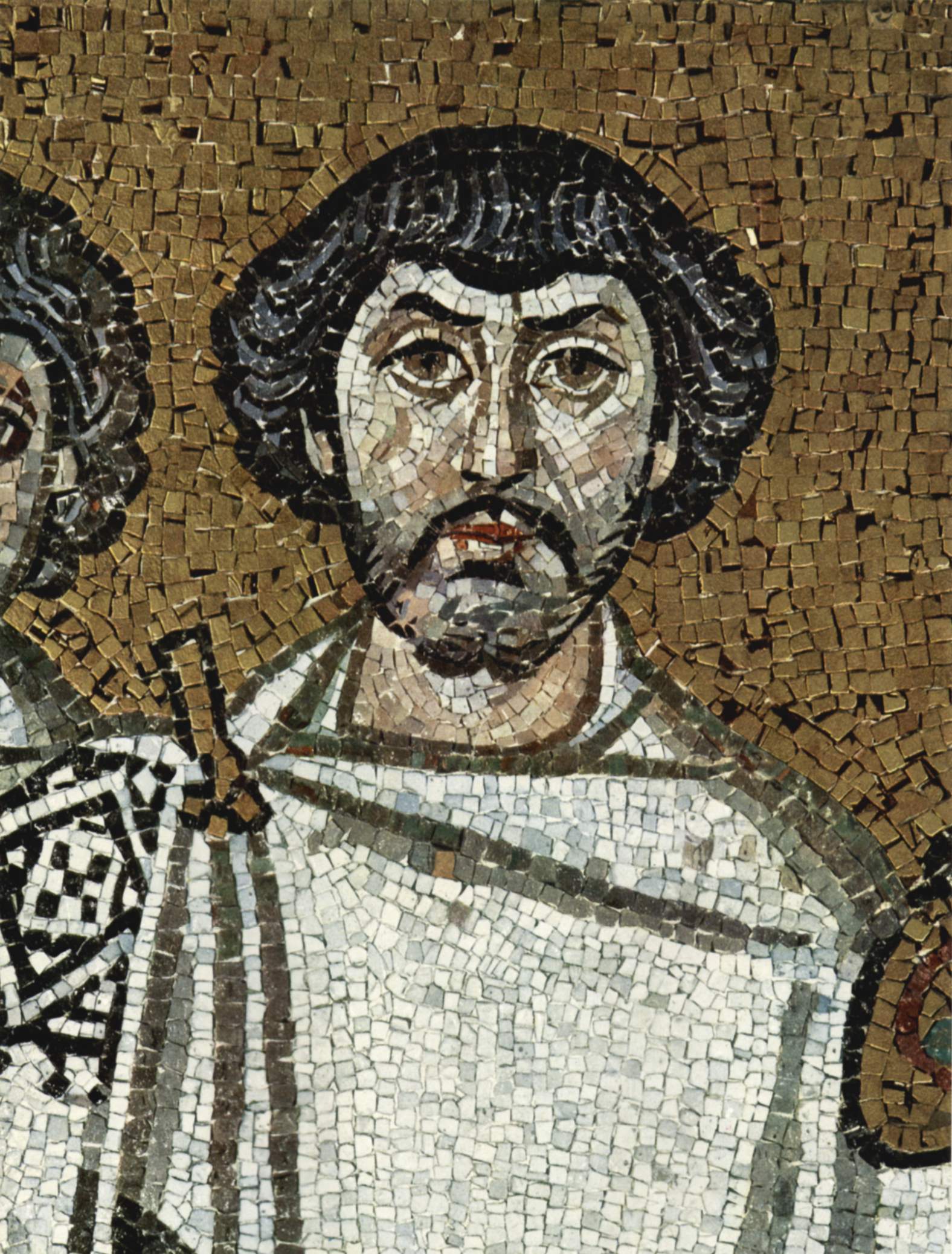
Belisarius, the last great Roman general, retook Rome for Constantinople twice. He fought off barbarians in a dozen lands. He took on impossible numbers and outmanoeuvred them. He took on increasingly unrealistic ‘asks’ from the Emperor, and, through his great skill, made them seem almost reasonable. As his reward he had both his eyes poked out by Justinian for the injustice of ‘lessening his Emperor by comparison’ with his virtue and deeds.

The moral of the story? Perfection in the loyal knight holds up an unflattering mirror to the king. Many transactions between people are about status, and for many people they are zero sum games – an exchange can only enhance my status if it diminishes yours. Like Belisarius, if you succeed, I am lessened.

‘Zero sum’ is a habitual but dumb human behaviour. I suspect, sadly, it’s also hard wired. You win, I lose. I niggle you and you might screw up. I mess with your mind and you’ll lose your head. You are shining, that’s making me look dull.

Why do we do it to each other? ‘Happy high status’ is the ‘positive sum’ posture – I’m good, you’re good. I’m happy you’re good; it makes me feel even better, which makes you feel better. And then, who knows, we might do something great together. But ‘happy high status’ needs to be met in a reciprocal spirit. Which is why it’s so rare. Like a true smile you can’t fake it. You’ve got to feel good about yourself to feel good about someone else’s success.

It is hard to keep ‘up’ when people are doing you down, but seeing it for what it is – substantially other people’s insecurity – helps me cope.

Obituary

We had another big leaving do at work this week. Hard to do justice to over 30 years (by my rough estimate 8,000 or so working days) of a person’s working life in 15 minutes of speeches, but it felt a bit flat all told.

A friend of mine I spoke to at the event, put me onto the ‘QI Book of the Dead’ before Christmas. Several dozen great men and women, of all times and places, types and backgrounds. From Ghengis Khan to Henry Ford, Florence Nightingale to Emma, Lady Hamilton (left). They are a remarkable bunch. It’s an easy and enjoyable read. I won’t spoil its many surprises here. But three things stood out for me:

1) You absolutely can’t write your own epitaph

2) Many of the most famous and powerful people died in disgrace, despair or destitution – but often didn’t care so much about it in the end.

3) Most of the thinkers we revere today were completely ignored in their own lifetimes.

It summed up for me to: enjoy the day, follow your passions, have fun, and, if any of it is remembered, it probably won’t be what you expected. I think I’ll let go of my obituary, it won’t be me who writes it – either in work or life.

Kindness

Three takes on kindness. First, a person I scarcely know – without any guile or hesitation – kindly bought me my coffee at work on Friday. I was completely thrown by it. An older man, he works in Human Resources. My implicit assumption, as we queued, was he would be against pretty much everything I’ve done in the last 3 years – targets, strategising, downsizing and redundancies. I expected him to look to get away from me as fast as politely possible. But no, he opened his wallet pulled out a five pound note and asked me what I would like. I had a coffee and a nice talk.

I sent him an email last night to thank him for his kindness. I said how touched I was and that kindnesses are like ripples from a pebble thrown in a pond. They multiply and spread and can go on to lap over many people. I said his kindness went on to touch everyone I met for the rest of the day. And this wasn’t an an idle promise – Wired thinks so too.

Take two. In a rare moment of peace, with the family out and about, I looked up the definition of cognitive dissonance this morning. I’ve got cognitive dissonance at the moment, as, in a significant life choice, events have unfolded in a way which completely mystifies me. Reading Wikipedia, I find one feature of cognitive dissonance is ‘sour grapes’. When expectations are not met, or the actuality turns out not to meet your expectations, we rubbish the things we previously wanted or valued. Like Aesop’s fox who branded the grapes ‘sour’ because he couldn’t reach them; we desire something, find it unattainable, and reduce our dissonance by trashing it. The technical term is “adaptive preference formation.” Sour grapes probably help keep us sane.

But as interesting for me was the ‘Benjamin Franklin effect’. I’m increasingly a fan of old Ben – he had a good life and good approach to it. When I get some time I plan to read his autobiography. I’ve already downloaded it in expectation. Here’s how Wikipedia describes the effect:

Franklin won over a political opponent by asking him a favour and he relates thus:

I did not … aim at gaining his favour by paying any servile respect to him but, after some time, took this other method. Having heard that he had in his library a certain very scarce and curious book, I wrote a note to him, expressing my desire of perusing that book, and requesting he would do me the favour of lending it to me for a few days. He sent it immediately, and I return’d it in about a week with another note, expressing strongly my sense of the favour. When we next met in the House, he spoke to me (which he had never done before), and with great civility; and he ever after manifested a readiness to serve me on all occasions, so that we became great friends, and our friendship continued to his death. This is another instance of the truth of an old maxim I had learned, which says, “He that has once done you a kindness will be more ready to do you another, than he whom you yourself have obliged.”

Apparently after lending Franklin the book, the opponent had to resolve the ‘dissonance’ of his attitude towards Franklin, because he had just done him a favour. He justified doing the favour by convincing himself that he actually liked Franklin, and, as a result, treated him with respect instead of rudeness from then on. Marvellous.

Take three. It’s a wonderful thing Wikipedia. The emergent wisdom of the crowd and the ‘perfect equilibrium’ between the supply of generous volunteer experts and demand from thirsty enquirers after knowledge. But economics is economics, and they do need a bit of money to make it work. I got an email this week from Wikimedia UK Foundation offering me ‘hearty thanks’ – in their words – for the kindness of my spontaneous donation on 22 December. As I noted at the time, they got the money largely thanks to Aristotle. Aristotle has convinced me that virtues aren’t born in, they are made. And I reckon giving £50 to Wikimedia was my first truly instinctive Aristotelian moral act. Instant, without question, recognising that there was no penalty for free riding, but just giving to Wikipedia because I use it, value it and am grateful for it.

So whether you subscribe to the the ‘cascade of kindness’ theory, the reverse psychology of Benjamin Franklin or the ‘trained’ ethics of Aristotle, of one thing I am certain – kindness is powerful stuff.

Personas

I’ve had several prompts recently to think about multiple personas. I’ve got a few different ones, and I was wondering the other morning whether this is good, bad or inevitable. First the prompts – and they are an eclectic bunch 1) Kierkegaard 2) venn diagrams and voluntary redundancy 3) the Portuguese writer Pessoa 4) the iPad 5) a Civil Servant I admire 6) cufflinks 7) a theory of very old age 8) a friend at work

Basically my question to myself as I walked into the office was: “Would I be happier if I was exactly the same person at work as I am at home?” My conclusion is not yet, but maybe one day. Here’s a veritable magpies nest of ideas in support of that thesis:

1) I am almost certainly in Kierkegaard’s ‘Ethical’ stage of life. Kierkegaard defines three stages of life in ‘Stages on life’s way‘: the Aesthetic, the Ethical and the Religious. He writes:

The aesthetic sphere is the sphere of immediacy, the ethical the sphere of requirement (and this requirement is so infinite that the individual always goes bankrupt), the religious the sphere of fulfilment.

In the ethical phase of life we seek to find ourselves in the jobs and roles we hold: father, manager, dog owner, minor pillar of the local community. Each of these roles requires things of us. To be the ‘ideal form’ of any of these roles is hard – to achieve the ideal in all simultaneously is impossible – hence Kierkegaard’s infinite requirement and inevitable bankruptcy. Thus, as I read him, we either reduce the number of roles (Kierkegaard I note spurned his true love to focus on writing) or we face varying degrees of falling short and dissatisfaction, until we give up trying please everyone and find solace in a one to one with God.

2) I’ve written about the salutary experience of seeing senior people leaving my organisation and realising the organisation defines their identity more than anything else in their lives. I conclude it is not wise to find one’s identity in a single role – especially one as fickle as a salaried job.

3) I read this week that Pessoa seemed to be a pretty uninteresting chap until a large chest of papers was discovered after his death with myriad texts written in myriad different identities – his heteronyms as he called them.

4) I don’t take my iPad to work. Partly, given they are still considered ostentatious, to avoid the ‘jeering’, which Epictetus invites us to brace ourselves for when attempting any self improvement. The prime reason though is it has pictures of my kids, my private thoughts and Apps which reveal my passions, idiosyncrasies and neuroses. It’s me and that’s my business not my work’s business.

5) The UK Civil Service distorted me as a person. It made me introverted, glum and bleak. A Civil Servant I admire always keeps his glass half full, despite the burden of being substantially responsible for the criminal justice system. I talked to him about trying blogging the other day – I blog at work too – and then immediately stopped myself. There’s no way he could blog in his job. He’d be leaked, misconstrued and pilloried in the press within hours if he wrote anything interesting. The ‘ideal type’ of the true Civil Servant cannot be entirely candid. The ‘ethical phase’ of his life requires great patience and careful manoeuvring to serve his higher purpose.

6) My daughter chose some heart shaped cufflinks for me for Christmas. I felt bad because I thought they were inappropriate for work. I asked a friend, he agreed. I asked another. He said: “Wear them, it’s who you are”. I wore them to our Management Board this week. Nothing bad happened.

7) My mother-in-law says that, in her experience of others, beyond 90 years of age people become the very essence of themselves. She had a friend who worked in fashion who beyond 90 became interested only in the appearance of others. A friend at work told me a relative who had been a spy became absorbed in a deeply secret mission in her final years. Neither was doolally, both simply became the essence of their prime persona in very old age.

8) A close friend advised me to be ‘me’ first and derive my work persona from the true ‘me’.

My synthesis from these prompts is this:

I have lived through my ‘Aesthetic stage’ and pursued beauty, booze and hedonism. I am now firmly in my ‘Ethical stage’. I have chosen to take on many roles: life partner, dog owner, father, director, volunteer, committee man, ascetic, philosopher and I am seeking fulfilment by chasing the ‘ideal’ in each. At times the demands and circumstances of one jostles the others. And some roles don’t fit me or mess up the others – being a Senior Civil Servant did. But mostly, despite Kierkegaard’s warning, their requirements are being met. I am not yet bankrupted by their demands and thanks to Aristotle and others I’m optimistic I can keep to a modest overdraft in meeting the needs of most of my ecosystem most of the time.

I suspect, at this stage of my life, seeking to fulfil all these roles is an essential part of finding my own essence. None of these entirely define the person I am or will become, some will fit me more or less well. If any of them excessively distort or damage the others I need to redefine the ‘terms of trade’ or stop doing it. Let them all get out of hand and I’ll dip into fatigue or get ill. Let one get too far out of step and dominate, and the others will suffer. Cordon off a secret role and some of what I’m about will disappear into a Pessoan private trunk. And that would be bad, because Kierkegaard advises that the guiding light in the ‘Ethical Stage’ is honesty and transparency.

So who am I? At the moment I am my multiple personas. The essence will be revealed in time, but for now I am simply the sum of my roles, no more no less. And given how important some of those roles are to me, I think that feels fine for now.