Dam; Busted

After a month of refusal, obstruction and obfuscation… on Monday the dam finally broke.

Under siege from my other and better half, out thought and out argued by my eldest; and finally advised to throw in the towel by my youngest… I gave in. Tomorrow we drive to the south coast to pick up a small brindled bundle of energy and potential joy called Romeo.

My daughter’s well argued PowerPoint put a massive crack in my defences

Our friends bringing his sister Winnie round last weekend brought the proposition to life…

So tomorrow we embark on by my guesstimate circa 17 years of having a hound again. Here he is looking rather down in the mouth with his breeder:

Albeit I know I’ll end up schlepping around in the rain, cold and dark for myriad hours as a result; I also know – in my heart of hearts – this is a statement of genuine optimism.

A dog brings mess, bother, responsibility, cost and ultimately great sadness – in their inevitable and sometimes painfully protracted decline. But a dog also brings joy, unconditional love and companionship; no one more pleased to see you when you open the door than a dog.

Every home is a happier home with a hound.

And so to our old dog. Poor old Mr Tumnus went downhill very badly in his last months; but he was a very fine hound for a good 7 years. It has taken half a decade but it’s time to welcome another big fella into our lives.

Wise Words

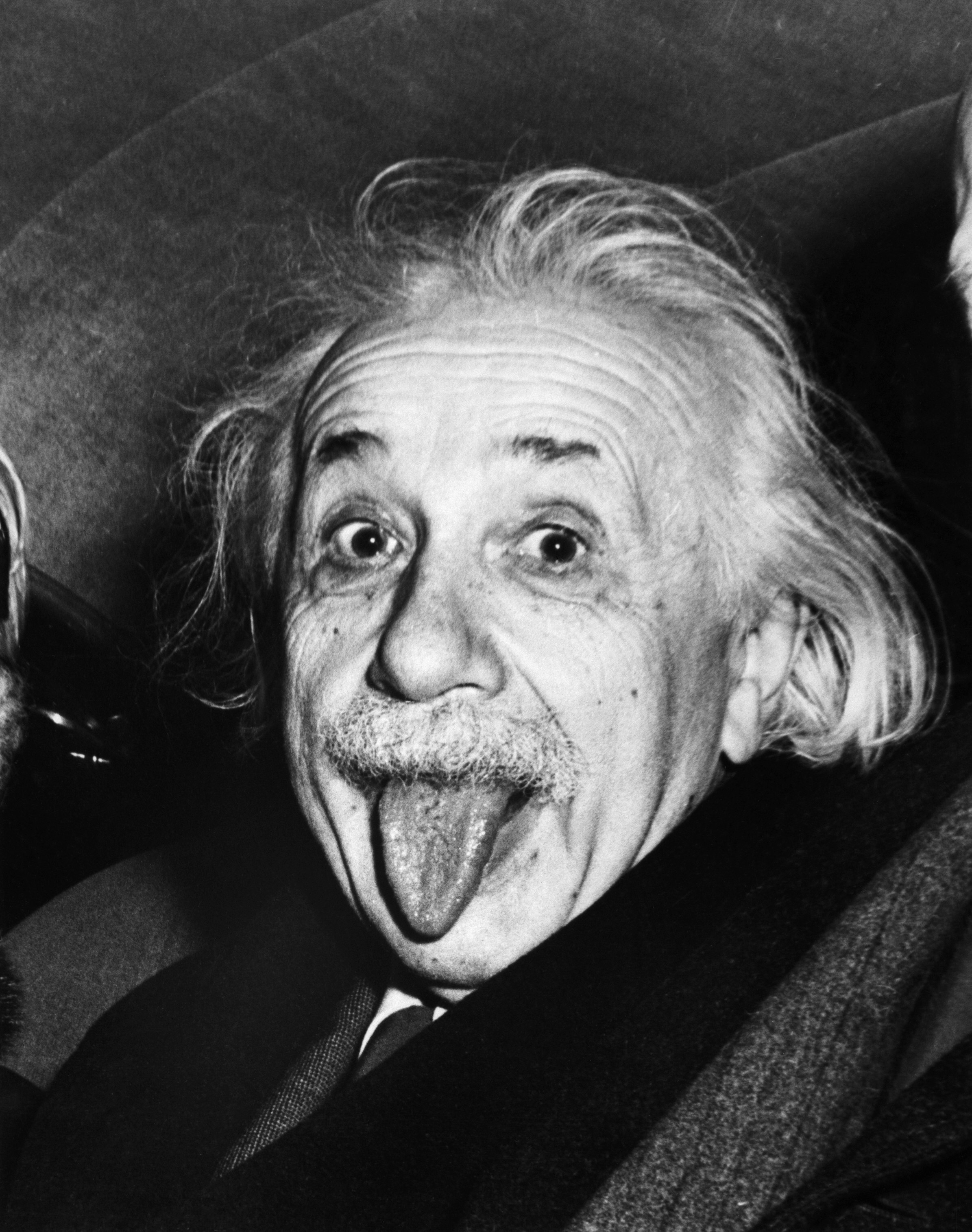
The BBC reported this week that two notes written by Albert Einstein, including his theory for happy living, sold for $1.56m.

Given to a courier in Tokyo in 1922 instead of a tip, Einstein (who had just heard that he had won the Nobel prize) told the messenger that, if he was lucky, the notes might become valuable one day.

When the courier came to his room to make a delivery, Einstein didn’t have any money to reward him.

Instead, he handed the messenger a signed note – using stationery of the Imperial Hotel Tokyo – with one sentence, written in German:

“A calm and humble life will bring more happiness than the pursuit of success and the constant restlessness that comes with it.”

As I hove towards my 50th birthday; and find myself this lunchtime, sat with a nice cup of tea, in the kitchen listening serendipitously to Tomaso Albinoni’s Adagio in G Minor on Spotify – I think Einstein had a point…

More of Einstein’s wise words (thanks to the BBC):

“We cannot solve our problems with the same thinking we used when we created them.”

“The true sign of intelligence is not knowledge but imagination.”

“We still do not know one thousandth of one percent of what nature has revealed to us.”

“When you are courting a nice girl an hour seems like a second. When you sit on a red-hot cinder a second seems like an hour. That’s relativity.”

Distracted? There’s an App for that…

Eric Barker writes a great blog; I’ve told three people about the thesis in this post, in the last week or so.

Neuroscience increasingly suggests we’re all more a bunch of impulsive Apps than a well designed rational operating system.

Makes a lot of sense to me; and has reminded me to actually make a bit of time for mindfulness for a week or two – as opposed to reading about it, avoiding it and constantly distracting myself by doing other things. Let’s see how I get on…

“The human brain wasn’t built top to bottom as a single project like Apple builds a computer. It evolved over millions of years in a very messy fashion. Various systems (or “modules”) came about to drive you to accomplish different tasks like seeking food, fighting, reproduction, etc. But here’s the problem…

They were never integrated. So these systems compete to steer the ship that is your brain. Your mind is less like a single computer operating system and more like a collection of smartphone apps where only one can be open and running at a time.

Here’s noted science author Robert Wright:

In this view, your mind is composed of lots of specialized modules—modules for sizing up situations and reacting to them—and it’s the interplay among these modules that shapes your behavior. And much of this interplay happens without conscious awareness on your part. The modular model of the mind, though still young and not fully fleshed out, holds a lot of promise. For starters, it makes sense in terms of evolution: the mind got built bit by bit, chunk by chunk, and as our species encountered new challenges, new chunks would have been added. As we’ll see, this model also helps make sense of some of life’s great internal conflicts, such as whether to cheat on your spouse, whether to take addictive drugs, and whether to eat another powdered-sugar doughnut.

Now modules aren’t physical structures in the brain, just like apps aren’t hardware in your phone. They’re software; the human nature algorithms that Mother Nature coded over thousands of generations of evolution.

So you want to diet but you see donuts and your brain’s hunger module (like the “Grubhub” app) hjacks control and says, “Food! Eat it. Now.” Or you want to be nice but your mind’s anger app (“Angry Birds”) takes charge and you’re saying things another app is really going to regret tomorrow. You’re like a walking live performance of Pixar’s “Inside Out.”

So how do we prevent hijacking by the wrong module at the wrong time and make better decisions? First we need to learn how those inappropriate modules get hold of your steering wheel…

Feelings. Nothing More Than Feelings.

Whichever module has the most emotional kick attached to it at any point wins the competition to be “you.”

Under this lens, many of the confusing and frustrating things about human behavior start to make a lot of sense:

  • Of course people are hypocritical. They’re made up of competing “selves” with very different goals and different information. Uncle Al is the most reasonable guy in the world — unless his “politics module” takes charge.

  • Are people good or bad? They’re both. The metaphorical angel on one shoulder and devil on the other are just different modules in the brain with different motivations.

  • Why do you lack self-control? Because now the word doesn’t make any sense. It’s actually “selves-control.” Your behavior isn’t inconsistent; the “you” in charge is inconsistent.

Here’s University of Pennsylvania psychology professor Robert Kurzban:

Some modules are designed to gather benefits, others are designed to deliver benefits, and they exist in the same head, sometimes in conflict. In the same way, this analysis does away with the question of whether individual acts are “really” self-interested. Different kinds of acts advance the goals that some, but not other, modules are designed to bring about. So, both meanings of “self-interest” seem to be a problem because different modules have different designs, and are therefore built to bring about different outcomes.

Here’s Robert Wright:

The human brain is a machine designed by natural selection to respond in pretty reflexive fashion to the sensory input impinging on it. It is designed, in a certain sense, to be controlled by that input. And a key cog in the machinery of control is the feelings that arise in response to the input. If you interact with those feelings… via the natural, reflexive thirst for the pleasant feelings and the natural, reflexive aversion to the unpleasant feelings—you will continue to be controlled by the world around you.

How To Prevent Brain Hijack

Buddhism recognized this problem over 1000 years ago. And it also came up with a solution: mindfulness meditation.

And neuroscience gives it a big thumbs up. Studies show meditation trains your brain to be less reactive to emotional swings and can prevent the wrong module from hijacking control of your brain.

The Silent Cinema

Now here’s a peculiar thing…

Having done a fair bit of listening to people with soothing voices inviting me to contemplate my feet… and having read a couple of harder core books from the Dalai Lama… I’d concluded mindfulness and meditation wasn’t really me.

I’ve learnt how to breathe, seek enjoyment and find peace ‘in the moment’. I’m getting pretty good at it; and had assumed that was it.

But one slightly terrifying day in July – the 29th to be precise – I met and said ‘oh, fancy that; hello’ to the actual ‘me’ inside. The most bizarre experience I think I’ve ever had.

The simple process is to imagine yourself in a cinema, completely caught up in a film. Then imagine yourself sitting deeper in the chair and detaching yourself from the film and noticing all the people sat around you (especially vivid if you think of them as wearing 3D specs).

Next imagine yourself alone in the movie theatre… and then imagine all your thoughts and sensory perceptions are on the screen.

Now imagine that screen going blank…

What’s left?

The silent person watching the screen inside.

I found it frankly really weird. For the first time I met the silent, energetic, unstable whoosh of raw consciousness and mental energy which is the ‘me’ that sits deep inside.

I’ve not been back since if I’m honest. I noted it down and slightly left it be. It feels like a thing not to be messed with. Pure consciousness is enlightenment, life and death and personal identity all wrapped up in one bouncing, pinging, luminous, easily distracted, unstoppable beam of ‘always on’ energy.

I get meditation and Buddhism now; and fear pain and fear itself a little less. But I’m not sure I want to go back into the cinema and turn everything off again…

I’ve kept myself busy since writing ‘Enlightenment’ in my iPhone notes on 29th July. My next entry is a ‘to do’ list for two weeks of camping – on the 30th July – which feels a good enough excuse; especially given all that’s happened since.

But the quiet seat – in the totally silent and empty cinema – is a place I will have to visit again; even if I don’t fancy it much.

Absent a sudden and violent death, the silent cinema is an important place to know the way into I reckon… That’s the purpose of Buddhism I suspect – to be able to detach the ‘silent witness’ and the constant flow of mental energy from the ego, angst, fear and pain which capture it for most of the living years.

A bit scary though.

POSTSCRIPT

Having written this, I popped back into the ‘silent cinema’ this morning. All very painless. Eyes closed: hearing the planes, noises off, feeling the grumbling in the stomach and the ache in my shoulder – and slowly turning attention away from them and towards inner silence. A few thoughts and ideas ping around, a sense it’s all a bit self-conscious in there and then quiet; just quiet… a couple of good thoughts float by… then eyes open and life’s Technicolor cinema immediately fills the screen again with dazzling light, noise, distractions and opportunity.

Life seems even brighter today after a few minutes in the silent cinema.

The Old Grey Goose

Just 13 days after the fateful phone call, the old grey goose – aka my mother-in-law – passed away.

As I texted a work colleague:

Thanks a lot, we’re all in good shape. Kids are getting there and Eleanor and me feel grateful we all saw her fully alive the other weekend and that she’s subsequently gone so quickly and gently. A decade too soon; but how you’d want to go if you had aggressive cancer: I’ll be in and just fine tomorrow. The old grey goose has flown off to her final peaceful resting place. It’s all good.

As I wrote to her after we saw the weekend before last:

Dear Hilary – as you said as we left your room today, there is so much I also want to say; but your energy is precious and I don’t want to take more of it than I should.

I just wanted to tell you – as I said to Eleanor in the car – that you looked very beautiful today; you had a kind of luminousity, your hair is lovely and the warmth and light you have brought to all our lives shone out from you and touched us all very deeply despite the pain and weakness in your body.

We will all remember this weekend very positively; I am so very glad we came.

Love

John

I had a good old cry after sending it – something the kids have never seen before; but I think made us feel better.

She was a wonderful woman with a central place at the heart of all our lives.

All too quick; but I think it’s what she wanted – the old grey goose valued her independence more than anything, and never wanted to be a burden. She is at rest.