Great Men

20140621-095505-35705610.jpg

The Greeks invented tragedy. Shakespeare explored its every facet. Hollywood is more ‘goodies’ and ‘baddies’. But does greatness invariably end in disaster? It depends on what you think great is.

Most of the ‘great’ men I’ve met have been greatest in either stature, ego or self regard. Far fewer in warmth, kindness or humility.

It’s this simple I reckon: if you’re great on the backs of others – expect one day to fail and fall.

If you’re great for and because of others – great of heart, integrity and kindness – you may stumble, but I believe you will never truly fall.

Why? Because those you have truly cared about and cared for will reach out to catch you in your hour of need, and will gently forgive you your honest mistakes.

The only greatness worth having is that which is earned for, from and freely bestowed by others.

Malevich

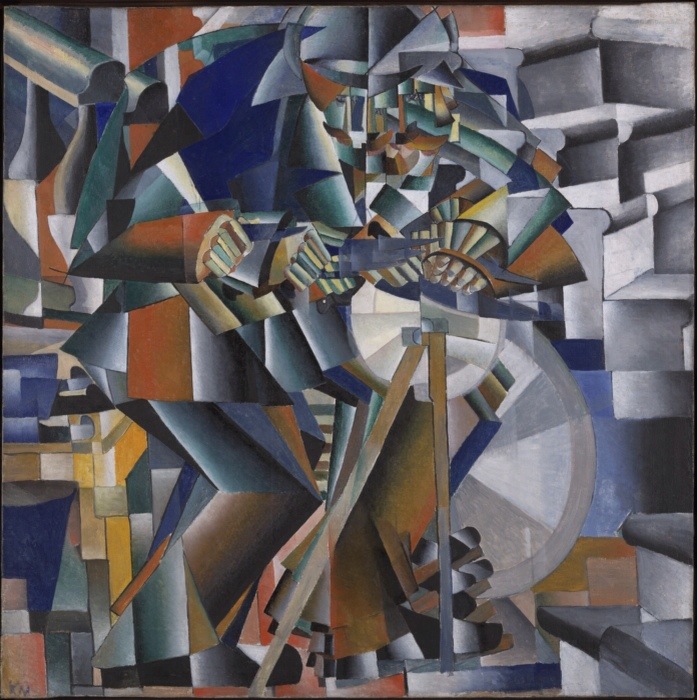
I knew he was deep, and suspected he was dark – but another find in the library shows he painted like a man possessed through some extraordinary times. Kazemir Malevich (1878-1935) the great Russian artist went from here:

20140614-215739-79059734.jpg

To here:

20140614-215813-79093001.jpg

Via here:

20140614-215837-79117724.jpg

And here:

20140614-222316-80596901.jpg

Before changing art forever here:

20140614-220200-79320546.jpg

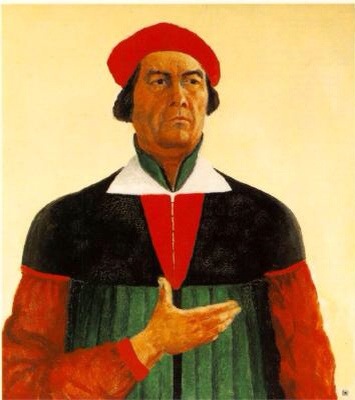
And ending persecuted but proud here:

20140614-220304-79384400.jpg

From impressionism, through cubism, to futurism and his own creation ‘suprematism’. Malevich created the ultimate abstraction in the ‘black square’, but ended his years under Stalin only being able to hint with a coy hand gesture at the ideas he created – that true art takes nothing whatsoever from nature and is pure ‘form’.

Modern art gets a mixed reception. But I’m staggered at what Malevich produced in a single lifetime. He is a dozen artists in one – and lived a life which spans, encapsulates and created a true revolution.

Dismal News

20140614-152633-55593857.jpg

I was a big economics fan at school. Supply and demand, rational actors, natural monopolies and perfectly competitive markets – it made simple good sense to me.

It all got a bit more complicated at university. There, whacking great equations I couldn’t fathom, seemed the inadequate answer to real world problems.

Later in the world of work, thanks to my broad brush mastery of ‘the dismal science’ I had a brief, successful (and with hindsight massively inaccurate) career in forecasting the prospects for mobile phones worldwide. I concluded as many as one in ten people might have one – one day. Nostradamus eh!

This week I discovered from the clever people at McKinsey it’s no wonder I got it wrong by a factor of ten. I was guilty of anchoring, group think, saliency bias, confirmation bias and the halo effect, to name just five.

It turns out people simply cannot, and do not make ‘rational’ decisions. Even with the best data, the right experience and great wisdom, we are all doomed by the impossibility of escaping group biases. And the killer is the biggest bias of the lot is “self-interest bias” which we absolutely cannot escape, as it’s 100% built in.

What to do? The only conclusion is talk about it. When it comes to the really big choices in work and life, even the smartest person in the room will get the big ones wrong on their own.

But you can’t talk forever or you’ll succumb to groupthink or give in to loss aversion. Eric Schmidt of Google has a good motto: for a good decision you need discord… and a deadline.

Plus, I conclude, let go of your own ego, and at least let others showcase their prejudices before you give in to your own.

12 Common Biases

1) Affect Heuristic – a team has fallen in love with its own proposal.

2) Groupthink – we’re all in the same boat on this one.

3) Saliency Bias – overly influenced by analogy to something memorable that happened once before.

4) Confirmation Bias – no credible alternatives means “let’s do it!”

5) Availability Bias – time limited offers are disproportionately attractive, but if you had to make the decision again in a year’s time what information would you want first?

6) Anchoring Bias – a tendency to cling to the first number heard and judge everything else with reference to that starting point.

7) Halo Effect – the assumption that people and teams with past success will be successful again.

8) Sunk Cost Fallacy – we’ve spent a fortune already, so we may as well spend some more to get some of it back.

9) Overconfidence and Optimism Fallacies – nobody likes a pessimist.

10) Disaster Neglect – the worst that could happen is too horrible to think about – let alone consider in your plans.

11) Loss Aversion – humans naturally weigh losses more heavily than equivalent or even greater future gains.

12) Self Interest Bias – the one you can never escape on your own and the best reason to take your big decisions with other people.
Mile High Spirits

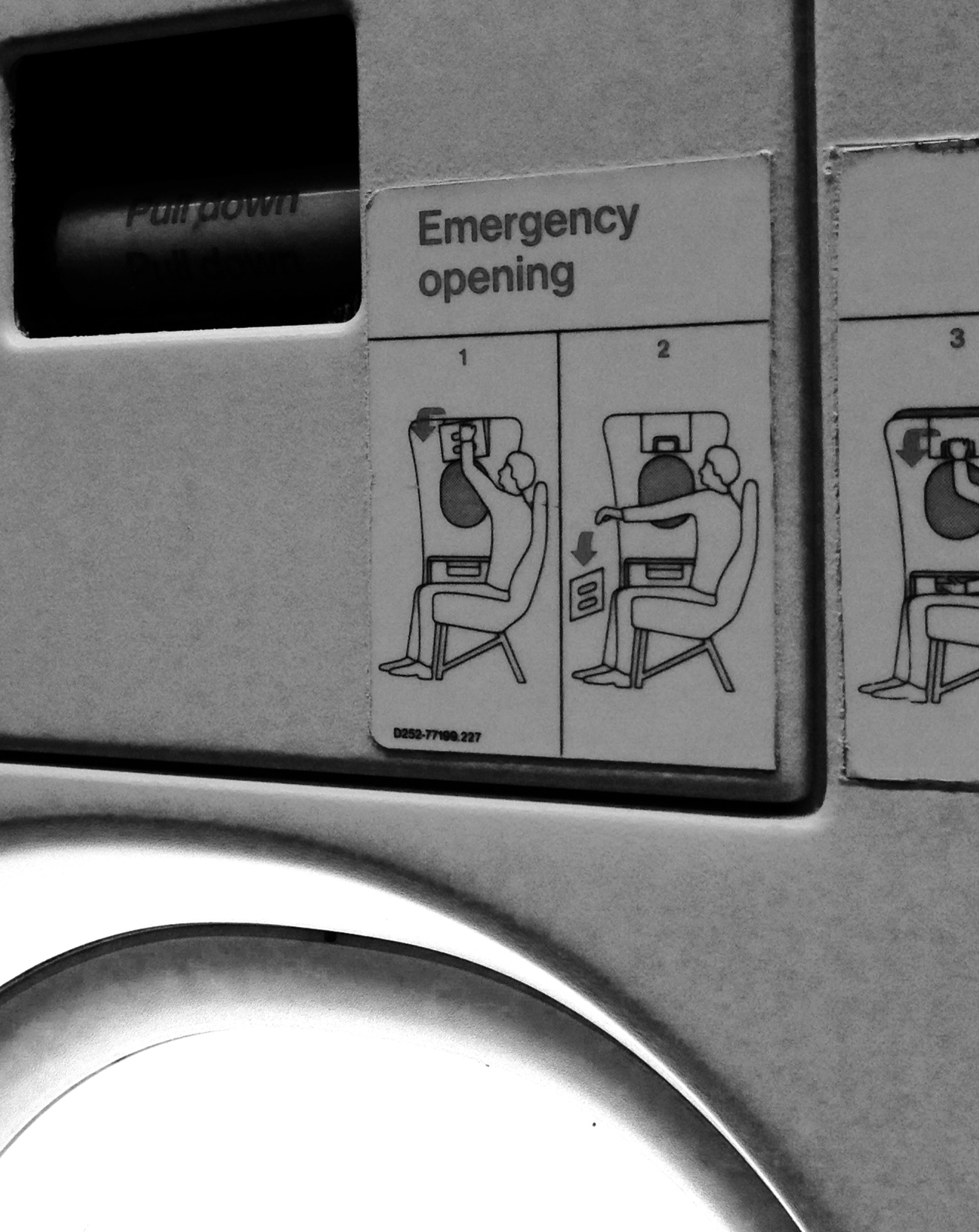
Open in Emergency

Glug, glug
Pssst
Clink
Plink
Fizzzz
Ice
Slice
Mingle
Slurp
Tingle
BANG
Brain wobble
Cheery
Leery
Life
Gets
Easy

In the film ‘Flight’, soon to be disgraced alcoholic airline pilot Denzel Washington turn his back on a hotel minibar miniature. And then bang he’s done. Watch it.

He necks the lot, owns up to being a drunk at an accident investigation and goes direct to jail. Helluva moment in a powerful film. Ironic then that I tapped out the poem above on a flight home from Belfast whilst necking my own spirit miniature – a stiff airline G&T.

There is something in the tinkle, the ice cool fizz and the spirit hit which is more intoxicating combined than just the intoxication alone.

Dangerous things white spirits. I reckon they need to be carefully measured and properly rationed or they’ll getcha… just like Denzel Washington’s pilot.

Waves

20140531-215435-78875213.jpg

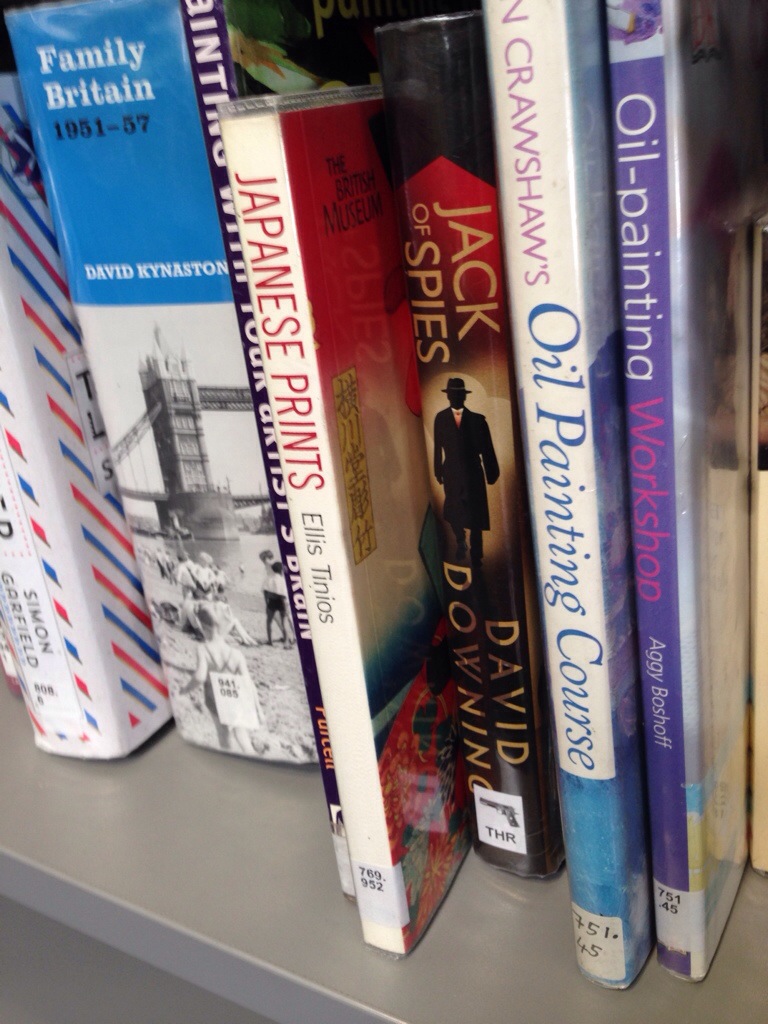
I waved goodbye to ‘Japanese Prints‘ at the library today. Here it sits among the ‘recently returned’ next to someone else’s thriller and two DIY oil painting books.

Japanese wood block prints, I learnt, were the product of art, craft, populism, censorship and Japan’s desire for isolation from the rest of the world.

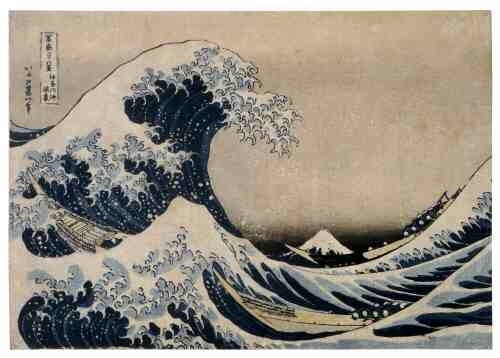
Hokusai’s ‘Great Wave’ is perhaps the most famous of all Japanese wood prints and belongs to the groundbreaking series ‘Thirty-six views of Mount Fuji’. Most Japanese prints were of famous actors, warriors or courtesans. Landscapes were few and far between, until this series.

20140531-215723-79043940.jpg
But what is also unusual about this print, is it draws on the industrial prowess of 19th century Germany. It was the first Japanese series to exploit the new chemical ‘Berlin blue’ pigment (also known as Prussian blue) which had recently become available from China. It gave Hokusai a strong but fine blue for both sky and water unlike the sticky splodgy ‘Indigo blue’ and did not fade like the other more watery traditional blue pigments.

On the other side of the world, German chemists enabled Japanese artists and printers to create many thousands of fine prints. These then found their way back to France and inspired Monet, Manet and the Impressionists, as well as the ‘new wave’ Art Nouveau posters of Toulouse Lautrec, which adorned and still define Paris.

It’s a small world. Japanese wood blocks sat next to oil paintings in 19th century Paris too.

20140601-075747-28667351.jpg