 I typed ‘Where does complexity come from given entropy?’ into Google this morning. Why? Because my life and work are in pretty good order, so a law of physics which threatens to mess them up is most inconvenient.
Given how hard it is to get anything done at work, given how fragile our lives and life’s works are and given the formidable obstacles to multicellular life a – how on earth do we get from chaos to complexity.
Before Googling, I’d read in the New Scientist that Precambrian alkaline oceans may have forced floppy-walled cells to get a shell – to keep the toxic alkalinity out. Alkaline oceans would also have promoted calcification. A problem and a solution jostling together.
I also read E.O. Wilson, the Harvard sociobiologist, explaining that the simplest way to understand complex human motivations, is the constant competitive/cooperative interplay between our loyalty to ourselves and that we pay to tribes and collectives -which give us faith, identity, mythologies and protection.
Speaking of which, high up the Google list of answers to my complexity vs entropy question was our old friend God. If the second law of thermodynamics demands increasing entropy, then a creator and His constant intervention seem to some like our only hope.
But I’m reminded of the classic sociological example I cited at work this week, in favour of not planning big things too much. You’re never more than five minutes from fresh bread in chaotic Paris but couldn’t get it anywhere in centrally planned Moscow – ecosystems are too complex to plan or design.
Instead of God, I preferred a great paper, which came top of the highly evolved ecosystem which is the Google search rank. MIT physicist Michel Baranger writes that the 20th century ‘certainty’ of scientific analysis has given way to the chaos of fractals and non-linearity.
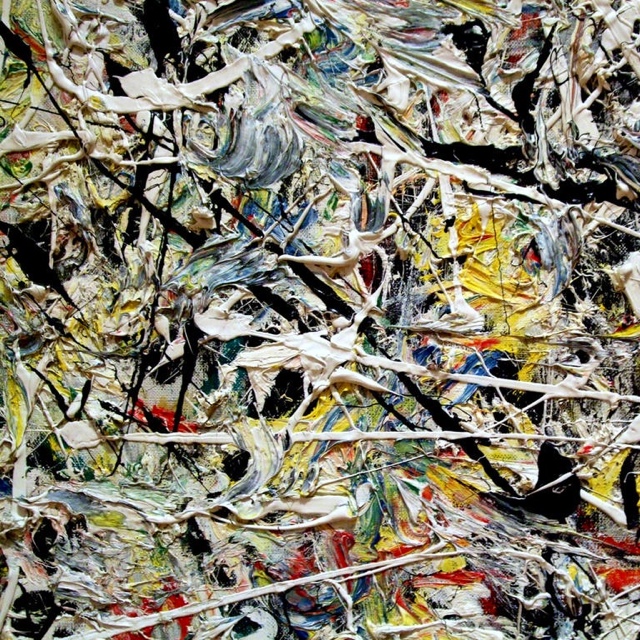
Baranger admits complexity still defies a simple definition. But it does have these six features:
1) Complex systems contain many constituents interacting chaotically.
2) The constituents of a complex system are interdependent.
3) A complex system possesses a structure spanning several scales. (cell, leg, person; building, district, city)
4) A complex system is capable of emergent behaviour. (properties emerge at a higher level which are more than a description of the constituent parts – consciousness, life, society, culture)
5) Complexity involves an interplay between chaos and non-chaos. (if it’s all chaos nothing happens, if there’s no chaos nothing happens either)
6) Complexity involves an interplay between cooperation and competition for resources (the big one – drives reactions, feedback loops, religion, ethics, moral dilemmas, kindness and cruelty)
Fully embracing the messiness of chaos and complexity opens up the possibility that we might come to better understand the biological and social systems which drive us, and which we in turn drive.
The answers won’t be in neat models. But they would be a small step towards what E.O. Wilson calls a ‘New Enlightenment’. An Enlightenment built not on the determinism of Newton’s calculus and Adam Smith’s pin factory. Or on the individualism and reductionism of pure ‘survival of the fittest’. But one recognising that complexity comes from the jostling of chaos and order, competition and cooperation, small scale and large and interdependence of the whole.
What does that mean for my efforts to maintain a well-ordered life? Accepting a meteorite could flatten our house. That disagreements at work and at home are probably the drivers of progress. And that the competing demands on me create, yes, chaos; but also new complexity and the spur to creativity.
A reminder then that chaos and change can’t be avoided – you can only ride the waves not hold back the tide.




 Achilles & Aristotle