Corporate Punishment ii) Absolute Clarity

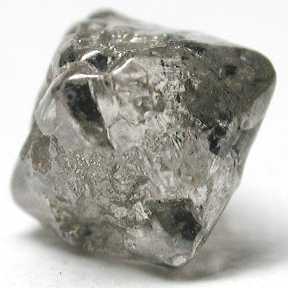
Absolute clarity is as rare in the workplace as diamonds are in nature. Like diamonds it usually takes too long and requires too much heat and pressure. When difficult choices are in the air the clarion call for ‘absolute clarity’ is usually not far behind.

In the right place, and measure, clarity of word and deed are virtues. At the wrong time and posed as a prerequisite for support or action ‘absolute clarity’ is a often a smokescreen or a diversion. As our chairman pointed out a few months ago most people want absolute clarity on how they are going to be measured and but clearly don’t want to be measured absolutely.

So how much clarity should we shoot for? The scholar J.A. Smith, in his 1930’s introduction to Aristotle’s ethics, writes:

Such knowledge is that which in its consumate form we find in great statesmen, enabling them to organise and administer their states and regulate by law the life of the citizens to their advantage and happiness, but it is the same kind of knowledge which on a smaller scale secures success in the management of the family or of private life.

It is characteristic of such knowledge that it should be deficient in “exactness,” in precision of statement, and closeness of logical concatenation. We must not look for a mathematics of conduct.

In most 21st century organisations, as in the administration of states and the management of families, there is no absolute clarity on what to do, what really matters, what good looks like or what’s wanted.

Diamonds are the wrong form of carbon to search for – the quick pencil sketch of graphite is what most people and organisations need most of the time.

Corporate Punishment i) Questions

I’ve decided to begin an irregular series on ‘corporate’ behaviours which one encounters in large organisations.

Most of these start with the germ of a good idea from some management book or coach. Some are learnt through imitation and emulation. Taken to excess or with the wrong intent they stymie progress, sap energy and scupper decision making. A common feature is they are safe and look clever but often aren’t. As with so much in life, too much or too little is a vice – only the golden mean is a virtue.

Number one in the series is always asking questions and not stating your own view. Aristotle (not himself a man to beat around the bush) quotes a prior Greek, Hesiod, on this topic.

Hesiod is pungent as an old sock in his critique:

“He is best of all who of himself conceiveth things; Good again is he too who can adopt a good suggestion; But whoso neither of himself conceiveth nor hearing from another layeth it to heart; — he is a useless man.”

It takes Aristotelian effort to develop a new insight and the courage of Achilles to present a new idea. Listening, thinking, improving, adapting and adopting is what you want in return. Questions are too easy.

The Fridge Door

I read a top neuroscientist’s suggestion last night that our capacity to understand how the human brain works may ultimately be limited by the capacity of our nervous system. This reminds me of a thought I had when studying philosophy of mind at Oxford: if our brain was simple enough to understand we’d probably be too simple to understand it.

One thing I do believe is that the brain is probabilistic and Bayesian. So I was interested to read what Dorothy Rowe, an Australian psychologist had to say about it in a recent article in the New Scientist:

Over the last 20 years or so, neuroscientists have shown that our brain functions in such a way that we cannot see “reality” directly. All we can ever know are the guesses or interpretations our mind creates about what is going on. To create these guesses, we can only draw on basic human neuroanatomy and on our past experience. Since no two people ever have exactly the same neuroanatomy or experience, no two people ever interpret anything in exactly the same way.

I’m increasingly sure this is right and is part of our everyday experience. But as the world becomes more cosmopolitan, we are more and more likely to encounter people with very similar neuroanatomy, but incredibly different experiences. I’ve read before that humans are very poor judges both of probability and coincidence. When we bump into someone we work with on holiday or a friend we’ve not seen in years in an airport we assume fate, a guiding hand or incredible coincidence.

On holidays this year I bumped into a person from work at a village festival in France, the former Chairman of my organisation on a cliff in Devon and crossed within 6 feet of UK’s Prime Minister, David Cameron, each of us barefoot in shorts on a beach in Cornwall. Incredible. But in fact not. Our brains are tuned for the humdrum of a hamlet, village, smallholding or savanna plain not the incredibly interconnected world of 21st century media, Facebook friends, social networks and ubiquitous travel.

Even if we are from the same physical place, we live on tremendously varied diets of interests, TV and work. The massing moments of the 19th and 20th century: factory gates, church, football, movies and network TV, which gave many people common experiences and outlooks, are no more. What chance then you’ll spontaneously see things the same way as the next man or women at work – almost none.

As Dorothy Rowe writes: This is frightening. It means that each of us lives alone, in our own world of meaning. Moreover, if everything we know is a guess, an approximation, events can, and often will, invalidate our ideas.

I have seen a number of very experienced senior people apply for fewer jobs than there are of them this week. I have spoken at length to several of them. Although trying to hide it, each was frightened, alone and in their own world of meaning. They knew to some degree that future events can and probably will invalidate their ideas of themselves, but each of them was to some extent caught in a solipsistic, self-referencing nightmare of wanting to be in control of their destiny and feeling utterly powerless in the face of their perceptions of the views others held of them – the deciders, their peers, their loved ones, the court of organisational opinion.

As new age writer Don Miguel Ruiz writes: “All the sadness and drama you have lived in your life was rooted in making assumptions and taking things personally. The whole world of control between humans is based on that”. Or as the Greek Stoic philosopher Epictetus said “it is not things in themselves that trouble us, but our opinions of things”.

So: we cannot see reality directly, we are poor judges of probability and coincidence and we are always guessing at what is happening based on snatched perceptions and an experience set which is always different – and sometimes very different – from those we find ourselves working with. As a result we are perpetually making self-limiting assumptions and taking things personally. Thus we are often alone, fearful and perturbed.

Stoicism is one answer. Endure, expect little and shrug off life’s indignities. Being a hermit is another. But if I seek the fulfilment of a public life of Aristotelian virtue – lit by bright flashes of ‘doing the right thing’ with the courage of Achilles – neither of those is enough.

Given the wrapper of how people ‘interpret’ things is all important, this week I’ve tried several times to remember the advice of a friend I spoke to a couple of weeks ago. He has an autistic, teenage stepson. Tricky. He sometimes tries to correct his behaviour and gets a lively reaction. His wife though has a way which works. Instead of saying “you left the fridge door open” she simply says “the fridge door is open”. Nine times out of ten it gets closed without any drama.

Simply saying how things are or how I see them has worked better for me in a very emotionally charged week than assuming, cajoling, second-guessing or taking things too personally.

Simply saying “the fridge door is open” gets it closed more often than not.
The Harp Player

In pursuit of the good life, Aristotle has sent me in a couple of very important directions recently. First the harp. He says that the work of the harp player is to play the harp, and of the good harp player to play the harp well. That way fulfilment lies.

He suggests we all have different ‘virtues’ or capacities which it is our life’s work to bring to excellence. Doing what we are good at ‘excellently’ gives us pleasure in the moment and fulfilment over time. An Aristotelian life is a balanced life though. There are eleven different virtues to cultivate not to mention the welfare and good of the many, politics, as he defines it. It’s a lot to fit in and doesn’t leave much time for pleasure. Or does it?

As Aristotle says: To each is pleasant of which he is said to be fond: a horse, for instance, to him who is fond of horses, and a sight to him who is fond of sights: and so in like manner just acts to him who is fond of justice. So then their life has no need of pleasure as a kind of additional appendage, but involves pleasure in itself. 

In fact Aristotle considers the highest human achievement and pleasure lies in contemplation. I now realise that there are many harps I play well enough to give me eudaimonia. I’m good at work, a decent leader and manager. I’m a good father, I love my kids and love being with them. But, above all, I am a good thinker. A life of thought is a pleasant life for me.

This leads me to the second idea, friendship. Aristotle spends a full fifth of his entire work on ethics in defining and describing the nature, types and specificities of friendship. There are transactional friendships and friendships for fun and frivolity. But the highest form of friends are friends for contemplation. These are friends whose excellence of thought, virtue in action and sheer interestingness in what they have to say draw us to them. And the same draws them to us.

Seeing these two things together is a revelation. We all care about our friends, but Aristotle reveals that our highest order friendships define us, enrich us and enable us to engage in the very highest of human achievements and pleasures – contemplation. As a friend of mine said recently ‘friends are a rich indicator’. They are indeed.

This week I told two of my ‘friends in contemplation’ at work how much I now understand they mean to me. I will seek and tell others in other parts of my life. As one of them told me in return, the great American Thomas Jefferson would always ensure he had his truest friends no more than an hour’s ride away. I now understand why. 

The intellectual harp is a wonderful instrument. But it takes a lifetime of practice to master and the company of fellow harp players to play it well.

Status

I’ve been really struck in the past couple of weeks by how much some people define status in their lives through work. I was talking to a smart guy I’ve not seen for a couple of years about his mother who had a very big job, but was also refreshingly down to earth. He said “she recognised she had a serious job, but didn’t take herself too seriously because of it”.

This strikes me as a good approach. Some people have greater status needs than others. I think mine are less than many people’s. But I do also wonder if I think that, to some extent, because they are more than amply filled by my current job. Last week I did a speech to 100+ people on the 40th floor of a major bank to generous applause. I used to fear these sorts of things, now I almost enjoy them, but the fringe benefit is to feel I have a serious job, even if I don’t take myself too seriously because of it.

But in these recessionary times we all wonder from time to time whether this status might be rudely taken away by redundancy or our face not fitting. I know a couple of good, experienced people who got the bullet this week. In some ways worse is the more realistic realisation that I will likely be taking some people’s employment away from them in the coming months. I feel bad about this and think about it a lot.

I was talking to another professional in a different field about this on Friday and he said “hard decisions should feel hard”. I think he’s right, it’s all too easy to switch off your emotions, don the protective armour of ‘managerialism’ and simply ‘do what’s wanted’.

I think to downsize with care, empathy, kindness and self-respect is do-able. Engaging with people as people, not losing my humanity or switching off my emotions is an important part of doing this well. And ultimately if I am asked to do something I feel is wrong, finding the courage to say I feel it is wrong and being brave enough to risk my own job and status feels important too.

The paradox of job cuts is what’s brave is to do the right thing for the many as well as deal with individual people with care, integrity and humanity. The cowardly thing is to ‘act tough’, switch off your emotions and use the excuse of managerialism whilst saving your own skin.

What looks and is often rewarded as ‘tough’ in job cuts is in fact comparatively easy in my experience. What is hard is caring, thinking fully about the consequences of what you are doing and doing it right.