Rumination

  
An interesting discovery from Learned optimismis that rumination is the optimist’s worst enemy… Chewing the cud leads to pessimism and inaction.

One thing I’ve learned at work down the years is: ‘if in doubt, do something’

Armed with this new insight I’m even more sure taking and helping others take action – sometimes any action – is my best defence against mine and their pessimism.

And this reminded me to look up Hannah Arendt the great 20th century philosopher, who I seemed to remember was big on action too… 
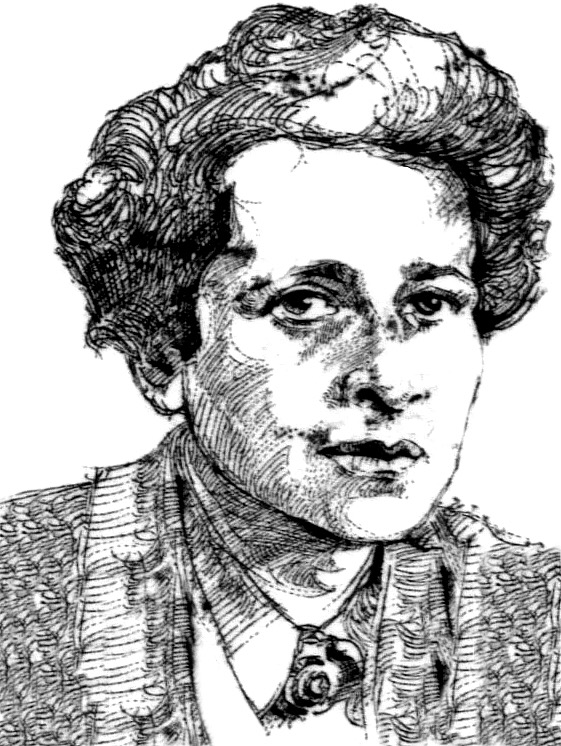
  

I was right. Here’s a boiled down extract from the Stanford Encyclopedia of Philosophy:  

“For Arendt, action constitutes the highest realization of the vita activa, via three categories which correspond to the three fundamental activities of our being-in-the-world: labor, work, and action. 

Labor is judged by its ability to sustain human life, to cater to our biological needs of consumption and reproduction.

Work is judged by its ability to build and maintain a world fit for human use.

Action is judged by its ability to [manifest] the identity of the agent and to actualize our capacity for freedom.

Although Arendt considers the three activities of labor, work and action equally necessary to a complete human life, it is clear from her writings that she takes action to be the ‘differentia specifica’ of human beings.

Action distinguishes [us] from both the life of animals (who are similar to us insofar as they need to labor to sustain and reproduce themselves) and the life of the gods (with whom we share, intermittently, the activity of contemplation).”

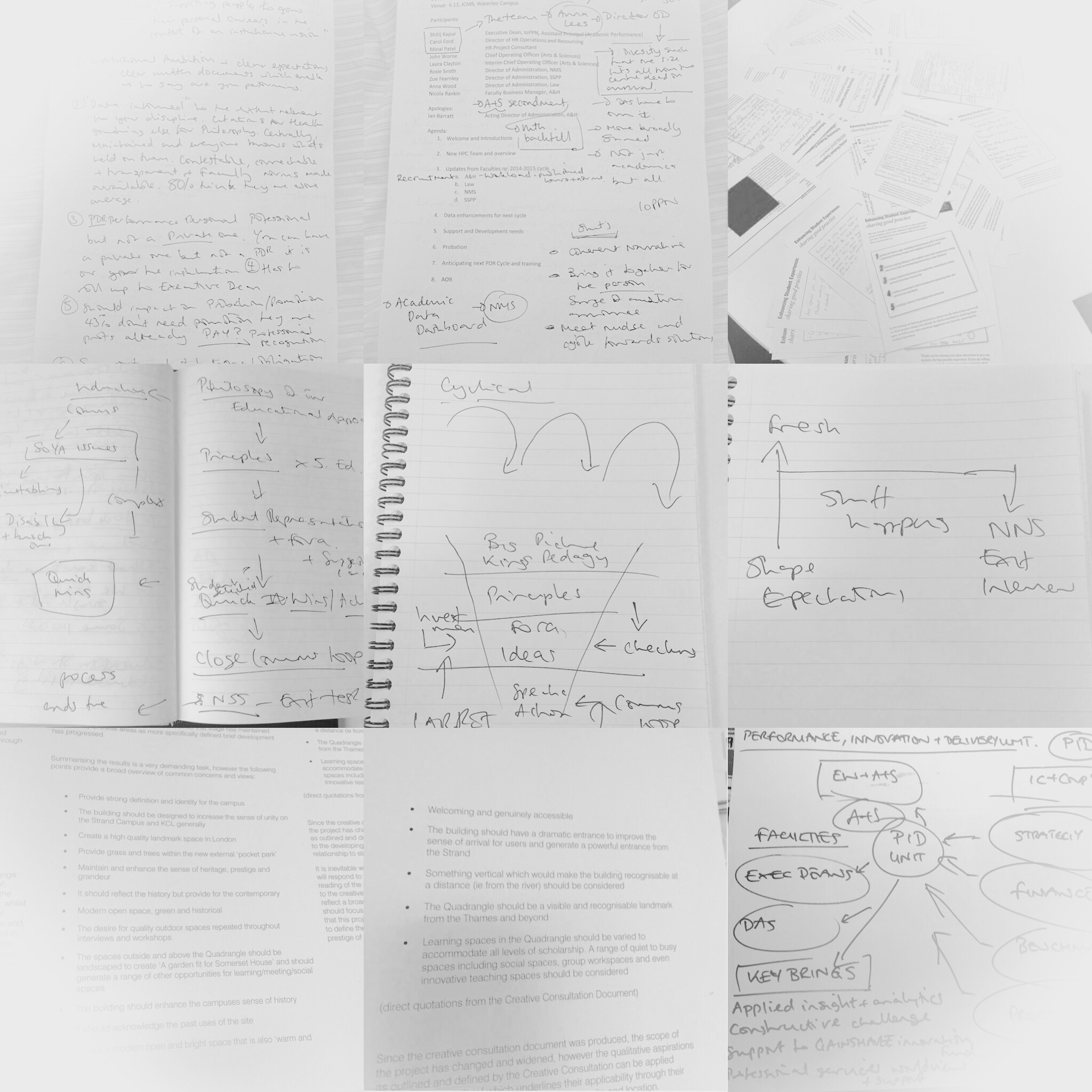
Nuff said. I made myself a little flowchart last Sunday to remind me, which still seems on the money…
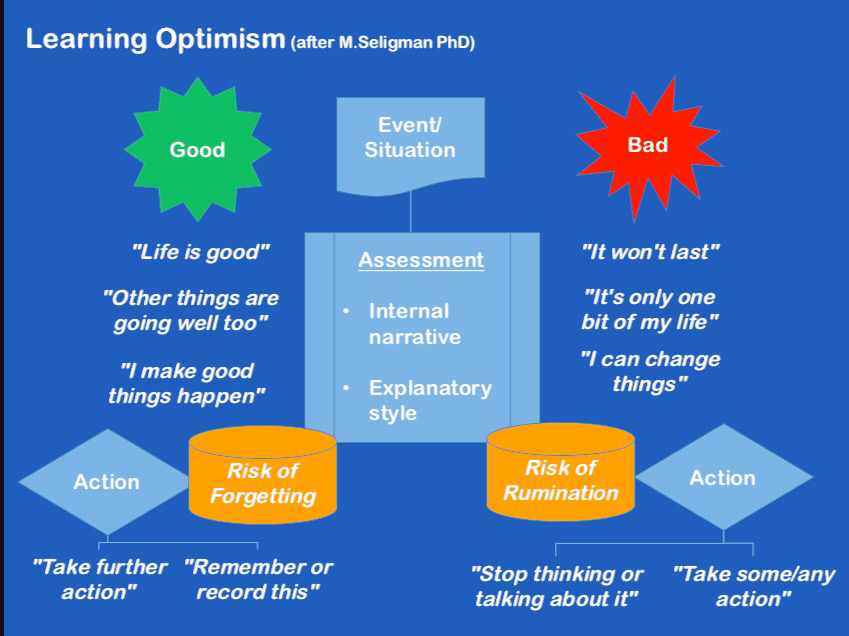
 

In the face of setbacks, troubles and ugliness; don’t ruminate – act. 

In the presence of success, progress and beauty; act – but don’t forget to contemplate too.

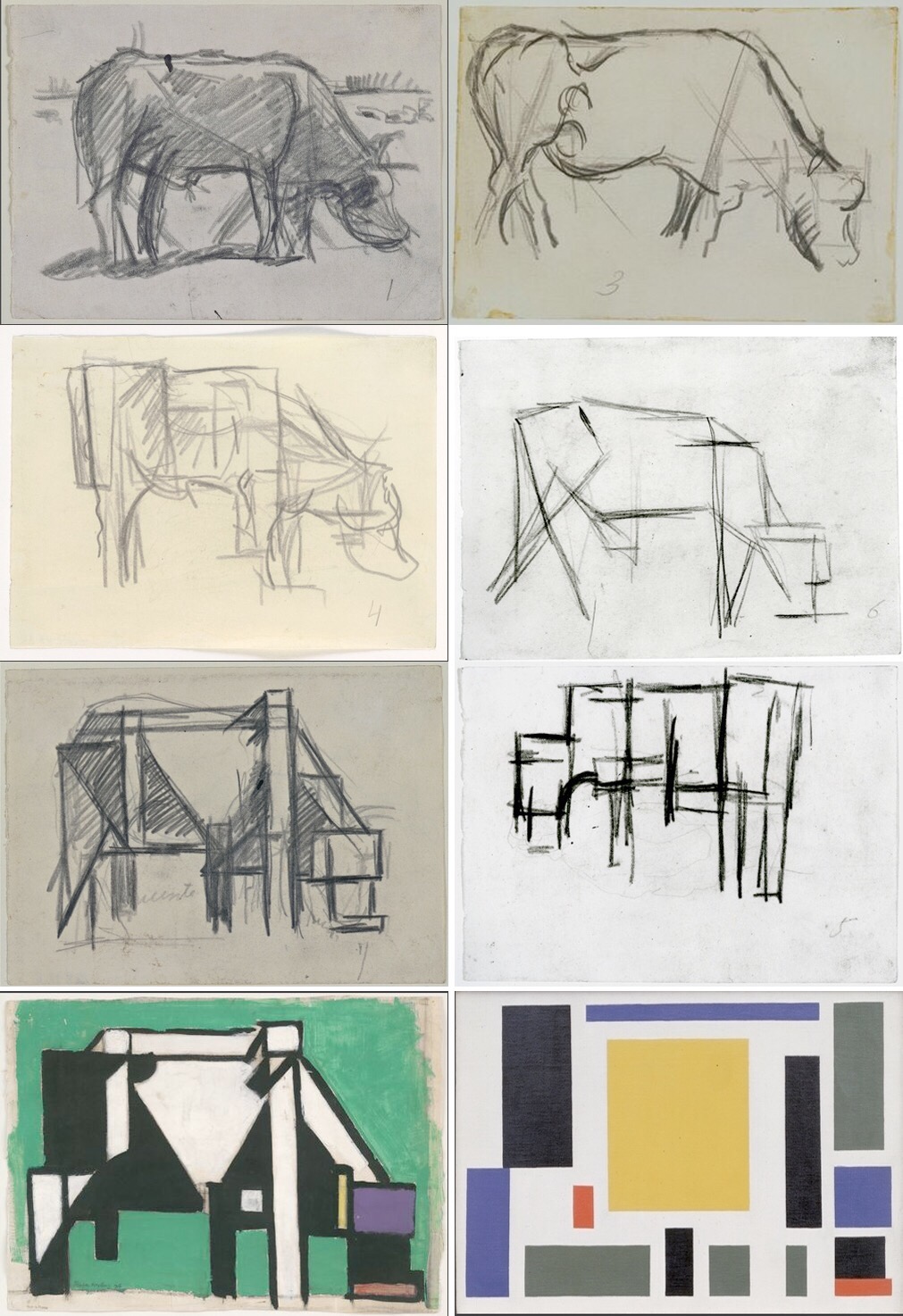
Or another way to look at it, less Theo van Doesburg


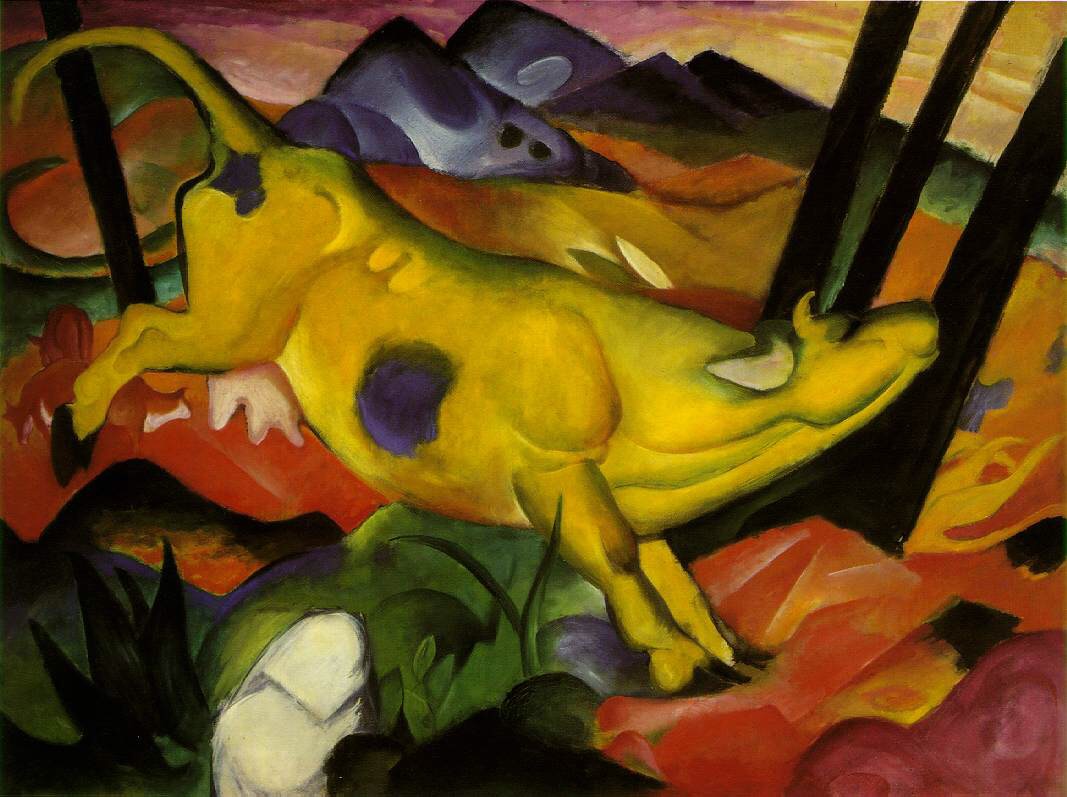
More Franz Marc


No more chewing the cud.

Optimism Epiphany


I’ve had an epiphany. It all comes down to three Ps; and avoiding learned helplessness

First discovered in dogs and then in humans, Wikipedia takes up the strain here:

Research has found that human reactions to a lack of control differ both between individuals and between situations. For example, learned helplessness sometimes remains specific to one situation but at other times generalizes across situations.

An influential view is that such variations depend on an individual’s attributional or explanatory style. According to this view, how someone interprets or explains adverse events affects their likelihood of acquiring learned helplessness and subsequent depression. 

For example, people with pessimistic explanatory style tend to see negative events as permanent (“it will never change”), personal (“it’s my fault”), and pervasive (“I can’t do anything correctly”), are likely to suffer from learned helplessness and depression.

If you want to bounce back fast from setbacks and beat the blues, Martin Seligman’s book and the thesis of learned optimism are well worth a read. It’s certainly working for me. 

I’m ruminating less, and actively breaking up permanent, pervasive and personal interpretations of bad situations when I hit them…

I’m regularly reminding myself: 

“It’ll pass”, “it’s just one part of my life”, “it’s not me that’s causing this.”

And directing myself – and others – toward action, not helplessness: 

“Ok but what can we do about it right now”,  “OK if we can’t fix that, what else can we fix” and “if anyone is going to make this better we can, so let’s have a go.” 

I feel a lot better, and people around me do too. It transpires the main benefit of pessimism is you predict the future better. 

Optimism might help change it.

Non Toxic

  
It’s hard work, but I feel like I’m making progress in my new job. And although I’m working flat out, people I’ve seen recently say I look well on it.

Of course people always say that. It’s pretty rare for someone to come out and say: “You look terrible”. But most of the people I’ve met from my old work, do say I look a lot happier now than I did there.

Which – given the large, in some cases huge and always myriad practical challenges in my new job – seems, on the face of it, quite surprising.

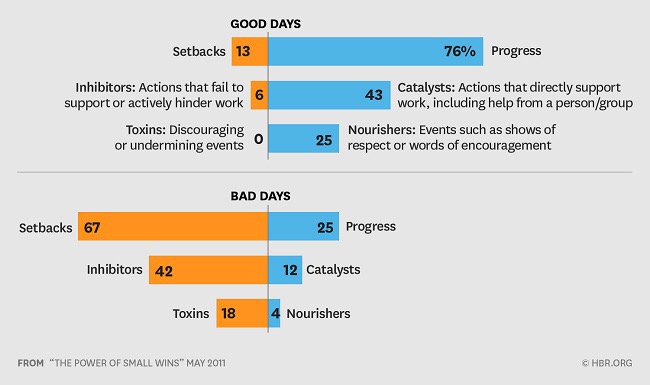
But, I as I said to someone this week; I think this simple chart explains it all:


Albeit they happen, my current job is dogged by far fewer ‘toxins’ than my old one. 

It’s not all progress. Not everyone is a catalyst; there are plenty of inhibitors around.  But the big difference is there are far fewer ‘deliberately discouraging or undermining events’. 

What a relief – as another Harvard Business Review article pointed out this week, organisations should worry less about hiring ‘superstars’ and more about avoiding hiring ‘toxic people’. The benefits of stars are more than eclipsed by the cost of toxic folk.

But the problem in my old job was as much structural as personal; it’s hard work being close to government. All organisations have politics, but stating the obvious, government is all about politics – and that means ‘deliberately discouraging or undermining events’ are part and parcel of working in or with it. 

I discovered this week that for all the moans and grumbles, universities have one of the highest job satisfaction scores of all sectors of the UK economy. 88% of people who work in universities say: “this is a good place to work”; only 56% do in government.

Less toxins, more progress – that’s all it takes to keep me happy at work.

σοφία


As modern Greece struggles with its economic problems, it’s worth remembering: there isn’t a decent concept for living we don’t have the Greeks to thank for.

With help from Wikipedia, try: 

Prohairesis – προαίρεσις

The ‘moral character’ or prohairesis, was brought to the world by Aristotle in the eminently readable Nicomachean Ethics (which first inspired this blog five years ago). Prohairesis is the capacity to reflect, and not be carried away by what our senses serve up.

For the stoic Epictetus, life is all about prohairesis; separating what we experience from how we choose to feel about it:

“Remember that what is insulting is not the person who abuses or hits you, but the judgment that these things are insulting.”

“So when someone irritates you, realise that it is your own opinion that has irritated you. Try, therefore, in the first place, not to be carried away by the impression; for if you once gain time and respite, you will find it easier to control yourself.”

Prosoche – προσοχή

In the Platonic Academy, prosoche referred to the discipline of “attention” – noticing the judgements that we make about ourselves and the world. 

Once observed, the next step is observing whether or not these judgements are in ‘conformity’ with the reality of our situation; and correcting them as needed so as to maintain appropriate behaviour and equilibrium (ataraxia). 

Prosoche is broadly equivalent to the Buddhist disciplines of ‘mindfulness’ as developed through meditation.

A Greek ‘prosoche’ poem sums it up: 

Give me the Serenity to accept
the things I cannot change,
the Courage to change the things I can,
and the Wisdom to know the difference.

Areté – αρετή

For Aristotle, bravery is the first virtue. It came up at work this week. 

It is, quite simply, consciously choosing to walk the difficult tightrope between fear and courage:

“A brave man is one who faces and fears what he should for the right reason, in the right manner and at the right time. A brave man performs his actions for the sake of what is noble. Those who err by excess with regard to this virtue are called rash, but one who is exceedingly fearful is called a coward.”

“Men who show courage because they are optimistic and they think they will win are not brave, because they do not act for the right reasons, and when the situation does not turn out well, they end up being cowards.”

“Men who are ignorant of danger are also not brave, but only appear to be so because they have no knowledge of the danger.”

Prohairesis, Prosoche and Areté: character, consciousness and choice, all come together in sophia σοφία; the title above, and Greek for ‘wisdom’ – the root of philosophy φιλοσοφία philo-sophia.

Whatever the state of their οἰκονομία (economy), Greeks deserve our enduring thanks; for all they invented in the life of the mind.