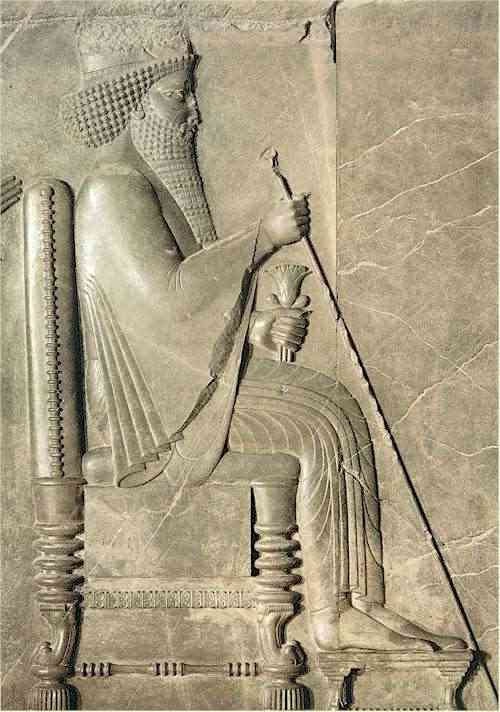
Xerxes

Xerxes – controversially portrayed as a narcissistic androgynous giant in the blood-spattered film 300 – broke with Persian tradition and laid waste to allies and enemies with enormous forces, before losing interest, losing ground and retiring to lotus eating and luxury. Or so some say.

His patina of invincibility was chipped by Leonidas’s legendary 300 Spartans’ suicidal defiance at the ‘hot gates’ of Thermopylae. A Persian General said of them: “Ye Gods, Mardonius, what men have you brought us to fight against? Men that fight not for gold, but for glory.” Spartans sought their immortality in glorious death.

In film and folklore Xerxes was a god amongst men before succumbing to human frailties. Is Xerxes a myth, a legend or history? Probably a bit of all three. A reading of Robert Graves’ Greek Myths suggests most ancient history, legend and mythology is in fact a bit of all three.

But a tale from Montaigne’s suggests that even as Xerxes set out to conquer all, he saw, in the same instant, the limits to his dominance:

Montaigne XXXVII

Artabanus coming by surprise once upon his nephew Xerxes, chid him for the sudden alteration of his countenance. He was considering the immeasurable greatness of his forces passing over the Hellespont for the Grecian expedition: he was first seized with a palpitation of joy, to see so many millions of men under his command, and this appeared in the gaiety of his looks: but his thoughts at the same instant suggesting to him that of so many lives, within a century at most, there would not be one left, he presently knit his brows and grew sad, even to tears.

Greek myths tell us that power and glory are always transient. Even the most powerful among us are mayflies in historical, let alone geological time. Xerxes is a reminder that men cannot be gods. We have at best three score and ten, whether we are millions or 300 men. It behoves us to use our time well.
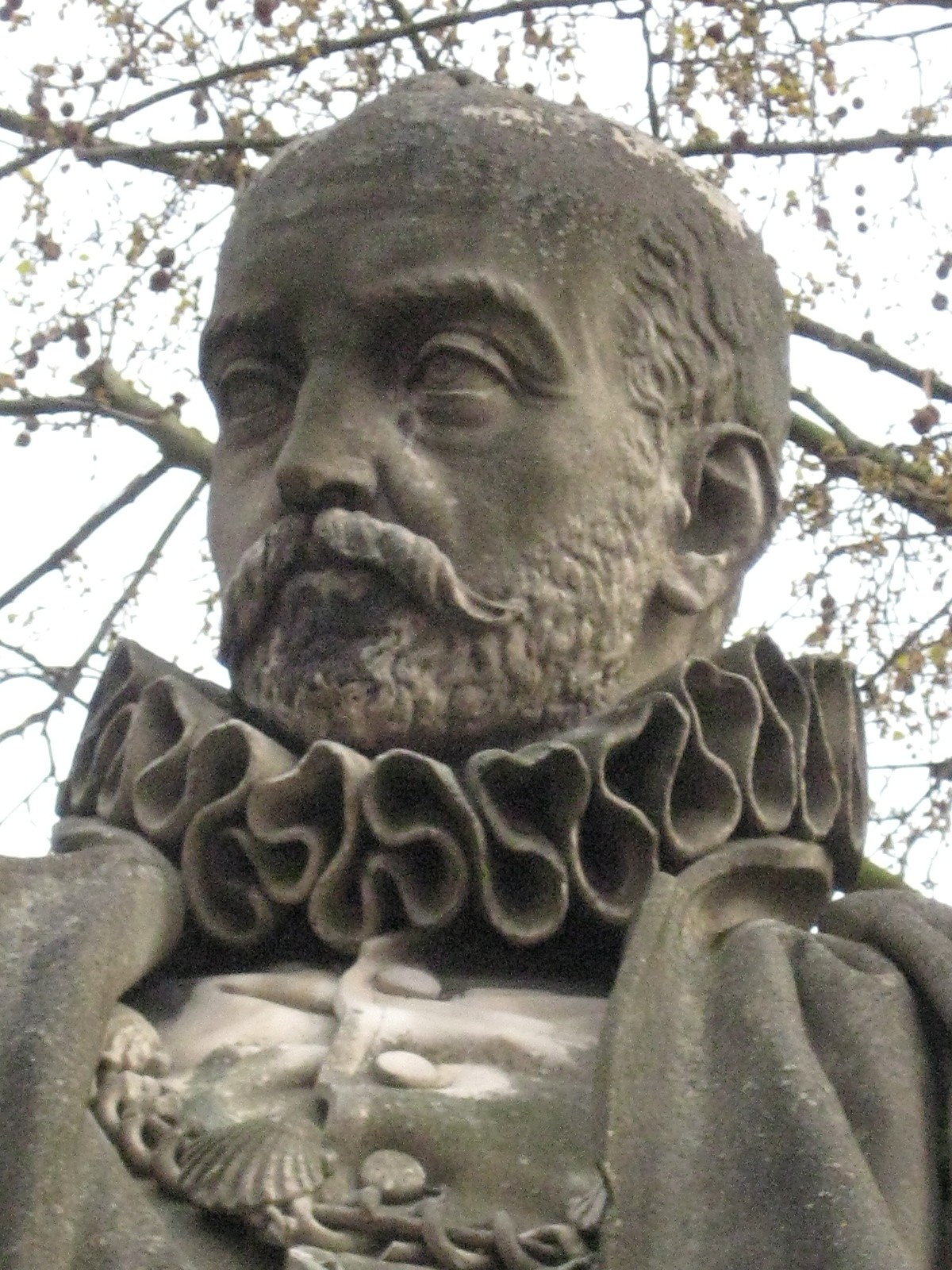
The Feast

I’ve just started reading some Montaigne. He seems a splendid chap, not least as you can get to know him so well through his 1000+ pages of observations on the profound, trivial and mundane. As Wikipedia has it “Montaigne’s stated goal in his [Essays] is to describe man, and especially himself, with utter frankness. He finds the great variety and volatility of human nature (not least his own) to be its most basic feature.”

I’ve temporarily closed the book on Kierkegaard. I’ve certainly enjoyed him, for all his inherently untestable and unprovable ‘leaps of faith’, his requirement for ‘innerness’ and his argument for the complete subjectivity of existence. By comparison the great humanist Montaigne promises to be a refreshing gallop through a more worldly form of ‘existentialism’ – living and documenting a unique and full life.

Whilst out riding one day in his mid thirties, Montaigne had a near death experience. He was badly crushed by another man’s horse. The episode apparently convinced him that death wasn’t worth planning for, or agonising over. Everything you need for the ‘big day’ is already given to you by nature, be you philosopher or peasant. He concluded you never truly ‘meet’ death anyway, as his experience suggested you’re likely to be semi-detached in gentle delirium on the day itself. Stop thinking about it, and get on with living, was his post accident conclusion.

The worlds first ‘essai-ist’ or ‘trier-outer’ in French, Montaigne wrote on everything. Giving up the responsibility to analyse, sense-make or edit, he just wrote about what struck him. A sixteenth century Stephen Fry.

Many have described encountering Montaigne as meeting and making a ‘friend for life’. He is so open, transparent and eclectic, we can all see in him the meandering of our own minds. Mid-way through his life he packed in ‘objectivism’ and seeking to transcend the human condition and got on with the ‘subjectivism’ of living. 

On death, as Seneca had largely observed a millennium before him, Montaigne advises in his essay: That to philosophise is to learn to die:

“Wherever your life ends, it is all there. The utility of living consists not in the length of days, but in the use of time; a man may have lived long, and yet lived but a little. Make use of time while it is present with you. It depends upon your will, and not upon the number of days, to have a sufficient length of life.”

He says at the start of the essay:

“Let the philosophers say what they will, the main thing at which we all aim, even in virtue itself, is pleasure. It amuses me to rattle in their ears this word.”

His advice, encouragement and goad for living is:

“Why not depart from life as a sated guest from a feast?”

Why not indeed. I suspect Montaigne will turn out to be a lively and engaging companion for my next gallop.

Obituary

We had another big leaving do at work this week. Hard to do justice to over 30 years (by my rough estimate 8,000 or so working days) of a person’s working life in 15 minutes of speeches, but it felt a bit flat all told.

A friend of mine I spoke to at the event, put me onto the ‘QI Book of the Dead’ before Christmas. Several dozen great men and women, of all times and places, types and backgrounds. From Ghengis Khan to Henry Ford, Florence Nightingale to Emma, Lady Hamilton (left). They are a remarkable bunch. It’s an easy and enjoyable read. I won’t spoil its many surprises here. But three things stood out for me:

1) You absolutely can’t write your own epitaph

2) Many of the most famous and powerful people died in disgrace, despair or destitution – but often didn’t care so much about it in the end.

3) Most of the thinkers we revere today were completely ignored in their own lifetimes.

It summed up for me to: enjoy the day, follow your passions, have fun, and, if any of it is remembered, it probably won’t be what you expected. I think I’ll let go of my obituary, it won’t be me who writes it – either in work or life.

Today

I heard Simon Armitage read his poem ‘Knowing what we know now’ on the Today Programme on Radio 4 on Wednesday. It features an Elf who makes the offer of turning the clock back to a man who is 44 – exactly half-way to the end of his life. It has a twist in its tale which I didn’t welcome but it certainly set me thinking. 

As I’ve written before it’s increasingly likely that I’m at, or close to, what Armitage’s elf calls the ‘tipping point’ – the half way mark. On Saturday morning in an unconnected thought I put it to myself, what am I going to do that will be memorable today? Cue 3 year old. I spent 3 hours doing 3 miles and 3 parks on a scooter with my son. We had great fun on what could otherwise have been a grey day. I love that boy.

Pondering it this evening, I thought to myself; what would be different if I counted life more often in days, not halves or years? Tapping 365 into a calculator, I realised that in the last year or so I’ve passed the milestone of living over 15,000 days. It’s a bit like when all the 9s turn over on another 10,000 on your car milage. That’s a lot of days. And since I reckon I have a reasonable hope of living another 15,000 that’s a lot of great days if I make them so.

And this reminded me of Seneca’s: ‘On the shortness of life‘. At the start he gently criticises Aristotle for bemoaning that nature has given man such a short span of life, for our many and great achievements, when animals have so long for so little. Seneca disagrees:

‘It is not that we have a short space of time, but that we waste so much of it.’

I listened to a very experienced and senior person describe his career on Friday. He had many thought-provoking things to say. But the one that stuck the most for me was a comparatively obvious one; you’ll spend more time working than doing anything else so make sure you do something you enjoy. He used the word ‘fun’ all the time to describe his work – great, enormous, tremendous… fun. Not a word I use anywhere near enough describe my working life.

And that is the thing I’ve been thinking about this weekend: enjoyment, fun and spontaneity. Thinking I’m half way to death makes me sombre and cerebral. Thinking I’ve got another 40 years, and probably another 20 odd of work, makes me think about my career and mortgage and school fees. Thinking I’ve got another 15,000 days makes me think about today – what’s going to be today’s highlight, what’s going to be today’s memory, what’s going to be today’s fun. 

As Seneca has it, the philosopher makes his life long by recollecting the past, using the present and anticipating the future. The most important of these for me though is remembering to have fun – today. 

Playing to win

I’ve been thinking recently about how to ‘be’ at work. Not everything – or everyone – is easy to get along with. Working life has many pressures and frustrations. I’ve often worked too long or too hard in my working life and sometimes got cross, spiky and brittle because of it. So looking after myself better has been part of learning to survive in bigger jobs. But surviving isn’t good enough. Thriving is what I’m after.

One potential solution to overstretch and indignity is Stoicism. It’s certainly better than ‘passive aggression’, or another past favourite of mine ‘victim behaviour’. Stoicism gives you a handy detachment and a heightened ability to endure and ‘not take things personally’. That’s a good ingredient to have in my mix, but it’s not in itself very attractive – enduring is not leading.

So how about ‘attracting’. On my better days I can definitely attract people with concepts and ideas. On my very best days I can stir a bit of passion too. But mostly I’ve been reticent to put myself at the centre of situations or ‘put my chair in the centre of the room’ as a friend of mine puts it. Partly this is fear of everyone looking at me. Partly this is the fear of friends ‘jeering’. Not much of my attraction to attraction is narcissism, but I do like to be liked.

I was reading bits of the Illiad and Odyssey last night and seeing what Achilles would have done. Achilles is the ultimate action hero. In modern managementspeak he’d be a strong ‘shaper’ and ‘personal performer’. He was passionate and incredibly driven, but he was also selfish, undermining and reckless. He was playing for himself not for the team. But he was a hero and he did make and change history.

As Odysseus said to the ghost of Achilles when he encountered him in Hades:

“There is not a man in the world more blessed than you – there never has been, never will be one. Time was, when you were alive, we honoured you as a god, and now down here I see you lord it over the dead in all your power. So grieve no more at dying, great Achilles.”

But in return Achilles protested:

“No winning words about death to me, shining Odysseus! By god, I’d rather slave on earth for another man – some dirt-poor tenant farmer who scrapes to keep alive – than rule down here over all the breathless dead.”

Achilles was a great talent, but he played for himself. He burned brightly, briefly. Then he was spent, and died carrying regret. Had he been a Stoic he would never have risen to the anger and fury which propelled him into history. But would he have been more contented in Hades had he stuck around and achieved more with – and for – others?

I will read more about Odysseus – or Ulysees. On first glance, he has a winning combination of courage, guile, teamwork and sustained leadership under pressure. He played to win for the team and the cause, not just for himself.

I re-read a useful piece of research today, which concluded:

“Leaders would do well to use the energy they have to attract people to the vision and purpose of the organisation, rather than themselves. The challenge is to have the organisation’s purpose ‘in your bones’.”

This crystallises the advice I’ve been following recently to consciously put the organisation’s “cause” at the heart of my choices and narrative. I’ve already found it gives me more courage and conviction to do the right things.

‘Playing to win’ means not being reckless, selfish, impatient, kamikaze, intemperate, self-indulgent, defensive or fearful. It means constantly re-focusing myself and those around me on doing better what everyone who works here – on our best days – believes in.

Why? Because what we do really does change people’s lives. And what I do has and can change the organisation greatly. So unlike Achilles, I should use that power for good not for myself.