
Exocets

I texted the person I’m slowly turning into late last night:

“Phew wee – a really stretching week… grievances, gross misconduct, controversial and risky things to land before Xmas and much change being imposed.”

“I suspect like you at a similar stage – I am strangely both deeply affected and also somewhat distant in my reaction to all this – it matters and it affects me; but much of it is not my doing and not in my gift to change.”

“A dawning of a more realistic sense of personal responsibility and the limits thereof?”

Maybe so.

I also have fought off the desire to compete, undermine and fight back in the face of many provocations these last weeks. And this is a lesson well learned…

As I also admitted to my pal:

“One of the bigger lessons of recent years was that firing two Exocets into an adversary’s hull damaged me below the waterline more surely than it did them.”

It has been hard; but I’ve largely managed to let go of a week of days packed without pause with relentless interpersonal aggro.

As I sit here listening to happy tunes in the school carpark (having chosen to save my eldest from a cold walk home from dancing) I have refound my equilibrium, equanimity – and the all important inner peace.

It gets the blood up; but Exocets just aren’t worth firing.

The swift flight of a single sparrow

After a couple of weeks of solid change – new house, new office, new term, new school year – I wrote to my old philosophy tutor the other evening.

He has written extensively on the ‘Episodic Life’ – a view that life as a story (the ‘Narrative Life’) isn’t actually how some people experience events; and may actually be something of a self-limiting straitjacket.

I’ve certainly found that a bit of letting go (à la Buddhism) and a bit of consciously setting out to enjoy new ‘episodes’ in life has got me through the last hectic fortnight. In fact I’ve quite enjoyed it!

Here’s what I wrote:

“After much denial I’m coming to the view there’s a lot to be said for the ‘episodic’ life. If Heidegger is right (and I think he is) that we wander as a tiny candle flame briefly through a dark, largely empty and uninterested universe – then why wouldn’t you see what every day on Gaia brings, and let the universe serve you up the answers for what fun to have next.

I’m starting think there’s a spot of hubris in my previous attachment to the ‘narrative’ life. A lot happened before us, little we do really affects the myriad lives and physical processes around us and we’ll all be gone before you know it.

I still think Aristotle’s fundamentally right; happiness is a life well lived – but maybe a slightly more eclectic approach to the journey might save me the angst of Kierkegaard and the earnestness of Bentham and Mill.

Keep writing Galen – I’ll catch up with your beautiful mind one day!”

And here’s what he wrote back – it’s rather lovely:

Thanks John. Heidegger … sounds like the Venerable Bede.

The Venerable Bede (c. 673-735) records the story of King Edwin of Northumberland at the hands of the missionary bishop Paulinus.

Edwin was willing to hear the preaching of Paulinus and to convert at once, but he called together a meeting of his council of elders, which included his pagan high priest, Coifi. Paulinus presented the gospel to him, and one of the chief advisors replied with this observation:

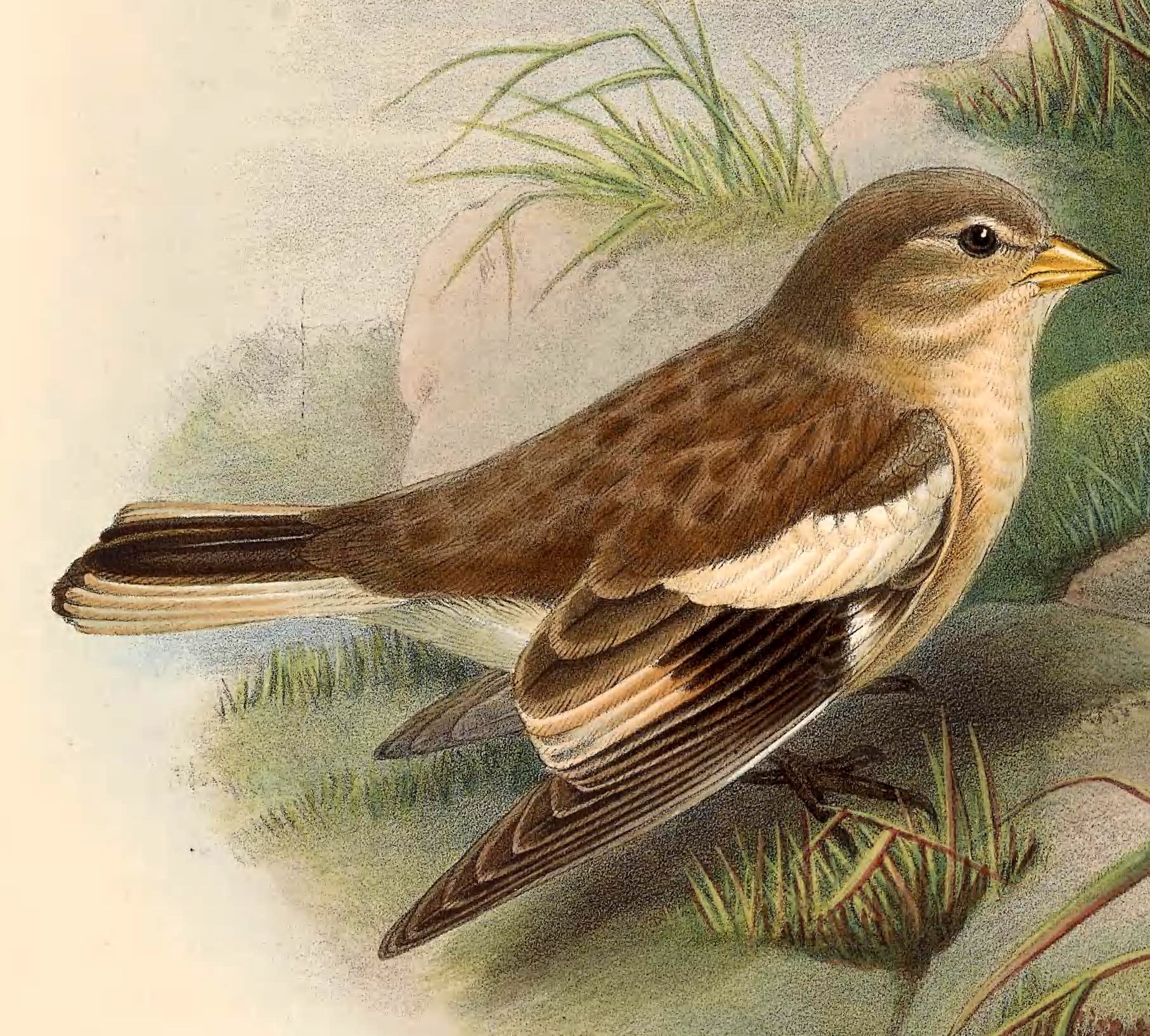
“Your Majesty, when we compare the present life of man on earth with that time of which we have no knowledge, it seems to me like the swift flight of a single sparrow through the banqueting-hall where you are sitting at dinner on a winter’s day with your thegns and counsellors.

In the midst there is a comforting fire to warm the hall; outside the storms of winter rain or snow are raging. This sparrow flies swiftly in through one door of the hall, and out through another. While he is inside, he is safe from the winter storms; but after a moment of comfort, he vanishes from sight into the wintry world from which he came.

Even so, man appears on earth for a little while; but of what went before this life or of what follows, we know nothing.” 

Here’s an article on the ‘Episodic Life’:

https://aeon.co/essays/let-s-ditch-the-dangerous-idea-that-life-is-a-story

Smorgasbord 

Bank Holiday view; spot the nuclear power station… oops.

Feeling a little jaded today after a late night and a long drive back from the Welsh borders – I’m not much looking forward to work tomorrow.

How fortunate to stumble across this rather super smorgasbord of eleven answers to the question: ‘how to live?’ by Carolyn Gregiore from the Huffington Post in 2013. It was rattling about in the inbox I’m slowly tidying.

Get a good night’s sleep is the only other advice that’s missing, I’ll make sure I will tonight.

Aristotle (at number one appropriately…) 

“Happiness is the meaning and the purpose of life, the whole aim and end of human existence,” Aristotle wrote.

The ancient Greek philosopher came up with one of the most famous definitions of happiness, eudaimonia, or human flourishing. By this theory of self-actualization, personal well-being and happiness are the highest goals that we can strive for.

Martin Heidegger

For German phenomenologist Martin Heidegger, a good life could was not possible unless you were living authentically, directing your life on your own terms, rather than following the blueprints set by others.

“Anyone can achieve their fullest potential, who we are might be predetermined, but the path we follow is always of our own choosing,” sais Heidegger. “We should never allow our fears or the expectations of others to set the frontiers of our destiny.”

Jean-Paul Sartre

Sarte may have been most famous for saying “Hell is other people,” but the French existentialist thinker also had some keen insights on happiness and the meaning of human existence. Freedom, he said, was the highest goal we could aspire to.

“Freedom is what you do with what’s been done to you,” said Sartre.

Ralph Waldo Emerson

To Emerson, the early American Transcendentalist thinker, taking each day in stride — as unburdened as possible by worries about the past and future — was the best route to a life well-lived.

“Finish each day and be done with it. You have done what you could; some blunders and absurdities have crept in; forget them as soon as you can,” said Emerson. “Tomorrow is a new day; you shall begin it serenely and with too high a spirit to be encumbered with your old nonsense.”

Albert Camus

For French existential philosopher and novelist, over-thinking and over-analyzing can make us miss the moment.

“You will never be happy if you continue to search for what happiness consists of,” said Camus. “You will never live if you are looking for the meaning of life.”

Epicurus

“Of all the means to insure happiness throughout the whole life, by far the most important is the acquisition of friends,” said the Hellenic philosopher Epicurus.

The Athenian philosopher believed that friendship, more than anything else, contributed to the development of a healthy and fulfilling life. He lived this notion in his own life, creating a school called “The Garden,” where he and his followers studied philosophy together in a close-knit community.

Friedrich Nietzsche

Nietzsche may have been a nihilist, but he still believed that there was one thing that truly made life worth living: The creation and enjoyment of art. Nietzsche was particularly fond of music, and loved to go see the operas of his German contemporary Richard Wagner (As he wrote, “Without music, life would be a mistake.”)

He also said, “We should consider every day lost on which we have not danced at least once.”

William James

American psychologist and philosopher William James coined the term “will to believe” to refer to way that we are able to choose our attitudes and beliefs — and in doing so, change our lives.

“Be not afraid of life,” James wrote. “Believe that life is worth living, and your belief will help create the fact.”

Simone de Beauvoir

Feminist thinker Simone de Beauvoir — the longtime partner of Jean-Paul Sartre — believed that caring for others was what gave life meaning.

“One’s life has value so long as one attributes value to the life of others, by means of love, friendship, and compassion,” she wrote.

Thomas Merton

American Catholic thinker and mystic Thomas Merton believed that we could all find happiness — if only we looked to our inner wisdom.

“We have what we seek,” said Merton. “It is there all the time, and if we slow down and be still, it will make itself known to us.”

Marcus Tullius Cicero

For the Roman philosopher and politician Cicero, cultivating the intellect was essential to the good life. He once said that all you need in life is a garden and a library, and many times waxed poetic about his love of reading.

“Read at every wait; read at all hours; read within leisure; read in times of labor; read as one goes in; read as one goest out,” said Cicero. “The task of the educated mind is simply put: read to lead.”

Confrontation and Compassion

Compassion came up a number of times this week – on Tuesday in the context of confrontation; and yesterday as a way to run an entire organisation. Of course the Dalai Lama and Archbishop Desmond Tutu would argue (in the book I’m reading below) that compassion is what we should use to run the entire world.

Back to confrontation through – a colleague of mine was arguing for a ‘public hanging’ to show that the behaviour of some people will no longer be tolerated. I said I felt not; I was accused of appeasement. 

That stung a bit, but my considered counter was: when I’ve ‘gone to war’ with people at work all manner of ills have followed – for me, them and everyone around us. 

So I offered what The Book of Joy suggests instead:

“There is an important distinction between forgiveness and simply allowing others’ wrongdoing. Sometimes people misunderstand and think forgiveness means you accept or approve of wrongdoing. No, this is not the case. We must make an important distinction.” The Dalai Lama was speaking emphatically, striking on hand against the other. “The actor and the action, or the person and what he has done. Where the wrong action is concerned, it may be necessary to take appropriate counteraction to stop it. Towards the actor, or the person, however you can choose not to develop anger and hatred. This is where the power of forgiveness lies – not losing sight of the humanity of the person while responding to the wrong with clarity and firmness. 

This is easier to say than do – both ways. I sometimes find it hard to respond quickly to a ‘wrong’ with ‘clarity and firmness’ without drawing on anger; and once the incident has passed, it feels like I’ve missed the moment and the best thing is probably to move on. But the Dalai Lama invites me to do better: 

“We stand firm against the wrong not only to protect those who are being harmed but also to protect the person who is harming others, because eventually they, too, will suffer. So it’s out of a sense of concern for their own long term well-being that we stop their wrongdoing… We do not let anger and negative feelings develop, but we strongly oppose their actions.”

Desmond Tutu sets out the personal benefit of forgiveness, which I buy completely and have experienced fully in recent years: 

“Forgiveness is the only way to heal ourselves and be free from the past. Without forgiveness, we remain tethered to the person who harmed us. We are bound to the chains of bitterness, tied together, trapped. Until we can forgive the person who harmed us, that person will hold the keys to our happiness, that person will be our jailor. When we forgive, we take back control of our own fate and feelings. We become our own liberator.”

The Dalai Lama picks up: 

“So it is totally wrong,” he said emphatically, cutting his hand sharply through the air, “to say that practice of tolerance and practice of forgiveness are signs of weakness. Totally wrong. Hundred percent wrong. Thousand percent wrong. Forgiveness is a sign of strength.”

The Archbishop adds with a laugh: 

“Those who say forgiveness is a sign of weakness haven’t tried it.”

Forgiveness I have largely cracked. Responding to ‘wrongs’ with ‘clarity and firmness’ but without hot or cold anger… that is a work in progress.

Joy

The rather wonderful Disney kids film ‘Inside Out’ suggests the eponymous ‘Joy’ (above) represents our original childlike state. In the film, the loss of ‘Joy’ deep into the vaults of memory is the bridge to the discovery of the more complex emotions of teen and adult years. 

It’s a lovely film. From our family watching experience, it helps both kids and adults better understand their emotions and personalities.

Interesting then – at the other end of life – to read two famous eighty year olds advocating the same simple emotion. The Dalai Lama and Archbishop Desmond Tutu invite us to do better than ‘happiness’: a rather stolid state of satisfaction; and aim for ‘joy’. 

So what makes for joy? Here’s what The Book of Joy says:

Our ability to cultivate joy has not been scientifically studied as thoroughly as out ability to cultivate happiness. In 1978 psychologists Philip Brickman, Dan Coates and Ronnie Janoff-Bulman published a landmark study that found that lottery winners were not significantly happier than those who had been paralysed in an accident. From this and subsequent work came the idea that have a “set point” that determines their happiness over the course of their life. In other words, we get accustomed to any new situation and inevitably return to our general state of happiness. 

I’ve read this before and there’s good and bad in it, I think. It helps with resilience as you know you’ll get through stuff, but doesn’t lead to much hope for joy; whatever you do you’ll just default back to ‘average’ happiness… But the next para is VERY encouraging:

However, more recent research by psychologist Sonja Lyubomirsky suggests that perhaps only 50% of our happiness is determined by immutable factors like our genes or temperament, our “set point.” The other half is decided by a combination of our circumstances, over which we may have very limited control, and our attitudes and actions, over which we have a great deal of control. According to Lyubomirsky, the three factors that seem to have the greatest influence on increasing our happiness are: 

  1. Our ability to reframe our situation more positively
  2. Our ability to experience gratitude
  3. Our choice to be kind and generous

These are exactly the attitudes and actions that the Dalai Lama and the Archbishop had already mentioned as central pillars of joy.

I realise looking at them that I really started making headway on the three factors in joy in my early forties – not the least through reading and blogging. 

As the saying goes ‘life begins at forty’. Perhaps if you’re lucky the rediscovery of ‘joy’ begins too.