A Titian

20121115-223509.jpg

‘A Titian’ I exclaimed today at work and I didn’t need a handkerchief. Presented with two cover designs for a research publication, for me, there was a clear winner. Not the one with a complex assembly of people, the one with a bright red shipping container daubed with Tunisian freedom graffiti.

But why? Thanks to Titian. Last night I learned from the redoubtable Ernst Gombrich, that the great Venetian artist was the first to use colour as a prime ingredient in artistic ‘composition’.

Rather than limiting himself to the beautiful symmetry and positioning of figures which Raphael had perfected, Titian allowed himself asymmetry. But he balanced it through pure, beautiful and powerful colour – a simple flag for example balances the Pesaro Madonna above.

Thanks to Titian, I could explain why ‘red shipping container’ beat ‘protesting crowd’; powerful symmetry of content and composition achieved through colour.

I do love it when a genius from the past bursts to life in the everyday of today – right under your nose.

Lights Down

20121103-110620.jpg

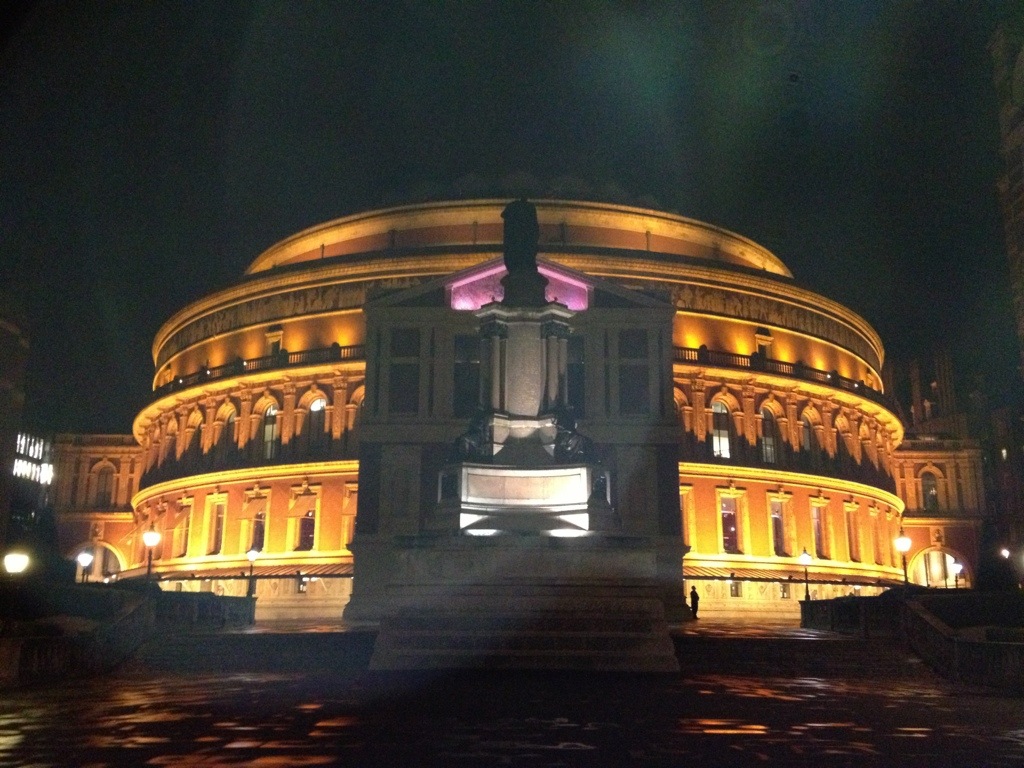
Months back – having discovered ‘relevant complexity’ in Saint Saëns Organ Symphony no 3 – I booked two tickets for the Royal Albert Hall.

After a long old week, neither me or the missus fancied it much. I tried to offload the tickets to my folks – nothing doing. So I asked my daughter if she wanted to go? ‘Why yes’ she said brightly.

Pace 6pm. And smartly dressed, armed with a bag of sweets, we set off. After a nice vanilla ice, we took our seats and had a good look at the splendid scene. Huge dome, red plush, gold fittings – and the enormous great organ which massively towers at one end of the Royal Albert Hall.

We reckoned that organ was about the size of our house; the illuminated organ ‘loft’ about the size of her bedroom. But a good deal tidier I pointed out to her; and a good job too or the organist would never find his music. She was not amused.

Then lights down, orchestra in, conductor up and away we went. Berlioz to get the players warmed up, then onto Saint Saëns. But my little one was nodding. A pale face, tired eyes, fiddling with her little shoulder purse – she was knackered.

A whisper: ‘How long to the organ?’ 12 minutes I said. A minute later ‘how long to the organ Dad?’ Five minutes I lied. Five minutes later: ‘how long to the organ?’ Two minutes I gestured silently.

And her eyes gently closed and she was asleep. Moments later BAHHHM! And the roof of the Albert Hall nearly blew off. Her eyes snapped open. ‘That’s the organ’ I said.

She stared wide eyed. And then the lead in her eyelids weighed them down again. And silently she slept through one of the loudest crescendos – on one of the largest organs in the world. Just a twitch of her brow at the final booming finale which made your tripes vibrate.

Proud of her. She did great. A memorable night out and a good chuckle. We were both shattered. But sometimes you have to dig deep to get the best from life. A night out with my big brave girl was a performance I’ll remember forever.

Arts and Draughts

20121027-140045.jpg

I found myself talking Art – with a nice bloke I’ve never met before – in the pub this week. It was at a leaving do for my other half.

Neither of us look like gallery buffs. But a happy coincidence of amateur enthusiasm for the painterly arts, meant two slightly awkward men – with ostensibly nothing in common – had a surprising bond.

He told me about a couple of lectures he’d been to at the National Gallery: what’s hidden in Turner’s boats and skies, what’s interesting about (two painters neither of us usually find remotely interesting) Gainsborough and Reynolds.

I told him about ‘Barge haulers on the Volga‘ and the problems of perspective for Renaissance composition (realism can really get in the way of symbolism – see Uccello navigating the transition from Medieval to modern above).

We finished on intrigue and alchemy in Nineteenth century porcelain (him) and the challenges of making colours and the discovery of new blues (me, him and Monet).

A cracking natter. We could’ve done footy – he offered me Everton FC early on. But something about him (chair of his local synagogue, England Rugby shirt, a bald head and long grey curls) made me venture portraiture.

I’m so glad I did. Csikszentmihalyi’s ‘flow’ in action.

Crystal Ball

20121020-131406.jpg

What if the purpose of memory is not to remember things?

We generally judge our memory on accuracy and completeness – and we are generally disappointed. Memory is jumbled, retouched and unreliable as a definitive record of the past. But a recent New Scientist suggests perhaps that’s because remembering is not what it’s for.

Thinking in evolutionary terms, what use is a perfect record of your entire past on the Serengeti plains? Not much. There would have been precious little time for introspection with four-legged food to chase and four-legged death to avoid. Not to mention increasingly cunning two-legged competition alongside.

Memory must have conferred a survival advantage – so it seems reasonable to think it developed from what other mammals probably have: recall of close shaves, sources of food and – if elephants are anything to go by – key life events: births, deaths and marriages.

And this is why dates get jumbled, memories get intertwined and autobiographical narratives develop in our heads – to guide us on what to do next, not produce a perfect historical record. Memory exists to better predict and guide our future.

Memory tells us who to trust, how to act and what might happen. Yes it’s flawed by inductive logic. Past performance is stricto sensu no guide to the future. But we remember what we need to remember – what’s useful for our future.

This difference in purpose is the big difference between computer memory and ours. Ours is constantly shuffled, refined and selected for its Bayesian predictive power, not its precision.

No wonder it’s sometimes cloudy; human memory isn’t a time capsule, it’s our crystal ball.

A Dog’s Life

20121014-181909.jpg

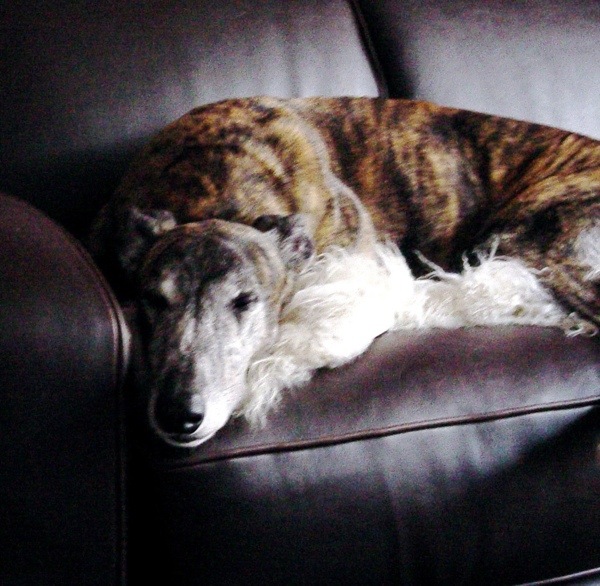
I’ve just finished ‘In Defence of Dogs’, a fascinating book on the evolution and psychology of our four-legged friends. Packed with insights, perhaps the most important is: they’re not half as complicated as we think they are.

That’s not to say dogs aren’t smart. But they proceed by ‘associative learning’ – always assume result b) follows directly from cause a) i.e. that which immediately preceded it.

Dogs, it seems, have no real capacity for introspection or to place events in the past – even the comparatively recent past. So shouting at them when they finally come back – or when you come back home and they’ve made a mess – just confuses them.

In the dogs head it’s “Smell x, smell y, hear shout from owner, bark, sniff, run around, bark, wag, return to owner – get shouted at.” The only associative learning possible from this is ‘Sometimes when I return to my owner I get shouted at.’

Dog owners project the full gamut of human emotions onto their dogs – guilt first and foremost. I did, Charles Darwin did, every dog owner does. But in fact there is no evidence dogs can feel guilt or can learn from it.

But they are hugely sensitive to humans and very attuned to us. So they can certainly tell when we’re not happy with them. What they can’t tell is why, unless it’s for the very last thing they did.

The capacity to appear ‘smart ‘ whilst lacking complex cognition is not a bad thing to have in mind for young kids too. We easily assume kids have fully featured introspection, a ‘theory of mind’ and the ability to think ahead. But a focus on the immediate and simple ‘associative learning’ is undoubtedly a big part of how kids are too.

My supersmart 8 year old daughter – on getting out of the bath last week – said: “Daddy, it seems to me that other people aren’t always thinking the same things that I am thinking.” “Indeed.” I said. “So how can I tell what other people are thinking” she asked? “That, my love”, I replied ruefully, “is the entire complexity of human life.”

On one level, it’s a bit sad to learn dogs can’t do complex emotions. It makes them seem a bit simple. But there is overwhelming evidence that dogs can – and do – do ‘happy’, ‘sad’ and most of all ‘love’.

And they reserve their deepest, most unconditional love for us – humans of all shapes and sizes, personalities and temperaments, faults and failings – their owners.

It’s a dogs life being scolded for stuff you can’t remember or understand. But what ‘In Defence of Dogs’ establishes beyond doubt is; we towering two-legged creatures are the centre of their world. We should aim to love them as much as they love us.