Sat on my Ass

20120613-201348.jpg

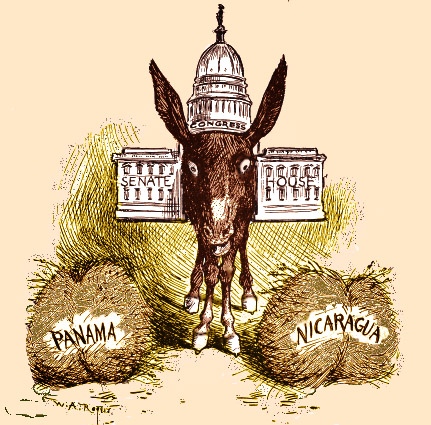
Buridan’s Ass is a famous thought experiment which features a perfectly rational ass rationally stuck between two equally attractive alternatives.

Tragically equidistant between hay and water, the ass lies down to quietly die – as it would be irrational to pursue either over the other.

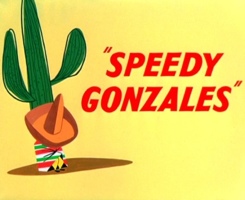
At work I’m more Speedy Gonzales than Buriden’s Ass at times. And at my worst Wile E. Coyote – hatching complex schemes for simple problems.

I’m often at my best when I slow down a bit. As I wrote today:

20120613-201721.jpgBetter sometimes to lie down between, than run needlessly and heedlessly between both seeking a carrot.

Perhaps I should treat myself to the odd sit down.

Conspiracy

20120606-211502.jpg

I spent last week wrestling other people’s demons. Could it be there isn’t a conspiracy? Could it be it’s not all about you? Why do we all jump so readily to self-centred conclusions?

In fact it’s a perfectly reasonable thing to do. The human version of Occam’s Razor – the simplest theory is generally the best; people are indeed out to get you…

Or at least that’s what two thirds of our brain thinks. The brain stem and limbic systems react instinctively and emotionally – mostly to protect us. The poor old neo-cortex has its job cut out to plod to a slow deliberate alternative. And a good thing too for most of human history.

But we are made for finer things these days. The ‘love of thought’ has been an organised pursuit for at least 3000 years and language for much longer. So hats off to W.V.O. Quine for expressing so perfectly how our rational brains work:

“We adopt, at least insofar as we are reasonable, the simplest conceptual scheme into which the disorganised fragments of raw experience can be fitted and arranged.” From a logical point of view (1953)

It’s still instinctive and still guesswork, but at least we think it’s rational…

And that’s why we jump to conclusions. The human animal is wired to discern intent, develop belief and divine agency; even when it’s not there. It’s the simplest way to ‘fit and arrange’ those disorganised ‘fragments of experience’.

It’s happening to me, so it must be about me – except most of the time it isn’t. And Quine’s gimlet eye above invites us to take that thought very seriously.

Life and soul of the party

20120512-111900.jpg

As something of an introvert, polite company comes best for me in modest doses. Not that I can’t be the life and soul of the party. Just that there’s a finite amount of it I can do. Once my reserves are exhausted, I switch off and get very tired.

Amusing to be interrupted in animated conversation with a friend babysitting for us last night – as we headed off to a worthy house party. The missus pointed out I only have so much sociability, so perhaps best not waste it all before we’ve even got out the door.

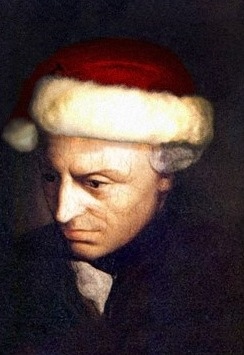
Still I could be worse. I read today that the famously cerebral Immanuel Kant’s biographer noted:

The brilliant recluse preferred to walk alone for a very particular reason: ‘he wished to breathe exclusively through his nostrils; which he could not do if he were obliged continually to open his mouth in conversation’.

Kant argue with that.

Narrative or Episodic

20120423-220507.jpg

I like (as do many others) the notion of lives as narratives. Interesting then to read a contrary view from my old philosophy tutor Galen Strawson – Against Narrativity.

He poses the question: is there really that much evidence that we are narrative beings? And if not, is it really so desirable – in terms of living a good life – that we seek to be?

What’s wrong with enjoying life as a smorgasbord of varied experiences and events. Does it all have to submit to the tyranny of a unifying narrative?

I was talking about this today. And as so often when you pick-up on something new – it then pops up everywhere. In my inbox this evening I find good old Montaigne on the same subject:

Our chiefest sufficiency is to know how to apply ourselves to divers employments. ‘Tis to be, but not to live, to keep a man’s self tied and bound by necessity to one only course; those are the bravest souls that have in them the most variety and pliancy. Of this here is an honourable testimony of the elder Cato:

“His parts were so pliable to all uses, that one would say he had been born only to that which he was doing.” Livy, xxxix. 49.

I do like the sense of a personal narrative. It helps make sense of it all. And along with the ‘can I look myself in the mirror test’ it keeps me on the right and proper path. But a sense of narrative shouldn’t be to the exclusion of Montaigne’s ‘divers employments’ and mixing it up a bit.

As my old tutor points out, a narrative can be both self-limiting and then dangerously self-fulfilling. Variety is the spice of life – and you only get one shot at it.
Death Becomes Us

20120419-085621.jpg

I’m reading the ‘Death’ edition of the redoubtable Philosophy Now magazine. And a bone-rattlingly good read it is too. Death dissected through metaphor, thought experiments, cool logic and rational argument.

The core issue, this issue: as medical technology advances should we prepare for immortality or stick with three score and ten? Imagine a typical lifetime of 300 years, the necessary absence of children, the ceaseless marinating in one’s own juices.

As always with philosophy there are no easy answers, but plenty of better ways of thinking about the problem. I remember reading the last half chapter of Julian Barnes ‘A history of the world in 10 1/2 chapters‘ at university as suggested by my philosophy tutor.

It perfectly captures the problem of eternal life – and heaven. Once you’ve had sex with everyone, studied and discussed everything, got your golf handicap down to a straight 18 (‘holes in one’ all the way round) and scared yourself at the ‘Hell’ theme park, what’s left to do.

Easy to say with the expectation of a good few years ahead, but I’m with Aquinas – the human animal makes no sense outside or beyond nature’s limits. Philosophy has always wrestled with it, but ‘death becomes us’.

As Seneca said its not so much the shortness of life, it’s not properly filling it, which is the tragedy.