Bureaucratic Mirroring

I was interviewed by someone this week who was desperate to find a conspiracy theory. There isn’t one. But she was frustrated. After the interview I described to her the theory of ‘Bureaucratic Mirroring’.
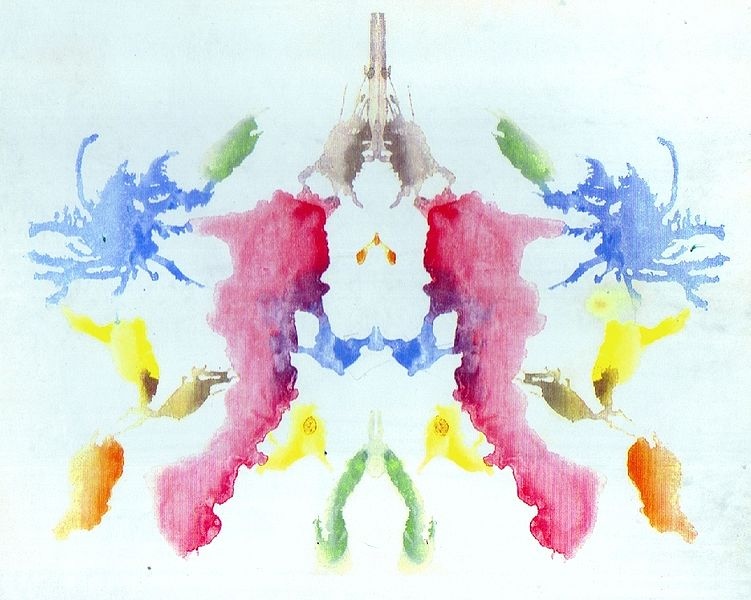
This is the institutional pathology that, even though rationally, people know it’s madness, they can’t escape the subconscious belief that their adversary has the same organisation and structures as they do.

Allegedly a feature of the Cold War, spoofed by Dr Strangelove, the Americans have also been accused of it post 9/11, gearing up for Al Qaeda as though Osama bin Laden had a situation room and Central Command in a bunker under Tora Bora. Bureaucratic Mirroring means you can’t imagine your enemy as other than yourself.

And this came up in conversation over lunch today. We all carry a world-view, a cultural frame of reference and our own personal form of ‘Bureaucratic Mirroring’, assuming others are as we are.

Cosmopolitanism says it ain’t so, we’re all different. Which means letting go of our prejudices and assumptions – as much of any of us can – is vital to escaping our own bunker.

Rope-a-Dope

A friend and I were discussing the relative merits of, in boxing parlance, ‘keeping your guard up’.

In cricket, a careful guard would be a predisposition towards defence – the style of the opening batsman. Endure and accumulate, rather than the flashing blade of the middle order cavalier. It takes discipline and concentration.

Of course whether a boxer or a batsman, defence is only half the job. You have to land or hit a few too. But a hopeful swing in either can cost you your wicket or your teeth. The point of our conversation was how emotionally ‘open’ to be to others. Guard up or guard down?

I think, generally, I’m pretty emotionally open these days. The upside is pleasant surprises, new friends and enriching moments. The downside is the body shots, low blows and bruises of being hit with other people’s emotional angst.

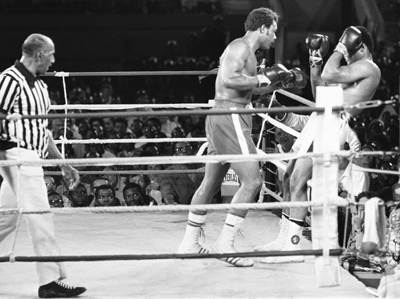
At times this week I’ve felt like Muhammed Ali in the ‘Rumble in the Jungle’ – soaking up head and body shots. There have been occasions for a positive flurry of revelation, knowledge and ideas. But lots of questioning, buffeting and absorbing the needs of others.

Too much ‘Rope a Dope’ cost Ali his gilded tongue and electric wit – knocked clean out of him. Emotional shots take it out of me too, perhaps I should keep my guard up just a fraction more.

Affiliation

Troubling news (for me) from the latest in cod psychology last week, as I discover I am low on ‘Affiliation’. It transpires that although my beliefs and values place people in great esteem, my ‘revealed’ self can sometimes take them or leave them. Ouch!

For some reason that hurts. A workplace survey is to blame. Sure ‘we are what we repeatedly do’, and as someone said to me about five years ago ‘behaviour is my saviour’. But to discover I’m more motivated by ‘achievement’ and worst of all ‘power’ has really naffed me off.

Still, if the truth hurts, maybe it’s still worth knowing. I put a lot of effort into people at work and sometimes I get little back. I also tire myself out listening to other people’s problems and frequently ‘go round the houses’ to avoid ‘imposing’ or ‘forcing the issue’. Perhaps there’s something to be said for ‘route one’ and just getting it done. I know my own mind and sometimes I should just speak it. I used to.

On a work trip today I was pleasant and engaged. But I did three things I wouldn’t have pre my latest ‘test results’. First, I stopped myself from sending an email afterwards saying everything was great, because some of it wasn’t. Second, I ruthlessly deployed a friend’s trick of navigating a busy station by staring fixedly at the floor ten feet ahead. Miraculously people part like the Red Sea, the opposite of what happens if you make ‘Affiliative’ eye contact. And third I’ve just ignored a taxi driver who obviously was up for a natter (which I wasn’t) by sitting quietly tapping this on my iPhone.

Selfish? Maybe. But perhaps I’ve been giving too much of myself too heedlessly. The beneficiaries of this lapse in ‘Affiliation’? My family, who will get Dad in good time and with batteries a bit more charged. Not bad given the early start.

I’m still smarting from the test, but perhaps the diagnosis is right. It seems good ‘Affiliation’ for me is using my ‘people energy’ more wisely – with the people who matter the most.

The Art of Friendship

I listened to a Philosophy Bites podcast this week on the topic of ‘friendship’. It made me think afresh about the balance of ‘duties to all’ versus special treatment for a ‘selected few’ – i.e. our friends.

Alexander Nehamas’ argument is, post Immanuel Kant, many of us have come to believe that privileging our friends over others is less ‘moral’ than treating everyone the same – even strangers and people we’ll never meet. This is Kant’s Categorical Imperative, act in ways you would ‘will’ to be universal laws.

But friends are different than everyone else in our lives. For Aristotle – although he might not recognise the modern version – friends are the purpose of life and our virtue revolves around them.

Nehemas’ suggestion is we should think of friends on different plane than ethics. We should think of them more as we think of art and artists. We are interested in our friends for their ‘specialness’, what is individual and distinctive about them, not for their commonalities. We are friends to co-create distinctive, memorable, pages in our life stories.

And this is why drifting apart from friends hurts them so much. Not only do we reject them as people, we turn over – even tear out – the pages of life we created with them; in favour of new friends and new pages.

This is a very different take on friends – friends as narrative growth, not past history. Is what makes us different and how we are growing what matters most in friendship; more even than what we have in common or did together in the past?

Friends as bringers of difference, individuality and new embroidery in life’s rich tapestry, is a very different way of thinking of them. ‘Individuation’, creativity and art are very different registers from ethics, equivalence and fairness. Friends as ‘works of art’ we have a hand in creating, is a nice way of looking at each other.

Language

Re-reading a chapter of Herbert McCabe’s ‘On Aquinas’ last night, the outline of a new understanding emerged from the complex conceptual haze of the ‘philosophy of language’.

Language is the means through which we transcend individual experience and share our lives, ideas and culture with others. So far so obvious – Stephen Hawking’s is a brilliant mind but without a twitch sensor and a computer voice he’d be lost to us, alone trapped in his own head.

McCabe, following Aquinas and Wittgenstein considers language as exclusively ‘public’. It exists outside and apart from the sense perceptions of people – it has to otherwise it would not work as a means of sharing understanding.

So while my ‘red’ might look and feel different to yours (although probably not that much) as soon as we name it, it ceases to be my ‘property’ and becomes a shared one. As McCabe points out, my sense perceptions are my own, but my words ‘belong’ to the English language and are public, shared and ‘intersubjective’ – i.e. most people would agree on what they mean, otherwise they wouldn’t work.

Why is this so important? Well as Aristotle said: ‘It us the mark of an educated mind to be able to entertain a thought without accepting it’.

Similarly it is the mark of an animal with language to be able to describe, contemplate and imagine actions, not simply to feel, jump and act. Without language there is no reflection, just action and reaction.

For Aristotle, Aquinas, Wittgenstein and McCabe, language is not just a fancy tail feather or ornament on human intellect – it is human intellect. Language is the difference between pure instinct and intelligence, communication and culture.

The penny has dropped for me – something I didn’t ‘get’ when I did philosophy at University. David Hume and others persuaded me that sensations come first and language just describes them. But I now reckon it’s the other way around – language marks off and frames sensations so we can contemplate them. Language is not just communicating, it’s everything.

Language also connects us across boundaries of space and time. Herbert McCabe lives on through his limpid, lively philosophical prose. Like Montaigne, you feel you know the man when you read what McCabe has written. Shrewd, perhaps a little stubborn, quick-witted, sharp – and for a monk, disarmingly worldly and funny.

As Aristotle said, we are we repeatedly do. Perhaps, also, we are what we repeatedly write – poetry, prose or philosophy.