Deep Time


Reading Neil MacGregor’s A History of the World in 100 objects, on chapter 91 I came across the concept of ‘deep time’. And deeply troubling it must have been in the 1800s; as people began to come to terms with it.

‘Deep time’, I discover, was the dawning recognition that the world was much much older than people had thought – and far less constant. Prior to ‘deep time’ the world was assumed to be capricious (hence gods) but unchanging (hence the need to pacify them).

The geneticist Steve Jones (who I’ve been fortunate to spend some time with) is quoted thus: 

The biggest transformation since the Enlightenment has been a shift in our attitude to time, the feeling time is effectively infinite, both the time that’s gone and the time that’s to come. It’s worth remembering that the summit of Everest, not long ago in the context of deep time, was at the bottom of the ocean; and some of the best fossils of whales are actually found high in the Himalayas. 

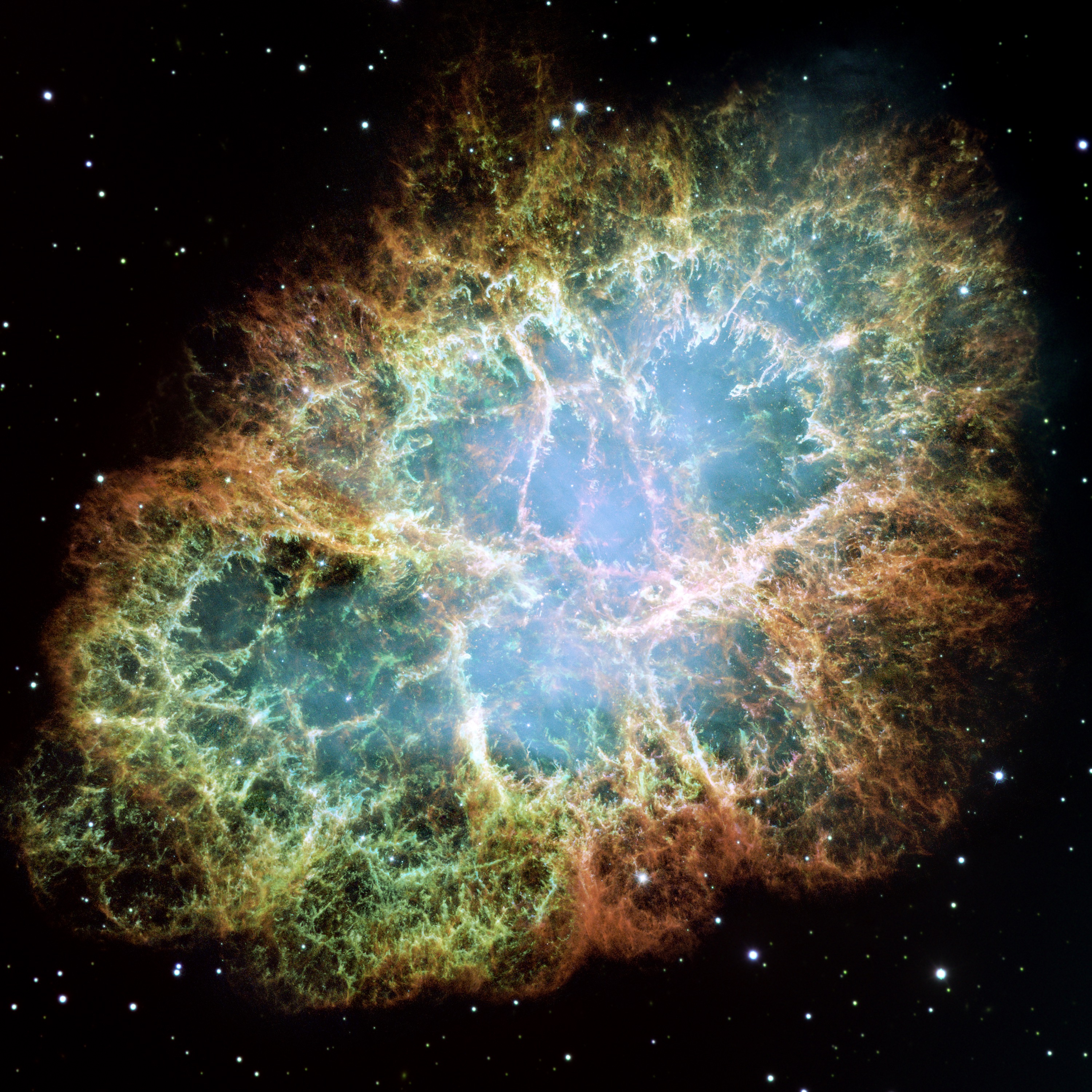
Deep time threw everything up in the air – origins, purpose and our place not just in the world; but in those unfathomably vast aeons of time and the unimaginably vast expanse of the universe. We went from the centre of everything to tiny, transient and trivial.

Faced with this reality I’ve often cheered myself up with the thought that bits of me were formed in stars. And I read somewhere once, we all have some molecules in us which were once in Julius Caesar and Napoleon. 

Nice therefore to read an entire feature in the New Scientist today, predicated on exactly this; the calcium atom formed in a star which is now in our bodies, the water in our blood which was once in a dinosaur etc. But the one which sparked my imagination was Stephen Battersby’s story of the iron ion formed in a supernova. 

I pick up the iron nucleus’s journey here, as it is spat out from the periphery of a large black hole: 

By the time our iron nucleus leaves this maelstrom, it has an energy of about 8 joules, millions of times greater than anything Earth’s Large Hadron Collider can provide. Now at about 99.9999999999999999 per cent of the speed of light. It is flung out of its native galaxy into the emptiness of intergalactic space.

As the iron nucleus wanders between galaxies, pulled this way and that by magnetic fields, its view of the universe is a strange one. At this ludicrous speed, the effects of relativity compress faint starlight from all directions into a single point dead ahead. Relativity also does strange things to time. While the nucleus is travelling, the universe around it ages by 200 million years. In another distant galaxy, Earth’s sun completes one lazy orbit of the Milky Way, dinosaurs proliferate, continents split and rejoin. But to the speeding nucleus, the whole trip takes about 10 weeks.

On the last day of its intergalactic holiday, our traveller finally approaches the Milky Way’s messy spiral. It heads towards a type G2 dwarf star, and a planet where the dinosaurs are now long dead. According to onboard time, the iron nucleus passes Pluto just 16 microseconds before it reaches Earth. When it arrives here we call it an ultra-high-energy cosmic ray.

The wispy gases of our upper atmosphere present a barrier far more challenging than anything it has encountered so far. The iron nucleus hits a nucleus of nitrogen, and the extreme energy of the collision not only obliterates both, but creates a blast of pions and muons and other subatomic particles, each with enough energy to do the same again to another nucleus, generating a shower of ionising radiation that cascades down through the atmosphere. 

Some of these particle will hit an airliner, slightly increasing the radiation dose of passengers and crew. Some may help trigger the formation of water droplets in a cloud – perhaps even help spark a lightning bolt. Some will find their way into living cells, and one will tweak an animal’s genes, spurring on the slow march of evolution. But it is very likely that nobody will even notice as the atmosphere scatters the ashes of an exceptional traveller that once flirted with a black hole in the faraway Virgo Cluster.

Remarkable. When I had the chance in 2011 to spend a couple of hours with Sergei Krikalev (at that time the cosmonaut who had spent the most time in space) he told me you typically see eight to ten scintillations in your eyes every minute in orbit – little flashes in your vision – which are the cosmic rays punching through your eyeballs.

But this story of an iron nucleus would surely seem as far fetched to a person in 1815, as the things they believed then may sound to us now. A reminder that deep time for us, is only 200 years old – just a blink (or twinkle) of the eye for a cosmic ray.
Perspectives


The thought that ‘people’ are just a manifestation of different causes, drivers and phenomena is an interesting one. 

We all have a strong sense of ‘self’. And an equally strong sense of other ‘selves’ too – not least when those other selves jostle, oppress and thwart us.

So the Buddhist doctrines of ’emptiness’ and that we have no ‘inherent existence’ challenge the common sense experience of selves, ourselves and selfishness.

Somewhat tired, somewhat hot; and somewhere between bored and irritated – I had a moment of enlightenment reflecting on this, at a work event this week.

This speaker who is mildly irritating me, on many levels simply does not exist at all…

If I looked at them at the molecular level, they’d just be a greyish fuzz of particles – in fact when you think about it, at the molecular level it probably makes no real sense to think in colours or shapes at all, it’s all a probabilistic blur.

At a bacterial level, that person was a teeming mass of microbes; which largely outnumber ‘their’ own cells. And many of those were probably running faster, because of the heat of the room and the anxiety of speaking.

As they were speaking, the speaker was constantly having holes punched through them by cosmic rays – some generating cellular malfunctions and mutations which the person’s immune system was hopefully mopping up.

At a planetary level, the roomful of people I was sat amongst would be about as visible and significant as a handful of microbes on a Petri dish is to the human eye.

And at a room level, lots of mounds, fungi and little creatures were probably gently coming to life thanks to the light, heat, food and prey that sixty odd people were all exhaling, expelling, shedding and radiating. 

And that’s before we get onto scales of time – how does an hour of speeches look on the timeline of a mayfly, an oak tree or a solar system?

With all those things going on, it’s hard to stick with the idea that the only thing happening in that room, was a person with an ego imposing their ego on my ego.

Letting go of the ‘person’ and seeing the myriad causes, effects, scales and timescales in which you could see them, helped me escape irritation; and embrace a sense of wonder. 

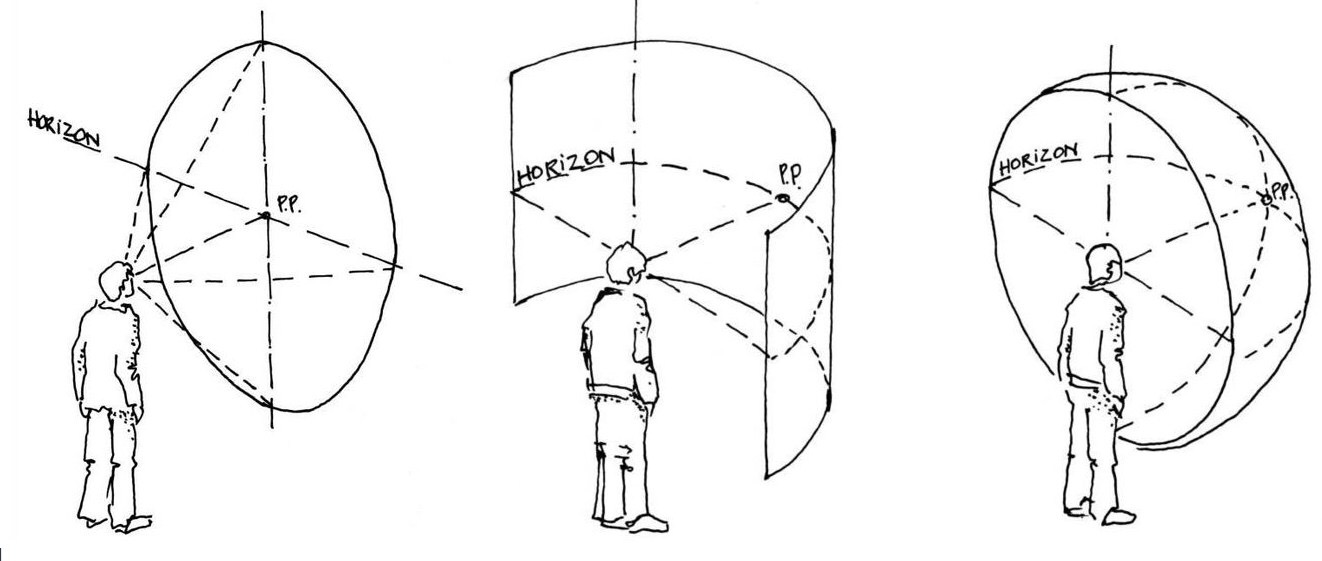
Different perspectives helped me get a different perspective.

Stop Hoovering

  
I knew this (or at least I kind of did) but a line in a book has recently kept it on my mind… ‘Mood’ is more a matter of biochemistry than anything else.

In the right mood everything is possible: ingenuity, problem-solving, creativity and joy. In the wrong mood, it’s all too much; all too hard and nothing can be done.

Win the lottery, lose your job, whatever happens most people’s underlying ‘mood’ ticks along remarkably unaffected; so long as you let it. Apparently only bereavement really affects mood for extended periods. It seems we can’t short circuit grief.

So ‘mood’ in fact, is not really about how happy, fulfilled, successful, busy or creative we are. It’s about noradrenaline, serotonin, cortisol and melatonin. These operate in an internal chemistry set, controlled by the limbic system – which is pretty much the same as in a bear, a monkey, a cat or a dog.

The limbic system is very resilient, very effective and very old – crocodiles have one. But it needs looking after. Apparently if you stress it to much, it chemically crashes and puts you into a state of hibernation. Literally. 

My book says the physiological symptoms of stress-related depressive illness are best understood, as exactly what happens in a bear’s body when it prepares for hibernation…
  

Why? Because the limbic system interprets the signals from the environment as too ‘hostile’, and that same old system kicks in: which enables a crocodile to lie dormant in mud for months; or a bear to hole up in a cave. We shut down; to wait for better days.

And here’s where the Hoover comes in. Because if you’re working yourself to the point your limbic system is about to blow a fuse – you have to stop; however exhilarating is the sense of achievement of getting more things done, or however great the pressure to do even more.

The test for hard-working diligent people is this; literally and metaphorically can you sometimes ‘leave the Hoover in the middle of the room’..? That is, can you visibly leave half-finished a task, you and people around you expect you to finish? 

Ouch, guilt and fear of humiliation – that hurts…

Because if you can’t – and you don’t listen to your body and look after your mood, there’s only one place you’ll end up…. shattered, flat and feeling like hibernating. 

This much I have learned in the past few weeks – if you want to avoid becoming a very grizzly bear, sometimes you have to leave the Hoover in the middle of the room.

Relevant Complexity

Relevant Complexity Link

Here’s to a brand new year.

And to celebrate I’ve bashed out a new blog, based on what I’ve learned about life, the world and everything since I started Achilles and Aristotle in 2010.

Time flies – or rather it doesn’t; a lot of water has passed under the bridge since then. But ‘Relevant Complexity’ was a fairly early discovery, I first wrote about it in January 2012 here.

Like all good things in the writing life, the more you write about it, the more you think about it, the more it changes you and what you do – Aristotle said as much.

I’ll plan to keep both blogs going: this one as a reminder of what I was up to in years to come; the new one to remind me to live for the day and enjoy a life full of ‘Relevant Complexity’.

Dasein

20140523-191853-69533252.jpg
Heidegger is a notoriously heavy read – and a controversial one, given he lived in Germany through two world wars and after. His concept of Dasein – the world as perceived and lived in by humans has made me think though.

It’s easy to imagine there’s a world without us. Of course there is. Surely? A world of maths, logic, science and mindless physical processes. Not to mention a less thought-filled living world of birds and beasts – nature red in tooth and claw.

So what’s so special about humans that Heidegger says we define our very own universe? I think I get his point. Everything we see, refer to, understand and know is in fact self-referring – it is based on human experiences, human timescales, human sensory apparatus and the human scale.

We can’t truly understand or describe the world from the point of view of an ant, let alone from the perspective of a celestial body. But a celestial body is dead, so it has no perspective surely? If I read Heidegger right – I think it does.

Knowledge, wisdom, trial and error, mindless and mindful – the course of the universe is to record more and more information in itself including embodied intelligence – information stored in physical forms.

In the same way as an ant contains within it information about carbon-based life, geological time and the process of evolution; even the most basic planet contains information about the elements, supernovae and stellar aeons which led to it.

From the blinding simplicity of the Big Bang to the unimaginably vast store of data which is a galaxy – let alone a universe of them – the course of ‘life’ has been captured, recorded, embodied and stored in both vast and minuscule stores of accumulated ‘relevant complexity’ – in effect: information.

As Heidegger suggests, our mentally comprehensible portion of this recorded information is determined by our embodied human faculties and timescales. But for the ant or the celestial body the ‘recording’ is at vastly different scales. Dasein or the ‘human universe’ is but a tiny portion of this. And what each of us sees and understands of it, is but the portion lit by our own tiny flickering candle.

That we see and understand even that much, is an accident of stellar and evolutionary history – our tiny illuminated moment in space and time. But for each of us it is a very fortunate and beautiful one. And Heidegger invites us to live it to the full.