Ancient Alchemy

20140426-085422.jpg

A friend and I popped into the National Gallery one lunchtime this week. Among the tourists and school kids, we were guided by gently spoken attendants, who steered us towards Dutch Masters – and then on to Medieval gilt and godliness.

I was keen to find the Wilton Diptych (above). The photo above hardly does it justice. By an unknown artist (as everything was before Giotto) it dates from the 1390s. And a fine piece of early English patriotism it is too.

A gift to him, it shows King Richard II being presented to the Virgin and child by John the Baptist. An English King was clearly worthy of the Devine in every respect.

What really amazes – in a object over 700 years old – are the colours. The blue is dazzling, set off by the expanses of gold. And the intricate gilt of the robes is staggeringly precise. How did the unknown artist procure, prepare and render these vibrant hues in the very midst of the Dark Ages?

But forget a few hundreds of years. I read this week that there is new evidence from China of the widespread use of coal for smelting fully 4,500 years ago. They guess coal was discovered and deployed because large scale deforestation had forced innovation – all the charcoal had run out.

What remains is so little, that we risk underestimating the sophistication of long past eras. We will never know their names, but our ancient forebears were finding and combining precious metals and minerals with amazing, ingenuity, craft and artistry long centuries ago.

This dazzling blue and gold panel, made for an English King, is an incredibly rare and precious proof of genuine ancient alchemy. Devine.


The Reasonableness of Reason

20140405-195006.jpg

I’ve just splashed out a fiver on a hardcore philosophy book ‘The Reasonableness of Reason’. Second hand mind you, austerity reigns. But absolute austerity is probably slightly unreasonable.

It is, by all accounts, an exhaustive investigation of whether following reason is better than scepticism or belief. My current bedtime read Philosophy Now carries an admirable review by Professor Raymond S. Pfeiffer of what I’ve bought, which I précis here:

Naturalists argue that there are some general goals that almost all humans in all societies have in common, such as obtaining safety, food, love, meaning, and an understanding of the world. In fact, no one has suggested possible alternatives.

Naturalists further argue that human goals are best achieved by a group of standards, rules and methods referred to as ‘the theory of middle-sized physical objects’. This theory is the idea that there is a world inhabited by everyday objects that behave in the kind of way they seem to behave in our experience of them.

The naturalistic claim is simply that a preponderance of evidence reveals that using the claims, methods, standards and rules of the theory of middle-sized physical objects (a.k.a. using reason) is the best way to fulfil human goals.

This process – which is the use of reason and the scientific method – has produced the best confirmed and most useful thinking about reality, and continues to do so.

Others may choose a different process to understand the world, such as basing some of their beliefs on faith. But history has shown that such an approach often goes wrong in some way, and that, when corrected, it is usually corrected by the use of reason and the scientific method.

Furthermore, sceptics, who suspend belief in reason and seek to follow the customs of the culture in which they live, use the very same theses, methods and rules of thought as the theory of middle-sized physical objects, and so use the tools of reason anyway.

Hauptli (the Author) concludes that “If we seek optimum goal-fulfillment, the use of reason will promote this best in the long run.” So although there is no certain proof of the advantage of using reason, it provides a better option than any known alternative.

How very reasonable. I have a feeling I could have saved myself that fiver.

Grumpy

20140329-101559.jpg

Having fought and won all winter long – through tempest and storm, deluge and downpour – I have finally been brought low. Not work, not home, not finances, not fatigue, but good old germs.

I have copped the family cold and feel rubbish. All life contains some suffering as the Dalai Lama points out, but is there a more pointless way to be laid low than with a cold?

We have astronauts and cosmonauts in orbit and super-chilled particles smashing together at the speed of light. Yet when it comes to medicine, short of chopping it off of blasting it with some chemical or other, we are clueless.

All it takes is a couple of hours standing around on a chilly afternoon, some arduous fetching and carrying on the back of a few late nights and an immune system off its game and bingo – germs win; I lose. Harrumph.

Of course we’ll never beat the common cold, just like we’ll never beat the onward march of the years, or the bad in human nature, or the all the wrong in the world.

But still, surely someone could have a better try? Never mind a mission to Mars how about some advance on Lemsip?

But the one good thing about being laid low – especially on the silent, seeping, sapping way a cold spreads through you – is the reminder just how fighting fit I feel most days. Mustn’t grumble. Now back to grumbling…

The Eternal Beauty of the Open Mind

20131222-134257.jpg

Surely one of the defining characteristics of the passage of years, is the tendency for the mind to close.

Knowing best, seen it all before, mind made up, declining interest in the new or different, set points of view; these are casts of mind which stalk us all. The secret to evading them, is to strive to remain an ‘open system.’

To adapt Wikipedia: the person who remains an ‘open system’ is one who continuously interacts with their environment or surroundings. The interaction can take the form of information, energy, or intellectual transfers into or out of the system.

This contrasts with the ‘closed minded’ person who exchanges neither energy nor information with their environment – they are substantially uninterested in and unaffected by the views of others and drain energy in their interactions.

There’s a lot of it about. We’re all guilty of it at times. But a true test of a person, is how hard they fight to resist it. The open mind is an interested and interesting mind.

Start closing and you stop learning, growing and thinking. The closed mind is old before its time. An open mind is ageless, limitless and eternally beautiful.

Doh! Ow! Oh?

20130907-151024.jpg

Like many men of my age, my general attitude to a health problem is ‘best ignore it’. Of course I periodically moan, but then refuse to get anything seen to and hope it will go away – nearly cost me dear that 20 years ago.

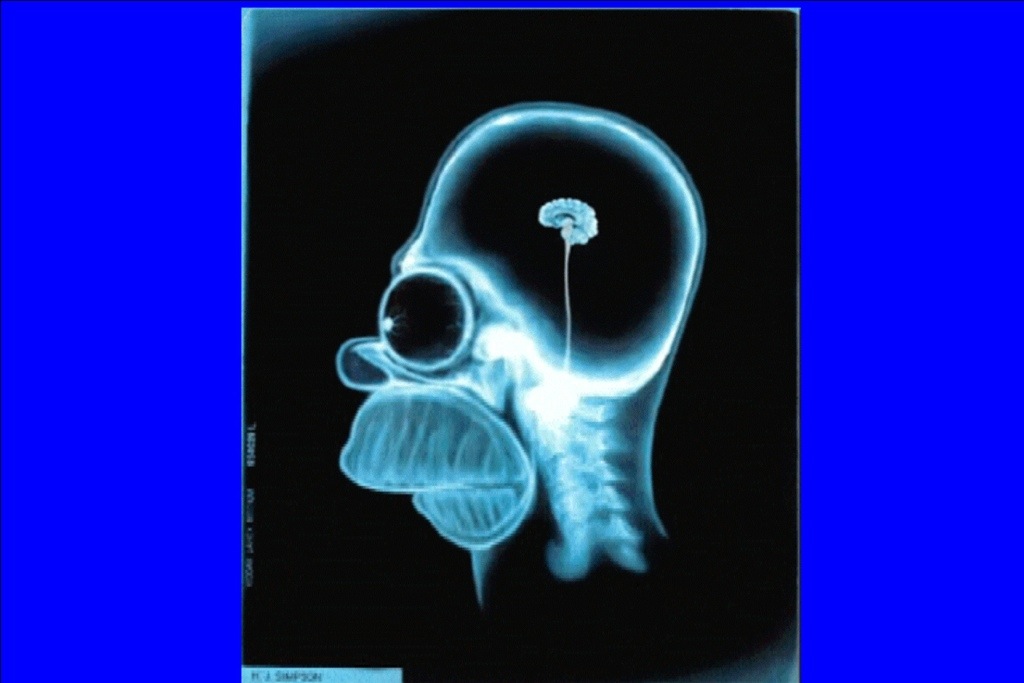
And it is going to cost me again, as I absorb the X-rays of my thoroughly impacted wisdom tooth. Having ignored it, complained about it and recently attacked it with a camping spoon, it has now got the better of me – two teeth to come out, root canal work on a third to hopefully save it and up to £2000 without passing Go.

I asked the dentist whether he could just pull them out and do me a George Washington wooden set. He felt not.

And what I’ve felt subsequently is interesting too… because now I’ve seen an X-ray, my subjective feeling of pain has changed. Now my brain has a picture of the problem, I feel it much more – and in a completely different place.

It used to really only hurt at 3am at night, when it often woke me up. I thought it was a nightly push from the wisdom tooth to get out. Turns out it’s just the nightly drop in cortisol of a healthy circadian rhythm – cortisol falls, the immune system kicks in and the pain kicks off. It still hurts at 3am but I realise it’s not one pushing, it’s another one throbbing.

What was – in my mind – the surging pressure of a wisdom tooth, with an battling desire to burst through, is now correctly identified as just the morbid cry of its near mortally wounded neighbour. Broken, damaged perhaps beyond repair – less George Washington more General Custer.

Three reflections arise. One, doh! Why didn’t I go get this fixed sooner. Two, ow! Pain. Three, oh? So that’s the explanation – and mind and body seamlessly recombine with a different mental picture and a different felt reality; no periodic ‘pressure’ just steady dull pain. Our senses can deceive us. The mind makes up its own mind.