Chaos and Complexity

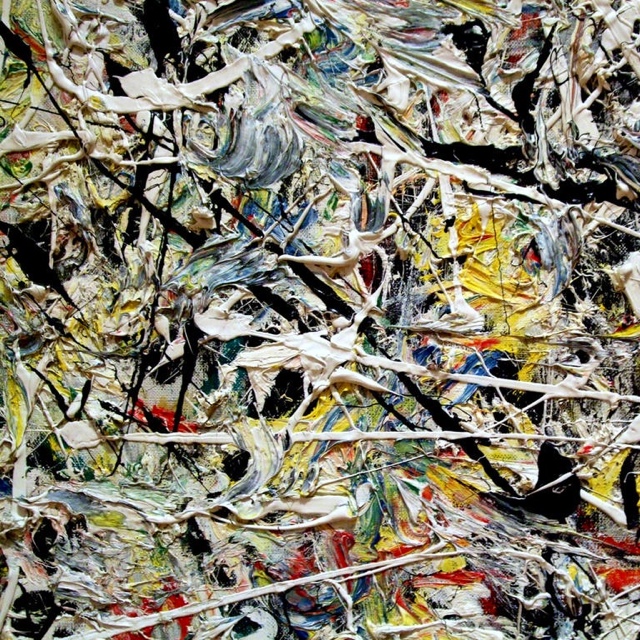
20120428-170548.jpgI typed ‘Where does complexity come from given entropy?’ into Google this morning. Why? Because my life and work are in pretty good order, so a law of physics which threatens to mess them up is most inconvenient.

Given how hard it is to get anything done at work, given how fragile our lives and life’s works are and given the formidable obstacles to multicellular life a – how on earth do we get from chaos to complexity.

Before Googling, I’d read in the New Scientist that Precambrian alkaline oceans may have forced floppy-walled cells to get a shell – to keep the toxic alkalinity out. Alkaline oceans would also have promoted calcification. A problem and a solution jostling together.

I also read E.O. Wilson, the Harvard sociobiologist, explaining that the simplest way to understand complex human motivations, is the constant competitive/cooperative interplay between our loyalty to ourselves and that we pay to tribes and collectives -which give us faith, identity, mythologies and protection.

Speaking of which, high up the Google list of answers to my complexity vs entropy question was our old friend God. If the second law of thermodynamics demands increasing entropy, then a creator and His constant intervention seem to some like our only hope.

But I’m reminded of the classic sociological example I cited at work this week, in favour of not planning big things too much. You’re never more than five minutes from fresh bread in chaotic Paris but couldn’t get it anywhere in centrally planned Moscow – ecosystems are too complex to plan or design.

Instead of God, I preferred a great paper, which came top of the highly evolved ecosystem which is the Google search rank. MIT physicist Michel Baranger writes that the 20th century ‘certainty’ of scientific analysis has given way to the chaos of fractals and non-linearity.

Baranger admits complexity still defies a simple definition. But it does have these six features:

1) Complex systems contain many constituents interacting chaotically.

2) The constituents of a complex system are interdependent.

3) A complex system possesses a structure spanning several scales. (cell, leg, person; building, district, city)

4) A complex system is capable of emergent behaviour. (properties emerge at a higher level which are more than a description of the constituent parts – consciousness, life, society, culture)

5) Complexity involves an interplay between chaos and non-chaos. (if it’s all chaos nothing happens, if there’s no chaos nothing happens either)

6) Complexity involves an interplay between cooperation and competition for resources (the big one – drives reactions, feedback loops, religion, ethics, moral dilemmas, kindness and cruelty)

Fully embracing the messiness of chaos and complexity opens up the possibility that we might come to better understand the biological and social systems which drive us, and which we in turn drive.

The answers won’t be in neat models. But they would be a small step towards what E.O. Wilson calls a ‘New Enlightenment’. An Enlightenment built not on the determinism of Newton’s calculus and Adam Smith’s pin factory. Or on the individualism and reductionism of pure ‘survival of the fittest’. But one recognising that complexity comes from the jostling of chaos and order, competition and cooperation, small scale and large and interdependence of the whole.

What does that mean for my efforts to maintain a well-ordered life? Accepting a meteorite could flatten our house. That disagreements at work and at home are probably the drivers of progress. And that the competing demands on me create, yes, chaos; but also new complexity and the spur to creativity.

A reminder then that chaos and change can’t be avoided – you can only ride the waves not hold back the tide.
Powerpoint like an Egyptian

20120418-142623.jpg

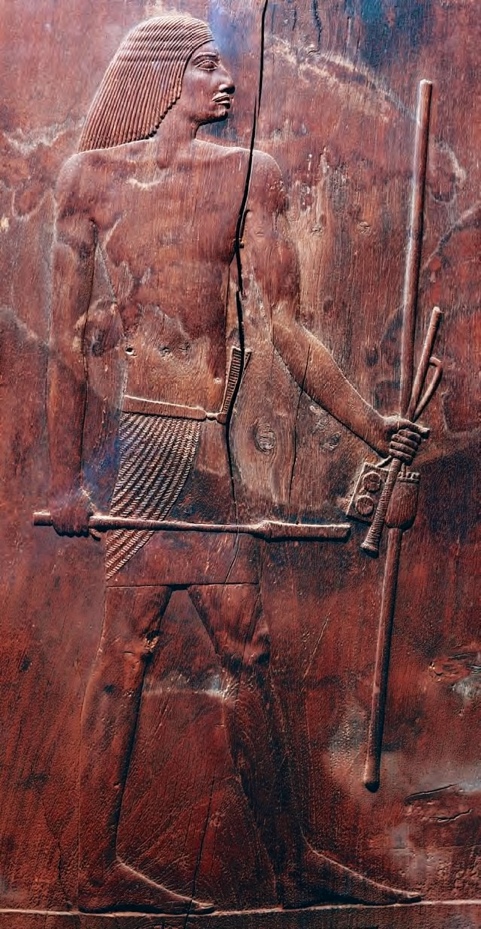
Why did ancient Egyptians have two left feet? Ernst Gombrich provides a fascinating answer in ‘The Story of Art’ – to make sure you had two good feet in the afterlife.

The art of the Pharoahs’ is in some senses very realistic. But lack of perspective and ‘side on’ angles can make it seem flat and naive to modern eyes. But that’s because it was governed by very formal rules of representation, scale and geometric placement.

A brief ‘naturalistic’ period, under Tutankhamen’s sun worshipping father, shows Egyptian artists absolutely could do portraiture. But once sun worship was banished, it was back to the formal rules of representation and proportion which lasted for 3000 years.

And why? Because the Egyptian artist was capturing the ‘ideal type’, the ‘essence’ or essential attributes of the person, duck, fish, foot or god portrayed. Thus key features for the afterlife – a full eye and two shoulders or the plumage of a wild fowl – were shifted, twisted, rotated or brought forward to ensure their ‘ideal attributes’ were clearly represented and hence captured and assured – in the version of the person or fowl which persisted into the afterlife.

20120418-195141.jpgEgyptian tomb art was more like designing a powerpoint slide than painting a picture. Placement, the right relative scale and the mix of images, words and sidebars to tell a story were the point. And a bit like ‘cutting and pasting’ onto a powerpoint slide, if necessary, images of birds or fish were ‘pasted’ on top of backgrounds to make sure their key attributes were visible and preserved.

The reason, then, for two left feet is that the ‘arches’ of the foot are more ‘essential’ than the outside – hence two ‘ideal’ feet are portrayed – arches facing out.

20120418-142727.jpgI’d have been laughing in ancient Egypt with my love of powerpoint. But what would the Egyptians have made of clip art? Surely sacrilege. Then as now.

Barge Hauler

20120211-140318.jpg

Work,
Think,
Eat,
Drink,
Wake,
Walk,
Type,
Talk,
Work,
Work,
Work.

As Aristotle once said: “all paid work absorbs and degrades the mind.” I have been working my n#ts off this week – heavy lifting from start to end – and a good deal of it thankless.

We end the week in a much much better place than we started – but the narrow steam of technicolor bandwidth which is my ‘consciousness’ has been totally absorbed in work, work, work.

For the first time in many months, at the weeks end, I can’t recall a single original or worthwhile thought in the last five days, that hasn’t been yoked to the chariot of work. I have been one of Illia Repin’s Barge haulers on the Volga.

Work owes me this week, I am paid a salary for my labour not my soul. Onward.

Never Mind the B%llocks

20120128-190635.jpgI found myself swearing a lot this week – a sure sign I’ve been depleting my modest ego. Self-control carries a cognitive cost: the more you soak up the more you get p155ed off.

There were good bits, but also plenty of b%llocks. According to the Broadcasting Standards Commission the relative severity of the various profanities, as perceived by the British public in 2000, placed “b%llocks” in eighth position in terms of its perceived severity, between “pr1ck” (seventh) and “ar5ehole” (ninth). Enough said.

A lot of angst in life comes from the need to be in control. People seek position and status in the hope of controlling more – and controlling others more. But the definition of larger roles is in fact that you control less: you directly do less, precisely determine less and very often control less of your immediate environment or your time.

As someone said to me of a senior absentee a few months back: “Well he’s obviously at the level where he can’t control his own time”. Wherever you work, whatever level, there is always someone who can jerk your strings.

But as I said to a colleague, and later the missus, if a meteor hit London we’d be scrapping for tinned food not worrying about being jostled at work. The Stoics knew this in Ancient Rome. If a senator could be ‘offed’ for offending a fickle Emperor, what refuge is there in status, money or power.

Life also throws constant spanners in the works. Last week the dishwasher broke – B%llocks! Rushing, I forgot key elements of my daughter’s school gear on two separate school runs – B%llocks, B%llocks. And my bike back wheel literally exploded, scaring pedestrians, as the rim buckled from too much wear – B$LLOCKS! All three made a mess of my best laid plans. Just as you fancy you have things under control, life intervenes.

So control is illusory, power is perverse and life is capricious. What to do? Curl up in a ball? Nope, I think aiming for ‘mastery’ not control is the answer. Mastery means being alive to context, alive to the environment, staying in shape, investing in good friends and support networks, developing resilience and sometimes stoicism and not letting the b@stards – or the botherations – get you down.

A little bit of mastery can go a long way. Giving up on control allows bigger things to become manageable and smaller ones to be less irksome. There will always be days where ‘B%llocks’ is the politest way of saying it. But giving up on the illusion of control means the next impulse is to laugh, not cry.

Relevant Complexity 2) Hobbies

20120129-213404.jpg

Until last year I absolutely didn’t get ‘hobbies’. Now I am persuaded hobbies maketh the man. The big mistake in life, I reckon – observing overwork, depression and recession hitting even the most high powered of my friends – is to have your work completely define who you are.

As Aristotle said: All paid jobs absorb and degrade the mind.

Sure we all have to earn a living. And if a trick of fate and a twist of ability take us to major responsibility, so be it. But a wider reading of Aristotle suggests no man can be ‘excellent’ who only works; much less ‘happy’.

Who we really are is often better indicated by what we do for leisure and pleasure. Of course being a ‘wage slave’ doesn’t always leave much space or time – and in antiquity, for most, there’d have been no time for leisure or pleasure at all.

But what we ‘freely’ do is a window to a person’s soul. Or perhaps better – as a typing mistake just suggested – a window to a persons ‘souk’: the bazaar of stuff we do and like.

A lot of hobbies are conventional: sports, music, walking, reading and none-the-worse for that. Some are apparently bonkers. I know a man who has laboriously constructed a scale railway in his back garden which his own daughter is forbidden to touch.

Some hobbies are sociable – choirs, ensembles, ramblers. Some are quite solitary – stamps and the myriad forms of collecting. Some border on sociopathic – travelling football fans notably. But what they all have in common is they endlessly fascinate the aficionado and generally bemuse the disinterested onlooker.

Of course once you spot it, the driver is ‘complexity’. Hobbies enable us to collect deep knowledge, unique complex skills and relevant (at least to obsessive) complexity. Hobbies are Csikszentmihalyi’s ‘flow’ par excellence – high challenge met with high skill.

“Who scored the winner against Scunthorpe in 1974?”, “What was the printing error in the 4d Commonwealth Games commemorative stamp?”, “What’s the winter plumage of that bird?”, “Can you play Schubert?”, “Is that a class 47 locomotive?”, “Is that a Bordeaux or a Burgundy?”

All of of these bring ‘flow’ to the expert. They are validated, either, by one’s personal appreciation of oneself or the appreciation of the ‘community’ of expert practitioners, fruitcakes and obsessives who share our particular interest.

But the art of life – and hobbies – I think is to weave together our passions with the other things we care about: family, friends, communities. There is joy to be had in literally any hobby – with practice we progress and develop mastery of its complexity.

As Aristotle said: ‘Excellence is an art won by training and habituation. Excellence, then, is not an act but a habit. [Or maybe a hobby?].

But there is also a trap – eccentricity and sheer oddness. The trick is in making at least some of our hobbies cohere into ‘relevant complexity’ so they define and develop us as much as our work does.

A friend described how he and his teenage son seek the ultimate ‘fried breakfast butty’ every Saturday. It’s about the only thing which always brings them together; relevant complexity. Building a garden railway, for me at least; irrelevant complexity. Writing for pleasure, relevant; long stints staring at the telly, irrelevant.

Albeit, as Aristotle said: different men seek after happiness in different ways, I think sewing (or knitting for my other half) ‘relevantly complex’ hobbies into the fabric of our lives is essential to properly embroidering life’s rich tapestry.

As Aristotle said of education, but might have said of hobbies if he’d read Csikszentmihalyi:

Education is [Hobbies are?] an ornament in prosperity and a refuge in adversity.

And

Education is [Hobbies are?] the best provision for old age.

But, of course, who am I to say. As the great Greek also points out:

Happiness depends upon ourselves.

And the fact I am secretly proud that I know what a Class 47 locomotive is, shows the perils and pleasures of hobbies. Keep it relevant.