Truisms iii) Dry stonewalling

Here are seven of Jenny Holzer’s Truisms I increasingly agree with:

Fake or real indifference is a powerful personal weapon

Expressing anger is necessary

Emotional responses are as valuable as intellectual responses

Giving free rein to your emotions is an honest way to live

Hiding your emotions is despicable

Humor is a release

Playing it safe can cause a lot of damage in the long run

For much of the last decade ‘stonewalling’ was a personal favourite of mine on the home and work front. I now see it was a form of emotional distancing I used to manage my reaction to people and situations. 

At one level it worked, but it drained my energy and at times frustrated people. Sometimes people would get cross with me. This was a quick route to me completely shutting down and quietly brooding, or more rarely reacting with excessively sharp-tongued vitriol. 

I’m learning that staying in touch with your feelings – although it feels risky sometimes – is important. Following my feelings can make me feel a bit ‘unbounded’, impulsive, eclectic, even a bit inappropriate sometimes. But often ‘in the moment’ I now do what needs doing or say what needs saying. And I have more laughs, with people I don’t know, as well as those I do. 

Constantly controlling my emotions was tiring, it drained my batteries and potentially prepared me to be hurt or hurtful. Better to be in tune and ready to speak up and speak out, flash a smile or crack up laughing. Life’s too short not to feel it.

Today

I heard Simon Armitage read his poem ‘Knowing what we know now’ on the Today Programme on Radio 4 on Wednesday. It features an Elf who makes the offer of turning the clock back to a man who is 44 – exactly half-way to the end of his life. It has a twist in its tale which I didn’t welcome but it certainly set me thinking. 

As I’ve written before it’s increasingly likely that I’m at, or close to, what Armitage’s elf calls the ‘tipping point’ – the half way mark. On Saturday morning in an unconnected thought I put it to myself, what am I going to do that will be memorable today? Cue 3 year old. I spent 3 hours doing 3 miles and 3 parks on a scooter with my son. We had great fun on what could otherwise have been a grey day. I love that boy.

Pondering it this evening, I thought to myself; what would be different if I counted life more often in days, not halves or years? Tapping 365 into a calculator, I realised that in the last year or so I’ve passed the milestone of living over 15,000 days. It’s a bit like when all the 9s turn over on another 10,000 on your car milage. That’s a lot of days. And since I reckon I have a reasonable hope of living another 15,000 that’s a lot of great days if I make them so.

And this reminded me of Seneca’s: ‘On the shortness of life‘. At the start he gently criticises Aristotle for bemoaning that nature has given man such a short span of life, for our many and great achievements, when animals have so long for so little. Seneca disagrees:

‘It is not that we have a short space of time, but that we waste so much of it.’

I listened to a very experienced and senior person describe his career on Friday. He had many thought-provoking things to say. But the one that stuck the most for me was a comparatively obvious one; you’ll spend more time working than doing anything else so make sure you do something you enjoy. He used the word ‘fun’ all the time to describe his work – great, enormous, tremendous… fun. Not a word I use anywhere near enough describe my working life.

And that is the thing I’ve been thinking about this weekend: enjoyment, fun and spontaneity. Thinking I’m half way to death makes me sombre and cerebral. Thinking I’ve got another 40 years, and probably another 20 odd of work, makes me think about my career and mortgage and school fees. Thinking I’ve got another 15,000 days makes me think about today – what’s going to be today’s highlight, what’s going to be today’s memory, what’s going to be today’s fun. 

As Seneca has it, the philosopher makes his life long by recollecting the past, using the present and anticipating the future. The most important of these for me though is remembering to have fun – today. 

Corporate Punishment v) Bad Behaviour

All organisations struggle with performance management. But in my experience, none more so than long-service public bodies.

I found this particularly acute as a Senior Civil Servant in UK Government. The main issue is often not capability, or even performance per se, but attitudes and behaviours which bring everyone and everything down.

Perhaps frustrated ambition is a factor. Being constantly overlooked for promotion and not ‘progressing’ can sour anyone over time – not least as promotion is usually the only way to get a pay rise. There are also those with rose-tinted memories of happier times who lament what they perceive, rightly or wrongly, as the ever degrading psychological contract between employer and employee.

Tidying up the other day, I found this list of ‘frequently encountered behaviours’ from my time in central Government. I worked with other senior people and developed a handy guide to tackling each too. That helped. Or at least helped me remain sane.

Re-reading them I’m so glad to be out of that context:

MANAGING BEHAVIOURS

The stereotypes below are behaviours that people can display and do not describe people themselves. Your own behaviour can elicit different reactions and you should be aware of the styles and behaviours you display before challenging them in others. People may adopt a mixture of these behaviours, switch or deploy several at once. Nevertheless, these stereotypes are based on real life situations people have described when managing the behaviour of civil servants.

1) AFFABLE – happily acknowledge shortcomings and performance issues, but either say that’s just the way they are and they can’t really change or say they might try to do something different but don’t follow through.

2) CHOOSY – enthusiastically focus on the list of things they have done, like to do or can do and make you feel guilty about challenging them on other aspects of the job or performance.

3) PLODDING/JOB’S WORTH – argue for narrow definitions of their role, justify performance on historic grounds – “I’ve always done it this way and no-one has complained”, may stress they work to live not live to work.

4) HYPOCHONDRIAC – focused only on themselves and their own workload, don’t recognise context or pressures others face, often refuse offers of help or resource as no-one else is sufficiently able or knowledgeable. (Often comes with Perfectionism as below)

5) HIJACKERS – often deployed by hoarders of information, relationships, skills, processes or technologies, hijacking is implicitly or explicitly threatening withdrawal of key ‘know-how’ with catastrophic consequences.

6) EMOTIONAL BLACKMAIL – using emotions and sometimes tears to stop a discussion on performance and in extreme cases displaying their upset to colleagues and other team members to rebuke you.

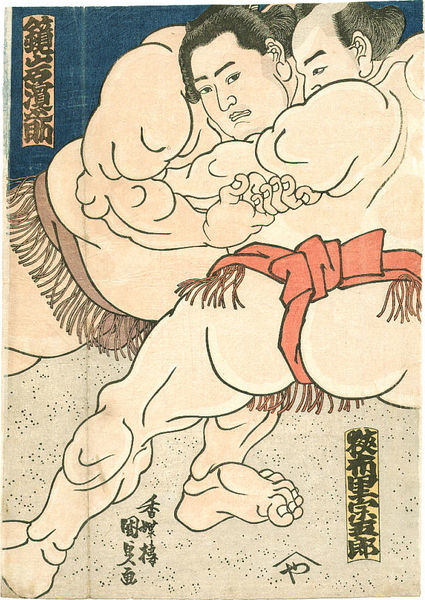
7) SUMO WRESTLING – coming back at you hard, challenging or criticising your style or behaviour to try to knock you back and barge you out of the ring.

8 ) PERFECTIONISM – often backed by great delivery, but often at great cost either to the person or those around them, aggressive defensiveness about excessive, exclusive or obsessive focus on their own work.

9) PAIN IN THE @RSE – antagonistic, argumentative, dogged, ignoring your context and time pressures often ultra-critical of the organisation, people or processes.

10) STAR QUALITIES – listening, taking responsibility, offering to help, making suggestions for improvement and change, sharing pressures, offering to lead and deliver. Make time to recognise, nurture, support and reward any of these behaviours at all costs.

Playing to win

I’ve been thinking recently about how to ‘be’ at work. Not everything – or everyone – is easy to get along with. Working life has many pressures and frustrations. I’ve often worked too long or too hard in my working life and sometimes got cross, spiky and brittle because of it. So looking after myself better has been part of learning to survive in bigger jobs. But surviving isn’t good enough. Thriving is what I’m after.

One potential solution to overstretch and indignity is Stoicism. It’s certainly better than ‘passive aggression’, or another past favourite of mine ‘victim behaviour’. Stoicism gives you a handy detachment and a heightened ability to endure and ‘not take things personally’. That’s a good ingredient to have in my mix, but it’s not in itself very attractive – enduring is not leading.

So how about ‘attracting’. On my better days I can definitely attract people with concepts and ideas. On my very best days I can stir a bit of passion too. But mostly I’ve been reticent to put myself at the centre of situations or ‘put my chair in the centre of the room’ as a friend of mine puts it. Partly this is fear of everyone looking at me. Partly this is the fear of friends ‘jeering’. Not much of my attraction to attraction is narcissism, but I do like to be liked.

I was reading bits of the Illiad and Odyssey last night and seeing what Achilles would have done. Achilles is the ultimate action hero. In modern managementspeak he’d be a strong ‘shaper’ and ‘personal performer’. He was passionate and incredibly driven, but he was also selfish, undermining and reckless. He was playing for himself not for the team. But he was a hero and he did make and change history.

As Odysseus said to the ghost of Achilles when he encountered him in Hades:

“There is not a man in the world more blessed than you – there never has been, never will be one. Time was, when you were alive, we honoured you as a god, and now down here I see you lord it over the dead in all your power. So grieve no more at dying, great Achilles.”

But in return Achilles protested:

“No winning words about death to me, shining Odysseus! By god, I’d rather slave on earth for another man – some dirt-poor tenant farmer who scrapes to keep alive – than rule down here over all the breathless dead.”

Achilles was a great talent, but he played for himself. He burned brightly, briefly. Then he was spent, and died carrying regret. Had he been a Stoic he would never have risen to the anger and fury which propelled him into history. But would he have been more contented in Hades had he stuck around and achieved more with – and for – others?

I will read more about Odysseus – or Ulysees. On first glance, he has a winning combination of courage, guile, teamwork and sustained leadership under pressure. He played to win for the team and the cause, not just for himself.

I re-read a useful piece of research today, which concluded:

“Leaders would do well to use the energy they have to attract people to the vision and purpose of the organisation, rather than themselves. The challenge is to have the organisation’s purpose ‘in your bones’.”

This crystallises the advice I’ve been following recently to consciously put the organisation’s “cause” at the heart of my choices and narrative. I’ve already found it gives me more courage and conviction to do the right things.

‘Playing to win’ means not being reckless, selfish, impatient, kamikaze, intemperate, self-indulgent, defensive or fearful. It means constantly re-focusing myself and those around me on doing better what everyone who works here – on our best days – believes in.

Why? Because what we do really does change people’s lives. And what I do has and can change the organisation greatly. So unlike Achilles, I should use that power for good not for myself.

Adjacent Possible

I read recently that all successful innovation expands into the ‘adjacent possible’. Whether it’s spines becoming feathers, swords becoming ploughshares or mobiles becoming smartphones, successful innovation depends on adapting technology to expand into an adjacent – and sometimes very different niche.

It’s also a useful metaphor for work and life. It’s a dangerous business trying to change everything all at once or trying to leap from one paradigm to a completely different one. I worked for two organisations which set out to change their whole market in the 1990s. In one we got it right, by applying an ‘adjacent’ idea from the restaurant business to mobile phones. The other had exactly the right strategy – cloud computing – just ten years too early. That organisation largely destroyed itself trying to create a new ‘non-adjacent’ future before people or the technology were ready.

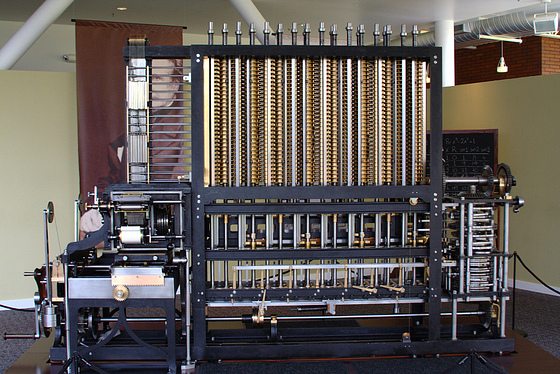
Charles Babbage’s Victorian computer was way before it’s time. But despite its potential people stayed wedded to the steam age. A friend told me in ancient Alexandria an inventor allegedly created a tiny table top steam engine, but considered it a mere curiosity – who needs steam power when you have slave labour.

So what of the iPad? Steve Jobs famously failed with the Apple Newton: too big, too slow, too expensive, no market. I bought an iPad in September more out of a sense of duty than belief. I wasn’t sure I needed one, but discovered I more or less do. For me the most amazing ‘adjacent possible’ that lies latent in the iPad is the ability to span all ages. My pre-school son can use it happily and so can his grandmother. We bought my parents an iPad for Christmas and she is now sending email.

Seizing the ‘adjacent possible’ doesn’t necessarily mean incrementalism – there are huge advances to be made by looking at the opportunity next door or putting familiar ideas and capabilities in new configurations. I learnt some years after applying ‘set menus’ to mobile phones that there is a well established marketing creativity trick called ‘related worlds’; namely, looking for new product ideas and inspiration in other sectors. As I emailed back to my mum this morning, she has leapt from the computing stone age to the 21st century in one graceful bound. She’s surfing the web and connected for the first time in her life – thanks to the re-imagined and simplified interface of iPad.

‘Think different’ was Apple’s strapline in the 1990s. It’s good advice. Neither a big phone nor a small computer, iPad is less than either. But it is more than both combined in getting my mum online. Hats off to Steve Jobs – he’s not ‘man of the year’ for nothing.

As soon as iPad became adjacent Steve Jobs made it possible and created new adjacent possibilities for millions of people. I’m writing on one now.