Water, Work and Eels 

Crossing Waterloo Bridge – against a tide of people walking to work – the thought came to me: how much in food, cars, goods and services have I and each of these people consumed so far in our lives?

And how much would that all add up to (by volume) if you piled it all together? 

And further; would it be greater or lesser in size than some of the buildings and landmarks, which make Waterloo Bridge the best view in London?

How many people’s piles of lifetime consumption would it take to fill a flat in the block on the south-west approach to Waterloo Bridge? 

How much to fill one of the South Bank theatres or galleries? How many people’s piles to fill County Hall or The Shard?

Then if you think about it in terms of the elixir of life itself – water – from which all that consumption is derived: either directly, or through steam turbines and factory processes; what would all that stuff we’ve each consumed translate into, by volume of water? It’d be huge.

And that’s just the thirty, forty, fifty odd people walking towards me on the bridge. What about all 30,000 or so in the university I help run? Or the city I live in? Would the 10-13m people of London be greater or lesser, by volume of water consumed, than the volume of all the buildings we all inhabit in London? 

And how much water directly or indirectly went into the power, people and materials that built all those buildings..?

But then I’m over the bridge, and into yet another meeting, and working life kicks in… The benefit of a job which makes you walk though, is the frequent gift of time to contemplate. 

And the benefit of a job which is about ‘keeping the show on the road’, is you don’t have time to worry about stuff too much – I’m incessantly busy: fixing and sorting and organising; and walking!

All of this adds to the growing sense that much water has now passed under the bridge of my life. 

And talking to people who are older than me, there’s a lot to be said for letting go of some of the things which have subtly driven me hitherto. That inner need to be ‘the youngest to do things’, ‘the hardest working’, ‘the best regarded’, ‘the most senior’; albeit I gave up on being ‘the best paid’ at least a decade ago.

Consumption and chasing more consumption; money and chasing more money, status and chasing more status – these are traps for the middle aged mind, soul and body.

So nice to have lunch this week with a splendid person I know, who is drawing, debating, walking and contemplating – and counting eels in the salty transitional waters of the Thames – a philosopher, cartographer, artist and citizen scientist in his first year of proper retirement. 

The river of life is long. Perhaps all those struggles to be ‘going places’ fractionally faster than the natural flow of things is – at this stage in life’s course – a genuine mugs game or maybe an eel’s.

Peace in our times


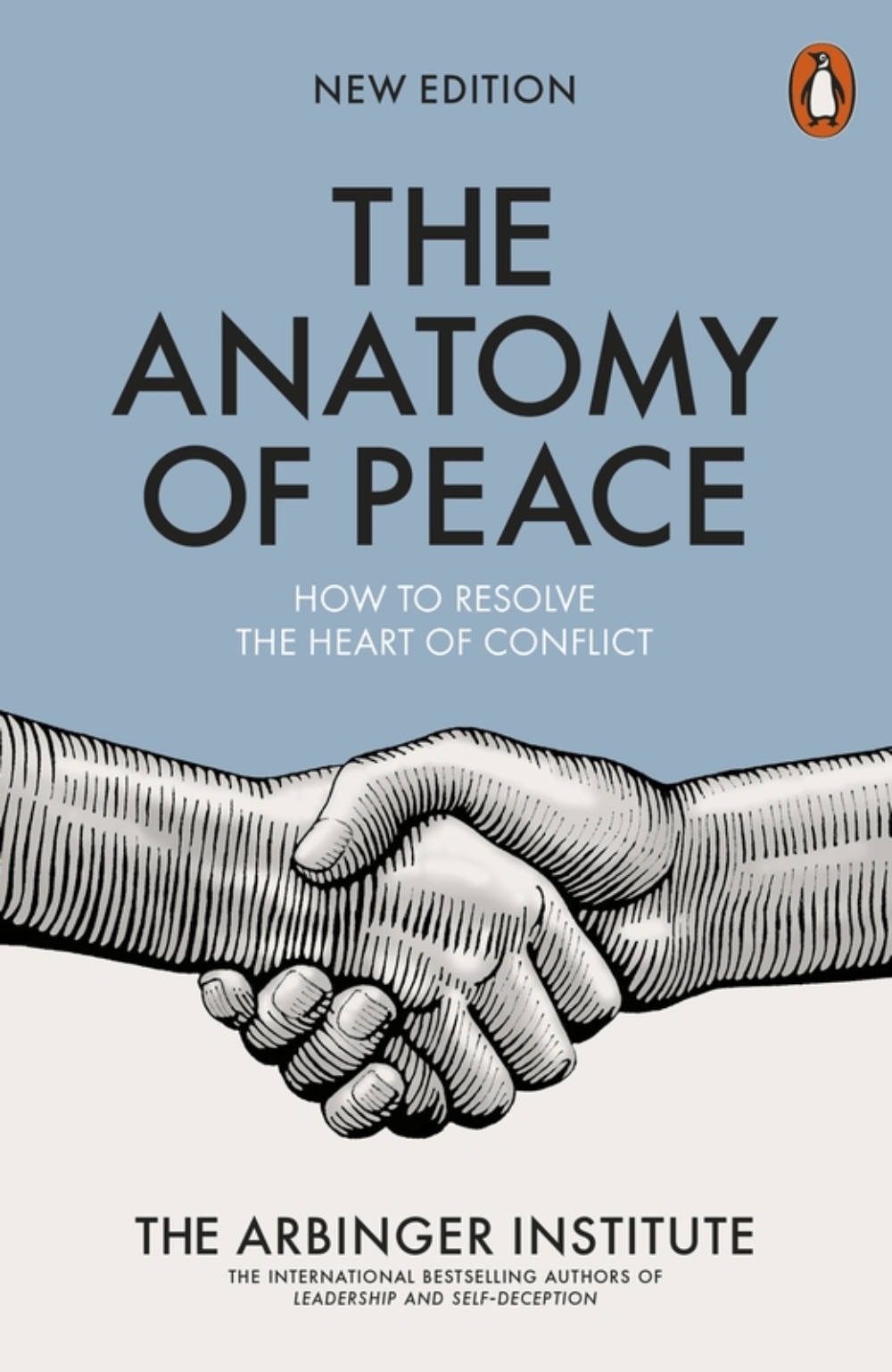
The Anatomy of Peace’ sounds a heavy read; and the fact it comes from the cultlike-sounding  ‘Arbinger Institute’ put me a little on edge… But I’d promised someone I’d buy it, so I did.

In essence it’s a simple thesis: 

1) We all spend far more of our time tackling things that are going wrong, than doing things to make them go better.

2) When people: co-workers, children, family members etc, resist our attempts to correct them, we combine increased coerciveness with talking them down – first in our heads, then increasingly out loud.

3) Once we start to coerce people and start talking them down, three things happen: 

a) they resist us all the more;

b) we demonise them in our minds and with other people to justify ourselves and our actions;

c) we increase our attempts to coerce them and talk them down further.

This focus on correcting, and the cycle of attempted coercion, self-justification, resistance, demonising and a hardening heart is everywhere, all around and at all levels – all the way up to nation states.

Heavy stuff.

What to do? There’s plenty that’s common-sense: listen more, build enabling relationships etc. But it all starts with the heart and stopping yourself getting into – and learning how to get out of – the downward cycle of correcting, coercing, hot and cold conflict and going to interpersonal war. 

I’ve tackled three difficult work situations with these new techniques this week; pitched battles, either in full-blown standoff or seething with cold professional anger. 

Tricky stuff. But acknowledging people as just that: flawed, frightened, angry and frequently frustrating; but first and foremost people, is the trick to developing a ‘heart at peace’ in the Arbinger jargon. 

And who doesn’t want a workplace, a home and a heart at peace? 

My left foot

Nearly a year ago I was preparing myself for a big change: a change of job, role, sector and working context.

About the same time, I decided to change foot. For over 15 years of cycling to work, pretty much every day, I’d always rested and hopped about on my right foot – at the many traffic lights and junctions to and from work; the left leg never used, bent double, toe strapped in toe clip.

Result – a dodgy left hip and a chronically sore tendon at the back of my right knee. 

If you’re going to change some things; why not change everything, was my reasoning: job, route and standing leg. And so I was wobbly, uncertain, off balance and uncomfortable on my bike – just as I was in the new job. Great idea!

But in a way, learning to stop, stand and push off on my left leg has been a metaphor for my life and the year at work. 

Many was the time in a long cold winter and an endless wet spring, I yearned for the certainty and sure footedness of old. But the other day on a summer cycle in, I noticed I am unconsciously surer now, left-footed on the bike – more confident in my balance and stronger kicking-off.

A year of trying something new, and it has become something I can more or less do. Much like my job. Practice makes perfect; we’re never too old to adapt and learn. 

Empathy, Pain and Compassion

New Scientist (11 May 2016) – How sharing can make you sick
Something I’ve done a lot in the last decade is empathy. Indeed it has become one of the things I do the most at work: connecting with people and quite literally ‘feeling their pain’.

Walk a mile in another person’s shoes and you see the world differently; better understand different opinions and why people do what they do – even when it seems to be hurting both them and you.

But it comes at a cost. Connecting with the pain of others is painful for me too. It hurts to see someone hurting; and even more if you go with them to the very source of their pain – deep fears, anxiety, sadness and loneliness.

And this is a problem, because once you’ve seen the contents of someone’s soul, you can’t just shrug and say: “Oh dear, how sad, never mind.”

Not least because neuroscience is proving that our own brain copies the pain and suffering of others when we empathise. We do literally ‘feel their pain’ when we listen and put ourselves in their place. Mirror neurones fire in sympathy – in exactly the same pattern as in the sufferer; and the suffering is shared.

So I was fascinated to read in the New Scientist (in the article pictured above), that we should consider cutting the empathy; and boosting our compassion instead.

What’s the difference? I’m not sure I exactly know – but I can ‘feel’ the difference… Empathy feels like touching a person and connecting directly with their emotions – literally feeling what they are feeling. The science says that’s also what’s happening in your brain.

The problem is that in sharing, experiencing and absorbing the pain of others, we lessen our own reserves of optimism, energy and resilience. And that means ultimately we are less able to summon the strength to help or improve anything. Empathy feels draining.

Compassion feels different. Compassion ‘connects’ like empathy does but instead of firing the pain-mimicking mirror neurones, compassion digs deeper: for warmth, care, appreciation and common humanity. 

I reckon this must be how the Pope, aid workers and others who have the suffering of hundreds, even thousands of people thrust upon them daily must cope. Not by directly empathising; but by digging deeper for compassion. Certainly it’s the Dalai Lama’s philosophy.

One thing’s for sure I haven’t cracked it yet. Now I know it, I can feel the difference – beleaguered by too much empathy; strangely strengthened by tapping into warmth and compassion.

But I can’t manage compassion confidently yet; I still want to say at the end of sad conversations “I feel you pain.” But I know now that’s the invitation and trigger to fire those mirror neurones, and carry away my share of another’s suffering.

Talking to a very smart work colleague about it this week, we concluded: if a person is in a deep dark hole, you’re not always helping them that much, if you just jump in next to them. 

Similarly if you do try to feel another person’s pain and offer the classic line “I know how you feel” you risk real failing yourself and the person you’re talking to – how can you really know how someone feels? 

When someone is in a dark place this week’s realisation is the answer isn’t necessarily to join them in the gloom. Compassion – if I can learn how to channel it – creates the same connection, but offers a better chance of staying happy and healthy; and being some help.

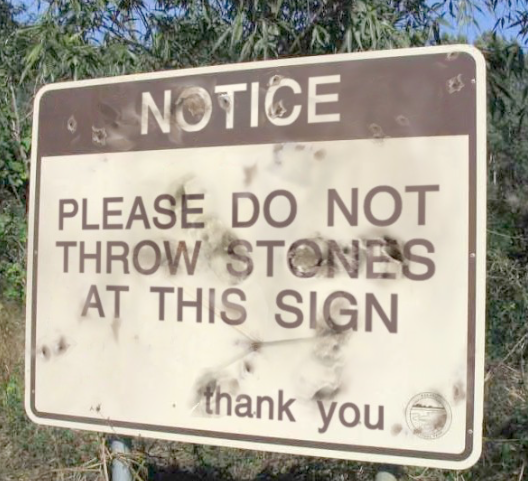
Throwing Stones

Is there anything more annoying than egos. We all have them; but some people more than others.

I like to kid myself I don’t have a big ego. I probably do, but my saving graces are: I’m not bothered about being right, I’m not bothered about power for its own sake and I’d be quite happy with a quiet life.

Not so other people. I suppose I’ll have peace when they nail the box lid down on my old bones; and I’m in no rush for that – but this week has been a right old ball-ache. And all because of egos.

Thank goodness for the comforts of family. Children are usually pleased to see you, and my other half has rallied round. 

As I often say at work though, apparently humankind had two stand out strengths on the savanna plain: stamina and overarm throwing. Keep jogging after problems and eventually they fall to the ground – if you can avoid all the people throwing stones…