24×17

20120609-101811.jpg

What’s 24×17? C’mon, c’mon. The clock’s ticking. Struggling? Sweating? No answer? A guesstimate? Not sure? Not good at maths? Need more time?

Relax. No-one can do 24×17 without thinking about it. There is no ‘fast thinking’ route to 24×17. It requires calculation and that means deliberation. The answer is below – I just checked it on a calculator.

What’s interesting though isn’t the answer. It’s the reaction the question gets from different people. Personally, I looked at it, tried to round up 24, then to round 17, then lost it, reminded myself I’m rubbish at arithmetic and waited for someone else to come up with the answer.

A friend who’s ‘good’ at maths quite quickly got to “About 400…” and then frowned and struggled for the final figure. Another colleague who does a lot of numbers work – and is smilingly tenacious – also struggled, looked puzzled that he was struggling and continued to wrestle with it even after I’d told him not to. I could see he was still calculating despite me telling him the point of the exercise wasn’t the answer. Three other people thought for a moment, said ‘oh god, I can’t do maths’ and smiled wanly.

What’s interesting to me is we all failed, but how depending on our self-image on mathematical ability, we all had different responses to that failure. Modest satisfaction with being close, desire to stick at it, preference to leave well alone. And yet all of us probably had the tools to work it out in broadly similar ways.

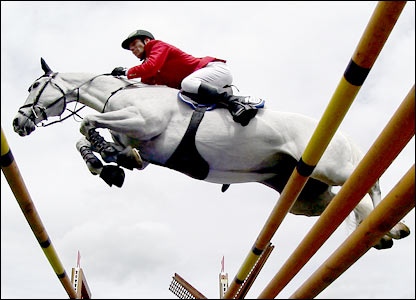
Perhaps maths plays with so many people’s heads for this reason – the boundaries between mental arithmetic and calculation aren’t clear cut. Some people clip the fence, others set themselves carefully to jump cleanly and many just refuse.

Learning this helped me this week. Handed a sheet of figures – which normally I’d have glanced at, then avoided and jumped to conclusions on – I asked for a minute to study them. It took me nearer two, but then I’d understood them and was happy with what they said, and what I thought of them.

I’m finding numbers are not so scary and actually quite satisfying, if I steadily negotiate all the mental fences instead of leaping wildly or refusing. Perhaps we’d all be more prepared to jump if we knew most maths is not innate but carefully calculated.

(804)
(Backwards)

Conspiracy

20120606-211502.jpg

I spent last week wrestling other people’s demons. Could it be there isn’t a conspiracy? Could it be it’s not all about you? Why do we all jump so readily to self-centred conclusions?

In fact it’s a perfectly reasonable thing to do. The human version of Occam’s Razor – the simplest theory is generally the best; people are indeed out to get you…

Or at least that’s what two thirds of our brain thinks. The brain stem and limbic systems react instinctively and emotionally – mostly to protect us. The poor old neo-cortex has its job cut out to plod to a slow deliberate alternative. And a good thing too for most of human history.

But we are made for finer things these days. The ‘love of thought’ has been an organised pursuit for at least 3000 years and language for much longer. So hats off to W.V.O. Quine for expressing so perfectly how our rational brains work:

“We adopt, at least insofar as we are reasonable, the simplest conceptual scheme into which the disorganised fragments of raw experience can be fitted and arranged.” From a logical point of view (1953)

It’s still instinctive and still guesswork, but at least we think it’s rational…

And that’s why we jump to conclusions. The human animal is wired to discern intent, develop belief and divine agency; even when it’s not there. It’s the simplest way to ‘fit and arrange’ those disorganised ‘fragments of experience’.

It’s happening to me, so it must be about me – except most of the time it isn’t. And Quine’s gimlet eye above invites us to take that thought very seriously.

Jubilee Camping

20120628-220339.jpg

Jubilee camp
Periodically damp
Some sun
Decent fun
Well fed
And some early beds
Good group
A sizeable troupe
The final night
Clear and bright
By the fire side
A beacon spied
And a firework spray
At the end of the day
But this is Devon
And so opened the Heavens
A pouring morning
Puddles forming
Packing up completely wet
Always was a likely bet
Home James
Back to the Thames
Unloading
Unfolding
Hanging
Draping
Of sodden stuff
That’s quite enough
So a glass of red
And an early bed
A good time it’s been
God save the Queen
But let’s not do it again
Until she’s 110.

Sugar Solution

20120527-081140.jpg

In a workshop this week I learnt a bit of the brain science behind ‘fast thinking’ and how it leads to ‘unconscious bias’. I suspect it’s just a different way of framing what I think of as my ‘Bayesian brain’: rapid-fire probabilistic assessments of people and situations based on a lifetime’s experiences and situations.

We were informed that ‘fast thinking’ leads us very often to bad judgements. ‘Slow thinking’ – when we deliberate – is the alternative. And indeed there are things we can do with slow thinking which we simply can’t with fast – complex arithmetic for example.

But slow thinking also suffers from ‘confirmation bias’ – where we look for evidence to confirm our decision or prejudice and screen out data which doesn’t fit. So ‘slow’ ain’t necessarily so, if it just seeks to confirm ‘fast’.

I think where our trainer went wrong was to leave the impression we should all think harder. I think the answer to unhelpful bias is to stop thinking and absorb more data.

I found myself, at times, in the workshop completely relaxed – open and with a conscious feeling of just soaking up what our trainer was saying; new data and new ways of looking at data.

Where I found myself far less at my best, was when asked to make spot judgements on what it all means and what we should do about it. Or indeed listening to other people disputing or challenging when I’d have rather just listened.

My feeling was, unless you’re a brain scientist or a trained psychologist don’t waste energy or thought arguing or critically appraising stuff you don’t know about. Just soak it up.

As our trainer explained our brain runs on glucose. It’s a big sugar soaked sponge, with its myriad connections made and laid down by filigree fibres powered by sugar solution. A bit like a wet candy floss. But too much thinking and the glucose runs down. And temper and thought deteriorate.

The answer to changing your mind, I reckon, is to soak up more info and leave the soggy sugar to work it out. Thinking hard just makes your glucose run out, your head sore and your mistakes worse. From soaking and sweetness comes good judgement.