Narrative or Episodic

20120423-220507.jpg

I like (as do many others) the notion of lives as narratives. Interesting then to read a contrary view from my old philosophy tutor Galen Strawson – Against Narrativity.

He poses the question: is there really that much evidence that we are narrative beings? And if not, is it really so desirable – in terms of living a good life – that we seek to be?

What’s wrong with enjoying life as a smorgasbord of varied experiences and events. Does it all have to submit to the tyranny of a unifying narrative?

I was talking about this today. And as so often when you pick-up on something new – it then pops up everywhere. In my inbox this evening I find good old Montaigne on the same subject:

Our chiefest sufficiency is to know how to apply ourselves to divers employments. ‘Tis to be, but not to live, to keep a man’s self tied and bound by necessity to one only course; those are the bravest souls that have in them the most variety and pliancy. Of this here is an honourable testimony of the elder Cato:

“His parts were so pliable to all uses, that one would say he had been born only to that which he was doing.” Livy, xxxix. 49.

I do like the sense of a personal narrative. It helps make sense of it all. And along with the ‘can I look myself in the mirror test’ it keeps me on the right and proper path. But a sense of narrative shouldn’t be to the exclusion of Montaigne’s ‘divers employments’ and mixing it up a bit.

As my old tutor points out, a narrative can be both self-limiting and then dangerously self-fulfilling. Variety is the spice of life – and you only get one shot at it.
Keeping the home campfires burning

20120420-170154.jpg

April fools under canvas
Sunlit striking
Followed by lightning
Humans huddle
Around a smoky campfire
Back to basics
Hot and cold comforts
Austerity Britain
Keeping afloat with the Joneses
Unseasonal camping confirms
Keeping warm
With friends and family
Is all.

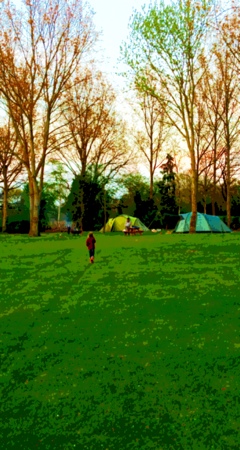
Despite my diffidence, we were early out of the traps for camping this year. Forecasts (realised) of thunder storms and temperatures of 2 degrees C were enough to deter six out of seven families on our first night – but not us.

Joined at midnight by family number two and then plucky three and four on the second day, it was initially very wet, then cold, then bright and breezy. In a man-made return to pre-history, a fire makes it bearable.

And once the kids are off to bed, with a glass of something warming in hand, there’s a camaraderie about camping which brings out the best in people. Everyone’s struggling a bit in this recession, but we’re keeping the home and camp fires burning.

Death Becomes Us

20120419-085621.jpg

I’m reading the ‘Death’ edition of the redoubtable Philosophy Now magazine. And a bone-rattlingly good read it is too. Death dissected through metaphor, thought experiments, cool logic and rational argument.

The core issue, this issue: as medical technology advances should we prepare for immortality or stick with three score and ten? Imagine a typical lifetime of 300 years, the necessary absence of children, the ceaseless marinating in one’s own juices.

As always with philosophy there are no easy answers, but plenty of better ways of thinking about the problem. I remember reading the last half chapter of Julian Barnes ‘A history of the world in 10 1/2 chapters‘ at university as suggested by my philosophy tutor.

It perfectly captures the problem of eternal life – and heaven. Once you’ve had sex with everyone, studied and discussed everything, got your golf handicap down to a straight 18 (‘holes in one’ all the way round) and scared yourself at the ‘Hell’ theme park, what’s left to do.

Easy to say with the expectation of a good few years ahead, but I’m with Aquinas – the human animal makes no sense outside or beyond nature’s limits. Philosophy has always wrestled with it, but ‘death becomes us’.

As Seneca said its not so much the shortness of life, it’s not properly filling it, which is the tragedy.

Powerpoint like an Egyptian

20120418-142623.jpg

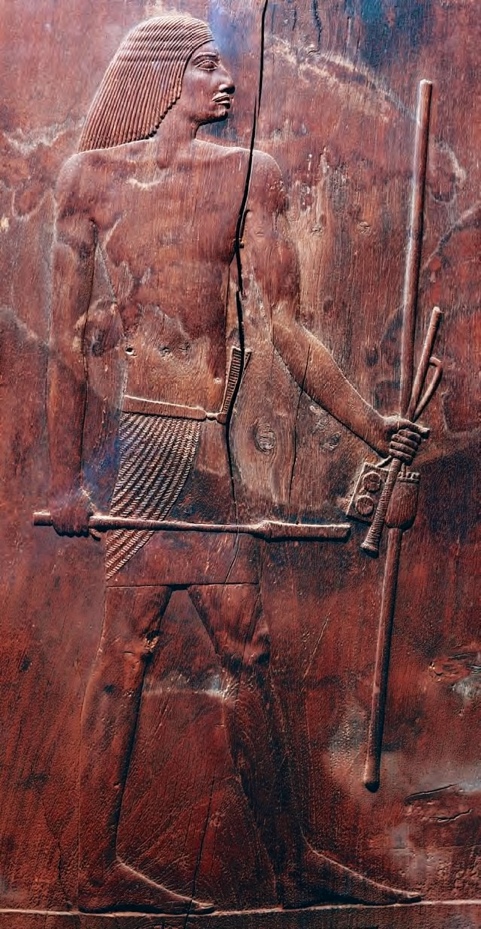
Why did ancient Egyptians have two left feet? Ernst Gombrich provides a fascinating answer in ‘The Story of Art’ – to make sure you had two good feet in the afterlife.

The art of the Pharoahs’ is in some senses very realistic. But lack of perspective and ‘side on’ angles can make it seem flat and naive to modern eyes. But that’s because it was governed by very formal rules of representation, scale and geometric placement.

A brief ‘naturalistic’ period, under Tutankhamen’s sun worshipping father, shows Egyptian artists absolutely could do portraiture. But once sun worship was banished, it was back to the formal rules of representation and proportion which lasted for 3000 years.

And why? Because the Egyptian artist was capturing the ‘ideal type’, the ‘essence’ or essential attributes of the person, duck, fish, foot or god portrayed. Thus key features for the afterlife – a full eye and two shoulders or the plumage of a wild fowl – were shifted, twisted, rotated or brought forward to ensure their ‘ideal attributes’ were clearly represented and hence captured and assured – in the version of the person or fowl which persisted into the afterlife.

20120418-195141.jpgEgyptian tomb art was more like designing a powerpoint slide than painting a picture. Placement, the right relative scale and the mix of images, words and sidebars to tell a story were the point. And a bit like ‘cutting and pasting’ onto a powerpoint slide, if necessary, images of birds or fish were ‘pasted’ on top of backgrounds to make sure their key attributes were visible and preserved.

The reason, then, for two left feet is that the ‘arches’ of the foot are more ‘essential’ than the outside – hence two ‘ideal’ feet are portrayed – arches facing out.

20120418-142727.jpgI’d have been laughing in ancient Egypt with my love of powerpoint. But what would the Egyptians have made of clip art? Surely sacrilege. Then as now.

Art and Artists

20120411-223341.jpg

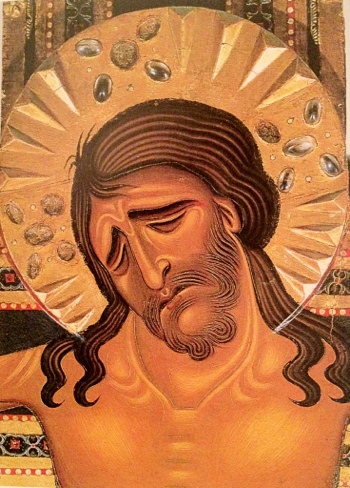
I’ve started E.H. Gombrich’s ‘The Story of Art’ which was recommended by one friend and came up in conversation with another today. Gombrich says there is really no ‘Art’, only artists and what they create.

A lot of what what ‘Art’ is actually about, is nothing to do with experts, critics, audiences or patrons – it’s about the artist and their personal effort to produce something of intrinsic value. The painting above from ‘The Story of Art’ simply and powerfully captures not only the passion of Christ, but also the passion of the unknown 12th Century artist.

I pointed out today that this connects with one of my dictums for social media – if you like what you’ve done that’s good enough, don’t worry about anyone else. I think social media is largely about forgetting the ‘audience’ and simply writing or posting something you personally care about, are interested in or want to say. It then finds an audience through chance and serendipity.

At this point in our conversation today I was forced to bring in Aristotle – and we had a laugh about it. Aristotle is knockout reference once you buy into him. There’s often nothing more to say once you’ve heard what Aristotle said on a subject.

So, drawing on Aristotle’s ‘Poetics’, my definition of the job of the artist – and bloggers too, I reckon – is to forget about ‘Art’ or ‘audience’ and simply:

Say, write, paint or sculpt something transcendent and universal about the human condition in no more and no less words, notes, chisel blows or brush-strokes than are needed.

If it’s good it will find appreciation – if only from the person who matters most, the artist.