Daubing

20120317-095458.jpg

I read a while ago that physicists were arguing over the wisdom of analysing the complete dataset from the latest probe which is measuring the cosmic microwave background radiation.

Why? Because from it we will soon have all the data it is possible for us to have on the origins of the universe. And if we analyse it all, we will have closed the book of history on our ultimate origins – there will be nothing more for future generations of physicists to know.

I was reminded of this by a lively conversation on the history of Western Art the other day. I’ve recently bought myself a primer which takes you from cave paintings to cubism and contemporary modern art.

In the early pages, just how small the sliver is, of what survives from antiquity, becomes obvious. There are no paintings, often no original statues and incredibly few fragments from entire cities, kingdoms and civilisations. The ‘cosmic background radiation’ of western culture is largely mapped. What we have is probably all there is.

But although only a fragment, it has been a treasure trove down the centuries. In the writings of Montaigne, his many references to Plutarch, Seneca, Horace et al were the ‘classical education’ which in his time (or in fact slightly before it as he lamented) were the gold standard. A Renaissance man who knew his ‘Greats’, knew everything that was worth knowing.

Paraphrasing Wikipedia, perhaps there is still something to be said for ‘Philo’s Rule’ of ‘classical education’: preserving those words and ideas which impart intellectual and aesthetic appreciation of “the best, which has been thought and said in the world”.

For the polymath, history is the easiest framework on which to hang intellectual curiosity. The past is finite. But, unlike the cosmic background radiation, the arrow of time for the living is forwards – at least for a few decades.

So, I think there’s a balance to strike between a good investment in “the best” that has been thought, said and painted, and keeping abreast of the ephemera of today. History has winnowed and filtered, but it has also carelessly and randomly mulched, ignored and forgotten.

Time marches on. And who knows which of today’s ‘cave paintings’ will be remembered 10,000 years from now. Daubing is as important as appreciating the daubing of others.

Botch Job

20120310-162715.jpg

Garden fencing
Ageing woodwork
Down comes the fence post
On a cold winter’s day
Sent out to repair it
With red hands
And blue notes
Patched up
Lashed up
Botched-up repairs

Cats promenading
Balancing on my fence post
Off comes the trellis
From my botched-up repairs

First day of sunshine
Sent to have another go
Drill bits
Rawl plugs
New screws and old
Ugly repair job
Patched up
Lashed up
Botched-up repairs

Were he still alive, my Dad’s Dad would have been proud of this one. A notorious botcher, he fashioned the ideal (for him) lifestyle accompaniment from an orange box, plywood, screws and nails.

A footstool-cum-occasional-table, its four sides held his betting slips, racing tips, pools coupons and newspaper as well as being a handy place to rest a cuppa. Splinters and gaudy fruit trademarks were the real drawbacks. But he was happy with it.

I can’t really say the same for my botch job – 8 different screw types, restraining stays which neither match nor fit and none of which are quite true. The old man’s genes have reached through time. But he’d have a good chuckle at a proper botch job.

Own Goal

20120304-105436.jpg

20120304-105452.jpgI’m having a jolly football weekend with old friends. But I’m still haunted by Andrew Graham-Dixon’s excellent and dark ‘Art of Germany‘ which I watched in the week. The image of the two bleak works of Caspar David Friedrich he presented stick with me. They sit side by side in Berlin: ‘The abbey in the oak forest’ and ‘The monk by the sea’.

Friedrich was seeking a more ‘primal’ and ‘elemental’ God than the one the church then offered. These two pictures suggest he found that search lonely and difficult.

His skies and landscapes are sometimes more hopeful, but these two suggest the crushing difficulty of finding God, on your own, at the turn of the 19th century in Northern Europe. Kierkegaard was on the same intellectual quest at around the same time.

It seems to me you’ll drive yourself mad if you go down this route. Humans ‘huddle’ and if you look for meaning all on your own, you’re lost. People, ‘relevant complexity’ and the here-and-now are what it’s about.

Football and a few beers with friends are a good investment in staying well away from ‘The abbey in the oak forest’.

Awkward or Orchid

20120303-085815.jpg

A fascinating article in the New Scientist puts forward the theory of ‘Orchid’ genes. The theory – and a variety of evidence – suggests 5-7 relatively recent gene variants (recent in evolutionary terms at least) work cumulatively and in combination to make people more or less ‘plastic’, responsive and sensitive to their upbringing and environment.

Once branded as ‘bad genes’ they now appear to be ‘adaptive’ genes. So, put ‘Orchid’ children in a good environment and they thrive. In a bad one and they develop anti-social behaviours.

As adults, ‘Orchids’ have the behavioural range to bring sensitivity and finesse to a positive context. But they are more volatile in a bad one. The other extreme from Orchids – Dandelions – cope fine with most situations.

Here’s a heavily abridged version of David Dobbs’ article. Fascinating stuff. I reckon I might be a lucky Orchid – lucky to have been carefully nurtured with a very caring and supportive upbringing.

But I also recognise that if you put me in a bad context – my secondary school to some extent, and working in UK Government to a very large extent – my leaves wilt and the ‘flower’ at my heart turns dark.

At times a bit more ‘Dandelion’ in my genes might have made me a happier camper, but we are who we are:

The genes that help create some of our most grievous frailties – anxiety and aggression, melancholia and murder – may also underlie our greatest strengths, from the sharing of meals to our spread around the globe.

Back in 1995, W. Thomas Boyce, a child development specialist then at the University of California, Berkeley, had been trying to understand why some children seemed to react more to their environment in measures ranging from heartbeat and blood pressure to levels of cortisol, a hormone related to stress.

Boyce was soon joined in this line of inquiry by Bruce Ellis at the University of Arizona in Tucson. Together they speculated that this reactivity also affects mood and behaviour.

Drawing on Swedish terms, they distinguished between “dandelion children”, who did about the same whatever their environment, and “orchid children”, who wilted under poor care but flourished if carefully tended (Development and Psychopathology, vol 17, p 271).

Many vulnerability-gene studies seemed to show that the so-called ‘bad’ variants of SERT, DRD4, and MAOA generated extra resilience and other assets in people with fortunate early years. Yet the literature largely ignored this upside: in paper after paper, the raw data and graphs indicated the positive effects, but the text failed to explore or even note them.

Others began publishing new studies and re-analyses of old ones showing that the so-called ‘vulnerability’ genes created not just risk but bidirectional sensitivity.

“These genes aren’t about risk,” says Jay Belsky, a psychologist at the University of California, Davis, who helped establish what is being called the plasticity gene hypothesis. “It is responsiveness – for better or worse.”

Belsky is doing bigger studies that gauge the cumulative effects of several plasticity genes. In 2010, he published an analysis drawn from a 12-year study of 1586 adolescents. He analysed five genes (SERT, MAOA, DRD4, and two other genes that regulate dopamine) and collected data on the teens’ behaviour and self-control, and on the mothers’ engagement in their lives.

The boys with no or only one plasticity variant proved to be dandelions: they fared about the same regardless of how engaged their mothers were. Those with two to five plasticity variants, however, responded like orchids, and the more they had, the more sensitive they were.

The orchid hypothesis also meshes with observations of adults in psychotherapy. Since 1997, Californian psychiatrists Elaine and Arthur Aron have written about what they call “highly sensitive persons”, or HSPs, who are especially responsive not just to trouble but to many of life’s pleasures and subtleties. As Elaine Aron sees it, this group, comprising an estimated 15 to 20 per cent of the population, perceive life at a finer, more nuanced scale.

As the plasticity theory has gained ground, the Arons and others have wondered if HSPs are essentially orchid children grown up. They argue that HSPs share with the orchid children a particularly reactive physiological and sensory response to the world.

Many of the orchid-theory supporters argue that even with its drawbacks, sensitivity is more often than not adaptive – and therefore selected for. This idea has gained credence by the discovery over the last decade that many of the plasticity genes have spread rapidly through humankind over the last 50,000 years.

Of the leading orchid-gene variants – the short SERT, the 7R DRD4 and the more plastic version of MAOA – none existed in humans 80,000 years ago. Since emerging, these variants have spread into 20 to 50 per cent of the population. “That’s not random drift,” says John Hawks, an evolutionary anthropologist at the University of Wisconsin-Madison. “They’re being selected for.”

Orchid genes could provide an advantage in several ways. To start with, they seem to create better mental health and greater resilience in people with secure, stimulating childhoods. The “problem” traits they can generate, such as anxiety, aggression or ADHD, could help survival in conflict-ridden or volatile environments. Plasticity genes also boost resilience at the group level by creating a mix of steady do-ers (dandelions) and individuals with greater behavioural range (orchids).

Some evolutionary anthropologists argue that these traits, particularly the restlessness and risk-taking found in many carriers of the 7R DRD4, may have helped drive human expansion.

The set of genes that help create our most grievous frailties may also underlie our greatest strengths – and sometimes the choice is settled in childhood.

http://daviddobbs.net/

Relevant Complexity 4) Red Wine

20120225-190031.jpg

Grape
Terrain
Sunshine
Rain
Bottle
Cork
Glass
Drain
Equals
Happy
Brain

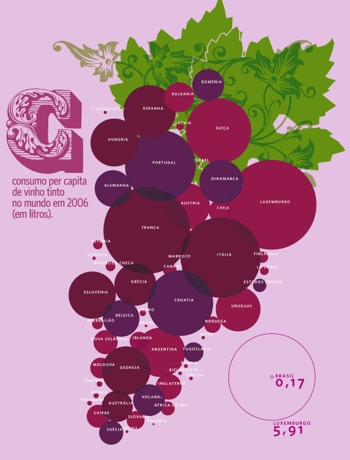
I generally watch my booze intake. Waking up with a fuzzy head and furry tongue isn’t a good mixer with effervescent children. But last weekend I fancied a tipple. There being no red wine in the house – due to my austerity measures – I found a slightly-less-than Stella Artois.

Reassuring alcohol hit – but the boast of ‘only four ingredients’ rang true. Unless it’s very very cold it’s just another fizzy beer. Not much ‘relevant complexity’ unless you have a skinful in which case it’s likely the wrong sort.

By this stage we were half way through a gripping film, so I decided to raise the stakes. Enter an unopened bottle of Baileys, bought for Christmas, dug from the back of a cupboard. No ice, but cream is always nice I thought. Yeeuch. Warm, thick, saccharine sweet gloop. That was the end of booze for the week.

Yesterday though, the missus had friends round for their book club. And in exchange for my baked Aubergine Parmigiana – result: two bottles of red on the sideboard! I’ve just opened the cheeky Rioja.

Mmmmm. Relevant complexity returns. Warm crushed red fruit, complex bouquet, smooth on the taste buds and gently down the throat. Marvellous.

As a health colleague of mine – then in charge of UK ‘liver policy’ – once pointed out, it’s all ethanol in the end. But the point of red wine is ‘relevant complexity’. I’m no connoisseur but I learnt a bit about reds living in France and on pre-kiddie holidays in the winelands of South Africa and Australia.

Someone else can write the book, but the combination of grape, terrain, sunshine and rain packages plain old ethanol in a very beguiling wrapper.

Distinguishing your ‘legs’ from your ‘noses’, youth from maturity, new world from old, ‘terroir’ from ‘tinto’ is a life’s work. And one I’m certainly looking forward to – in due moderation.