Sinister

20110515-080333.jpgI’ve always been more dextra than sinistre. Right-handed, very right-footed and very left-brained. But I worry for my son. With no left foot he’ll never make the England football team. Plus he’d stand a better chance of becoming a test batsman or bowler if he was a ‘cack hander’.
So a few weeks back I resolved to only dribble and kick footballs left-footedly to set him an example. I’ve also started brushing my teeth with my left hand. I’m slowly becoming quite accomplished.

Still, I was roundly beaten in a trial of strength at left handed handwriting by my daughter. She very much has the upper left hand.

When I told a friend about left-handed tooth-brushing, he smiled. Transpires he’s a left-hander. But he owned up to standing on one leg while brushing his teeth – very good for balance. Ronald Reagan famously said he always put his socks on balancing on one foot to keep him young.

This morning I brushed left-handed, balanced left-footed and burst out laughing as I did my teeth. A perfect example of the joy of ‘flow’ – being immersed in an engaging challenge, however small. Certainly nothing sinister about that.

Broadband

Our home broadband has been on the blink this week. You really miss it when it’s not there. Perhaps worse is when it comes and goes – one minute you’re surfing gaily, the next you’re beached with a ‘no network’ message.

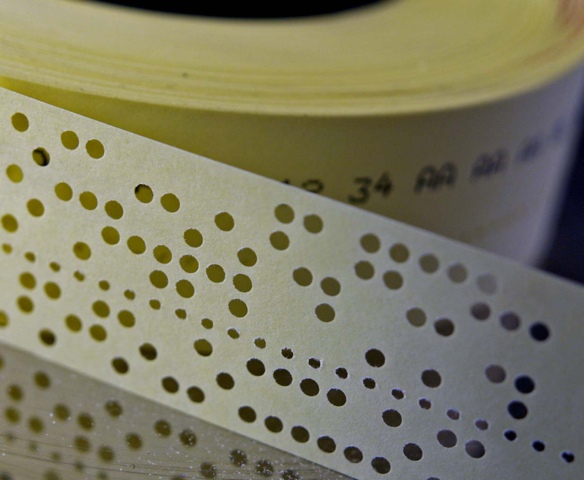
Csikszentmihalyi points out that, although impressive by electronic standards, the amount of data our minds can process simultaneously is surprisingly small. More punched tape than broadband. Two people talking to us at once or, say, riding a bike and whistling a song, just about exhausts our real time mental processing capacity. Any more and we lose attention and get distracted, flustered or confused.

I noticed it one day this week in the office. One minute I was churning out flowing prose, the next someone started talking in my earshot and I was distracted. I slowed to trickle – like someone was hogging my wifi. The talker left, bandwidth returned, and so did flowing prose. It was like flipping a switch.

Things, events, people and basic navigation are all basically different data and signals crowding in or cluttering up our cognitive bandwidth. This makes directing our consciousness and limited mental energy hard.

And it’s especially hard because life can easily just happen to us. Events and other people can readily soak up all the bandwidth we have. And if we do decide to use that precious resource on directed thought and action, we do so against a background of almost overwhelming distraction and diversions.

All life is, is the continual stream of sensory data, words, pictures, thoughts and ideas streaming through that narrow mental bandwidth. All we are, is the accumulated store of that data in the limited hard drives of our brains and to some extent those of others. It makes you think – until someone starts talking in your earshot and the mental connection is interrupted.

But given mental broadband is always there I’ve discovered I can redirect it when I catch myself wasting or underusing it. At work this week while being gently bored by a presenter on pan-European data collection standards, I contemplated the extraordinary beauty of a large tree – spare broadband successfully redeployed into joyful contemplation.

More experimental was testing optimising ‘flow’ by doing two different things simultaneously, and well. Combining loudly whistling the Marseillaise with cycling to work smoothly and safely through London traffic perfectly occupied my mental broadband. And in a heartily enjoyable way. Vive la France.

Our mental broadband has surprisingly limited peak capacity. But the compensation is it is ‘always on’. You can waste it or have it used for you, but you can also use it well. I found this week being more careful in how I deploy my personal ‘punched tape’ makes a big difference. Focusing its use on doing one or two things at a time really well – and exploiting every minute of it – whether I’m on my own, or with others, has removed a good deal of routine boredom and irritation from my week. Replacing that with moments of joy, satisfaction and genuine happiness is broadband well spent.

Waste not, want not.

Immersion

Concentrating on boiling a ham on the hob yesterday, I was reminded of a key aspect of ‘flow’ – immersion. ‘Flow’ is ceasing to be self-conscious or unduly conscious of others and becoming thoroughly immersed in the task or activity.

When you look at it this way, a number of things we usually consider important in enjoyable achievement turn out not to be – notably the immediate judgement and appreciation of others. Also, a variety of things we consider dull can suddenly become a joy.

Take hoovering the house. Usually a chore, and one I resent. I enter into it – if at all – with little a priori enthusiasm. I have, however, discovered it passes more easily with an iPod, headphones and music.

Surprising then to discover last weekend during a particularly energetic and virtuoso vacuum – as I removed the ‘T head’ to more precisely target the skirting boards in the kitchen – I was in full ‘flow’. It was an absorbing task, in which my goal was evident, feedback clear (disappearing crumbs and detritus) and my mental energy was fully absorbed (in music and coordinated physical effort). Stone me, it’s that simple I realised.

I was talking to another parent yesterday about how this applies to kids, sports and music. The art is perhaps in helping a child to become completely immersed in the ‘process’ of playing football or the piano to the point they cease to be self-conscious or unduly conscious of you and your anxiety/impatience/projection of your own hopes and fears (delete as applicable).

A lot of what we do with children and activities is the opposite. We make them concentrate on us, keep pushing them on – before they’ve had time to master or enjoy developing skills – and most of all we distract them with incentives and threats. The art of ‘flow’ is to let them lose themselves in what they are doing and forget we’re there – not focus them on extrinsic rewards or punishments.

More immersion perhaps means less coercion. And letting go a bit and getting lost in what they’re doing makes parenting ‘flow’ more easily too.

Kisses

As my other half left the house for work one morning this week, my daughter was a bit sad.

My daughter and son were perched with me on the back of the sofa. My partner waved to us through the bay window – in the nice way she often does. She waved through the first pane coming out of the door. She waved through the roses as she passed in front of the central sash. Finally, she turned back for a final wave through the third pane, as she disappeared out of view down the hill. But my daughter still looked sad.

I said to her ‘Your kisses will have reached her’. She shook her head and held her hands apart like my Grandad sized a fish and said ‘They can only travel this far’. I said ‘Much further if you blow them’. She still looked sad. ‘Only about as far as the bookcase to the wall’ she said.

And then my four year old son chimed in with his piping voice – and winning smile – and said confidently ‘A kiss can go all the way round the world’. We all smiled and felt better.

Cross Stitches

I’ve subscribed to Montaigne’s Essais on dailylit.com which breaks him up into comparatively bitesized chunks. Still the discovery that there are 426 daily episodes to look forward to sometimes feels a long haul. I’m up to episode 62.

Some days I skim him, some days I ignore him completely. But sometimes he discusses something with himself, in his meandering way, which speaks to my own day. Whenever I’m close to cancelling my daily dose of Montaigne, something crops up which piques my interest.

The other day I was tickled in Chapter XXV by his discourse on copying, citing and stealing the ideas and expressions of others. He describes the occasion he spotted a piece of stolen intellectual treasure in an otherwise dull read:

…After a long and tedious travel, I came at last to meet with a piece that was lofty, rich, and elevated to the very clouds… and so wholly cut off from the rest of the work, that by the first six words, I found myself flying into the other world, and thence discovered the vale whence I came so deep and low, that I have never had since the heart to descend into it any more.

In some ages quoting and embroidering ones own words with those of others has been considered scholarly. In others a sin. Montaigne is ambivalent, but on balance feels – properly cited – it is good to draw on others: 

…I myself… attempt to equal myself to my thefts, and to make my style go hand in hand with them, not without a temerarious hope of deceiving the eyes of my reader from discerning the difference… Besides, I do not offer to contend with the whole body of these champions, nor hand to hand with anyone of them: ’tis only by flights and little light attempts that I engage them; I do not grapple with them, but try their strength only. 

When I first read Aristotle and indeed almost any of the thinkers I’ve ‘tried the strength of’, it is easy to feel – at least for ethics – that it has all been thought and said. But an insight from Csikszentmihilyi reassures me that it’s still well worth thinking for myself. Like Aristotle, he maintains that there is no reliable guide or recipe for ‘the good life’. There are, at best, principles and then it is the work of every individual to create our own virtuous circle of thought and action. As Aristotle says: we are, what we habitually do.

That we each have a personal Odyssey to navigate, is reason enough to embroider our thoughts with the golden threads of others from all the ages. But Csikszentmihalyi’s further point is, even where great thinkers have distilled the essence of the good life for their age – Aristotle for the Ancients, Epictetus and Seneca for the random cruelty of the Romans, the Apostles for the tough early years Anno Domini, yogis, Confucius, the Buddha and others for their times and places – the times they are a constantly changin’. 

So not only is living ‘the good life’ a personal challenge, but it is a fresh generational challenge for every epoch given our vastly different social, technological and interpersonal contexts. 

It is almost impossible to imagine the scale of the technological difference between me typing on an Apple bluetooth keyboard in 2011 and Montaigne scratching on parchment in 16th Century France. And yet a decent proportion of what drops electronically into my inbox from his pen is in some way pertinent and relevant. I find it remarkable that both Aristotle and Montaigne travel the ages so well. 

And so to my handy consolation from Montaigne for this week. I’ve spent the last couple of days wrestling with the interaction between my two ‘lovely’ children and two other ‘lovely’ children. Of course they are each individually and collectively lovely, and the interactions between them have been mainly delightful. But they have also been occasionally loud, wearing and late one afternoon briefly teetered towards ‘The Lord of the Flies’. Who was it who said other people are hell? They were wrong – it’s children.

Overall though it was lovely – and with no qualifying speech marks. But yesterday morning as temperatures and tempers warmed, it was nice to enjoy a moment of Montaigne on the iPhone, reassuring me that 400+ years ago, Renaissance parents struggled with many of the same challenges: 

We often take very great pains, and consume a good part of our time in training up children to things, for which, by their natural constitution, they are totally unfit.

Nevertheless, I am clearly of opinion, that they ought to be elemented in the best and most advantageous studies, without taking too much notice of, or being too superstitious in those light prognostics they give of themselves in their tender years.

But, in truth, all I understand as to that particular is only this, that the greatest and most important difficulty of human science is the education of children.

Reassuringly parenting down the ages seems much like John Wanamaker’s view of advertising: everyone knows half of it doesn’t work, the problem is no-one knows which half. Much like ‘the good life’, ‘good parenting’ is a fresh challenge for every parent and every age. It is indeed the greatest and most important difficulty of the human sciences, but also – at least most of the time – the most rewarding.