Redrawing Lines

Learning to listen and learning to care for people hasn’t always been my forte. I’ve always read the data: the expressions, the fleeting emotion crossing someone’s face, the tic which tells all. But for much of my life I tended to routinely discard it. At work, for well over a decade, I pretty much thought emotions were to be ignored or surpressed – in favour of a pseudo-objective norm of ‘professional workplace behaviour’.

In the private sector this was a good protection mechanism against loss, and having to do bad things to people. People all around me were regularly ‘fed to the huskies’ in round after round of redundancies in in the late 1990s and I had to do some of it. Later in the Civil Service, you were always one honest comment away from a newspaper headline or a grievance procedure, so wise to stick to the party line.

Latterly, helped by a bit more more experience, some professional advice and two lovely children, I’ve learnt that my emotions and feelings – and my assumptions about those of others – condition nearly everything that happens to and around me. Best start using that data then.

So now I very much do. And through practice and a certain amount of inner calm, I can read and help people with their problems. It used to take me a huge mental effort – a short ’emoting’ session would leave me shattered. I’ve got better at it now. A few techniques help. But also tuning in to my own emotions, rather than using my head to respond, gets a far better result for much less effort.

The problem is I’ve become so good at it, that I’m now in demand. A steady stream of people regularly check in with me to unburden themselves, complain of injustices or moan about the world going to the dogs. Of course it’s nice to help. It’s also flattering to think I can. But sometimes I give too much. And sometimes to the wrong people.

This week a friend and I discussed emotional intelligence and a penny dropped – it’s time to redraw some boundaries with people I work with. I’m at work to get a job done and my emotional energy is the most precious resource I have. Sometimes helping people emotionally doesn’t help get the job done. And it takes it out of me. I need to spend my emotional energy more wisely at work and use it sparingly where it is most needed – to make a difference. 

But more importantly I need to save more of it for me – to invest it where it pays the richest return – in my friends and family. And that means redrawing some lines.
The Feast

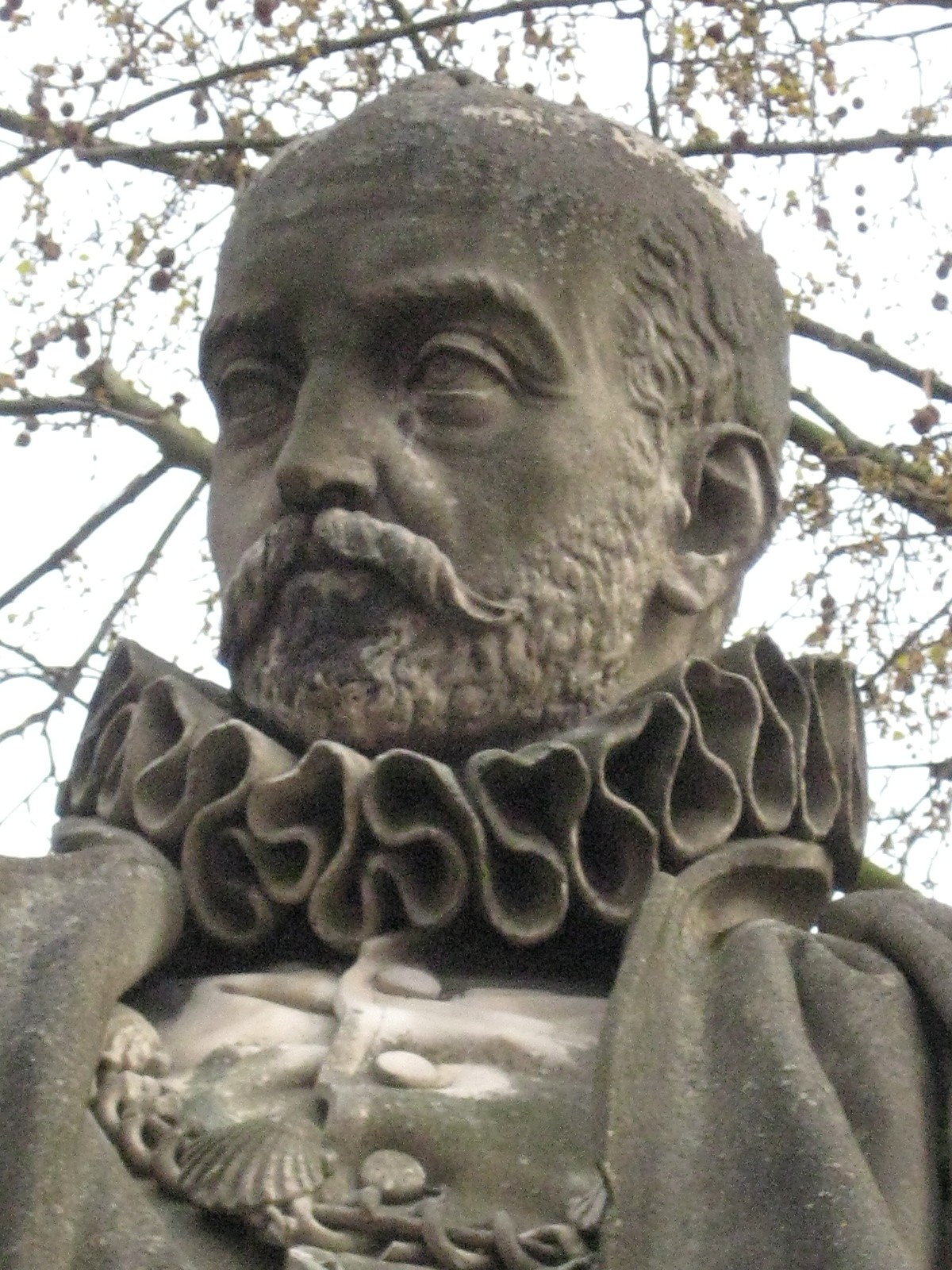
I’ve just started reading some Montaigne. He seems a splendid chap, not least as you can get to know him so well through his 1000+ pages of observations on the profound, trivial and mundane. As Wikipedia has it “Montaigne’s stated goal in his [Essays] is to describe man, and especially himself, with utter frankness. He finds the great variety and volatility of human nature (not least his own) to be its most basic feature.”

I’ve temporarily closed the book on Kierkegaard. I’ve certainly enjoyed him, for all his inherently untestable and unprovable ‘leaps of faith’, his requirement for ‘innerness’ and his argument for the complete subjectivity of existence. By comparison the great humanist Montaigne promises to be a refreshing gallop through a more worldly form of ‘existentialism’ – living and documenting a unique and full life.

Whilst out riding one day in his mid thirties, Montaigne had a near death experience. He was badly crushed by another man’s horse. The episode apparently convinced him that death wasn’t worth planning for, or agonising over. Everything you need for the ‘big day’ is already given to you by nature, be you philosopher or peasant. He concluded you never truly ‘meet’ death anyway, as his experience suggested you’re likely to be semi-detached in gentle delirium on the day itself. Stop thinking about it, and get on with living, was his post accident conclusion.

The worlds first ‘essai-ist’ or ‘trier-outer’ in French, Montaigne wrote on everything. Giving up the responsibility to analyse, sense-make or edit, he just wrote about what struck him. A sixteenth century Stephen Fry.

Many have described encountering Montaigne as meeting and making a ‘friend for life’. He is so open, transparent and eclectic, we can all see in him the meandering of our own minds. Mid-way through his life he packed in ‘objectivism’ and seeking to transcend the human condition and got on with the ‘subjectivism’ of living. 

On death, as Seneca had largely observed a millennium before him, Montaigne advises in his essay: That to philosophise is to learn to die:

“Wherever your life ends, it is all there. The utility of living consists not in the length of days, but in the use of time; a man may have lived long, and yet lived but a little. Make use of time while it is present with you. It depends upon your will, and not upon the number of days, to have a sufficient length of life.”

He says at the start of the essay:

“Let the philosophers say what they will, the main thing at which we all aim, even in virtue itself, is pleasure. It amuses me to rattle in their ears this word.”

His advice, encouragement and goad for living is:

“Why not depart from life as a sated guest from a feast?”

Why not indeed. I suspect Montaigne will turn out to be a lively and engaging companion for my next gallop.

Belisarius

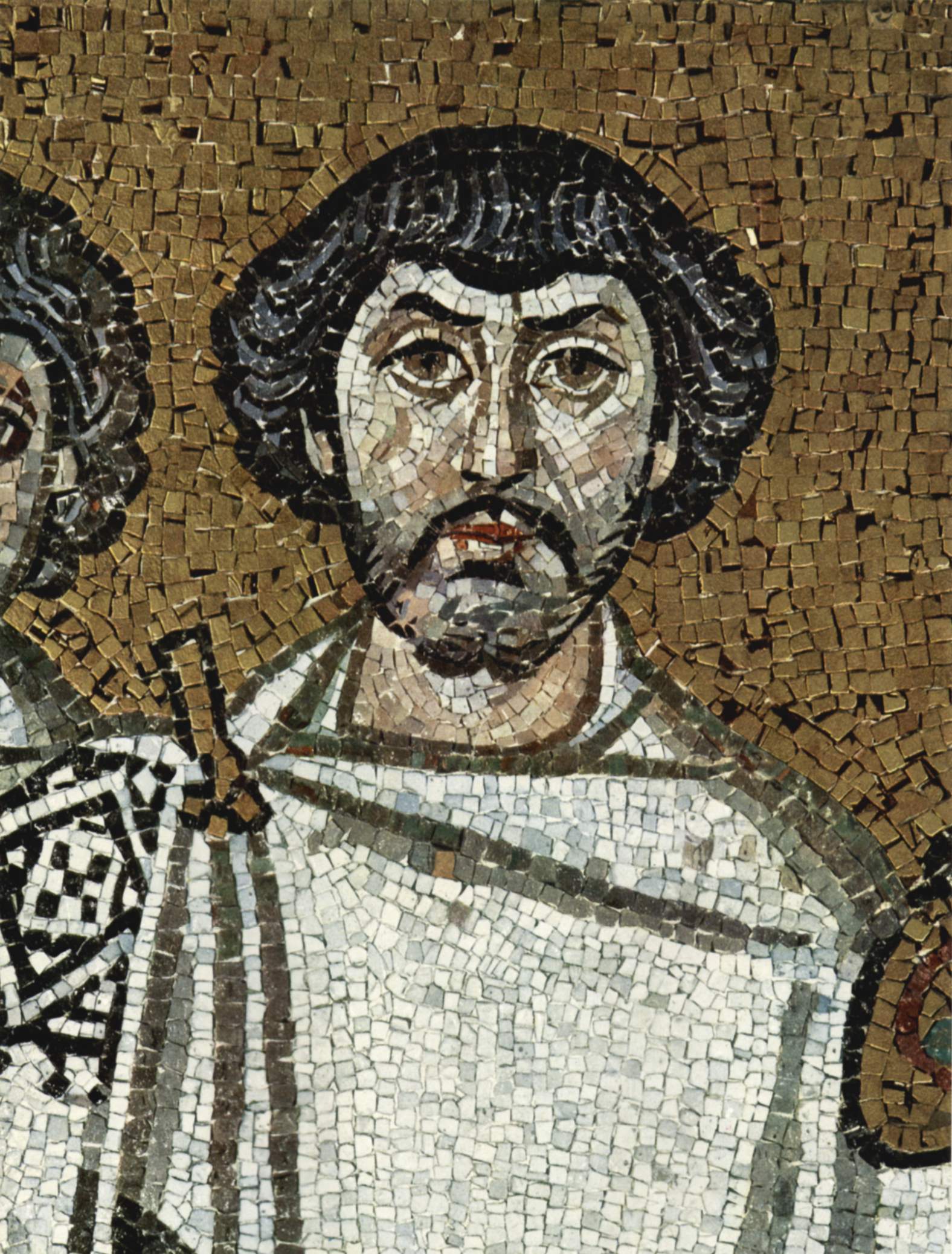
Belisarius, the last great Roman general, retook Rome for Constantinople twice. He fought off barbarians in a dozen lands. He took on impossible numbers and outmanoeuvred them. He took on increasingly unrealistic ‘asks’ from the Emperor, and, through his great skill, made them seem almost reasonable. As his reward he had both his eyes poked out by Justinian for the injustice of ‘lessening his Emperor by comparison’ with his virtue and deeds.

The moral of the story? Perfection in the loyal knight holds up an unflattering mirror to the king. Many transactions between people are about status, and for many people they are zero sum games – an exchange can only enhance my status if it diminishes yours. Like Belisarius, if you succeed, I am lessened.

‘Zero sum’ is a habitual but dumb human behaviour. I suspect, sadly, it’s also hard wired. You win, I lose. I niggle you and you might screw up. I mess with your mind and you’ll lose your head. You are shining, that’s making me look dull.

Why do we do it to each other? ‘Happy high status’ is the ‘positive sum’ posture – I’m good, you’re good. I’m happy you’re good; it makes me feel even better, which makes you feel better. And then, who knows, we might do something great together. But ‘happy high status’ needs to be met in a reciprocal spirit. Which is why it’s so rare. Like a true smile you can’t fake it. You’ve got to feel good about yourself to feel good about someone else’s success.

It is hard to keep ‘up’ when people are doing you down, but seeing it for what it is – substantially other people’s insecurity – helps me cope.

Inner Disposition

Twice this week I made myself feel a lot better by acting to adjust my ‘inner disposition’. Before Christmas I read the Stoic Epictetus’s ‘Handbook’. The translator and expert guide Keith Seddon has produced a simple summary of Stoicism in a flow diagram (above). In the centre is ‘adjusting one’s inner disposition’ which reduces ‘wrong judgements’, ‘debilitating emotions’ and overreaction to ‘external events’ – notably people. The products of an adjusted ‘inner disposition’ are ‘serenity’, ‘peace of mind’ and ‘fearlessness’. 

I associate Stoicism with passivity. Shrugging the shoulders, avoiding situations, retreating to the intellectual ‘cave’ and keeping your head down. I conclude from this week it ain’t necessarily so. Why? Because in both cases I ‘adjusted my inner disposition’ by taking action ‘in the moment’, not reflecting on it too much, and in the process letting go of the ‘debilitating emotions’ almost immediately. 

The first instance was easy. I was fuming about my day at work and the inappropriate behaviour I’d been subject to. I put my iPod on and tapped out a rant (which I kept to myself) on my iPhone. Rant written, fave tunes playing, my ‘inner dispositions’ changed in less than 5 mins. I let go and felt better.

In the second instance, I also wrote a rant, but this time hit Send. Risky. And after an hour with no answer, I started regretting it. But like hitting the reset button, or turning a computer on and off, my head and heart were cleared. So when the time came to deal with the consequences of my rant, I had a better ‘inner disposition’ and we changed the air.

Many of the great thinkers draw on Stoicism. Kierkegaard, who I’m enjoying at the moment, places taking responsibility for your own life as part of his ‘ethical’ stage of life. Aristotle advocates thought and action. Like Achilles though, sometimes I have to act – not think – to achieve ‘serenity’, ‘peace of mind’ and ‘fearlessness’.

Obituary

We had another big leaving do at work this week. Hard to do justice to over 30 years (by my rough estimate 8,000 or so working days) of a person’s working life in 15 minutes of speeches, but it felt a bit flat all told.

A friend of mine I spoke to at the event, put me onto the ‘QI Book of the Dead’ before Christmas. Several dozen great men and women, of all times and places, types and backgrounds. From Ghengis Khan to Henry Ford, Florence Nightingale to Emma, Lady Hamilton (left). They are a remarkable bunch. It’s an easy and enjoyable read. I won’t spoil its many surprises here. But three things stood out for me:

1) You absolutely can’t write your own epitaph

2) Many of the most famous and powerful people died in disgrace, despair or destitution – but often didn’t care so much about it in the end.

3) Most of the thinkers we revere today were completely ignored in their own lifetimes.

It summed up for me to: enjoy the day, follow your passions, have fun, and, if any of it is remembered, it probably won’t be what you expected. I think I’ll let go of my obituary, it won’t be me who writes it – either in work or life.