Death Becomes Us

20120419-085621.jpg

I’m reading the ‘Death’ edition of the redoubtable Philosophy Now magazine. And a bone-rattlingly good read it is too. Death dissected through metaphor, thought experiments, cool logic and rational argument.

The core issue, this issue: as medical technology advances should we prepare for immortality or stick with three score and ten? Imagine a typical lifetime of 300 years, the necessary absence of children, the ceaseless marinating in one’s own juices.

As always with philosophy there are no easy answers, but plenty of better ways of thinking about the problem. I remember reading the last half chapter of Julian Barnes ‘A history of the world in 10 1/2 chapters‘ at university as suggested by my philosophy tutor.

It perfectly captures the problem of eternal life – and heaven. Once you’ve had sex with everyone, studied and discussed everything, got your golf handicap down to a straight 18 (‘holes in one’ all the way round) and scared yourself at the ‘Hell’ theme park, what’s left to do.

Easy to say with the expectation of a good few years ahead, but I’m with Aquinas – the human animal makes no sense outside or beyond nature’s limits. Philosophy has always wrestled with it, but ‘death becomes us’.

As Seneca said its not so much the shortness of life, it’s not properly filling it, which is the tragedy.

The Fear of Dying

20111224-222302.jpgA good friend’s mother died last week. But we went to the footie together on Wednesday, as we’d planned despite – and because of it.

We didn’t talk much about it, but talking to others, one of the things in anyone’s head when parents die is: who will I turn to when I need some help? Some advice? Some love? Someone to be unconditionally proud of me?

Then there’s the realisation – I’m next. No-one can bear the thought of burying their own child, so the inescapable conclusion has to be that the least worst outcome is – I go next.

When I was worried about cancer 18 months ago I read David Servan-Schrieber’s excellent book Anticancer. Since then I’ve recommended it to four people – two diagnosed, one with a brother diagnosed and one with a terminal friend.

There’s a chapter I’ve mentioned to all four which describes the six worst fears about dying. I found it hard to read – it made my heart beat faster and feeling of anxiety rise in my chest. I knew I’d want to read it again – but couldn’t bring myself to do it, until today, remembering my friend.

Servan-Schreiber himself died this year, which feels strange. In a way he was speaking in the abstract when I read it last – now he’s been there and done it. This time though, the chapter didn’t make me anxious at all. The cloud of cancer has lifted from over my head. But also writing and reading Montaigne and others on death has defused the bomb for me – at least for now.

I feel calmer at the prospect of death, not least because I now have some answers for the six greatest fears:

1) The fear of suffering: as Montaigne convincingly tells, Mother Nature gives us all we need to cope at the end – dehydration, delirium, distance, departure.

2) The fear of nothingness: people and increasingly science concur: Oxygen depletion automatically creates a welcoming white light to which we are drawn, leaving only an eternal moment to reflect on the unique trace on the universe we have left with our lives.

3) The fear of dying alone: Servan-Schreiber quotes someone else’s advice: ‘Escape the prison of positive thinking’, accept time’s up and make your peace with those around you so they can cope with being near.

4) The fear of being a burden: Servan-Schreiber makes a good point, that in death rather than being ‘useless’ we become pioneers and guides for everyone close to us – we’re all going on this journey.

5) The fear of abandoning your children: an enormous amount of resourcefulness has already been carefully placed there – love, confidence, care – which they will draw on their whole lives.

6) The fear of unfinished stories: as Mike Oldfield says in ‘The living years’ – say it now, say it loud. Say the things you always wanted to say and do the things you wanted to do – or get over them. I reckon I’ve already had a good knock and said most of what I need – so far – to say to those who matter the most.

‘Pretty, act young, be fearless’ – as ‘Scorpios’, my choice of funeral music goes. I still have my folks though, so perhaps I’m kidding myself.

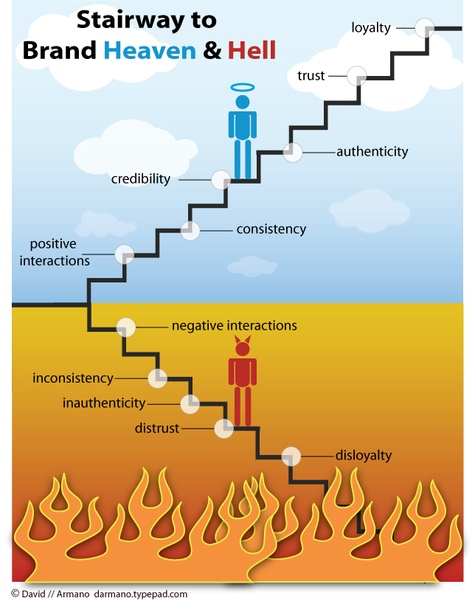
Heaven and Hell

I read in the New Scientist a while back that people who’ve suffered near death experiences commonly have a sense of drifting out of their bodies, floating above themselves and being drawn towards brightness above them.

Sounds heavenly. But according to the scientists there may be a simpler neurological explanation – the action of oxygen depletion on the brain.

My theory of Hell draws on Montaigne’s description of his near death experience falling off and being crushed by his horse. His delirium made time stand still, pain an irrelevance and his life pass before him scrambled in time and place by hallucination.

A troubled conscience taken into that context must be a special kind of torment. And stripped of all sense of time, it meets many of the classic criteria of Hell.

I watched the film ‘Source Code’ at the weekend. The hero is a massively injured soldier kept alive, artificially, so his brain can be deployed in a virtual timeshift to stop a ‘dirty bomb’. He saves the day. And his brain comes to a stop at a perfect moment – kissing the virtual ‘girl next door’ having saved millions of lives. Heaven.

We could all check out any minute. In olden times often with no warning in a brutal instant. Spartans sought glorious death on the battlefield – not much time to contemplate your sins in that kind of death. But there were plenty of other ways to go.

Montaigne, like the ancient philosophers he drew on, writes a lot about death. He points out:

We call that only a natural death; as if it were contrary to nature to see a man break his neck with a fall, be drowned in shipwreck, be snatched away with a pleurisy or the plague, and as if our ordinary condition did not expose us to these inconveniences… To die of old age is a death rare, extraordinary, and singular, and, therefore, so much less natural than the others; ’tis the last and extremest sort of dying: and the more remote, the less to be hoped for.

These days many of us will go slower and with plenty of time for delirium – troubled or ecstatic. Even in an accident there’s a fighting chance of oxygen, crash teams and intubation keeping you going long enough for a few timeless hallucinations. All the more reason to live well, without regret or a troubled conscience.

As Montaigne observes:

As an ill conscience fills us with fear, so a good one gives us greater confidence and assurance; and I can truly say that I have gone through several hazards with a more steady pace in consideration of the secret knowledge I had of my own will and the innocence of my intentions.

And quoting Ovid:

“As a man’s conscience is, so within hope or fear prevails.”

A clean conscience is a good principle for life. And, although I’m in no hurry to test it, I suspect also for death. If you buy my theory, bad deeds and a bad conscience could last an eternity in our final moments. Good ones potentially shimmer with ethereal light. Whatever you think comes next, a happy ending is another reason to invest in a good life in the here and now.

Servan-Schreiber

I was sad to read today that David Servan-Schrieber lost his battle against cancer the other day. But although he lost the battle, I think he won the war. He lived nearly twenty full and vivid years post diagnosis of a brain tumour. His cancer spurred him to develop as a human being and to write. Reading his books and fearing the big ‘C’ did the same for me.

His writing combined a rock solid scientific foundation with an interest in the whole person. As someone wrote in an obituary, he was tete, coeur et corps – head, heart and body. All I have to say is read his books: ‘Healing without Freud or Prozac’ for the head and the heart and ‘Anticancer’ for the body.

A good man, who it is tempting to say died too young. But reading about his full medical, research, writing, speaking, travelling and sporting life, perhaps at 50 he managed as Aristotle recommends: ‘to rise from life as from a banquet, neither thirsty nor drunken.’ I hope so.

The Feast

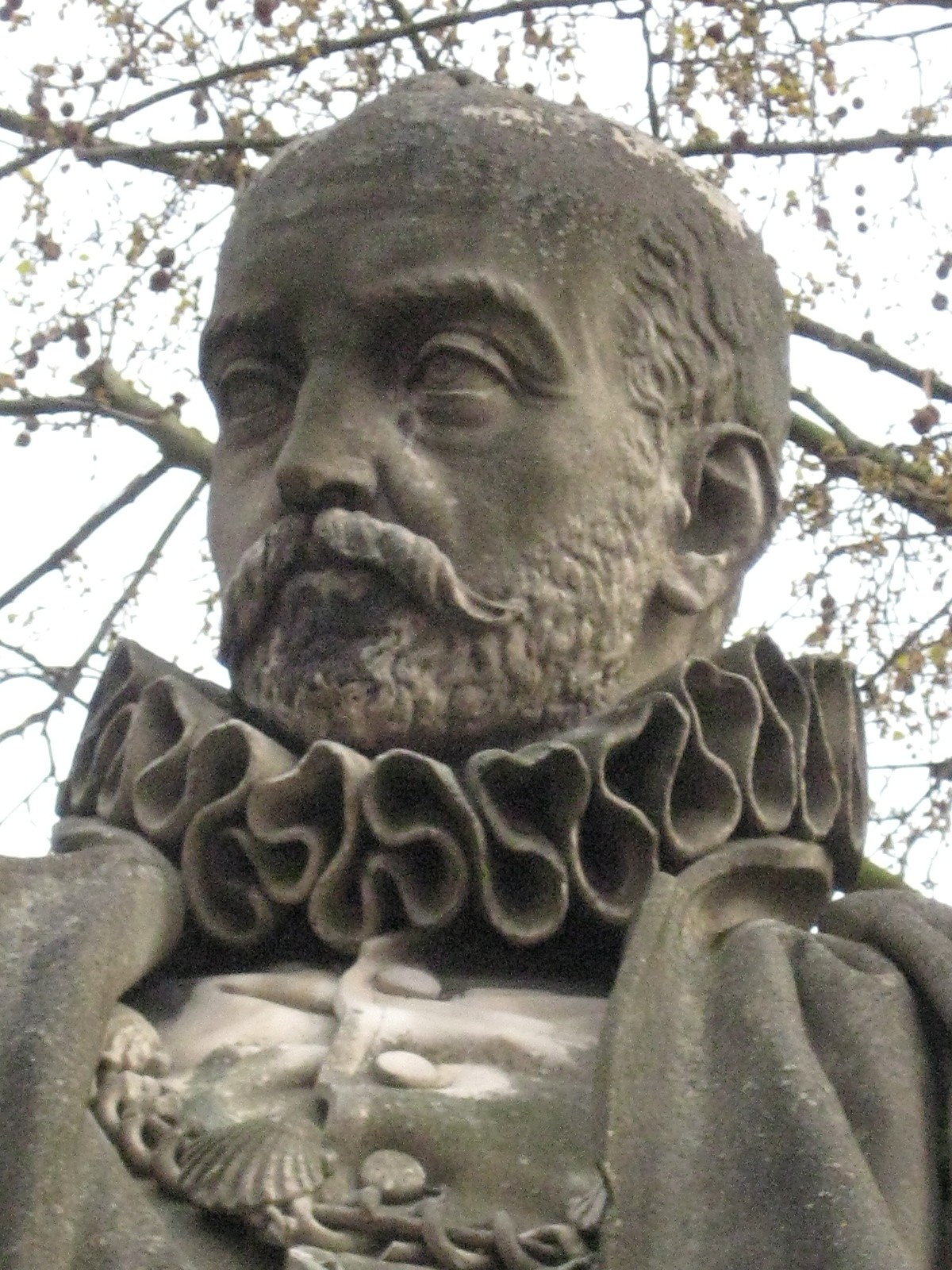
I’ve just started reading some Montaigne. He seems a splendid chap, not least as you can get to know him so well through his 1000+ pages of observations on the profound, trivial and mundane. As Wikipedia has it “Montaigne’s stated goal in his [Essays] is to describe man, and especially himself, with utter frankness. He finds the great variety and volatility of human nature (not least his own) to be its most basic feature.”

I’ve temporarily closed the book on Kierkegaard. I’ve certainly enjoyed him, for all his inherently untestable and unprovable ‘leaps of faith’, his requirement for ‘innerness’ and his argument for the complete subjectivity of existence. By comparison the great humanist Montaigne promises to be a refreshing gallop through a more worldly form of ‘existentialism’ – living and documenting a unique and full life.

Whilst out riding one day in his mid thirties, Montaigne had a near death experience. He was badly crushed by another man’s horse. The episode apparently convinced him that death wasn’t worth planning for, or agonising over. Everything you need for the ‘big day’ is already given to you by nature, be you philosopher or peasant. He concluded you never truly ‘meet’ death anyway, as his experience suggested you’re likely to be semi-detached in gentle delirium on the day itself. Stop thinking about it, and get on with living, was his post accident conclusion.

The worlds first ‘essai-ist’ or ‘trier-outer’ in French, Montaigne wrote on everything. Giving up the responsibility to analyse, sense-make or edit, he just wrote about what struck him. A sixteenth century Stephen Fry.

Many have described encountering Montaigne as meeting and making a ‘friend for life’. He is so open, transparent and eclectic, we can all see in him the meandering of our own minds. Mid-way through his life he packed in ‘objectivism’ and seeking to transcend the human condition and got on with the ‘subjectivism’ of living. 

On death, as Seneca had largely observed a millennium before him, Montaigne advises in his essay: That to philosophise is to learn to die:

“Wherever your life ends, it is all there. The utility of living consists not in the length of days, but in the use of time; a man may have lived long, and yet lived but a little. Make use of time while it is present with you. It depends upon your will, and not upon the number of days, to have a sufficient length of life.”

He says at the start of the essay:

“Let the philosophers say what they will, the main thing at which we all aim, even in virtue itself, is pleasure. It amuses me to rattle in their ears this word.”

His advice, encouragement and goad for living is:

“Why not depart from life as a sated guest from a feast?”

Why not indeed. I suspect Montaigne will turn out to be a lively and engaging companion for my next gallop.