Scienceing the sh1t out of it

I met some old professional friends for an annual reunion yesterday; and was pressed (as we all were) to recount my year. This made me think. 

First what did I want to say, why and to what purpose? Second, write it down (good old Chris Croft at work here again).

So I chose to describe my last year/18 months through five books:

1) Fierce Conversations

Gifted me by some free coaching from my previous employer, I was far more honest than I normally would be in workplace assessment; and was suitably diagnosed as: perfectionist, passive/aggressive and chronically unassertive with a strong tendency to take the problems of the world on my slender shoulders.  

Prescription: more ‘fierce conversations’ to assert my needs and proactively and reasonably manage the expectations of others.  

2) Depressive Illness – The curse of the strong

Faced with the first sight of what my new job entailed, I realised I’d made a horrible mistake… Massive construction projects with big problems, chronically unhappy people, no status, no power, no levers and probably hired as a fall guy. 

A very deep and sudden slump in my mood was explained and then arrested by this priceless little book. And since I’ve helped three other people by buying it for them. 

The essence: if you always work harder when more pressure comes on, and you don’t feel you can escape, you will blow a fuse. Simple and unavoidable; your body does for you what your mind won’t and cuts the power.

Prescription: ‘leave the Hoover in the middle of the room’ as I’ve written before; learn to deliberately leave some tasks undone, and some people potentially disappointed, as the inevitable reality of more demands than you can possibly meet.

3) Learned Optimism

Now this has been a BIG change… having written on it before I won’t rehearse it again.

Prescription: unless you are an Air Traffic Controller or a Loss Adjuster, as Eric Idle famously sang ‘always look on the bright side of life…’

4) The Anatomy of Peace

The simple if obvious discovery, that, nearly everything that happens to you, spirals out from your own attitudes and behaviour towards others. Correcting the behaviour of other people directly (however selfish, antagonistic or hurtful) is impossible; the only way to change things in others is by startling with yourself. 

As I said to someone this week, quoting Oogway from the marvellous Kung Foo Panda: “a man often meets his destiny on the road he takes to avoid it” as here

But I have discovered progressively (since an epiphany half way through this book on our family holiday in Italy last summer) change how you yourself are ‘being’ and everything else changes for the better. 

Prescription: stop trying to correct things in others and invest in listening, understanding and accommodating them.

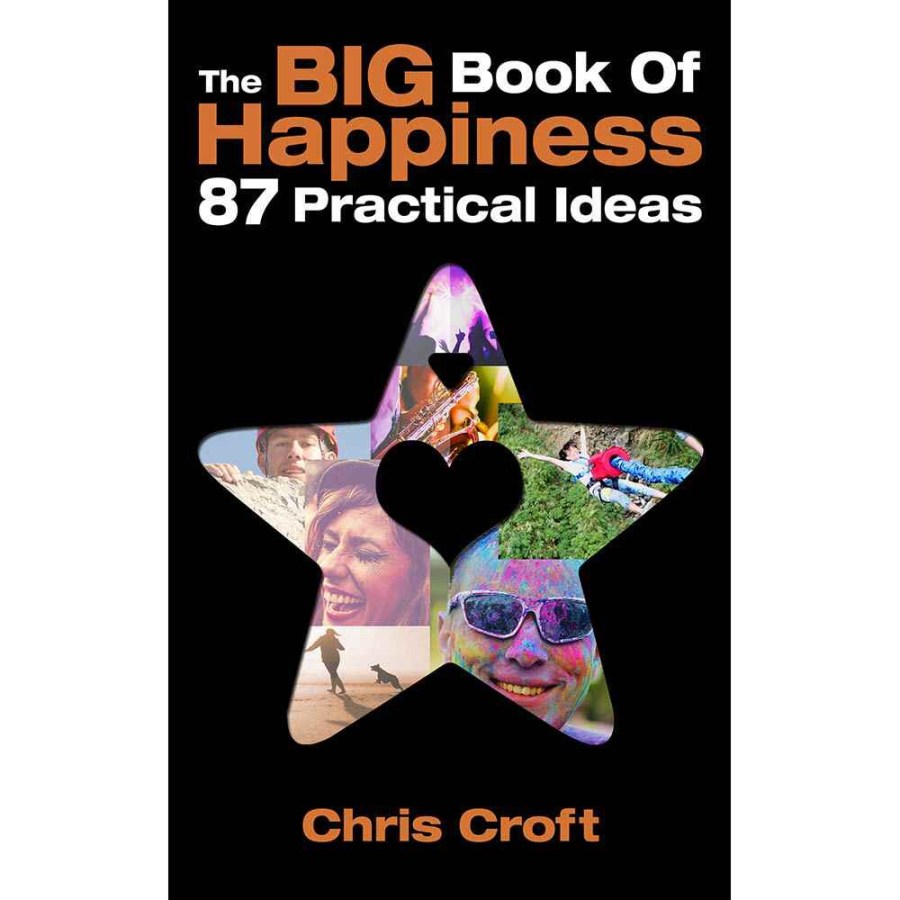
5) The BIG Book of Happiness – 87 Practical Ideas

My current favourite – there’s just so much to learn from this as here

Having reeled of my five books and the linking story, one of my pals said: ‘it’s quite impressive how you’ve analysed, researched and read stuff and figured out a way through all this.’

That struck me as very kind. I’d simply thought of it as ‘installing new upgrades’ and a few ‘power ups’ as my son would say. 

But on reflection later in the day, I concluded I’ve largely followed Matt Damon’s advice from ‘The Martian’ when he was faced with a hostile climate and a low apparent chance of survival – I’ve scienced the sh1t out of it. 

Happy Christmas

I’ve had a Happy Christmas and a joyful start to 2017; not thanks to Santa, but a dead sensible British bloke who has written a book I’d recommend to anyone.

‘The Big Book of Happiness 87 Practical Ideas’ is a no-nonsense guide to how to live.

The point of it all, self limiting beliefs and behaviours, getting organised, writing down and pursuing your goals – and the value of dabbling in things. It’s a cracker.

If you read nothing else this year read this… If Aristotle were around today, it’s the book he’d write.

Empathy, Pain and Compassion

New Scientist (11 May 2016) – How sharing can make you sick
Something I’ve done a lot in the last decade is empathy. Indeed it has become one of the things I do the most at work: connecting with people and quite literally ‘feeling their pain’.

Walk a mile in another person’s shoes and you see the world differently; better understand different opinions and why people do what they do – even when it seems to be hurting both them and you.

But it comes at a cost. Connecting with the pain of others is painful for me too. It hurts to see someone hurting; and even more if you go with them to the very source of their pain – deep fears, anxiety, sadness and loneliness.

And this is a problem, because once you’ve seen the contents of someone’s soul, you can’t just shrug and say: “Oh dear, how sad, never mind.”

Not least because neuroscience is proving that our own brain copies the pain and suffering of others when we empathise. We do literally ‘feel their pain’ when we listen and put ourselves in their place. Mirror neurones fire in sympathy – in exactly the same pattern as in the sufferer; and the suffering is shared.

So I was fascinated to read in the New Scientist (in the article pictured above), that we should consider cutting the empathy; and boosting our compassion instead.

What’s the difference? I’m not sure I exactly know – but I can ‘feel’ the difference… Empathy feels like touching a person and connecting directly with their emotions – literally feeling what they are feeling. The science says that’s also what’s happening in your brain.

The problem is that in sharing, experiencing and absorbing the pain of others, we lessen our own reserves of optimism, energy and resilience. And that means ultimately we are less able to summon the strength to help or improve anything. Empathy feels draining.

Compassion feels different. Compassion ‘connects’ like empathy does but instead of firing the pain-mimicking mirror neurones, compassion digs deeper: for warmth, care, appreciation and common humanity. 

I reckon this must be how the Pope, aid workers and others who have the suffering of hundreds, even thousands of people thrust upon them daily must cope. Not by directly empathising; but by digging deeper for compassion. Certainly it’s the Dalai Lama’s philosophy.

One thing’s for sure I haven’t cracked it yet. Now I know it, I can feel the difference – beleaguered by too much empathy; strangely strengthened by tapping into warmth and compassion.

But I can’t manage compassion confidently yet; I still want to say at the end of sad conversations “I feel you pain.” But I know now that’s the invitation and trigger to fire those mirror neurones, and carry away my share of another’s suffering.

Talking to a very smart work colleague about it this week, we concluded: if a person is in a deep dark hole, you’re not always helping them that much, if you just jump in next to them. 

Similarly if you do try to feel another person’s pain and offer the classic line “I know how you feel” you risk real failing yourself and the person you’re talking to – how can you really know how someone feels? 

When someone is in a dark place this week’s realisation is the answer isn’t necessarily to join them in the gloom. Compassion – if I can learn how to channel it – creates the same connection, but offers a better chance of staying happy and healthy; and being some help.

Forme et fond

I remember, from working in advertising in France, the slippery distinction between ‘forme’ and ‘fond’ – broadly style versus substance.

Much of organisational life lies in the interplay between these two; what’s the underlying ‘thing’ you’re tackling and how do you package and talk about it; as Wikipedia has it here.

If there’s one thing I’ve learned at work: it’s once you’ve sorted what you’re going to say; how you then say it will largely determine how it goes down – and that’s all about tone. Especially if it’s bad news, when some honesty and some humility are required.

The flip side though, is this week I’ve recognised when it comes to what others ask of me: I’m much better focusing on the ‘fond’ than the ‘forme’. 

Forget the wrapper, ditch the interpretation, don’t fret about being patronised, ignore any implied criticism, leave aside the irritation, accept any humiliation; just spot the action arising.

99 times out of 100, all that interpretation just makes you brood and ruminate: “can’t you see I’m busy”; “you really think I hadn’t thought of that”; or indeed occasionally “how bloody dare you…”

Leave all that alone and simply spot the action arising – edit the document, chase the right person, connect the protagonists; get the thing done. And the miracle of this approach is… No brooding (well not much anyway), problems solved, stuff sorted and even the odd word of thanks!

I conclude: if you want someone else to something; it’s all in the tone. If you are being asked to do something; ignore the style and focus on the substance – the action arising – however mundane, trivial or irritating; and do it directly. 

Rumination is ruination; happiness lies in action.

: ) or : (

2015/01/img_0021.jpg

Last week, someone I’ve known for some years described me thus: ‘A generally glass half empty person, whose glass seems a bit fuller than usual’. Anther person countered: ‘No he’s not, I’ve never thought of him as gloomy, it’s just the way he describes things. Look at his socks’. Hmmm.

Truth is they’re probably both right, but I do feel quite cheerful these days. Happiness is a product of the mind, body and soul, but also what you do with your time and who you hang about with. Still happiness is sometimes in the eye the beholder.

I’m reading about the life of the great composer Handel (or Hendel as apparently you should pronounce him). And despite sometimes being described as gloomy in his latter years, when he lost his eyesight – an anecdote suggests he still had some good cheer.

On the suggestion that (as a great organist in his own right) he should share a performance with another great British blind organist, he roared: “But my dear man, this would be the blind leading the blind!”

Pondering it, I idly asked my son what he thought last night, as he brushed his teeth.

“Do you usually find me a happy person or a sad person?”

He thought about it for a minute and said.

“Hmmm. Somewhat in between.”

That’s about right, I reckon – but my glass is generally a bit fuller these days.