#HappyWithMyLot

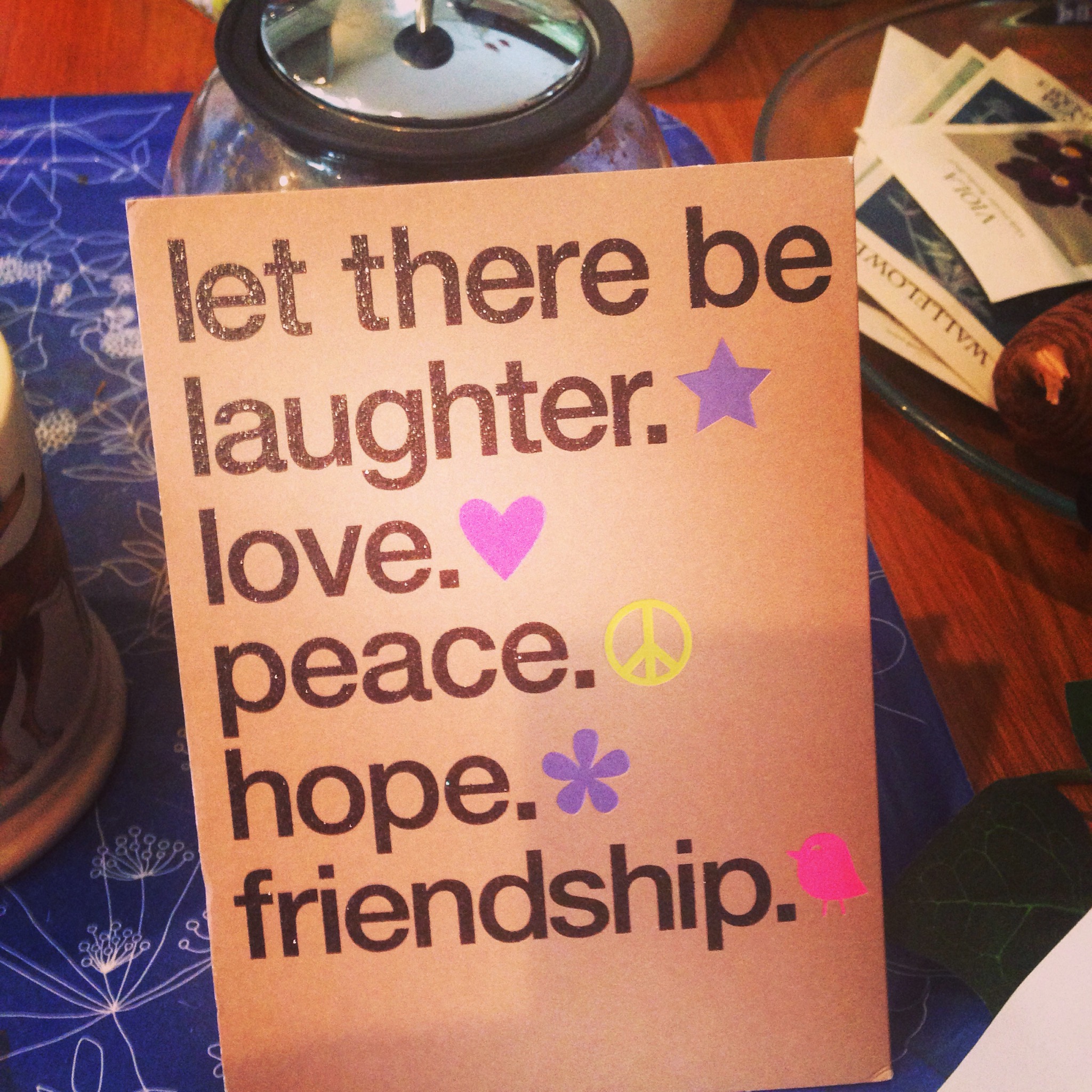
IMG_2789.JPG

On my birthday, last weekend, I replied to someone’s best wishes with the hashtag #HappyWithMyLot. And indeed I am.

Not in a smug, self-satisfied way. More in a content, honest about myself and accepting kind of way.

So many people I see, default to worry or anxiety. They want more, they want different or they want better. They want life’s many problems fixed today and solved tomorrow. But there’s a fair bit to be said for accepting where and who you are; and living with, whilst gently improving things.

Worry, frustration, fear – and getting wound-up or trying to fix everything and everyone’s problems is the alternative. A set of things I am, steadily, trying to leave behind.

It seems to me, with the passage of years, that most things in life are improvable. But not many are fixable; especially things which involve people. As the Dalai Lama usefully points out, some things were wrong before us and will still be wrong when we are gone.

And the big discovery for me, is I can often improve things faster and better, if I worry myself and others about them less. A positive élan moves things forward – the worst-case diagnosis scares everyone to death.

It’s all relative. I’m not kidding myself entirely. I still get irritated, frustrated, shirty and cross. But less often and less profoundly these days. Perhaps, because I’m increasingly at peace with myself and #HappyWithMyLot.

Toxic

20140215-113205.jpg

What happens when you are dealing with a toxic situation with toxic people and potentially toxic consequences? You go toxic obviously.

But I’m searching for another way. In the past when I’ve had to do this, I haven’t been able to stop myself ingesting some of the toxic waste. Less doing bad things myself, more feeling sad, bleak and dark hearted. So who better to accompany me on my latest toxic clean-up than His Holiness the Dalai Lama?

As if by magic, his face was gently radiating out from a prominently placed book at our seaside library last weekend when I took the kids.

This is why we need libraries.

It takes a human to recognise that on one of the wettest winters on record, the Dalai Lama on ‘The Art of Happiness’ would be a good book to strategically place right by the entrance. Those quietly helpful, studious folk – librarians – know what they’re doing…

So what has the Dalai Lama to say?

Simple really:

1) Promote happiness and reduce suffering – especially your own.

2) Treat others with compassion, interest and openness.

3) Welcome intimacy with many – not just a few – with a few words, a smile or a simple kindness.

Easy really.

As I started writing this, I was going to choose a toxic ‘skull and crossbones’ to illustrate the post.

Now, having written it, I shall choose a beam of sunshine. That’s the Dalai Lama difference.

Sisyphus

20131228-191533.jpg

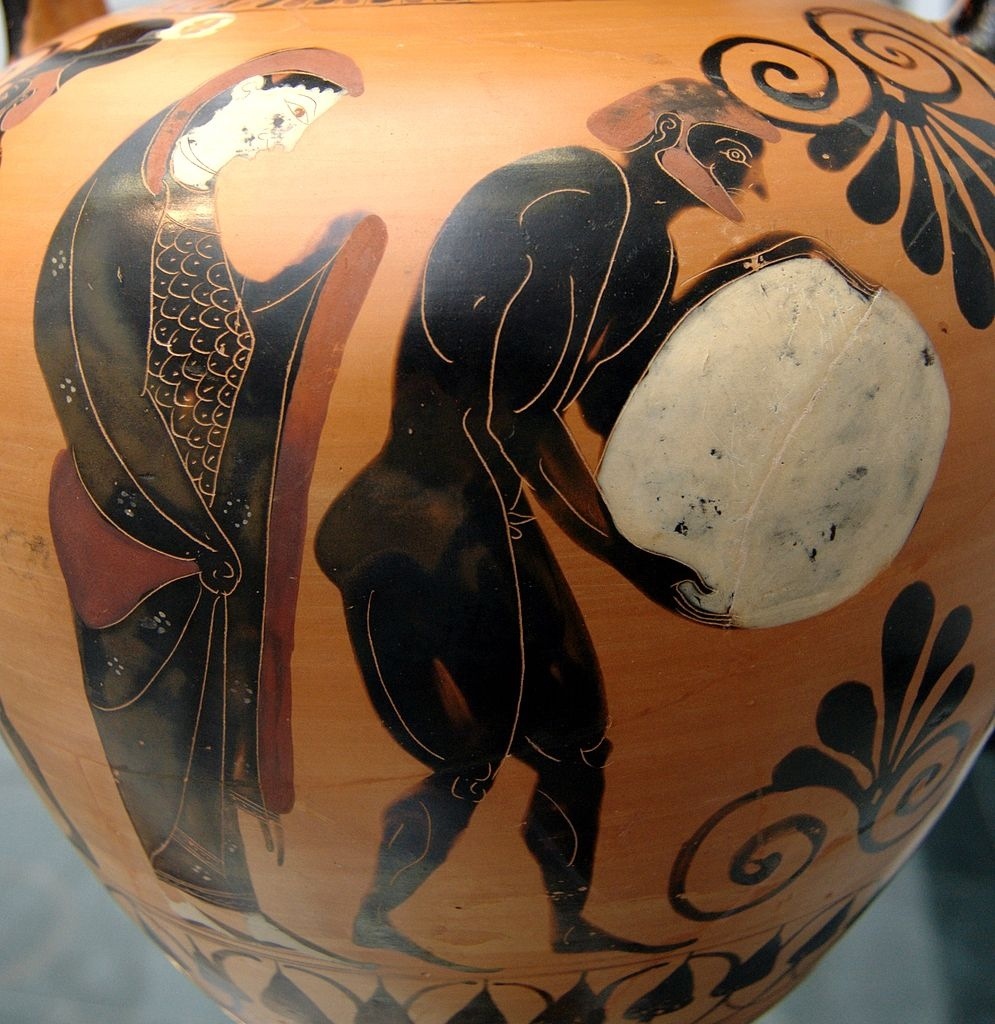
Albert Camus, the French Algerian Existentialist, challenges us to be happy as Sisyphus. That Greek King was damned by Zeus to forever roll a boulder uphill, only to have it roll back down as soon as the summit was achieved.

For Camus, the human condition requires us to face the futility of Sisyphus – that we are alone in the universe without meaning or destiny, each pointlessly rolling our own boulder uphill. But Camus’s challenge to us, is to smile and be happy in the face of this futility – not sad or downcast.

And the lot of Sisyphus, was mine yesterday – faced with several hundredweight of miscellaneous building rubbish to shift, in a biblical downpour. Badly bagged, paint dripping from it, from a narrow alley to an unknown refuse site without proper parking or help.

Three bags in – I was Sisyphus. Drenched, cold, back stiff and a hamstring already taught. With dozens more bags and wood and board and plastic and blinds and rubble and cement and soaking dustsheets and rags and sharp stuff and awkward stuff and worst of all paint-dripping stuff. A ball ache to match the back ache.

Toying with chucking it in, taking shelter or hoping it would all go away, Monsieur Camus came to mind -smiling enigmatically, with the collar turned up on his French trench-coat…

All human existence was momentarily encapsulated in sacks, rubble and timbers. To be happy as Sisyphus, the triumph of the spirit over drudgery – the satisfaction of a thankless task well done.

And it was done. Drenched, back-breaking, four car loads of dripping, spiky, heavy building debris bit the dust. And a happy Sisyphus was I.

So much so, that after a couple of celebratory beers and a pepperoni pizza, I cheerfully armed myself with two chisels and cleared two staircases of carpet staples and nails.

Zeus himself would have been grudgingly impressed and Camus was right. Sisyphus, happy, is the satisfaction of a thankless task well done. And that’s about all there is to life – chin up, put a smile on your face and keep rolling that boulder.

Autumn Sunrise

20111116-191114.jpg

On a misty morning
With the kids in the car
Turning left
The surprise of a huge sun
Low in the sky
A silver gold blob
Just too bright to stare at
Not too bright to blind
Heralds
An emergent phenomenon
Not easily had
Coming into being
In my busy head
Happiness
More than a brain state
A life lived instead
Myriad things
In work at home at play
To bring together
Before it is found
Easily lost
A single moment can confound
But in simple pleasures
Doing the right things
Caring for people
About things
And oneself
Happiness shines
At times
Just too bright to stare at
Not too bright to blind.

I talked to a taxi driver today – an old man and a nice one. He revealed he studied art a good many years ago. Very much against the odds on a scholarship, he went to the art school at the bottom of our road – near where he was taking me.

He said other cabbies sometimes mock when he says he paints, but it brings him great peace and satisfaction. I owned up that I’ve started writing poetry too. We found ourselves kindred spirits. It’s not always the winning, it’s often the taking part with art. This poem refers to yesterday, but some of the warm glow spilled into today’s conversation.

Of Angels

20111105-201745.jpgSmarting from the accusation I seldom read the source, I’m wading through Aquinas at present. Corblimey he’s obsessed with some things well beyond my interest. But that’s because I’m reading him for his ethics, and he’s writing a science book as far as he’s concerned.

Summae Theologica is, I come to realise, describing Aquinas’ views on how the world, universe, animals, minds, substance and energy all work – the lot.

Not surprising then he spends considerable time on causation – what causes what, what is primary, what is secondary and what is ‘higher’ and ‘lower’, what is an ‘operation’ what is a ‘state’.

His method is famously rigorous: three or four well sourced views on a theme, his own judgement and an answer to the opening views.

I think he quite carefully integrates a humanist perspective with a religious one. At times he acknowledges tantalisingly what ‘would’ be the case if there was no God – Aristotle ‘would’ be right on human happiness for instance he says.

After Aristotle, he concurs that our ‘end’ is indeed happiness. But we achieve happiness imperfectly in our mortal lives. We achieve it most in contemplation. In contemplation of what though?

For Aquinas, of course, that would be God. But contemplation of God is, he acknowledges, tricky. Not least as He is infinite and Our reason is finite. We’re snookered from the off.

What to do? It could be worse. Animals are even further from God than we are. They lack our intellect and capacity for reason and thought and so can’t contemplate God at all.

Aquinas explicitly acknowledges that nature has fitted us and animals with desires and emotions to further our own survival and that of our species – positively Darwinian. But they are ‘beneath’ us and we are a rung down from – you guessed it – Angels.

God tops Angels of course, but each in the chain comes closer to ‘perfection’ and achieves ‘happiness’ most by ‘touching’ the one above.

I’m not sure how many farm animals would agree they are ‘perfected’ and happier ‘touching’ humans. Perhaps a well trained sheepdog. But we humans can attain greater happiness in the use of our more ‘perfect’ power, namely contemplation. And among the things we can happily contemplate are Angels.

Now this is a thought I can honestly say I have never had. Beyond the one on top of the Christmas Tree and my daughter in the school nativity, I have never spent any time contemplating Angels. Perhaps I should?

But the point I take from Aquinas and Angels is this: contemplation, seeing beauty around us and perfecting and developing our human capacities, skills and aptitudes is where Earthly happiness lies.

Csikszentmihalyi comes to mind. As I said to someone last weekend it’s all about adding ‘relevant complexity’ to our lives and personalities.

And I think this is what Aquinas is getting at too. A life of virtue, self-improvement and integration of the body, soul and mind might mean at the end of it all, the ‘bottled essence’ of us – probably in frail and wizened form – is a shimmering soul ‘touching’ that of an Angel.