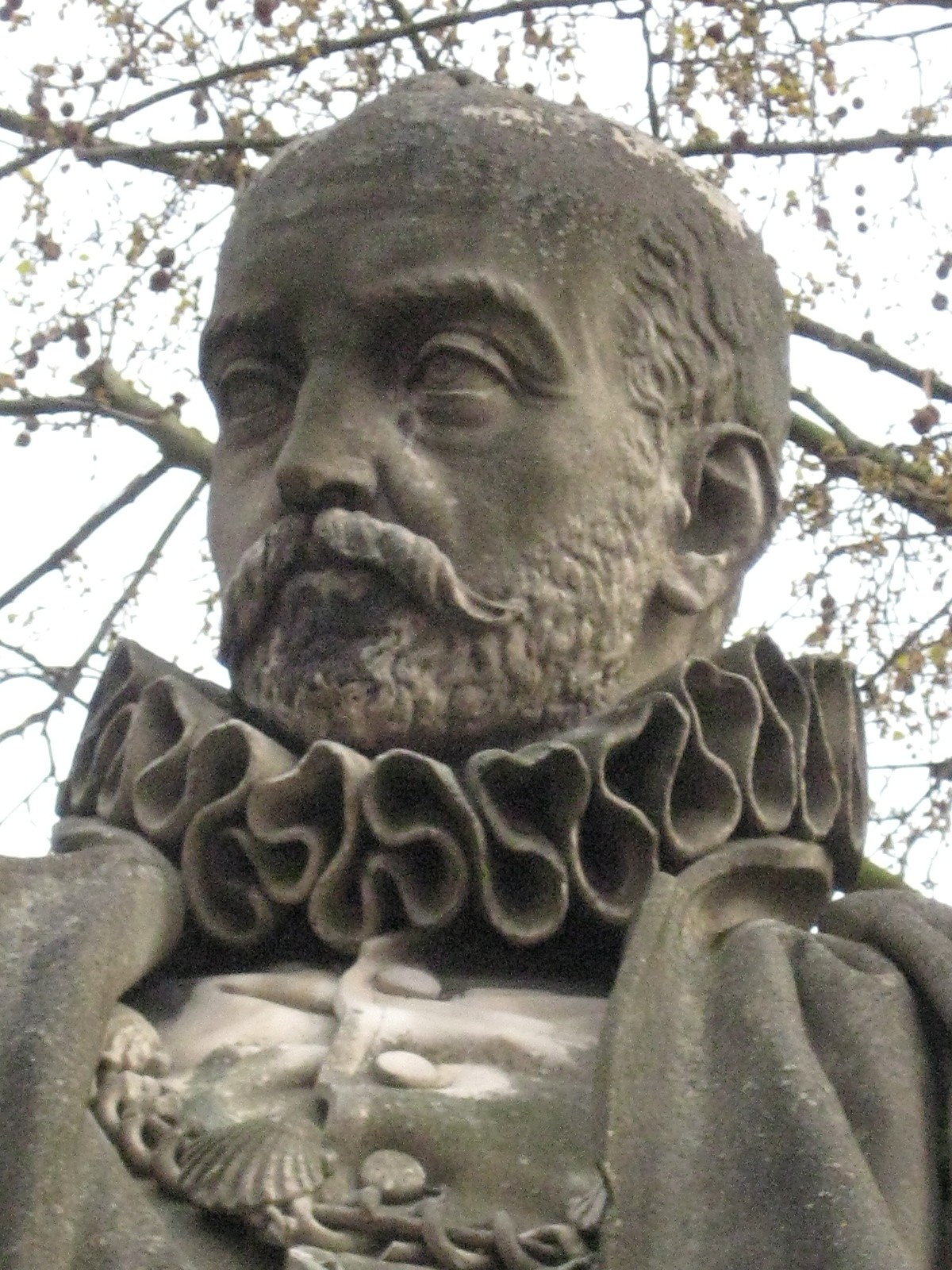
 I’ve subscribed to Montaigne’s Essais on dailylit.com which breaks him up into comparatively bitesized chunks. Still the discovery that there are 426 daily episodes to look forward to sometimes feels a long haul. I’m up to episode 62.
Some days I skim him, some days I ignore him completely. But sometimes he discusses something with himself, in his meandering way, which speaks to my own day. Whenever I’m close to cancelling my daily dose of Montaigne, something crops up which piques my interest.
The other day I was tickled in Chapter XXV by his discourse on copying, citing and stealing the ideas and expressions of others. He describes the occasion he spotted a piece of stolen intellectual treasure in an otherwise dull read:
…After a long and tedious travel, I came at last to meet with a piece that was lofty, rich, and elevated to the very clouds… and so wholly cut off from the rest of the work, that by the first six words, I found myself flying into the other world, and thence discovered the vale whence I came so deep and low, that I have never had since the heart to descend into it any more.
In some ages quoting and embroidering ones own words with those of others has been considered scholarly. In others a sin. Montaigne is ambivalent, but on balance feels – properly cited – it is good to draw on others:
…I myself… attempt to equal myself to my thefts, and to make my style go hand in hand with them, not without a temerarious hope of deceiving the eyes of my reader from discerning the difference… Besides, I do not offer to contend with the whole body of these champions, nor hand to hand with anyone of them: ’tis only by flights and little light attempts that I engage them; I do not grapple with them, but try their strength only.
When I first read Aristotle and indeed almost any of the thinkers I’ve ‘tried the strength of’, it is easy to feel – at least for ethics – that it has all been thought and said. But an insight from Csikszentmihilyi reassures me that it’s still well worth thinking for myself. Like Aristotle, he maintains that there is no reliable guide or recipe for ‘the good life’. There are, at best, principles and then it is the work of every individual to create our own virtuous circle of thought and action. As Aristotle says: we are, what we habitually do.
That we each have a personal Odyssey to navigate, is reason enough to embroider our thoughts with the golden threads of others from all the ages. But Csikszentmihalyi’s further point is, even where great thinkers have distilled the essence of the good life for their age – Aristotle for the Ancients, Epictetus and Seneca for the random cruelty of the Romans, the Apostles for the tough early years Anno Domini, yogis, Confucius, the Buddha and others for their times and places – the times they are a constantly changin’.
So not only is living ‘the good life’ a personal challenge, but it is a fresh generational challenge for every epoch given our vastly different social, technological and interpersonal contexts.
It is almost impossible to imagine the scale of the technological difference between me typing on an Apple bluetooth keyboard in 2011 and Montaigne scratching on parchment in 16th Century France. And yet a decent proportion of what drops electronically into my inbox from his pen is in some way pertinent and relevant. I find it remarkable that both Aristotle and Montaigne travel the ages so well.
And so to my handy consolation from Montaigne for this week. I’ve spent the last couple of days wrestling with the interaction between my two ‘lovely’ children and two other ‘lovely’ children. Of course they are each individually and collectively lovely, and the interactions between them have been mainly delightful. But they have also been occasionally loud, wearing and late one afternoon briefly teetered towards ‘The Lord of the Flies’. Who was it who said other people are hell? They were wrong – it’s children.
Overall though it was lovely – and with no qualifying speech marks. But yesterday morning as temperatures and tempers warmed, it was nice to enjoy a moment of Montaigne on the iPhone, reassuring me that 400+ years ago, Renaissance parents struggled with many of the same challenges:
We often take very great pains, and consume a good part of our time in training up children to things, for which, by their natural constitution, they are totally unfit.
Nevertheless, I am clearly of opinion, that they ought to be elemented in the best and most advantageous studies, without taking too much notice of, or being too superstitious in those light prognostics they give of themselves in their tender years.
But, in truth, all I understand as to that particular is only this, that the greatest and most important difficulty of human science is the education of children.
Reassuringly parenting down the ages seems much like John Wanamaker’s view of advertising: everyone knows half of it doesn’t work, the problem is no-one knows which half. Much like ‘the good life’, ‘good parenting’ is a fresh challenge for every parent and every age. It is indeed the greatest and most important difficulty of the human sciences, but also – at least most of the time – the most rewarding.
 Achilles & Aristotle