Poetic Licence

The experience of rapidly tapping out some words (‘School Run’ below), to manage my stress and frustration at my son not getting out of the car this Thursday morning, was an interesting one.

There’s something about tapping an iPhone screen and conjuring a few words of rhyme which both soothes and fulfils. So I did another on ‘spelling’ on Friday morning:

Spelling test
Practice quest
Raised tempers
Points incentives
Distraction reigns
Grumps
Everyone’s cross
What have we lernd
Very little

‘Awayday’ (below) tumbled out last night and I find myself unexpectedly enjoying churning out poetry instead of prose for a change. Perhaps it’s the influence of Twitter. Saying more in less distills your words. Overnight I got a cheerful ‘like’ and a nice comment to encourage me along.

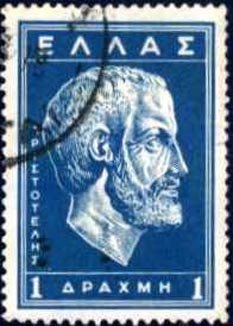
As so often in recent times I have Aristotle to thank. He says the job of the poet is to say something transcendent and universal about the human condition, in no more or less words than are needed. I find this strangely liberating. It doesn’t matter if it’s perfect, scans or rhymes. The job is done if it says something which chimes.

Banal is meaningful if it triggers a memory or a moment of empathy. I read in the New Scientist this week that life passes more quickly as we get older because our senses are no longer constantly alight with new experiences – we’ve seen it all before. The challenge then is to keep finding ways to bring life to life. So I’ve recorded my morning for my own pleasure and future recollection. Aristotle gives us all poetic licence, which is good for the mind and the soul.

Post office sorting
A Saturday routine
Too large for your letterbox
Sorry you weren’t in
Stand in line
For modern life’s Aladdin’s cave
Got any ID for that
Then
Cardboard boxes and sealed bags
Reveal
New household treasure
To carry off
In triumph
Home

Bacon sandwich
Warm baguette
Irish rasher
Ketchup lash
Then
Focused eating
Greasy plate
The only trace

Sun’s rays
Happy days
In the park
The children lark
Throwing and catching
Tearing around
Shouts of delight
Ball goes to hand
Ball goes to ground
Swings, bumps and bikes
Life is easy
Sometimes
Awayday

20111014-223632.jpg

Team awayday
Cautious start
Scrape of chairs
Opening gambits
Familiar tunes
And some new ones
New dance partners
Take careful steps
The odd squashed toe
All trying gamely
Until we lose one another
Lengthy meander
Round the houses
Some infinite loops
Time gets short
Tempers shorter
Cavalry charge
Then it all slows down
And the record stops
Moment of silence
Ice breaks
Put back together
Fire each other up
Clear the fog
Next steps
Sense of closure
Spot of disclosure
We all feel closer
Wrap it up
And game over
Decent result

School Run

20111013-214210.jpg

School run
Is no fun
Crying child
Try to be mild
In the car
Getting later
So many people
Do nothing to cater
Me first
You wait
Milling around at the gate
Daughter searching
For her pals
Sees them
Runs
Little wave
Safely done
Then my son
‘I don’t want to!’
Take a moment
Out he comes
In the playground
Climbing frame
Changes the game
A kiss on the run
From my bun
His smiling face
Saving grace
Hard slog
Right old flog
It gone done
Not much fun
Ho hum
Tomorrow is another one

Sock Drawer

In a brief moment of peace this morning – as newly shod children ran from the house with their mother – I wedged in a bit of Aristotle. Via dailylit.com, I opened a couple of chapters of ‘On Poetics’, including the famous line: ‘Poetry is finer than history, as it describes the universal, while history describes only the particular.’

Aristotle is fascinating on ‘plot’, beginnings and endings and the ideal length. Most of all though his point is that plot makes poetry – not verse or the central character. The poet’s prime job is to say something transcendent and universal about the human condition, in a length which contains no more and no less than is needed.

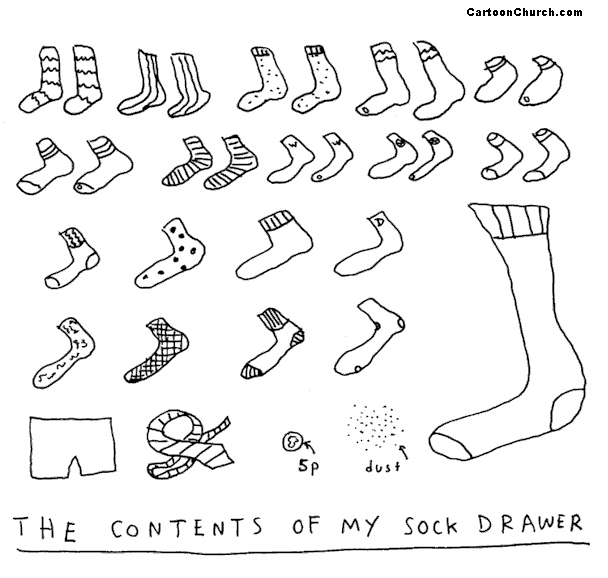
Reading Aristotle is like having your intellectual sock drawer sorted for you. Concepts ordered, ideas reconnected. Then everything neatly paired and placed just so. Not showy nor rhetorical, bombastic nor florid. No more and no less than is needed. And, without fuss, a tidy drawer of knowledge and ideas added to your head. Marvellous.

Poetics

Aristotle is always refreshingly plain on a subject. So when I read him, I find it easy to think he’s simply making a useful summary of a well known issue. But often he was creating the entire discipline; the first known thinker to frame or classify it. This makes his clarity and brevity all the more remarkable. And all this in 350 BC.

Among his intellectual inventions was the first setting out of the principles of ‘Poetics’, covering drama, tragedy and a lost volume on comedy.

Here he explains the origins and evolution of poetry:

Poetry in general seems to have sprung from two causes, each of them lying deep in our nature. First, the instinct of imitation is implanted in man from childhood, one difference between him and other animals being that he is the most imitative of living creatures, and through imitation learns his earliest lessons; and no less universal is the pleasure felt in things imitated.

Imitation, then, is one instinct of our nature. Next, there is the instinct for ‘harmony’ and rhythm, meters being manifestly sections of rhythm. Persons, therefore, starting with this natural gift developed by degrees their special aptitudes, till their rude improvisations gave birth to Poetry.

Poetry, myth and tragedy played important roles in Ancient Greece. According to Nietzsche they were instrumental in maintaining the vitality and optimism of Greek culture. Poetry, myth and tragedy also captured the essence of Ancient History. As Aristotle said:

Poetry is finer and more philosophical than history. For poetry expresses the universal and history only the particular.

Perhaps, like philosophy, poetry is less central to modern culture. But it’s still takes the same courage and skill:

Constantly risking absurdity, whenever he performs above the heads of his audience, the poet like an acrobat climbs on rime. (Lawrence Ferlinghetti, 1958)

It also connects the sublime with the ridiculous in the human condition:

Poetry is the achievement of the synthesis of hyacinths and biscuits. (Carl Sandburg, 1928)

But philosophy and poetry can still bring happiness, fulfilment and an opportunity to develop our natural gifts – till our ‘rude improvisations’ give birth to our own poetry.