Sport as Life

20120624-132825.jpg

The thesis: truly great sporting skill and self-expression come best when not too structured, not too investigated, not too explored.

The counter: nearly-great performance is helped by study, stats, practice and heightened professionalism.

Stimulated by a cricket ground conversation with a good friend – and his kindness in buying me Ed Smith’s ‘What sport tells us about life’, I’m pondering the balance of thought and action, impulse and impact, standing up and standing out.

Csikszentmihalyi’s ‘Flow’ comes from matching high challenge with high skill. This suggests a linearity – progressive improvement. Perhaps for some things and some people it’s more non-linear: in life, as well as sport.

A great work, a stunning goal or a pivotal intervention – are they more likely as a ‘moment of genius’? Or perhaps as likely a moment we could potentially judge as ‘madness’, depending on the outcome. Do our greatest interventions come where we ignore risk and just ‘act’, with no conscious consideration of the chances or consequences.

There is a fate and fatalism side to these moments – whether in politics, war, life or sport. The sense that the script has already been written and destiny calls – a feeling that life stands still, the world is watching and it was meant to be.

The best goal I ever scored – volleyed low and unstoppable from a zinging cross – had that sense of time standing still. There are moments in working life too, I can recall, of almost out-of-body otherworldliness when the stakes were high, but ignored, in favour of speaking-up and speaking out.

Of course you remember the moments it came off – not when it didn’t. There’s lady luck and ‘confirmation bias’ to thank in ‘memorable’ moments too.

Perhaps what we call ‘genius’ is simply the product of a self-belief which ignores the situation and unconsidered – sometimes lucky, but often skilful – action. How many times you pull it off determines how history judges the ‘actor’.

But the ‘average’ means many must fall below, for a few to soar above. Heroes ignore the odds. Most of us consider them. But maybe we should all ignore the odds too – at least once in a while.


Facts and Data

20120621-211207.jpg

Stone me, or rather half a stone me. It transpires that our bathroom scales couldn’t be more wrong. A combination of old age (theirs) and youth – the kids jumping on them – means they turn out to be massively misleading!

Looks like I’ve been convincing myself that my slightly wobbly belly was one step short of emaciation, when the truth is it’s half a stone of unnecessary blubber!

Like ‘faster than light’ neutrinos at the Large Hadron Collider, the measurements were wrong. My theory of thinness has been falsified by new experiments – the missus has bought some shiny new bathroom scales.

I’ve been following my own personal satnav into a bowl of empty calories. It’s amazing how we blindly follow instruments in modern life.

So the hard work of shedding the pounds begins. But like a good scientist, I’m mainly glad to have corrected my error. New data, new knowledge, new understandings. Bang go the ice creams this summer…

Sat on my Ass

20120613-201348.jpg

Buridan’s Ass is a famous thought experiment which features a perfectly rational ass rationally stuck between two equally attractive alternatives.

Tragically equidistant between hay and water, the ass lies down to quietly die – as it would be irrational to pursue either over the other.

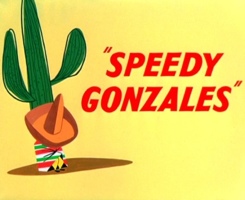
At work I’m more Speedy Gonzales than Buriden’s Ass at times. And at my worst Wile E. Coyote – hatching complex schemes for simple problems.

I’m often at my best when I slow down a bit. As I wrote today:

20120613-201721.jpgBetter sometimes to lie down between, than run needlessly and heedlessly between both seeking a carrot.

Perhaps I should treat myself to the odd sit down.

24×17

20120609-101811.jpg

What’s 24×17? C’mon, c’mon. The clock’s ticking. Struggling? Sweating? No answer? A guesstimate? Not sure? Not good at maths? Need more time?

Relax. No-one can do 24×17 without thinking about it. There is no ‘fast thinking’ route to 24×17. It requires calculation and that means deliberation. The answer is below – I just checked it on a calculator.

What’s interesting though isn’t the answer. It’s the reaction the question gets from different people. Personally, I looked at it, tried to round up 24, then to round 17, then lost it, reminded myself I’m rubbish at arithmetic and waited for someone else to come up with the answer.

A friend who’s ‘good’ at maths quite quickly got to “About 400…” and then frowned and struggled for the final figure. Another colleague who does a lot of numbers work – and is smilingly tenacious – also struggled, looked puzzled that he was struggling and continued to wrestle with it even after I’d told him not to. I could see he was still calculating despite me telling him the point of the exercise wasn’t the answer. Three other people thought for a moment, said ‘oh god, I can’t do maths’ and smiled wanly.

What’s interesting to me is we all failed, but how depending on our self-image on mathematical ability, we all had different responses to that failure. Modest satisfaction with being close, desire to stick at it, preference to leave well alone. And yet all of us probably had the tools to work it out in broadly similar ways.

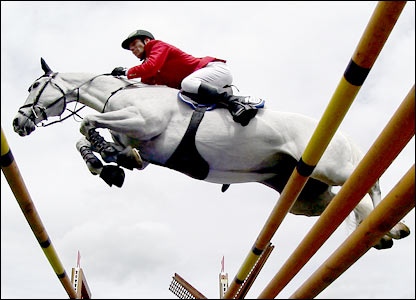
Perhaps maths plays with so many people’s heads for this reason – the boundaries between mental arithmetic and calculation aren’t clear cut. Some people clip the fence, others set themselves carefully to jump cleanly and many just refuse.

Learning this helped me this week. Handed a sheet of figures – which normally I’d have glanced at, then avoided and jumped to conclusions on – I asked for a minute to study them. It took me nearer two, but then I’d understood them and was happy with what they said, and what I thought of them.

I’m finding numbers are not so scary and actually quite satisfying, if I steadily negotiate all the mental fences instead of leaping wildly or refusing. Perhaps we’d all be more prepared to jump if we knew most maths is not innate but carefully calculated.

(804)
(Backwards)

Conspiracy

20120606-211502.jpg

I spent last week wrestling other people’s demons. Could it be there isn’t a conspiracy? Could it be it’s not all about you? Why do we all jump so readily to self-centred conclusions?

In fact it’s a perfectly reasonable thing to do. The human version of Occam’s Razor – the simplest theory is generally the best; people are indeed out to get you…

Or at least that’s what two thirds of our brain thinks. The brain stem and limbic systems react instinctively and emotionally – mostly to protect us. The poor old neo-cortex has its job cut out to plod to a slow deliberate alternative. And a good thing too for most of human history.

But we are made for finer things these days. The ‘love of thought’ has been an organised pursuit for at least 3000 years and language for much longer. So hats off to W.V.O. Quine for expressing so perfectly how our rational brains work:

“We adopt, at least insofar as we are reasonable, the simplest conceptual scheme into which the disorganised fragments of raw experience can be fitted and arranged.” From a logical point of view (1953)

It’s still instinctive and still guesswork, but at least we think it’s rational…

And that’s why we jump to conclusions. The human animal is wired to discern intent, develop belief and divine agency; even when it’s not there. It’s the simplest way to ‘fit and arrange’ those disorganised ‘fragments of experience’.

It’s happening to me, so it must be about me – except most of the time it isn’t. And Quine’s gimlet eye above invites us to take that thought very seriously.