Roman Walls

20140906-170723.jpg

Stop growing and you’re already shrinking. Resolve to hang on to what you’ve got and you’ll probably lose it. Stick to what you’ve always known and you are getting stuck. The best bet in life is to give up self-defence – and march ever onwards.

This came to me, when I was talking to a nice person at work, about her natural desire to protect what she has. When we feel vulnerable or change is in the air, we all get defensive. I admitted I had felt very much the same, until quite recently. Then something I read about the Romans came to my assistance.

Historians sometimes mark the height of the Roman Empire as Marcus Aurelius’ defeat of the Germanians. But you can trace the start of its decline two emperors earlier, to Hadrian’s decision to stop advancing and instead build walls. The construction of walls marked the edge of civilisation and was designed to keep out barbarians. For which, Hadrian famously put one up across the North of Britain.

But in that moment the Romans subtly and implicitly signalled their limits – and invited attack, decline and fall. No longer advancing, assimilating and civilising; they’d said: “That’s it, we’re digging in, hanging on and giving up.”

My conversation partner and I reflected on the fact that perhaps life, and indeed working life, are much the same. Keep moving forward, keep an open mind, keep learning and doing new things; and momentum, new challenges and opportunities come along.

Hunker down, dig in and hang on – even behind the most impressive fortifications, and you’re already sinking into decline and fall. And this couldn’t have been more amply demonstrated, than in a valedictory interview I watched, between two ageing newsmen a few day later: one, retiring, cynical, dogmatic and closed minded; the other delightfully open, interested and enthusiastic about life, other people and the world.

There are always more intellectual aqueducts to construct, chasms of ignorance to span with new bridges and viaducts, roads to pave to fresh knowledge and ideas. Whatever the temptation to stop, rest or settle, the best answer is always to keep moving on, growing and learning.

Lance

20140708-215726-79046869.jpg

Last night I stayed up late, to watch a remarkable documentary on a fallen hero of our times – Lance Armstrong. On the day the Tour de France hit London, it couldn’t have been better timed.

The ordinary background, the “f#ck ’em all” early years, the descent into cancer and vicious chemo, the fight back and astonishing, triumphant 1999 Tour de France victory. Then the doping rumours, allegations, flat denials, Feds, hubris, betrayals (of him and by him) and the final fall.

His is an epic story of Greek proportions. But I come away confused… Charming, brutal, controlling, intimidating. But now vanquished: a quieter, reflective and for me, a better man.

A modern Achilles, it’s not for nothing that all Greek tragedy had a narrative arc. There are no gods in real life, only mortals. And in acknowledging he has done wrong – albeit too late and with a trail of lies and damaged lives in his wake – he has begun the steep climb to redemption.

I wish him well on that road.

Great Men

20140621-095505-35705610.jpg

The Greeks invented tragedy. Shakespeare explored its every facet. Hollywood is more ‘goodies’ and ‘baddies’. But does greatness invariably end in disaster? It depends on what you think great is.

Most of the ‘great’ men I’ve met have been greatest in either stature, ego or self regard. Far fewer in warmth, kindness or humility.

It’s this simple I reckon: if you’re great on the backs of others – expect one day to fail and fall.

If you’re great for and because of others – great of heart, integrity and kindness – you may stumble, but I believe you will never truly fall.

Why? Because those you have truly cared about and cared for will reach out to catch you in your hour of need, and will gently forgive you your honest mistakes.

The only greatness worth having is that which is earned for, from and freely bestowed by others.

Hagler

20140510-113034.jpg

It ain’t always pretty; but boxing has a primal quality, which whether you like it or not, makes it one of the ‘pure’ sports.

There are sports with complex rules and sports with fancy equipment. And then there are sports which have been there ever since there have been people – who can run fastest, throw farthest or batter their opponent to submission before being battered themselves.

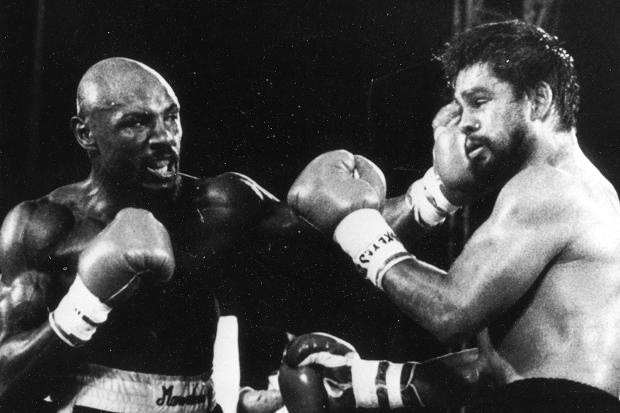
I’m no pugilist, but sometimes you have to fight for what you believe in. And in my line of business, words are sometimes punches. So after an important bout this week, I reflected to a good friend it had been like Hagler vs Durán.

For me Marvellous Marvin is pound for pound the best fighter I have seen. Less brutal than Tyson, not the showman that was Sugar Ray and I’m too young to have seen really Ali in his pomp. But when I watched Sportsnight as a kid, the precision, focus, efficiency and relentlessness of Hagler made him the best I saw.

Because he wasn’t a heavyweight he didn’t always get the profile. As a taciturn guy with a shaven head he didn’t always please the cameras. And because he didn’t dance around he wasn’t much feted. But as I fighter you wouldn’t want facing you, for me, he stood out.

Always going forward, never dominated, quick, precise, focused and hard as nails. As I often joke when people try to get me wound up ‘I’m a lover, not a fighter’. But if I have to fight Hagler is the model – not a big man, no frills, no showboating, just a precise, focused, bald head, hitting you hard; bang bang bang.

Sisyphus

20131228-191533.jpg

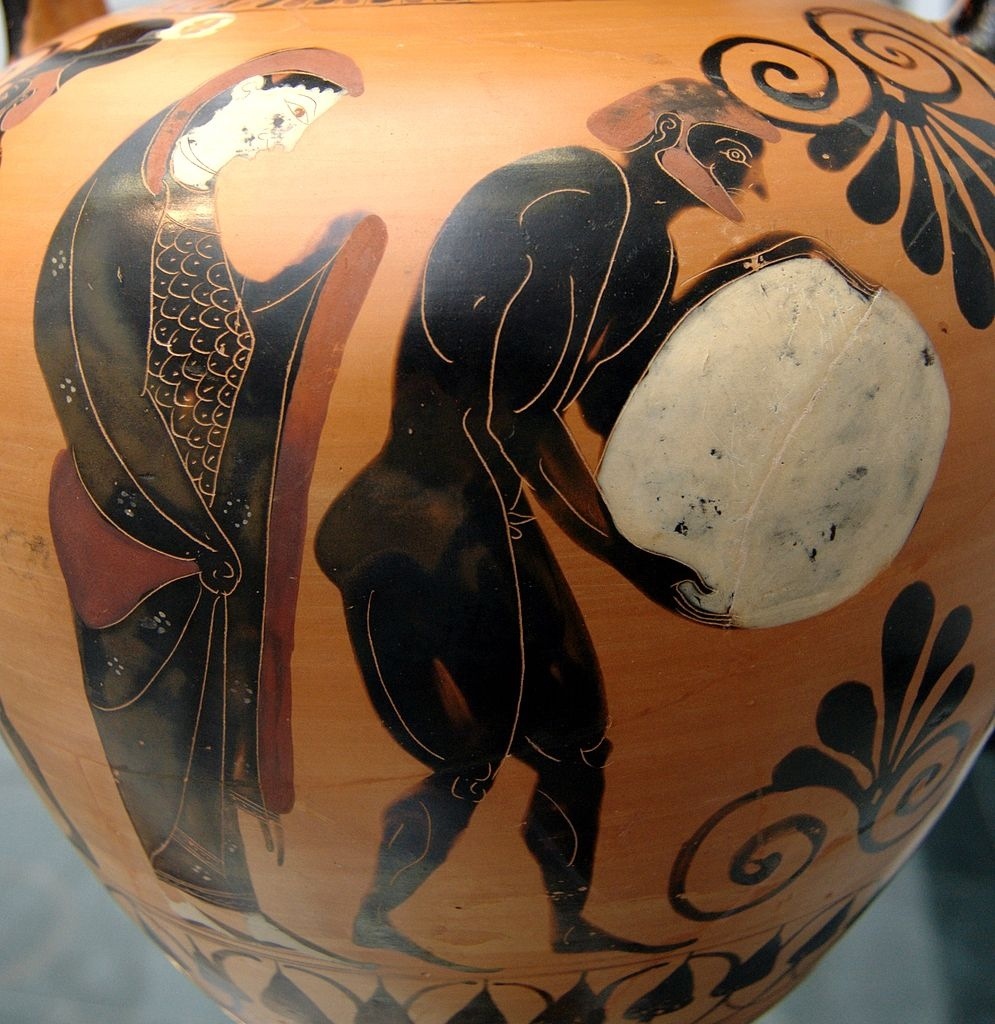
Albert Camus, the French Algerian Existentialist, challenges us to be happy as Sisyphus. That Greek King was damned by Zeus to forever roll a boulder uphill, only to have it roll back down as soon as the summit was achieved.

For Camus, the human condition requires us to face the futility of Sisyphus – that we are alone in the universe without meaning or destiny, each pointlessly rolling our own boulder uphill. But Camus’s challenge to us, is to smile and be happy in the face of this futility – not sad or downcast.

And the lot of Sisyphus, was mine yesterday – faced with several hundredweight of miscellaneous building rubbish to shift, in a biblical downpour. Badly bagged, paint dripping from it, from a narrow alley to an unknown refuse site without proper parking or help.

Three bags in – I was Sisyphus. Drenched, cold, back stiff and a hamstring already taught. With dozens more bags and wood and board and plastic and blinds and rubble and cement and soaking dustsheets and rags and sharp stuff and awkward stuff and worst of all paint-dripping stuff. A ball ache to match the back ache.

Toying with chucking it in, taking shelter or hoping it would all go away, Monsieur Camus came to mind -smiling enigmatically, with the collar turned up on his French trench-coat…

All human existence was momentarily encapsulated in sacks, rubble and timbers. To be happy as Sisyphus, the triumph of the spirit over drudgery – the satisfaction of a thankless task well done.

And it was done. Drenched, back-breaking, four car loads of dripping, spiky, heavy building debris bit the dust. And a happy Sisyphus was I.

So much so, that after a couple of celebratory beers and a pepperoni pizza, I cheerfully armed myself with two chisels and cleared two staircases of carpet staples and nails.

Zeus himself would have been grudgingly impressed and Camus was right. Sisyphus, happy, is the satisfaction of a thankless task well done. And that’s about all there is to life – chin up, put a smile on your face and keep rolling that boulder.