Barge Hauler

20120211-140318.jpg

Work,
Think,
Eat,
Drink,
Wake,
Walk,
Type,
Talk,
Work,
Work,
Work.

As Aristotle once said: “all paid work absorbs and degrades the mind.” I have been working my n#ts off this week – heavy lifting from start to end – and a good deal of it thankless.

We end the week in a much much better place than we started – but the narrow steam of technicolor bandwidth which is my ‘consciousness’ has been totally absorbed in work, work, work.

For the first time in many months, at the weeks end, I can’t recall a single original or worthwhile thought in the last five days, that hasn’t been yoked to the chariot of work. I have been one of Illia Repin’s Barge haulers on the Volga.

Work owes me this week, I am paid a salary for my labour not my soul. Onward.

Relevant Complexity 2) Hobbies

20120129-213404.jpg

Until last year I absolutely didn’t get ‘hobbies’. Now I am persuaded hobbies maketh the man. The big mistake in life, I reckon – observing overwork, depression and recession hitting even the most high powered of my friends – is to have your work completely define who you are.

As Aristotle said: All paid jobs absorb and degrade the mind.

Sure we all have to earn a living. And if a trick of fate and a twist of ability take us to major responsibility, so be it. But a wider reading of Aristotle suggests no man can be ‘excellent’ who only works; much less ‘happy’.

Who we really are is often better indicated by what we do for leisure and pleasure. Of course being a ‘wage slave’ doesn’t always leave much space or time – and in antiquity, for most, there’d have been no time for leisure or pleasure at all.

But what we ‘freely’ do is a window to a person’s soul. Or perhaps better – as a typing mistake just suggested – a window to a persons ‘souk’: the bazaar of stuff we do and like.

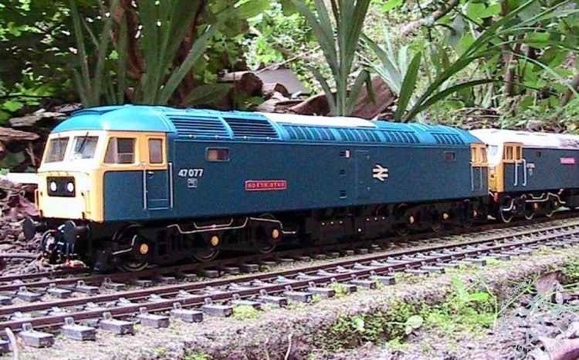
A lot of hobbies are conventional: sports, music, walking, reading and none-the-worse for that. Some are apparently bonkers. I know a man who has laboriously constructed a scale railway in his back garden which his own daughter is forbidden to touch.

Some hobbies are sociable – choirs, ensembles, ramblers. Some are quite solitary – stamps and the myriad forms of collecting. Some border on sociopathic – travelling football fans notably. But what they all have in common is they endlessly fascinate the aficionado and generally bemuse the disinterested onlooker.

Of course once you spot it, the driver is ‘complexity’. Hobbies enable us to collect deep knowledge, unique complex skills and relevant (at least to obsessive) complexity. Hobbies are Csikszentmihalyi’s ‘flow’ par excellence – high challenge met with high skill.

“Who scored the winner against Scunthorpe in 1974?”, “What was the printing error in the 4d Commonwealth Games commemorative stamp?”, “What’s the winter plumage of that bird?”, “Can you play Schubert?”, “Is that a class 47 locomotive?”, “Is that a Bordeaux or a Burgundy?”

All of of these bring ‘flow’ to the expert. They are validated, either, by one’s personal appreciation of oneself or the appreciation of the ‘community’ of expert practitioners, fruitcakes and obsessives who share our particular interest.

But the art of life – and hobbies – I think is to weave together our passions with the other things we care about: family, friends, communities. There is joy to be had in literally any hobby – with practice we progress and develop mastery of its complexity.

As Aristotle said: ‘Excellence is an art won by training and habituation. Excellence, then, is not an act but a habit. [Or maybe a hobby?].

But there is also a trap – eccentricity and sheer oddness. The trick is in making at least some of our hobbies cohere into ‘relevant complexity’ so they define and develop us as much as our work does.

A friend described how he and his teenage son seek the ultimate ‘fried breakfast butty’ every Saturday. It’s about the only thing which always brings them together; relevant complexity. Building a garden railway, for me at least; irrelevant complexity. Writing for pleasure, relevant; long stints staring at the telly, irrelevant.

Albeit, as Aristotle said: different men seek after happiness in different ways, I think sewing (or knitting for my other half) ‘relevantly complex’ hobbies into the fabric of our lives is essential to properly embroidering life’s rich tapestry.

As Aristotle said of education, but might have said of hobbies if he’d read Csikszentmihalyi:

Education is [Hobbies are?] an ornament in prosperity and a refuge in adversity.

And

Education is [Hobbies are?] the best provision for old age.

But, of course, who am I to say. As the great Greek also points out:

Happiness depends upon ourselves.

And the fact I am secretly proud that I know what a Class 47 locomotive is, shows the perils and pleasures of hobbies. Keep it relevant.

Note to Self

20111217-121831.jpgI came upon a terse description of ‘identity’ this week in a longer piece by neuroscientist Terrence W. Deacon of USC Berkeley:

An intrinsic tendency to maintain a distinctive integrity against the ravages of increasing entropy as well as disturbances imposed by the surroundings.

He was describing the way molecules come together in sympathetic, then symbiotic relationships to form ‘auto-catalytic’ processes – where one chemical reaction feeds, and is fed by another. But deliberately he was defining ‘self’ in a way which embraces chemicals, bodies and minds.

I watched a chilling piece on the news last night about Alzheimer’s, with an awareness raising TV ad portrays sufferers fading through transparency to invisibility. Another of Deacon’s definitions – intended for chemicals, is as true of minds:

To be truly self-maintaining, a system must contain within it some means to ‘remember’ and regenerate those constraints determining its integrity which would otherwise tend to dissipate spontaneously.

Which leads me to the conclusion that:

After Aristotle, as moral animals, we are what we repeatedly do.

After Aquinas and McCabe, as linguistic animals, we are what we think, say and write.

And after Deacon, as forgetful animals – sometimes helpfully, sometimes tragically – we are what we can remember against the ravages of entropy, the environment and time.

All the more reason to write the odd reminder I think.

Against Idleness

20111129-095156.jpgA friend and I discussed yesterday whether ‘perpetual activity’ is simply a function of my work and life stage – or is it my underlying temperament. In a previous conversation, he put to me, that the ceaseless activity I observe in my daughter might suggest ‘the fruit never falls far from the tree’.

I think of myself as basically liking my rest. I’m just not allowed any. My family all seem to feel me sitting down means they need to spur me to action. Sitting down for them is me signalling a desire to be reactivated. I routinely stay on my feet at home, to keep them from ‘tasking’ me further.

Similarly at work, keeping busy is my way. If things are in good order, I instinctively seek some ‘new’ things to make happen – at times to the chagrin of those around me.

I blame the Emperor Vespasian as quoted by Montaigne in his essay ‘Against Idleness’ which I read the other day:

The Emperor Vespasian, being sick of the disease whereof he died, did not for all that neglect to inquire after the state of the empire, and even in bed continually despatched very many affairs of great consequence; for which, being reproved by his physician, as a thing prejudicial to his health, “An emperor,” said he, “must die standing.”

A fine saying, in my opinion, and worthy of a great prince. The Emperor Adrian since made use of the same words, and kings should be often put in mind of them, to make them know that the great office conferred upon them of the command of so many men, is not an employment of ease; and that there is nothing can so justly disgust a subject, and make him unwilling to expose himself to labour and danger for the service of his prince, than to see him, in the meantime, devoted to his ease and frivolous amusement, and to be solicitous of his preservation who so much neglects that of his people.

Never sitting down and avoiding any whiff of ‘ease’ or ‘frivolous amusement’ in my domestic and working life have become habits. We are what we repeatedly do. Just need to keep standing.

Digital Art

20111120-180755.jpgAs I’ve written before, the job of the poet is to say something transcendent and universal about the human condition – in no fewer or more words than are needed. It’s the liberating, inclusive and motivating definition of poetry from Aristotle.

And I think it applies to the other arts too – no fewer or more brushstrokes, musical notes, dance steps and now maybe pixels.That’s why I like s[edition]art the new digital art marketplace.

I bought a Damien Hirst (a piece is to the left) on Thursday. Number 54 of a limited edition of 10,000. I have a digital certificate of ownership which says so. Talking about it to an expert in visual arts on Friday, she asked me why? Why bother, why pay, what’s the attraction, what’s to stop people copying them, is it just a scam?

I think it’s similar to the way Aristotle has changed my views on charity. It’s not about being ‘seen’ to give – that’s Aristotle’s virtue of magnificence. Charity is the entirely personal internal feeling of doing the right thing – connecting with a cause and doing something about it, however small.

I think that’s why digital art works for me. It involves some appreciation, some choosing, some discernment, connecting and empathising with the artist and personally recognising – in a small way – the value of their art.

As I said to another arts expert on Friday, I think the ‘art of life’ lies in developing and exploring ‘relevant complexity’ – intricacies which embroider existence, refine judgement and develop character. For art, walking a gallery is one way. Browsing and buying in a virtual one is another.

£7.50 is a small price to pay in recognition of an artist’s attempt at a statement on the human condition. I think Digital art – along with digital poetry – is here to stay.