I am a Londoner


I’m not from London, so I’ve never felt a real Londoner. Still, I’ve lived here on and off nearly half my life; my family is here, my life is here, both my kids were born here.

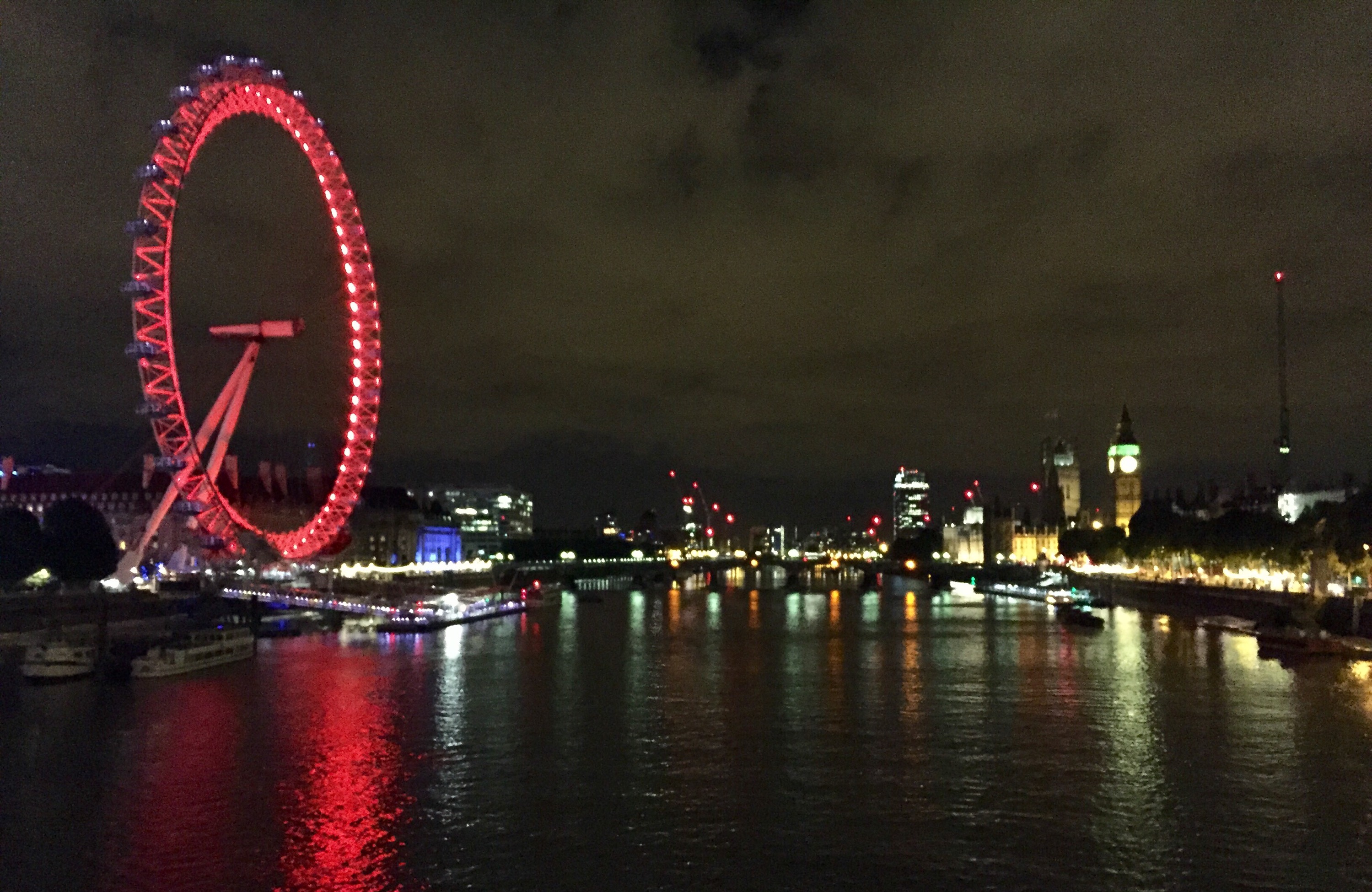
On Friday, I found myself walking across one of London’s bridges by night and took a photo (above). The people I walked past were from many different places, indeed many different countries; all enjoying a beautiful London evening.

Of course it’s not all fantastic. Too busy, too expensive, often choked with people and traffic. And you see people struggling: sleeping rough, struggling with booze, drugs, crime and poverty; people who are really up against it. 

But London is a great city. Of all the great capitals I’ve visited, only central Paris beats it for beauty – and maybe New York for chutzpah. There are places of antiquity with stunning sights and history – amazing Istanbul or Rome. There are places I’ve lived with more steel and glass: Hong Kong the most obvious. But London has pretty much everything you could ever want or need.

But why London is so special came home to me the other week; on the tenth anniversary of the 7/7 London bombings. 

July 7th 2005 was a terrible day. One I will certainly never forget, and was followed by anxious weeks for everyone in this city. Ken Livingstone, then London Mayor (and whatever you think of him, a true Londoner) said this at the time: 

“In the days that follow look at our airports, look at our sea ports and look at our railway stations and, even after your cowardly attack, you will see that people from the rest of Britain, people from around the world will arrive in London to become Londoners and to fulfil their dreams and achieve their potential.”

“They choose to come to London, as so many have come before because they come to be free, they come to live the life they choose, they come to be able to be themselves. They flee you because you tell them how they should live. They don’t want that and nothing you do, however many of us you kill, will stop that flight to our city where freedom is strong and where people can live in harmony with one another. Whatever you do, however many you kill, you will fail.”

I arrived in London 25 years ago, and as Ken said, this great city has enabled me to achieve my potential, and fulfil my dreams. Just as he describes, I have been free to live the life I have chosen, and to be myself.  

I’m proud that this city – my city – finds a place for all sorts of people, and lets them be who they want to be. Ken Livingstone’s words from ten years ago made me realise; although I wasn’t born here – I am a Londoner.

Stop Hoovering

  
I knew this (or at least I kind of did) but a line in a book has recently kept it on my mind… ‘Mood’ is more a matter of biochemistry than anything else.

In the right mood everything is possible: ingenuity, problem-solving, creativity and joy. In the wrong mood, it’s all too much; all too hard and nothing can be done.

Win the lottery, lose your job, whatever happens most people’s underlying ‘mood’ ticks along remarkably unaffected; so long as you let it. Apparently only bereavement really affects mood for extended periods. It seems we can’t short circuit grief.

So ‘mood’ in fact, is not really about how happy, fulfilled, successful, busy or creative we are. It’s about noradrenaline, serotonin, cortisol and melatonin. These operate in an internal chemistry set, controlled by the limbic system – which is pretty much the same as in a bear, a monkey, a cat or a dog.

The limbic system is very resilient, very effective and very old – crocodiles have one. But it needs looking after. Apparently if you stress it to much, it chemically crashes and puts you into a state of hibernation. Literally. 

My book says the physiological symptoms of stress-related depressive illness are best understood, as exactly what happens in a bear’s body when it prepares for hibernation…
  

Why? Because the limbic system interprets the signals from the environment as too ‘hostile’, and that same old system kicks in: which enables a crocodile to lie dormant in mud for months; or a bear to hole up in a cave. We shut down; to wait for better days.

And here’s where the Hoover comes in. Because if you’re working yourself to the point your limbic system is about to blow a fuse – you have to stop; however exhilarating is the sense of achievement of getting more things done, or however great the pressure to do even more.

The test for hard-working diligent people is this; literally and metaphorically can you sometimes ‘leave the Hoover in the middle of the room’..? That is, can you visibly leave half-finished a task, you and people around you expect you to finish? 

Ouch, guilt and fear of humiliation – that hurts…

Because if you can’t – and you don’t listen to your body and look after your mood, there’s only one place you’ll end up…. shattered, flat and feeling like hibernating. 

This much I have learned in the past few weeks – if you want to avoid becoming a very grizzly bear, sometimes you have to leave the Hoover in the middle of the room.

Black Cat


Apparently human beings are easily fooled by coincidence – we are tuned for life in a Stone Age village, where not that much happened.

The maths of probability are skewed by the everyday experience of everything happening to us. As the precocious footballer Mario Balotelli is wont to say ‘why always me?’

Lady Luck is our constant companion, as we try to fit random events into a sensible narrative of what the blazes is happening to us. Studies suggest the gods (although not God) first sprang from here.

So how much of life is luck, how much is the luck you made – for better and for worse? Who knows. It all seems to makes sense looking back; but at the time…

Was it me, others, chance, caprice – or the hand of gods or God? Whatever and wherever you ascribe the credit or blame, like the handsome black cat who once stalked me for a fortnight, I have landed firmly on all four paws this week. 

Happy days.

Mighty; Fallen

IMG_3157.JPG

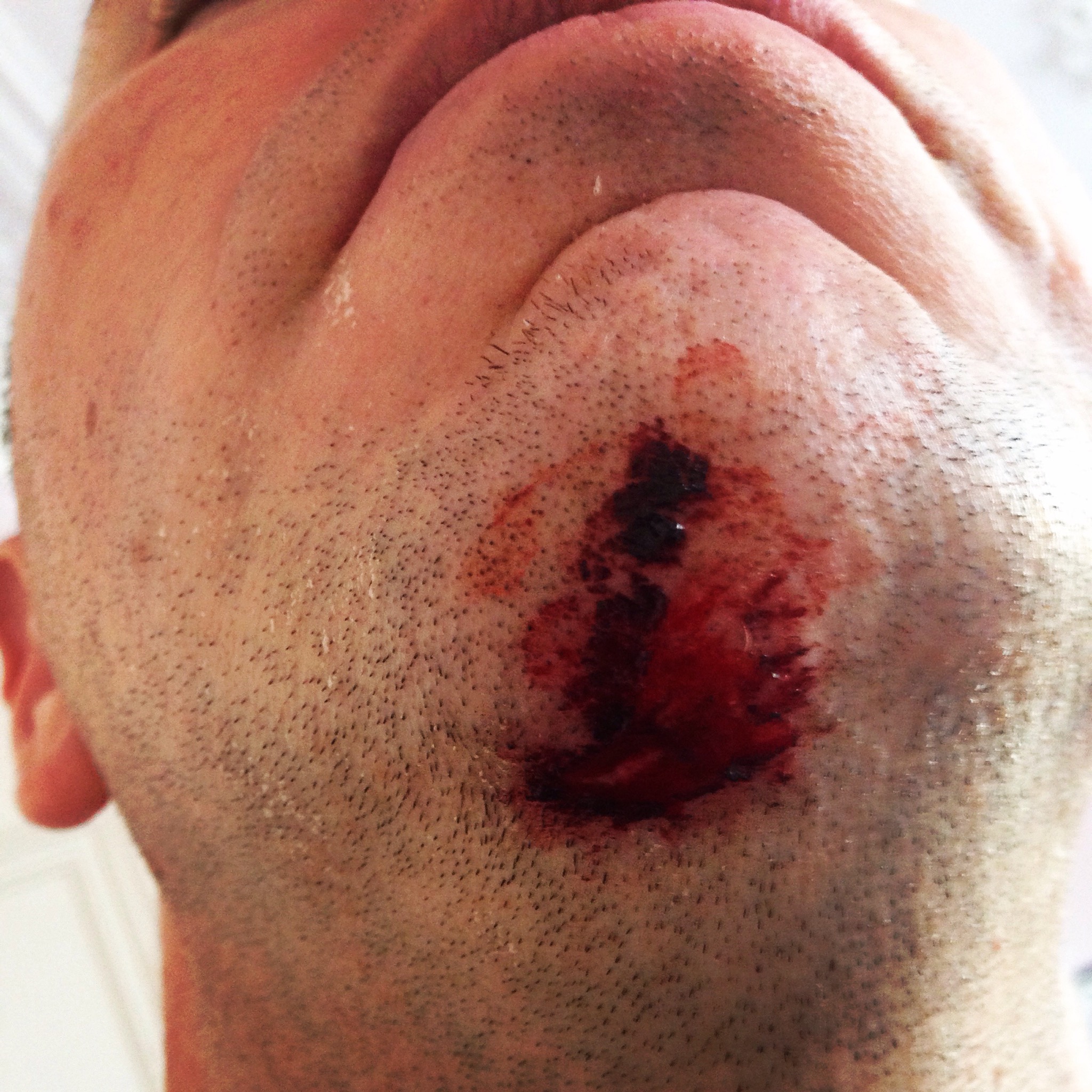
Scooting along – reminding myself that whatever else may be wrong, fitness and health are one thing I can be proud of. Then, BANG!

Ooof, skinned palms, knees and blood-dripping chin; hands not working and a limp, bent and seemingly useless right arm. In an instant broken, bloody, battered and hurting.

It’s all got slowly better. But last Saturday, I literally couldn’t fork my wallet out of my pocket, get a shirt over my head or do up my own buttons. The simplest things – the kettle, doors, even sleep, all too hard.

A painful reminder that past 40 you don’t bounce, you crumple.

I have been slow, laboured, distracted and reduced – spending the week trying to warn (and avoid) people who wanted to vigorously shake the limp hand, of my slowly straightening right arm.

Take care of these bones, I conclude. Keeping a happy head has been very hard; without a happy body to carry it around. Health and fitness are a gift, not an entitlement.

A Different Perspective

IMG_3150.JPG

This week I discovered Albrecht Altdorfer’s ‘Saint George and the Dragon.’

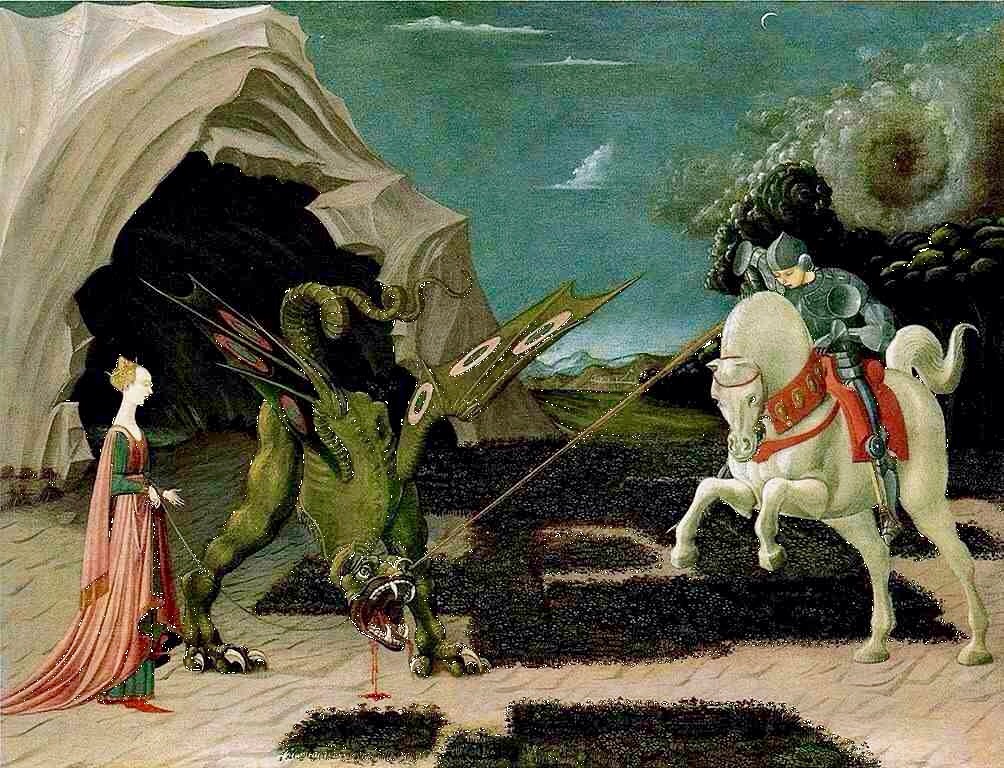
I’ve been inspired before by Uccello’s version, which heralded the Renaissance and redrew the rules of painting with its extreme perspective as below.

IMG_3155.JPG

But Altdorfer’s small panel painted in 1510 was revolutionary in its own right. It was the intermediate ‘evolutionary form’ between portrait and landscape. Within a decade of ‘Saint George!, Altdorfer was painting and printing some of the first “true” landscapes in Northern Europe.

The dense forest dominates a tiny Saint George looking diffidently at the rather uninspiring dragon. His horse doesn’t fancy it much, and the whole scene – robbed of the customary ‘damsel in distress’ of Uccello’s has a ‘more in sadness than in anger’ feel.

IMG_3149.PNG

Here’s what Daily Art App has to say:

This tiny panel (22.5cm x 28cm) is filled with the ferocious wildness of the forest, from which the lumpy, froglike dragon seems to emerge, slobbering with primordial slime.

In a little window where the trees open, the light of the outside world burns through. St. George is not in the act of killing the dragon—rather, he seems to be looking down on it with pity. His lance hangs limply at his side.

Altdorfer’s George looks tired, his armor is dingy, and the horse seems to shrink back in disgust at the sight of the formless, murky dragon.

The figures become lost in the ferocious foliage (ferocious like the dragon traditionally should be) which threatens to choke out the figures themselves (who should traditionally be the focus), and they all seem to merge into monochrome.

The knight seems to be musing on something within himself which he knows he must slay in order to leave the dark forest of the unconscious and emerge

Although Uccello’s is one of my favourite paintings (forever associated, in my mind, with the buzz and bustle of London due to its place on wall panels at Charing Cross tube) Altdorfer’s is more my type of Saint George.

A thing to be done but not revelled in. A certain amount of ambiguity, a fearful horse and a lumpen unfortunate dragon – a moment of pause and perhaps uncertainty.

Few true acts of ‘bravery’ in real life are as clear cut as Uccello’s. Most have the ambiguity and uncertainty of Altdorfer’s Saint George – which usually makes them all the braver.