Bonhoeffer

I quoted Dietrich Bonhoeffer to a friend the other day. Bonhoeffer stood up to the Nazis and perished for it in a concentration camp. He is celebrated (pictured on the right) as a 20th Century martyr in Westmister Abbey.

A Christian theologian and a man of obvious moral courage, Bonhoeffer argued – like Kierkegaard before him – for a more direct spiritual connection with God. One mediated by fewer trappings of religion.

He believed we have a deep moral sense, beyond the reach of rational thought which is both our guide and goad. He said our conscience comes from a “depth which lies beyond a man’s own will and his own reason and it makes itself heard as the call of human existence to unity with itself.”

For Bonhoeffer, guilt is a warning about our ‘doings’ conflicting with our ‘being’. A guilty conscience arises when we lose the unity – what some people call ‘congruence’. Our conscience is, thus, like an alarm bell, warning us of the risk of damage to ourselves.

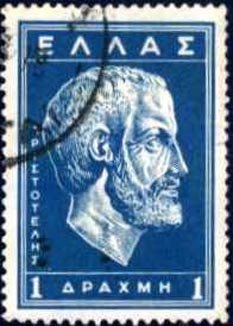
I’m not sure I agree with Bonhoeffer that conscience lies beyond the ‘event horizon’ of thought and will. I’m more with Aristotle that we simply ‘are what we repeatedly do’. For me, reason, will, our actions and character all come together in an intertwined person. But the Bonhoeffer quote I read out today is still a powerful one:

The man with a conscience fights a lonely battle against the overwhelming forces of inescapable situations which demand moral decisions despite the likelihood of adverse consequences.

Bonhoeffer found himself up against truly overwhelming forces and a tragically inescapable situation – it cost him his life. He took moral decisions despite the likelihood, entirely realised, of very adverse consequences. Whether he found it in faith or forged it through reason, that is moral courage.

For Aristotle, courage is the ‘mean’ between confidence and fear. To respond to ‘overwhelming forces of inescapable situations’ with the courage of Bonhoeffer requires a strength built within – the confidence in the importance of ‘unity with oneself’ overcoming the fear of ‘adverse consequences’ and considering them a price worth paying.

But what’s the practical day to day application here? Like the other 20th century martyrs in Westminster Abbey, Bonhoeffer faced extraordinary challenges. History has judged him simply and kindly. Most of us live with less extreme, more attritional moral challenges and choices – do I say something or keep quiet, do I stand up for something or let it go, do I join in talking someone down or keep my mouth shut. And implicit in Bonhoeffer’s words are the fact that others won’t always understand and won’t always judge you kindly.

The thought that conscience is a warning that expedient ‘doings’ might undermine my ‘being’ is a valuable one. It’s less about carrying guilt and more about making choices. It achieves some of what Bonhoeffer would no doubt have wished for us; a simple internaliseable test of our actions.

For me, I think it may be this simple: if I can look others in the eye and myself in the mirror – even amidst the adverse consequences of inescapable situations – I know my ‘self’ is in ok shape. If not my ‘doings’ are damaging my ‘being’.

The Forth Bridge

Twice in the last two weeks I’ve cited the Forth Rail Bridge to describe what I increasingly recognise as a not uncommon challenge – being called upon, like Sisyphus, to do the same thing again and again.

Famously, but perhaps apocryphally, the Forth Bridge offered a couple of hardy Scots lifelong employment in the rain, wind and sleet of the Firth of Forth painting and repainting it. A masterpiece of cantilevered Victorian design, it needs constant painting to keep it from corroding. I remember being told as a child that it took the two men five years to do from end to end. Then they had a day off. Then they started again.

At times organisational life is not unlike painting the Forth Bridge. Any organisation worth its salt divides opinion. Putting your best foot forward, making the case and explaining the strategy to the world, outside and in, is a Sisyphean task of care and maintenance.

I’ve started thinking about work as a bit like our busy family home. Something always needs fixing. It can be a bit untidy. There are shelves to put up and occasionally walls to knock down. Just when you have it looking ship-shape the shower leaks or a roof tile falls off. And then there’s that plan for the loft conversion or a new fridge. You live with – not just in – a house. And so it is at work.

I found myself getting frustrated about a misfiring corporate function the other day. But then I thought it’s a bit like an old chest freezer – burns a lot of electricity, some frozen leftovers in the bottom, but still doing a job. Sure a swanky new one would be nice, but there are other things which need fixing, upgrading, repainting first.

The best you can do with a family home is live well in it, keep it structurally sound and leave it in better shape than you found it. I think that’s a lot of what leading an organisation is about too. As Aristotle might say, the job of the bridge painter is to paint bridges, and of the good bridge painter to paint bridges well. There is satisfaction to be found in painting my Forth Bridge well.

Guilt

I was reminded of one of my own ‘mottos at work’ this week – don’t start with an apology. We often start an encounter by excusing ourselves for things that aren’t really our fault. That, or making an unduly self-deprecating comment. Why?

Well when it comes to a big ballsy idea you can’t beat Nietzsche. What say you to this: all our animal instincts that don’t get let out into the real world get turned inside. This is Nietzsche’s idea that our ‘will to power’ is either expressed externally or turned in our ourselves – often as guilt.

Nietzsche is an interesting chap. Unashamedly elitist, cultured, a fine writer. But also discomforting and highly speculative. His punt – based on no particular evidence it must be said – is that there was a time when we were cruel but cheerful. Guilt didn’t exist. Just debts to repay and retribution to enact.

Depending on whether you were owed to or in debt, you were either cheerfully duffing someone up or being duffed up. But there were no hard feelings – even if it was painful and cruel. The nobly savage, jolly, barbarian life.

This reminds me of the Viking laws someone gave me a copy of a couple of years ago:

Be direct, brave and aggressive, grab all opportunities, use varying methods of attack, be versatile and agile, attack one target at a time, don’t plan everything in detail, use top quality weapons, keep weapons in good shape, keep yourself in good shape, find good battle comrades, agree on important points, choose one chief.

Not much introspection there. Sensible organisation, plenty of ‘flow’ potential and a good deal of what we would consider cruelty. I also suspect not much guilt… And by the sounds of it a fair bit of cheerfulness.

And this is what I find interesting in Nietzsche’s thesis. The barbarism and cruelty of dominance and power led to vivid, guilt free lives – nasty brutish and short no doubt, but vivid and guilt free. For Nietzsche, guilt is simply energy we can’t expend elsewhere. So why do we all feel guilty all the time?

Because we can never do enough (Kierkegaard) if anyone could view what we’re doing as wrong then it is wrong (Kant) and even when we do do the ‘right’ things they may turn out wrong (Mill).

Nietzsche asks a perfectly good question; why do we feel so guilty for everything? These days I’m feeling less guilty about spending that energy better elsewhere.

Poetics

Aristotle is always refreshingly plain on a subject. So when I read him, I find it easy to think he’s simply making a useful summary of a well known issue. But often he was creating the entire discipline; the first known thinker to frame or classify it. This makes his clarity and brevity all the more remarkable. And all this in 350 BC.

Among his intellectual inventions was the first setting out of the principles of ‘Poetics’, covering drama, tragedy and a lost volume on comedy.

Here he explains the origins and evolution of poetry:

Poetry in general seems to have sprung from two causes, each of them lying deep in our nature. First, the instinct of imitation is implanted in man from childhood, one difference between him and other animals being that he is the most imitative of living creatures, and through imitation learns his earliest lessons; and no less universal is the pleasure felt in things imitated.

Imitation, then, is one instinct of our nature. Next, there is the instinct for ‘harmony’ and rhythm, meters being manifestly sections of rhythm. Persons, therefore, starting with this natural gift developed by degrees their special aptitudes, till their rude improvisations gave birth to Poetry.

Poetry, myth and tragedy played important roles in Ancient Greece. According to Nietzsche they were instrumental in maintaining the vitality and optimism of Greek culture. Poetry, myth and tragedy also captured the essence of Ancient History. As Aristotle said:

Poetry is finer and more philosophical than history. For poetry expresses the universal and history only the particular.

Perhaps, like philosophy, poetry is less central to modern culture. But it’s still takes the same courage and skill:

Constantly risking absurdity, whenever he performs above the heads of his audience, the poet like an acrobat climbs on rime. (Lawrence Ferlinghetti, 1958)

It also connects the sublime with the ridiculous in the human condition:

Poetry is the achievement of the synthesis of hyacinths and biscuits. (Carl Sandburg, 1928)

But philosophy and poetry can still bring happiness, fulfilment and an opportunity to develop our natural gifts – till our ‘rude improvisations’ give birth to our own poetry.

Incandescence

This week, I advanced my new theory – to a gently sceptical friend – that the brain works (at least partly) like the electronic ink screen of an Amazon Kindle. Blending in the philosophy of St Thomas Aquinas, my sweeping conclusion was he should get angry more. Here’s why.

Since buying a Kindle, I’ve been impressed that the screen, when you switch it off, maintains a complex picture – a person, a constellation, a painting etc – using no energy at all. It’s simple but impressive. Like a screensaver, but without power. Information and knowledge are thus available to be viewed, at any time, at no energy or processing cost. My theory is the brain has the same capacity.

A few years ago I read that neurones aren’t permanently ‘charged’ like little lightbulbs or LCD pixels but store information passively – more like a physical switch or dial. Energy is used to ‘charge’ them with information, but once they have been ‘set’ with information they store it passively until changed. Good job too, or, given the number of neurones we have, we’d need a nuclear generator to power our heads.

So my emerging thesis is we can ‘poll’ in computer lingo, or rapidly access a snapshot our entire accumulated summary of knowledge and experience in an instant. And in that instant we can act or react subconsciously informed by that summary.

My guess is that none of this requires much in the way of conscious cognitive processes. Like a finger recoiling from a nail or a smile drawing a return smile, we can immediately and effectively respond to people and situations against this dataset. I’m not saying it is innate or preloaded. We are constantly checking, updating and rearranging our vast neuronal data-set. But at any instant, my thesis is, it lies latently ‘there’ encrypted in neurones like the patterns which make a rich picture, or a page of words, out of electronic ink.

Of course we can intervene, ignore, debate or challenge our accumulated data. Any instant ‘gut’ reaction, or action, it may recommend can be overruled. In complex or nuanced circumstances the higher cognitive functions kick in – at least most of the time.

And this connects to my ongoing conversation with my friend on Aquinas’ support for ‘ira’, and the set of passions which include anger. Like Aristotle – in fact far more than him – Aquinas was pro anger in the right circumstances. Surprising for a theologian.

He thought the passions were intrinsic parts of who we are. He thought they were forms of reason, not lower ‘animal’ or ‘bodily’ sensations to be suppressed by our purer ‘mind’ or ‘soul’. Thus, our passions come from our instincts, blended with our default ‘Kindle screen’ summary of experiences, beliefs and our lifetime of accumulated and refined knowledge. They all inform each other.

I’m with Aristotle that we are what we repeatedly do. So we are constantly refining and tuning our passions, our experience dataset and our virtues through action – only some of that helped by conscious reflection. I’m increasingly with Aquinas too, that it all comes together in complex single holistic system – an ‘anima’, aka a person, not a dumb body and a smart, reasonable mind.

As Herbert McCabe points out: for Aquinas the good life is a passionate life; not achieved by the repression of passions, but by passions guided by virtues. Perhaps there’s more to be said for trusting our ‘gut’, allowing moments of ‘ira’ and the occasional incandescence of righteous anger. Once you’ve lived a few decades and developed a bit of virtue, it’s pretty well informed.