Hilaritas mentis

After a full (and indeed a fulfilling) schedule of festive feasts and gatherings; the final set piece hoves into view – the big one: New Year’s Eve…

Classically the ‘bridge too far’, I usually approach New Year’s Eve with a heavy heart and a bulging acid stomach. But not this year!

Perhaps in part thanks to Josef Pieper and St Thomas Aquinas.

Last night I finished ‘The Four Cardinal Virtues’ and found myself reflecting on temperantia which Wikipedia has thus:

Temperance is defined as moderation or voluntary self-restraint. It is typically described in terms of what an individual voluntarily refrains from doing.

Temperantia, by Luca Giordano (Wikipedia)

But not for Josef Pieper, who offers a typically full blooded rebuttal of this ‘modern’ interpretation:

The meaning of “temperance” has dwindled miserably to the crude significance of “temperateness in eating and drinking.” We may add that this term is applied chiefly, if not exclusively, to the designation of mere quantity, just as “intemperance” seems to indicate only excess.

He continues:

Needless to say, “temperance” limited to this meaning cannot even remotely hint at the true nature of temperantia, to say nothing of expressing its full content.

Temperantia has a wider significance and a higher rank: it is a cardinal virtue, one of the four hinges on which swings the gate of life.

Boom!

Discipline, moderation, chastity, do not in themselves constitute the perfection of man. By preserving and defending order in man himself, temperantia creates the indispensable prerequisite for both the realization of actual good and the actual movement of man toward his goal.

Which kinda makes sense. So what of the gustatory arts? St Augustine offers a very reasonable take:

It is a matter of indifference what or how much a man eats, provided the welfare of those with whom he is associated, his own welfare and the requirements of health be not disregarded; what matters is just one thing, namely, the ease and cheerfulness of heart with which he is able to renounce food if necessity or moral obligation require it.

To which Thomas Aquinas adds pithily.

To oppress one’s body by exaggerated fasting and vigils is like bringing stolen goods as a sacrificial offering.

And furthermore:

If one knowingly abstained from wine to the point of oppressing nature seriously, he would not be free of guilt;”

After all as Pieper points out, the Bible says:

“When you fast, do not shew it by gloomy looks!” (Matt. 6, 16).

Because it transpires, the whole point of temperantia is to keep heart and soul happy and healthy – no more and no less. For as Pieper warns:

All discipline… bears in itself the constant danger of the loss of self-detachment, and of a change into self-righteousness, which draws from its ascetic “achievements” the profit of a solid self-admiration.

And we wouldn’t want that on New Year’s Eve, would we?

Instead, having eaten, drunk and been adequately merry (and stayed on the right side of 11 stone this Xmas) I’ll follow Pieper’s advice and crank out another evening of hilaritas mentis – namely: cheerfulness of heart.

Here’s to temperantia!
Mere Civility

sɪˈvɪlɪti [noun] – formal politeness and courtesy in behaviour or speech: “I hope we can treat each other with civility and respect.” Courtesy, courteousness, politeness, mannerliness, graciousness, consideration, respect, urbanity, cordiality.

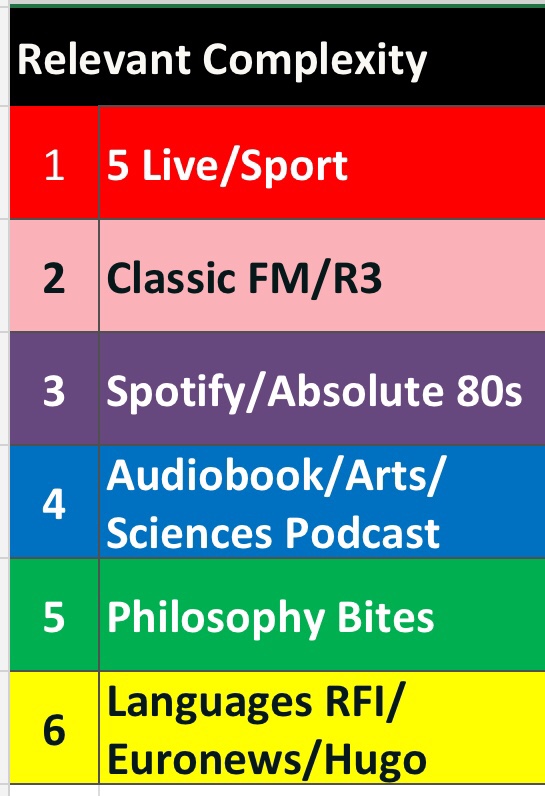
It’s autumn; the clocks have gone back and the nights are getting dark…. So it’s time to start rolling the ‘relevant complexity’ dice again – for audio accompaniment to cooking, cleaning up the kitchen and stacking the dishwasher.

On Tuesday the dice said listen to a Philosophy Bites podcast

So I did; and listened to a fascinating one with Teresa M. Bejan from Oxford University on the topic of civility:

It’s here

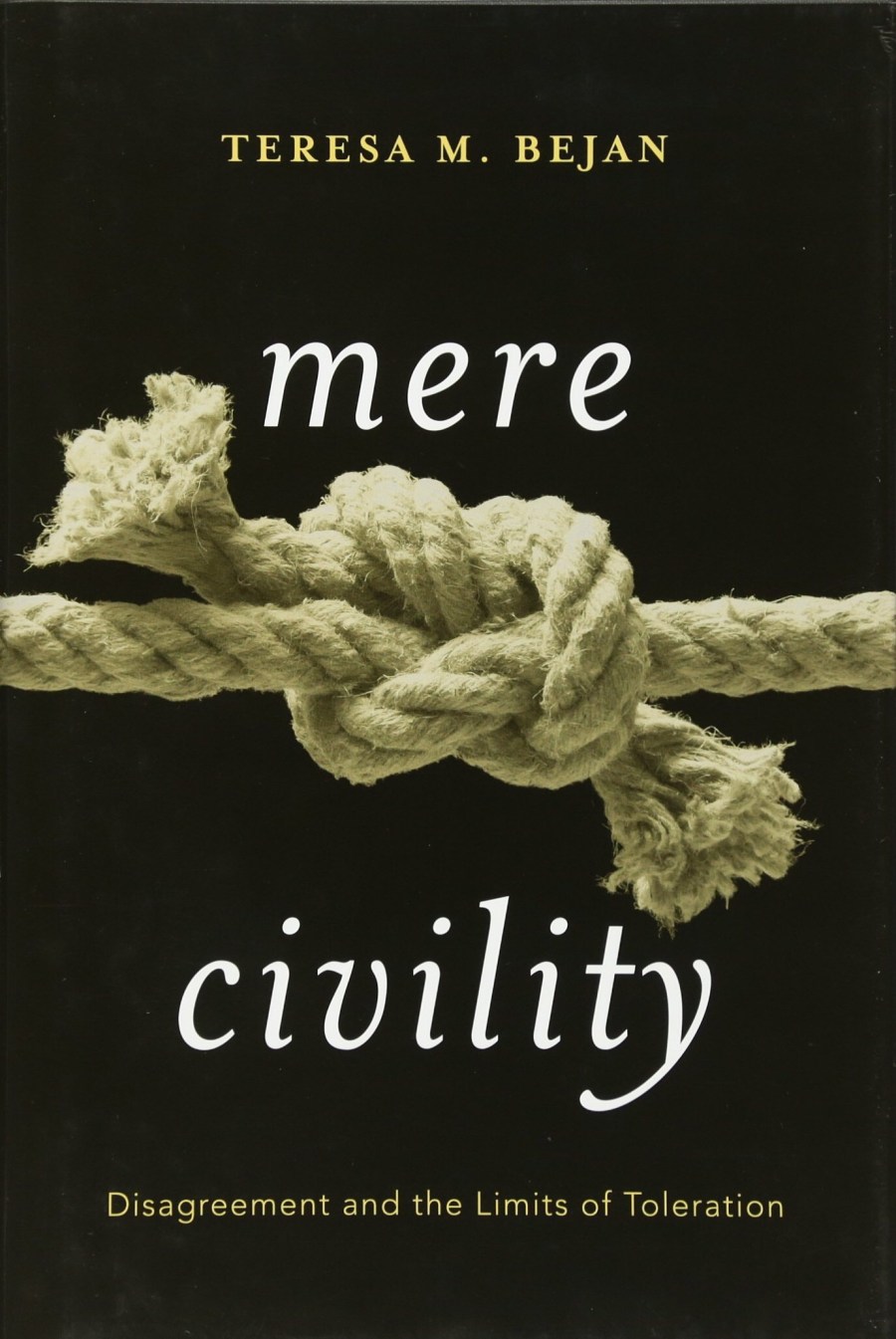
Looking for more, I found her book ‘Mere Civility: Disagreement and the Limits of Toleration’

As the synopsis rightly says:

Today, politicians and intellectuals warn that we face a crisis of civility and a veritable war of words polluting our public sphere.

In liberal democracies committed to tolerating diversity as well as active, often heated disagreement, the loss of this conversational virtue appears critical.

But is civility really a virtue? Or is it, as critics claim, a covert demand for conformity that silences dissent?

This is exactly what I was talking about with a former colleague of mine, in a lovely walk in the autumn sunshine past the ‘Mother of Parliaments’ yesterday.

Surely the disfiguring scaffolding all over it, is a reminder of how much democracy and civility need bracing in this country – and many others – right now.

Back to ‘Mere Civility’… it turns out that:

Many of the pressing questions facing liberal democracies today – what the proper scope of liberty should be and how to handle partisanship and hate speech – closely recall early modern concerns about the limits of toleration and the dangers posed by sectarianism, evangelical expression, and so-called “persecution of the tongue.”

Then as a now, thinkers appealed to civility as a way to reconcile the tension between diversity and disagreement, but determining what civility requires can be complicated.  While some restraint on expression is surely necessary to make disagreement tolerable, accusations of “incivility” can easily become pretexts for persecution.

The issue with civility is it feels weak and insipid, if it appears to allow bad things to be said. But when institutions close ‘protest’ down, there’s an equal fear that ‘free speech’, the legitimate right to be angry and to demand change is being curtailed.

I’ve spent significant parts of the last few weeks – at my university – writing new policies and procedures which walk this tightrope.

In work, in politics and at home, I’m an advocate for civility – if you’re not even prepared to listen there’s not much hope of reasonable accommodation or collective progress.

But the suffragettes weren’t civil, Malcolm X wasn’t civil and some of the protesters we host at work aren’t either; but the things they were and are fighting for are good things.

Theresa Bejan argues for ‘mere civility‘ – the absolute bare minimum of it:

that allows for rude, rambunctious, honest debate without the disputants attempting to eject each other from society, 

That’s the baseline I’m defending at work; but I must say I’d like to see a bit more civility than we have.

As a middle-aged, middle-class white ‘family man’ that’s easy to say – all society’s norms are tuned to me. If I was a woman, black, gay or poor I might see things very differently.

Perhaps ‘mere civility’ is right – we shouldn’t seek to be too comfortable in a world full of inequality.

A funny old game…

It’s a funny old game; the game of life… After a two months of feverish activity I find myself:

1) in a very promising and already rather nice new family home;

2) through the worst of some work travails;

3) a full stone lighter than at the end of May and the trimmest I’ve been since schooldays;

4) two days into a relaxing and rather lovely family holiday in Holland;

5) Downloading a dead German Catholic philosopher’s ‘Four Cardinal Virtues’.

It all goes to show that philo sophos (philosophy’s enduring charms) can be driven into abeyance by the busyness of life; but they are what I come back to when I am at rest.

Josef Pieper came to my attention via Wednesday’s (1st August) chapter of the Daily Stoic. As life progresses and reasonableness seems the only lasting solution to anything, I liked this Pieper quote:

“he alone can do good who knows what things are like and what their situation is.”

The wisdom of the ages in that one.

What better than a German Catholic on a Dutch beach holiday – surely Thomas Aquinas would have approved.

Maximus

“Of all people only those are at leisure who make time for philosophy, only they truly live.”

“Not satisfied to merely keep good watch over their own days, they annex every age to their own. All the harvest of the past is added to their store.”

“Only an ingrate would fail to see that these great architects of venerable thoughts were born for us and have designed a way of life for us.” —SENECA

Having dabbled and somewhat discarded it once before, I’m greatly warming to Stoicism…

The Daily StoicbyRyan Holiday and Stephen Hanselman: offers a year’s worth (in 366 date-stamped, bite-sized nuggets) of: “wisdom, perseverance, and the ‘Art of Living’: from Seneca, Epictetus, and Marcus Aurelius.”

I find a nightly dose is a great way to take the good advice on board… As the foreword sets out:

Stoicism was once one of the most popular civic disciplines in the West, practiced by the rich and the impoverished, the powerful and the struggling alike in the pursuit of the Good Life.

But over the centuries, knowledge of this way of thinking, once essential to so many, slowly faded from view.

Except to the most avid seekers of wisdom, Stoicism is either unknown or misunderstood. Indeed, it would be hard to find a word dealt a greater injustice at the hands of the English language than “Stoic.”

To the average person, this vibrant, action-oriented, and paradigm-shifting way of living has become shorthand for “emotionlessness.”

I have to say that’s where I’d largely left Stoicism; an argument for detachment and disengagement. But as ‘The Daily Stoic underlines:

What a sad fate for a philosophy that even one of its occasional critics, Arthur Schopenhauer, would describe as “the highest point to which man can attain by the mere use of his faculty of reason.”

Channelling my ‘inner Buddhist’ and combining it with Aristotle’s worldly Ethics, I now see things very differently. Stoicism is basically the best of both, applied to the secular world…

Holiday and Hanselman agree:

It has been the doers of the world who found that it provides much needed strength and stamina for their challenging lives… as a practical philosophy they found Stoicism perfectly suited to their purposes.

Born in the tumultuous ancient world, Stoicism took aim at the unpredictable nature of everyday life and offered a set of practical tools meant for daily use.

Our modern world may seem radically different than the painted porch (Stoa Poikilê) of the Athenian Agora and the Forum and court of Rome.

But the Stoics took great pains to remind themselves that they weren’t facing things any different than their own forebears did, and that the future wouldn’t radically alter the nature and end of human existence.

One day is as all days, as the Stoics liked to say.

They continue:

Making its way from Greece to Rome, Stoicism became much more practical to fit the active, pragmatic lives of the industrious Romans.

As Marcus Aurelius (above) observed:

“I was blessed when I set my heart on philosophy that I didn’t fall into the sophist’s trap, nor remove myself to the writer’s desk, or chop logic, or busy myself with studying the heavens.”

Instead, he (and Epictetus and Seneca) focused on questions we continue to ask ourselves today:

“What is the best way to live?”

“What do I do about my anger?”

“What are my obligations to my fellow human beings?”

“I’m afraid to die; why is that?”

“How can I deal with the difficult situations I face?”

“How should I handle the success or power I hold?”

Stoics frame their work around three critical disciplines:

The Discipline of Perception (how we see and perceive the world around us)

The Discipline of Action (the decisions and actions we take—and to what end)

The Discipline of Will (how we deal with the things we cannot change, attain clear and convincing judgment, and come to a true understanding of our place in the world)

Master these and you master yourself and your world:

By controlling our perceptions, the Stoics tell us, we can find mental clarity.

In directing our actions properly and justly, we’ll be effective.

In utilizing and aligning our will, we will find the wisdom and perspective to deal with anything the world puts before us.

Far from sombre and sober, Stoics believed:

That by strengthening themselves and their fellow citizens in these disciplines, they could cultivate resilience, purpose, and even joy.

The Daily Stoic Stoic offers some down to earth Roman ‘Maxims’ to add to La Rochefoucauld’s French fancies.

In what has been a very trying week at work, this one certainly helped:

“You shouldn’t give circumstances the power to rouse anger, for they don’t care at all.” —MARCUS AURELIUS, MEDITATIONS, 7.38

But the best and most useful maxim this week, came to me by text message from my old boss:

Worthy of Maximus that one.

The Midlife Crisis

Of course we’re all ultimately barrelling towards the abyss; but there’s something about the middle of life that starts you thinking about it…

The ancients, the Stoics, the Buddhists; even the most whacko Californians all agree: at least half of the purpose of philosophy is to cope with our own mortality. And that need kicks-in big time around half-way through.

Elliot Jacques coined the phrase ‘midlife crisis’ in his 1965 paper Death And The Midlife Crisis. And MIT philosopher Kieran Setiya has had a proper go at really thinking about what it is and what to do about it, in this terrific podcast from the ever wonderful series Philosophy Bites.

The essence of his advice lies in giving up ‘telic’ living: the life focused on ‘projects’ and achievements. Defined by their completion: projects, achievements and ‘bucket lists’ are either constantly being consumed or are eluding you – increasing the feeling of time running out.

Instead the focus needs to be on ‘atelic’ living; enjoying ‘categories’ of activity and the process of doing them. It’s about enjoying philosophy, not ticking off the great philosophers; listening to classical music, not methodically completing the works of Beethoven; enjoying really looking at Art not consuming, categorising and collating it…

One approach endlessly pursues endpoints; of which and there is an infinite supply versus a finite amount of time. The other enjoys the time there is, in the doing of enjoyable things; not just the completing of them.

It’s a subtle thing; often the identical activities, but with a slightly different mental approach – enjoying the journey, not racing to complete as much as possible before the end.