Stations on the road to Freedom

I shared Dietrich Bonhoeffer’s “Stations on the road to freedom” with an old friend this week.

I bought a copy of Bonhoeffer’s Ethicswhen I was searching for a famous quotation – which is actually by Martin Niemöller. Niemöller was arrested in 1937 by the Nazi authorities and survived first Sachsenhausen and then Dachau concentration camps.

Niemöller’s famous statement, reminds us that sometimes if you don’t take a stand, there may be no-one left to stand up for you:

“In Germany they came first for the Communists, and I didn’t speak up because I wasn’t a Communist. Then they came for the Jews, and I didn’t speak up because I wasn’t a Jew. Then they came for the trade unionists, and I didn’t speak up because I wasn’t a trade unionist. Then they came for the Catholics, and I didn’t speak up because I was a Protestant. Then they came for me, and by that time no one was left to speak up.” 

Bonhoeffer didn’t survive the war. His ‘Stations on the road to freedom’ were written in Tegel prison before his death at the hands of the Nazis.

His words really speak to me. But they have a few bits where God intervenes as the ultimate answer. Those bits aren’t for me. So with a gentle edit, here is my secular version of Bonhoeffer’s four stations.

Secular “Stations on the Road to Freedom” after Dietrich Bonhoeffer:

Discipline

If you set out to seek freedom, then learn above all things to govern your soul and your senses, for fear that your passions and longing may lead you away from the path you should follow. Only through discipline may a man learn to be free.

Action

Daring to do what is right, not what fancy may tell you, valiantly grasping occasions, not cravenly doubting – freedom comes only through deeds, not through thoughts taking wing. Faint not nor fear, but go out to the storm and the action, trusting in those commandment you faithfully follow; freedom, exultant, will welcome your spirit with joy.

Suffering

A change has come indeed. Your hands, so strong and active, are bound; in helplessness now you see your action is ended; you sigh in relief; so now you may rest contented.

Death

Come now, thou greatest of feasts on the journey to freedom eternal; death, cast aside all the burdensome chains, and demolish the walls of our temporal body, the walls of our souls that are blinded. Freedom, how long we have sought thee in discipline, action, and suffering; dying, we now may behold thee revealed.

As I said in an email to my good friend: 

“I’m doing ok on 1) Discipline and 2) Action, haven’t a huge amount to complain about on 3) Suffering by global standards, and I’m still in the prime of life – albeit number four will get us all in the end.”

“That and the greater number of protons which have cascaded across membranes in my body than there are stars in the observable universe in the time it has taken to write you this, are my thoughts for the day.”

I’m somewhere between half and two thirds down the ‘road to freedom’. Important, amid all the ‘action’ to remember that; and enjoy the ride.

Laughter; the best medicine 


I’m more a man for observational humour than for jokes; but perhaps the joke has been on me…

British humour tends to the downbeat. Ironic, sarcastic and even cynical – there’s always the risk of us talking everything down. With my new optimistic élan, I’m doing my best to avoid all that. 

But if you can’t ‘bitch and moan’, where are the laughs at work? Our place is dead clever, but also dead earnest. I realised the other day I hadn’t laughed all week…

Thank goodness Philosophy Now spurred me into action with their humour edition!

Two strong explanations of humour are the ‘Superiority’ and the ‘Incongruity’ theories.

Anya Steinbeck explains the first:

“The so-called superiority theory is prominent among explanations of humour. In fact, so prominent that it has been championed by philosophical heavyweights such as Plato, Aristotle, Hobbes and Bergson

Thomas Hobbes’ formulation of the superiority theory is this: “Laughter is nothing else but sudden glory arising from some sudden conception of some eminency in ourselves, by comparison with the infirmity of others, or with our own, formerly.” 

If Hobbes is right, humour becomes a tool for making ourselves feel better by thinking of others or our own past selves as inferior. So if Ted is a terrible golfer he can overcome the pain of this truth by making fun of Fred who is an even worse golfer. 

Plato believes this kind of humour to be damaging: “Taken generally the ridiculous is a certain kind of evil, specifically a vice.” It counts as a vice because it is symptomatic of a lack of critical self-awareness as we ridicule others. 

I would suggest that the two most serious problems with hierarchical jokes are these: 

1) Firstly, as Plato says, the aesthetic form of a joke form is just so attractive and appealing that we may not pay enough critical attention to the moral content. 

2) Secondly, far from having a dialogue function, jokes can be conversation stoppers. As Theodor Adorno says: “He who has laughter on his side has no need of proof.” 

In other words, humour is, next to its wonderful properties, also a great potential tool for manipulation. Dress them up as a joke and you can get away with outrageous statements. 

So what of the ‘Incongruity’ theory? The Stanford Dictionary of Philosophy gives us this:

“The first philosopher to use the word incongruous to analyze humor was James Beattie (1779). Our laughter “seems to arise from the view of things incongruous united in the same assemblage.” The cause of humorous laughter is “two or more inconsistent, unsuitable, or incongruous parts or circumstances, considered as united in one complex object or assemblage, as acquiring a sort of mutual relation from the peculiar manner in which the mind takes notice of them.”

Beattie may be right but he’s not exactly got us rolling in the aisles with that description.

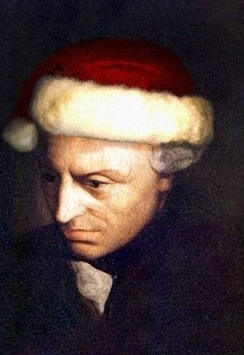
And it gets worse… Given his well deserved reputation for seriousness, perhaps not surprising that Kant is stronger on theory than gags…

20120512-111900.jpg

“In everything that is to excite a lively convulsive laugh there must be something absurd (in which the understanding, therefore, can find no satisfaction).”

“Laughter is an affection arising from the sudden transformation of a strained expectation into nothing. This transformation, which is certainly not enjoyable to the understanding, yet indirectly gives it very active enjoyment for a moment. Therefore its cause must consist in the influence of the representation upon the body, and the reflex effect of this upon the mind.”

Kant illustrates with this story:

“An Indian at the table of an Englishman in Surat, when he saw a bottle of ale opened and all the beer turned into froth and overflowing, testified his great astonishment with many exclamations. When the Englishman asked him, “What is there in this to astonish you so much?” he answered, “I am not at all astonished that it should flow out, but I do wonder how you ever got it in.”

Following that cracker he serves up another:

“The heir of a rich relative wished to arrange for an imposing funeral, but he lamented that he could not properly succeed; ‘for’ (said he) ‘the more money I give my mourners to look sad, the more cheerful they look!’”

Whilst I wouldn’t recommend he gives up his day job, I’m with Kant. When it comes to making people laugh, I like incongruity. 

Superiority all too easily leads to the worst type of humour – arrogance, trashing others and talking people down. Now I know what I’m looking for, I realise I’ve seen plenty of ‘superiority’ humour about. It’s not pretty. 

Keep it incongruous I say. As my boy did with his little joke in the car this morning; it made me laugh out loud:

“What did one rebel sausage say to the other?”

“May the fork be in you!”


Rumination

  
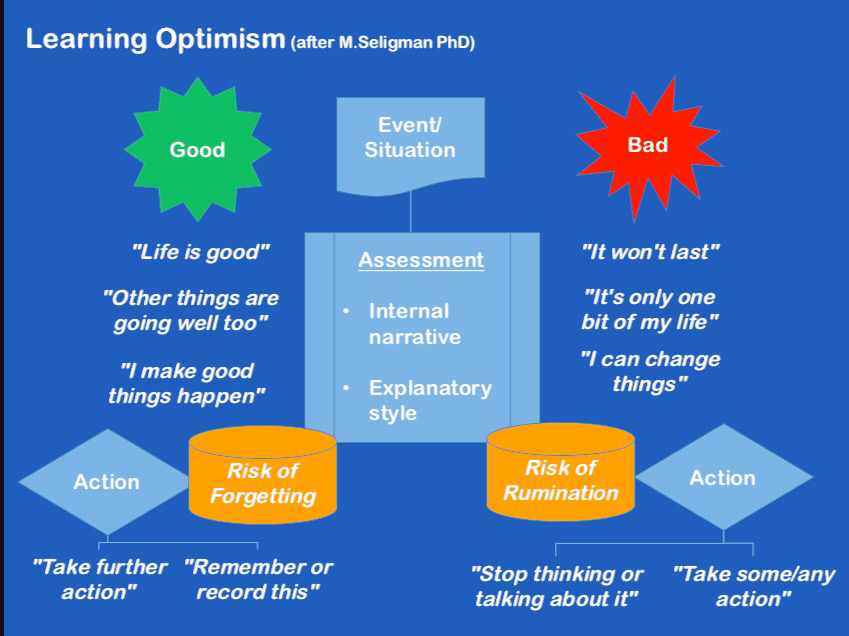
An interesting discovery from Learned optimismis that rumination is the optimist’s worst enemy… Chewing the cud leads to pessimism and inaction.

One thing I’ve learned at work down the years is: ‘if in doubt, do something’

Armed with this new insight I’m even more sure taking and helping others take action – sometimes any action – is my best defence against mine and their pessimism.

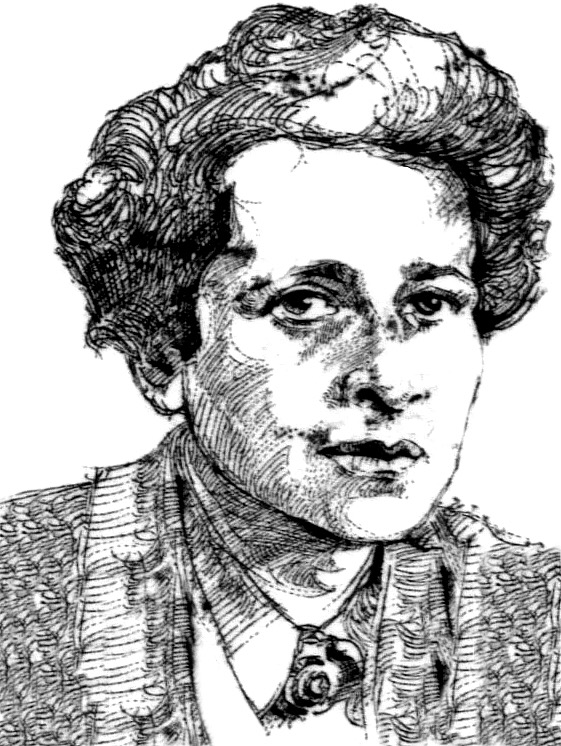
And this reminded me to look up Hannah Arendt the great 20th century philosopher, who I seemed to remember was big on action too… 


I was right. Here’s a boiled down extract from the Stanford Encyclopedia of Philosophy:  

“For Arendt, action constitutes the highest realization of the vita activa, via three categories which correspond to the three fundamental activities of our being-in-the-world: labor, work, and action. 

Labor is judged by its ability to sustain human life, to cater to our biological needs of consumption and reproduction.

Work is judged by its ability to build and maintain a world fit for human use.

Action is judged by its ability to [manifest] the identity of the agent and to actualize our capacity for freedom.

Although Arendt considers the three activities of labor, work and action equally necessary to a complete human life, it is clear from her writings that she takes action to be the ‘differentia specifica’ of human beings.

Action distinguishes [us] from both the life of animals (who are similar to us insofar as they need to labor to sustain and reproduce themselves) and the life of the gods (with whom we share, intermittently, the activity of contemplation).”

Nuff said. I made myself a little flowchart last Sunday to remind me, which still seems on the money…


In the face of setbacks, troubles and ugliness; don’t ruminate – act. 

In the presence of success, progress and beauty; act – but don’t forget to contemplate too.

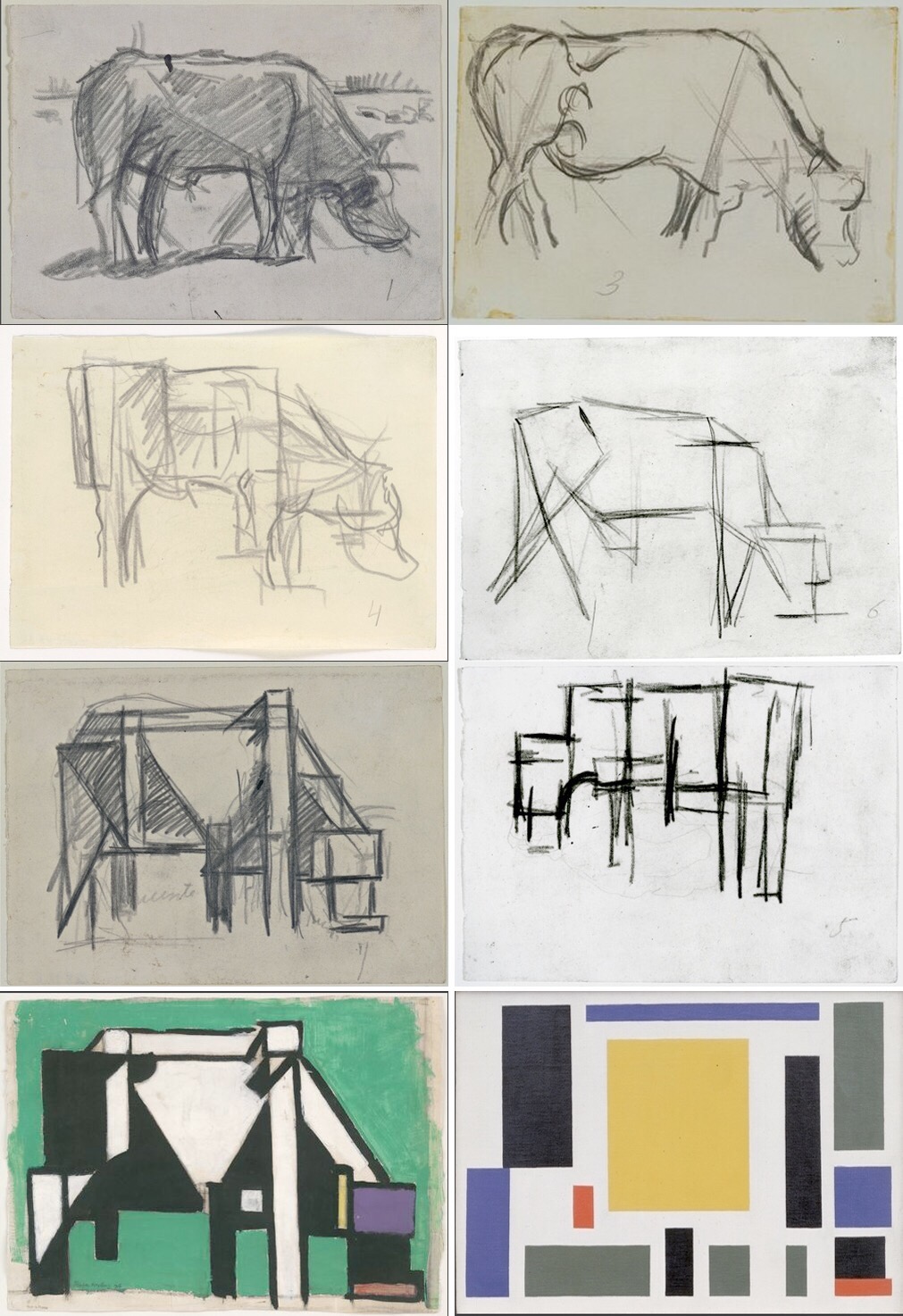
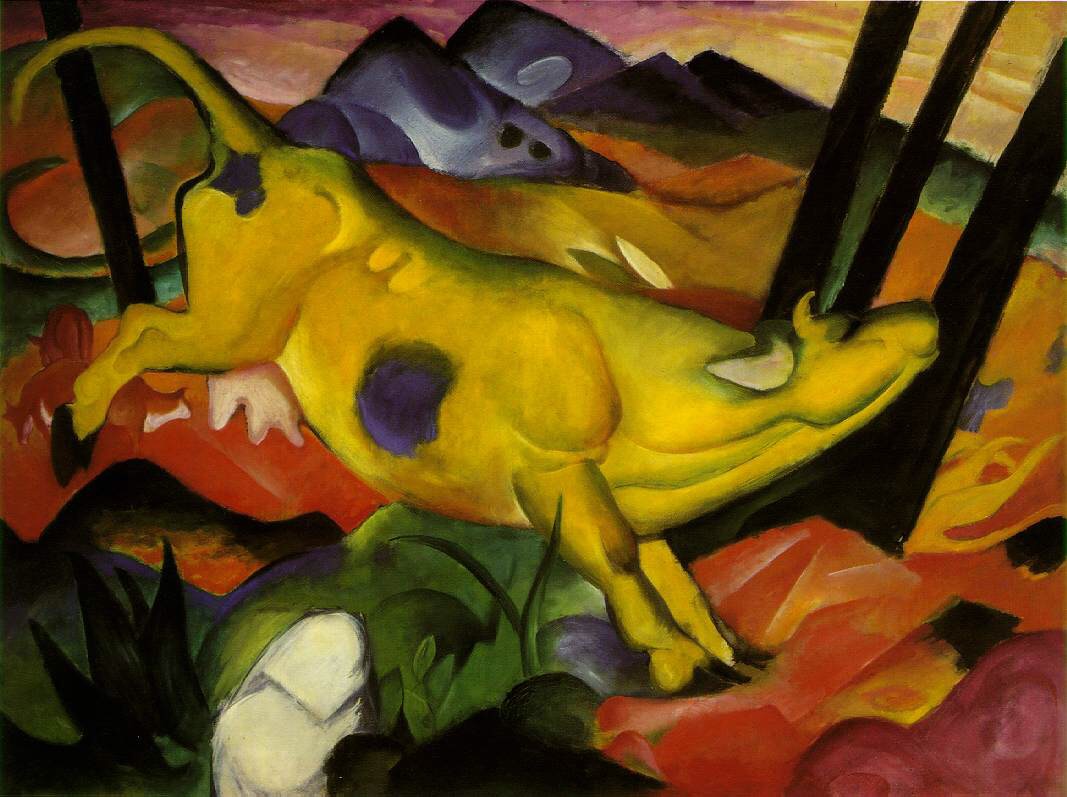
Or another way to look at it, less Theo van Doesburg


More Franz Marc


No more chewing the cud.

Perspectives


The thought that ‘people’ are just a manifestation of different causes, drivers and phenomena is an interesting one. 

We all have a strong sense of ‘self’. And an equally strong sense of other ‘selves’ too – not least when those other selves jostle, oppress and thwart us.

So the Buddhist doctrines of ’emptiness’ and that we have no ‘inherent existence’ challenge the common sense experience of selves, ourselves and selfishness.

Somewhat tired, somewhat hot; and somewhere between bored and irritated – I had a moment of enlightenment reflecting on this, at a work event this week.

This speaker who is mildly irritating me, on many levels simply does not exist at all…

If I looked at them at the molecular level, they’d just be a greyish fuzz of particles – in fact when you think about it, at the molecular level it probably makes no real sense to think in colours or shapes at all, it’s all a probabilistic blur.

At a bacterial level, that person was a teeming mass of microbes; which largely outnumber ‘their’ own cells. And many of those were probably running faster, because of the heat of the room and the anxiety of speaking.

As they were speaking, the speaker was constantly having holes punched through them by cosmic rays – some generating cellular malfunctions and mutations which the person’s immune system was hopefully mopping up.

At a planetary level, the roomful of people I was sat amongst would be about as visible and significant as a handful of microbes on a Petri dish is to the human eye.

And at a room level, lots of mounds, fungi and little creatures were probably gently coming to life thanks to the light, heat, food and prey that sixty odd people were all exhaling, expelling, shedding and radiating. 

And that’s before we get onto scales of time – how does an hour of speeches look on the timeline of a mayfly, an oak tree or a solar system?

With all those things going on, it’s hard to stick with the idea that the only thing happening in that room, was a person with an ego imposing their ego on my ego.

Letting go of the ‘person’ and seeing the myriad causes, effects, scales and timescales in which you could see them, helped me escape irritation; and embrace a sense of wonder. 

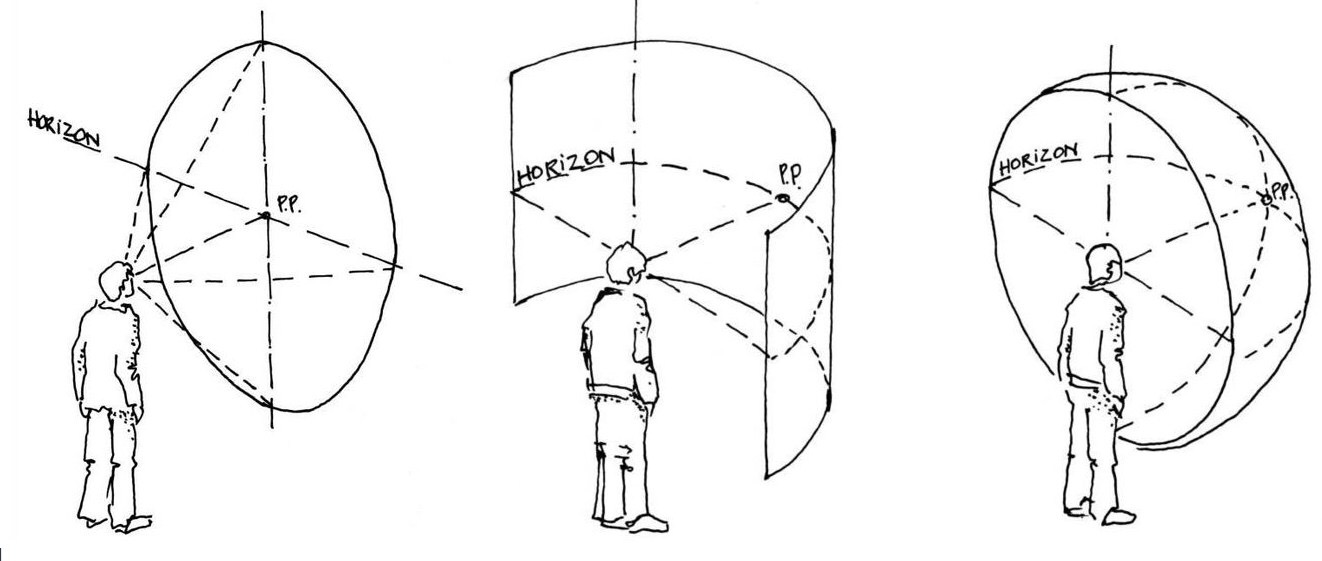
Different perspectives helped me get a different perspective.

Aquinas – a life’s work


Some years ago on holiday, we stayed in a French house which had a multi-volume set of philosophy books. Of all the great philosophers of history only Aristotle and Aquinas merited three entire volumes; which was reassuring – I was already reading on Aquinas when we arrived.

Whilst this standing in philosophy is well merited (in my humble opinion), I’ve found Aquinas’s particular method of logical argument, makes his original texts a bit of a struggle.

But, as I dug out from the Stanford Encyclopaedia of Philosophy – for an especial friend – Aquinas’s prescription for the good life is disarmingly straightforward:

The basic human goods:

(i) life, 

(ii) “marriage between man and woman and bringing up of children [coniunctio maris et feminae et educatio liberorum]” (not at all reducible to “procreation”), 

(iii) knowledge, 

(iv) living in fellowship (societas and amicitia) with others, 

(v) practical reasonableness (bonum rationis), and 

(vi) knowing and relating appropriately to the transcendent cause of all being, value, normativity and efficacious action.

You might argue with one or two of them, but it’s not a bad recipe… 

There’s plenty of ‘practical reasonableness’ about Aquinas.