Life as Art

20130217-103343.jpg

I always used to be big on objectivity – getting to what’s factually and actually right. But I’m much less obsessed with the ‘objective’ these days.

The (at times painful) discovery of my working and family life is that, with the exception of basic chemistry and arithmetic, pretty much everything in life is a matter of interpretation.

It all depends on where you’re looking from, what you’re looking with and how you’re understanding what you’re seeing. Different lives and different experiences equal very different interpretations of the same data. There are few facts and many interpretations.

So, with the passage of years and against my better judgement, I’m strangely drawn to Sartre’s view nicely encapsulated here:

Since I could always have chosen some other path in life, the one I follow is my own. Since nothing has been imposed on me from outside, there are no excuses for what I am.

Since the choices I make are ones I deem best, they constitute my proposal for what any human being ought to be.

The inescapable condition of human life is the requirement of choosing something and accepting the responsibility for the consequences.

Which makes me totally responsible for the life I choose.

Freed from the shackles of objectivity – that there is a right answer or a right way to live – I realise that in fact we often have more choice than we think.

What happens to us is more our responsibility than we are sometimes ready to accept. Every life is a unique, personal and ongoing act of creation. We live creating the ultimate work of art – ourselves.

Norman Mailer puts it pithily:

Every moment of one’s existence one is growing into more or retreating into less. One is always living a little more or dying a little bit.

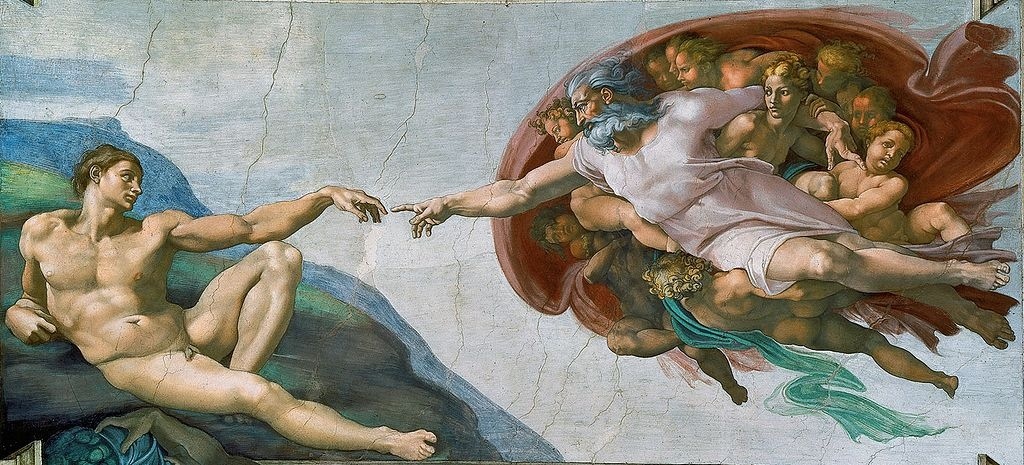
Life is a work of art. But these days I’m happy to settle for the bustle of a Dutch feast, instead of seeking the perfection of an Italian ceiling.

20130217-102821.jpg

Complex Pleasures

20130120-164003.jpg

Talking last night with friends about ‘pleasure’, we recognised it’s a complex beast. One of our party admitted she was happy with her life but generally not happy as she lived it. How could this be?

I listened again to Thomas Hurka on Philosophy Bites today to remind me. Hurka identifies four types of pleasure in two categories: ‘felt’ and ‘thought’.

The two ‘felt’ pleasures are: first, ‘simple pleasures’ i.e. specific immediate sensations: “mmm tasty” or “ahh comfortable.” And second, moods – which are a general and last for a duration.

The two ‘thought’ pleasures are specific: “I’m happy that… my daughter is in the school play” or “my football team won” and general: “overall I’m happy with how my life is going”, aka Aristotle’s flourishing.

Of course they are all intertwined. A life of physical pleasures – pure hedonism – might come up short on achievement. Or get cut short by a heart attack. But a life of too much ‘thought’ might lack passions and pleasures and the achievements of love and family.

Apparently, most parents say that the thing which has given them most pleasure in their lives has been the raising of children.

But also, apparently, if you give parents of young children an electronic ‘clicker’ to register every time they feel a sensation of pleasure during their day, they register fewest clicks of personal pleasure when they are actually with their kids. Probably haven’t got time to click…

So Hurka’s four pleasures explain how our friend can think “I am happy with how my life is going” whilst feeling in a permanent bad mood – they have three kids who run them ragged. Doesn’t sound great. But she’s happy, at least on one level.

Sleep’s the big one for me. Now I’m getting my sleep and enjoying my work – as well as enjoying time with my kids – I’m in a pretty permanent good mood. Feeling good is a great addition to my life. Simple to feel, complex to achieve.

Rights Gone Wrong

20121215-172440.jpg

Rights are all well and good, but sometimes they lead you to the wrong places. Generally I’m with John Stuart Mill:

“Mankind are greater gainers by suffering each other to live as seems good to themselves, than by compelling each to live as seems good to the rest.”

That’s the classic case for ‘negative liberty’ – i.e. freedom from interference if you’re doing no harm. And it has travelled time well; Governments: know your limits. But what Mill says before this is important too:

“The only freedom which deserves the name is that of pursuing our own good in our own way, so long as we do not attempt to deprive others of theirs, or impede their efforts to obtain it.”

And it’s this innocuous final phrase which is the tricky one: ‘impeding their efforts to obtain it.’ Does ‘impeding’ include dodging your taxes, turning a blind eye to inequality or using ‘rights’ to justify a bad status quo? As Mill said:

“A person may cause evil to others not only by his actions but by his inaction, and in either case he is justly accountable to them for the injury.”

Not that he was a pacifist:

“War is an ugly thing, but not the ugliest of things; the decayed and degraded state of moral and patriotic feeling which thinks nothing worth a war, is worse.”

“A man who has nothing which he cares more about than his personal safety is a miserable creature who has no chance at being free, unless made and kept so by the exertions of better men than himself.”

But as America reels from another terrible school shooting, with the prospect that the 2nd Amendment will be wheeled out again to justify inaction, surely historic rights are causing contemporary wrong.

Times change. It’s the 21st century not 1791. Give Governments too many powers and they abuse them. Give citizens guns and they do too. Two wrongs don’t make a right in a modern democracy.

I can’t help quoting Mill one more time:

“I never meant to say that the Conservatives are generally stupid. I meant to say that stupid people are generally Conservative.”

Surely it’s time for change on the right to bear arms.

Fridge Frees

20120811-213902.jpg

Proof, if ever it were needed, that Csikszentmihalyi’s ‘flow’ can be found in any – and I mean any – activity. This morning at 7.45am, I began chucking some veg and old bottles of chilli out of the fridge…

…Two hours later the entire fridge, glass shelves, drawers and door storage sparkle clean as a whistle; for the first time in over five years.

What possessed me? A combination of ‘homo faber’ (Hannah Arendt’s thesis that man needs to work) and ‘flow’ any task done with focus and intensity brings absorption and satisfaction.

Positive feedback from my astonished ‘other half’ helped too. Amazing what a week off work does for you – plus a brief respite from the kids.

As I said to the missus last week, I sometimes have an uncontrollable urge to take some autonomous action, to get on and do something – anything. Hannah Arendt explains why:

“Men are free…as long as they act, neither before nor after; for to be free and to act are the same.”

A fridge frees.

Take me to your Leader

20120810-214912.jpg

As the Curiosity rover pulled off an improbably complex landing on Mars, I was having a laugh with a friend in the US. I pointed out that it’s the US President’s duty to welcome any extraterrestrial when and if he/she arrives. As I put it to her:

It’s America’s job to have any alien invasion land there. And your job to extend the hand of friendship, attempt to nuke em and then use geek ingenuity to whoop ET’s sorry ass. These are important tests of the CinC plus would you have a beer with him/her.

But as Montaigne wrote 50 years after the discovery of the New World, Europeans did a pretty lousy job of ‘constructive engagement’ when they landed in the Americas:

We have taken advantage of their ignorance and inexperience, with greater ease to incline them to treachery, luxury, avarice, and towards all sorts of inhumanity and cruelty, by the pattern and example of our manners.

So many cities levelled with the ground, so many nations exterminated, so many millions of people fallen by the edge of the sword, and the richest and most beautiful part of the world turned upside down, for the traffic of pearl and pepper?

Montaigne reckons the Ancients would have done it better:

Why did not so noble a conquest fall under Alexander, or the ancient Greeks and Romans; and so great a revolution and mutation of so many empires and nations, fall into hands that would have gently levelled, rooted up, and made plain and smooth whatever was rough and savage amongst them.

And that would have cherished and propagated the good seeds that nature had there produced; mixing not only with the culture of land and the ornament of cities, the arts of this part of the world, in what was necessary, but also the Greek and Roman virtues, with those that were original of the country?

I’m not so sure that ‘up close and personal’ the Greeks and Romans would’ve been quite that benign. But who knows.

A question arises. Having spent the week with my two kids arguing incessantly about fairness and equality, at what point do we give that up and go for dominance, acquisition and accumulation?

Lord Acton the Victorian historian, politician and moralist had a few ideas:

“Power tends to corrupt, and absolute power corrupts absolutely.

“Great men are almost always bad men.”

“There is no worse heresy than that the office sanctifies the holder of it.”

And with remarkable prescience:

“The issue which has swept down the centuries and which will have to be fought sooner or later is the people versus the banks.”

Plus ça change…