Carol Singing

20111209-223056.jpg

School Christmas carols
Parents wedged in
Younger siblings
Making a din
Silence falls
Like a blanket of snow
Then many small voices
Sing tunes we all know
All upstanding
The grow-ups join in
All in good voice
The joy of a hymn
Our spirits all lifted
By seasonal cheer
The annual sing song
Gets better each year.

The annual Christmas carol service, at my daughter’s new school, is a step up from the childish plays of recent years.

Opened with an expert trumpet solo, studded with eloquent readings and conducted with vim and vigour throughout, this was a classy – and very traditional – Christmas performance.

She, smartly dressed in red shirt and blue skirt, never spotted us – lost in the crowd. But I could see her, through gaps in many heads, singing her little heart out. It lifted mine as I stood to sing too. You can’t beat a proper Christmas hymn.

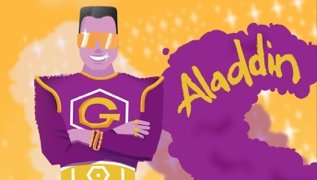
Aladdin

20111204-205415.jpg

Late for the start of
A theatrical performance
And Aladdin’s Cave
Required the kids to be brave
Quickly to seats
Amidst bangs and flashes
And loud panto banter
For a contemporary take
On a seasonal great
Widow Twankey
Cheeky Monkey
Street-talking hero
Fun for all the family
A whiff of greasepaint
And a real flying carpet
How did they do that?
Magic.

Tempting to say ‘you can’t beat a night at the theatre’, but in my experience you easily can. Still, despite nearly two hours in the car each way, a stunning visual spectacle, and some big hearted performances, made it a memorable Saturday night.

Star of the show was the gently wobbling – then rising and rotating – flying carpet, carrying our hero and his princess. How did they do that? A moment of theatrical magic. Worth the entrance money alone.

King James Bible

20111203-133355.jpg

Four hundred years
of the King James Bible.
The blood sweat and tears
Of six writing panels
Produced a text
Which united a kingdom
To post-Elizabethan revival.
Still read today,
Words of great majesty
Hell, fire and brimstone
Meet faith, hope and charity
A piece of England’s history
And linguistic gift to the world.
Can’t vouch for the science
But there’s power in the words.

Having read an interesting article about the origins of the King James Bible, I’ve decided to give it a proper read. Aside from its obvious religious role, it is the origin of so many phrases and sayings we still use today.

The skin of my teeth
How are the mighty fallen
Be horribly afraid
From time to time
As a lamb to the slaughter
Beat their swords into ploughshares
Turned the world upside down
A thorn in the flesh
Fell flat on his face
Get thee behind me
A man after his own heart
Set thine house in order

It’s interesting to read passages which are completely familiar, and not. Also to note things which myth, custom and the Disneyfication of culture have added to popular folklore but aren’t actually there – no unicorns perish in Noah’s floods, just a lot of un-named things which ‘creepethed on the earth’.

It’s also remarkable how little time, and how few words, are spent on massively significant and controversial topics – creation for example. The language though is rich, terse and magisterial.

A life’s work. For a disputed King and his ecclesiastical writing panels, quite literally.

Digital Art

20111120-180755.jpgAs I’ve written before, the job of the poet is to say something transcendent and universal about the human condition – in no fewer or more words than are needed. It’s the liberating, inclusive and motivating definition of poetry from Aristotle.

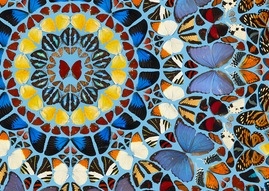
And I think it applies to the other arts too – no fewer or more brushstrokes, musical notes, dance steps and now maybe pixels.That’s why I like s[edition]art the new digital art marketplace.

I bought a Damien Hirst (a piece is to the left) on Thursday. Number 54 of a limited edition of 10,000. I have a digital certificate of ownership which says so. Talking about it to an expert in visual arts on Friday, she asked me why? Why bother, why pay, what’s the attraction, what’s to stop people copying them, is it just a scam?

I think it’s similar to the way Aristotle has changed my views on charity. It’s not about being ‘seen’ to give – that’s Aristotle’s virtue of magnificence. Charity is the entirely personal internal feeling of doing the right thing – connecting with a cause and doing something about it, however small.

I think that’s why digital art works for me. It involves some appreciation, some choosing, some discernment, connecting and empathising with the artist and personally recognising – in a small way – the value of their art.

As I said to another arts expert on Friday, I think the ‘art of life’ lies in developing and exploring ‘relevant complexity’ – intricacies which embroider existence, refine judgement and develop character. For art, walking a gallery is one way. Browsing and buying in a virtual one is another.

£7.50 is a small price to pay in recognition of an artist’s attempt at a statement on the human condition. I think Digital art – along with digital poetry – is here to stay.