What gets measured…

20120922-135313.jpg

I’d consider myself to have better than average self-discipline. But I have to concede – what gets measured gets done.

And it needs measuring often. I didn’t see off my half stone of blubber until I started counting exactly what I was eating throughout each day. I didn’t make the healthy changes to my daily routine (and still don’t) unless I tick them off every night.

And at work – where someone once said: ‘We all want to know precisely how we’re going to be measured, but absolutely not be measured precisely’, I’ve decided to bite the bullet, commit to some challenging targets and see if I can fire up people to measure and hit them.

My latest measuring gizmo is the Nike FuelBand: steps, activity and calories counted as you go. It syncs with an iPhone – so there’s instant data and no hiding. And it colour codes your progress all through the day…

The good thing about constant measurement is small stuff gets done a bit more often – which over time can add up to big changes.

Humans are lousy estimaters, expert self-deceivers and eternal optimists. These are three of our vital survival skills – but they don’t always get the job done.
Average White Male

20120908-150127.jpg

Shock news from the Harvard Business Review this week: men who are ‘agreeable’ suffer a 20% deficit in earnings versus those who are ‘disagreeable’. Add this to one earlier in the year, where men who are slim also suffer a 20% deficit – and I’m in trouble.

Average height costs me another 15-20%. And entering the jobs market in a recession (1990) means a £200,000 lifelong deficit versus those who entered the labour market in a ‘boom’. Any more ‘deficits’ and I’ll be paying my employer for the privilege of working my nuts off.

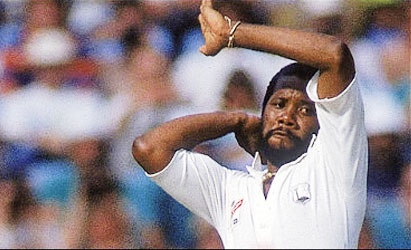
My remedy – West Indies cricket of the 1970s and 80s. Master your sense of injustice, focus on what you are great at, forget the conventional wisdom and play to win.

Joel Garner, Michael Holding and Curtly Ambrose were very tall. Malcolm Marshall was average height, but the most feared fast bowler of them all. Viv Richards took whatever blows were necessary, before whacking everything and everyone all around the ground with controlled power and aggression.

Finally Clive Lloyd. He captained in virtual silence – an inclination of the head, a quiet word. Total authority. His loping, slightly stooped walk to the middle, enough to make the whole crowd pause and pay attention.

The Harvard Business Review says if I respect the average, I lose. So like the great West Indians – time to change the rules of average white males.

Why Silver is the worst medal of all

20120812-172541.jpg

Watching the Olympic 10m diving yesterday, one couldn’t help but be struck by the delight of Tom Daley, in third, versus the desolation of Qiu Bo in second. This morning a friend sent me a good reason for it: counterfactual thinking.

Put simply, Silver looks at Gold and thinks about loss. But Bronze looks at the whole of the rest of the field and delights in making the podium at all. Each sees the most obvious counterfactual outcome – what might have been. Gold for one, nothing at all for the other. Each then frames their assessment of their situation accordingly: Dumb luck vs Result!

It’s a fascinating insight. And one which travels to other domains – notably work. People often obsess about the job they haven’t got, instead of being grateful for the one they have.

Instead of lamenting over the top spot, more of us should revel in making the podium. Bronze is a more precious metal than it looks.

Fridge Frees

20120811-213902.jpg

Proof, if ever it were needed, that Csikszentmihalyi’s ‘flow’ can be found in any – and I mean any – activity. This morning at 7.45am, I began chucking some veg and old bottles of chilli out of the fridge…

…Two hours later the entire fridge, glass shelves, drawers and door storage sparkle clean as a whistle; for the first time in over five years.

What possessed me? A combination of ‘homo faber’ (Hannah Arendt’s thesis that man needs to work) and ‘flow’ any task done with focus and intensity brings absorption and satisfaction.

Positive feedback from my astonished ‘other half’ helped too. Amazing what a week off work does for you – plus a brief respite from the kids.

As I said to the missus last week, I sometimes have an uncontrollable urge to take some autonomous action, to get on and do something – anything. Hannah Arendt explains why:

“Men are free…as long as they act, neither before nor after; for to be free and to act are the same.”

A fridge frees.

Sport as Life

20120624-132825.jpg

The thesis: truly great sporting skill and self-expression come best when not too structured, not too investigated, not too explored.

The counter: nearly-great performance is helped by study, stats, practice and heightened professionalism.

Stimulated by a cricket ground conversation with a good friend – and his kindness in buying me Ed Smith’s ‘What sport tells us about life’, I’m pondering the balance of thought and action, impulse and impact, standing up and standing out.

Csikszentmihalyi’s ‘Flow’ comes from matching high challenge with high skill. This suggests a linearity – progressive improvement. Perhaps for some things and some people it’s more non-linear: in life, as well as sport.

A great work, a stunning goal or a pivotal intervention – are they more likely as a ‘moment of genius’? Or perhaps as likely a moment we could potentially judge as ‘madness’, depending on the outcome. Do our greatest interventions come where we ignore risk and just ‘act’, with no conscious consideration of the chances or consequences.

There is a fate and fatalism side to these moments – whether in politics, war, life or sport. The sense that the script has already been written and destiny calls – a feeling that life stands still, the world is watching and it was meant to be.

The best goal I ever scored – volleyed low and unstoppable from a zinging cross – had that sense of time standing still. There are moments in working life too, I can recall, of almost out-of-body otherworldliness when the stakes were high, but ignored, in favour of speaking-up and speaking out.

Of course you remember the moments it came off – not when it didn’t. There’s lady luck and ‘confirmation bias’ to thank in ‘memorable’ moments too.

Perhaps what we call ‘genius’ is simply the product of a self-belief which ignores the situation and unconsidered – sometimes lucky, but often skilful – action. How many times you pull it off determines how history judges the ‘actor’.

But the ‘average’ means many must fall below, for a few to soar above. Heroes ignore the odds. Most of us consider them. But maybe we should all ignore the odds too – at least once in a while.