In the spotlight…

A month into ‘lockdown’ I WhatsApped in reply to a friend this week:

For my part, I have been studying Introduction to Psychology on Coursera with Paul Bloom of Yale.

And here he is.
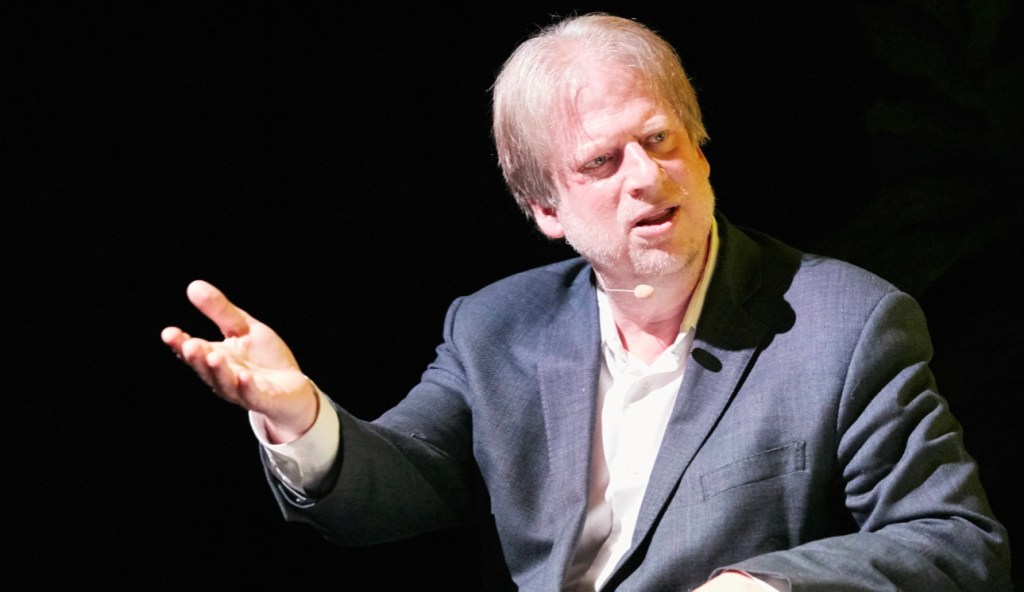
Paul Bloom

As I said to my friend:

I reckoned I knew my psychology but it turns out far less that I thought; it’s a revelation! We are so much more a product of emotion and subconscious probabilistic inference than of conscious thought or deliberation. And we are fantastically suggestible in every respect; easily triggered and primed to find patterns where there are none and seeking to exert control where none is possible.

A roam around ‘Intro Psych’ reveals just how much we are a bag of impulses and how little we are the rational beings the Enlightenment set out to make us. That’s not to say we can’t do better than simply follow our instincts – but it’s well worth knowing how ‘hard wired’ they are.

One tiny vignette from Paul Bloom… the number one fears for Chicago preschoolers are snakes and spiders (as they are universally) even though the great majority will probably never have encountered the former. There’s something primal about snakes and spiders – it’s a simple survival instinct.

Week four was ‘Social Psychology’: group dynamics, stereotypes, bias, belonging and ‘fitting in’. And the most helpful idea for me here is the ‘Spotlight Effect’:

The spotlight effect is the phenomenon in which people tend to believe they are being noticed more than they really are. Being that one is constantly in the center of one’s own world, an accurate evaluation of how much one is noticed by others is uncommon.

Wikipedia

As Bloom points out the Spotlight Effect is a great thing to know about… Individuals are more anxious they’re being noticed than they should be; everyone is far busier worrying about themselves than taking an interest in you, and fear of failure and embarrassment are universal – especially in novel situations and with new tasks.

Only experts, practising in their narrow domain of expertise perform better with an audience. The rest of us fare worse, because of our fear of being in the spotlight. And Bloom (who comes across as a rather splendid person) points out that this sometimes drives the so-called ‘Fundamental Attribution Error’:

In social psychology, fundamental attribution error (FAE), also known as correspondence bias or attribution effect, is the tendency for people to under-emphasize situational explanations for an individual’s observed behavior while over-emphasizing dispositional and personality-based explanations for their behavior. This effect has been described as “the tendency to believe that what people do reflects who they are”.

Wikipedia

FAE also leads to people believing (including sometimes Academics themselves) that because a person is impressive in their particular field of expertise they are similarly sound in all domains. Not so Bloom reminds us. And with a dash of ‘confirmation bias’ I’ve quickly decided (as above) that Bloom is a ‘splendid person’ not just a good psychology prof… FAE hard at work (I’m sure he’s a splendid person all the same!)

The Fundamental Attribution Error is a keeper, because it nudges us to remember that far more of what people do is ‘situational’; it’s what anyone would do, or how they would be seen in the same situation.

It also reminds us that when we blame others (not least at work) we tend to pin it on their ‘character’; whereas when we make a mistake or do something wrong ourselves – we are far more likely to blame the circumstances…

All in all, my enthusiasm for psychology is blooming under Bloom. As I concluded on WhatsApp:

I’m finding all this Covid-19 uncertainty as hard as the next person, but at least I’ve rediscovered a love of learning (which working professionally with Academics had damaged enormously!) It’s not all bad is it!

Ye gods!

I’m really enjoying Terence Green’s ‘Philosophical Haikus’ in Philosophy Now… Bitesized chunks of wit and wisdom which make you think. This month’s is on the controversial economist Friedrich Hayek.

The full text is down below (and I’m hoping Terence and Philosophy Now will forgive me as I do recommend a subscription to what one of my favourite reads).

But the bits which got me thinking are these:

…humankind is possessed of a singular desire to control: to control our environment, to control society, to control other people (cf Nietzsche’s will-to-power). Control is hoped to be a way of ridding ourselves of uncertainty; and more than anything else, human beings are troubled by uncertainty.

This speaks to the worries and anxieties we all endlessly lock onto: the Existentialist ‘lack’, Buddhist ‘clinging’ and the endless ‘control dramas’ of interpersonal relations. We are both bored by and possessive about what we have, fear what we don’t know and worry constantly about other people and the future.

We’re all about control.. are we beyond help?

But, said Hayek, this belief [in control] is just hubris – the sort of arrogant over-confidence for which the Greek gods were always punishing people. In the absence of the gods, we’re punished by the circumstances we create.

Maybe the answer is, mentally, to bring back those Greek gods – capricious, mercurial, tempters and temptresses, spiteful and unpredictable; but ultimately (kind of) on our side.

If life was unavoidably a rollercoaster ride of being tossed about by Zeus and the others, perhaps we might enjoy it more. Let go of the illusion of control and it’s unalloyed fun when it’s going well and less painful when things go badly; it’s all in the lap of the gods.

After all, chance seems to be beating control hands down in 2020.

Amor fati as Nietzsche said.

Philosophical Haiku

Friedrich Hayek (1899-1992)
by Terence Green

“Reason’s poverty,
Man’s desire to control –
This road walks the serf.”

Hayek’s reputation as an economist and political philosopher has suffered on account of his popular but vitriolic and unbalanced rant against state power, The Road to Serfdom (1944). In it he argued that even mild, well-intentioned attempts at central planning will inevitably slide towards authoritarianism. The book was appropriated by the worst zealots of neoliberalism. But there remains much wisdom in the fundamental points he returned to time and again.

The Enlightenment bequeathed to us a seemingly unshakable confidence in the capacity of human reason. Reason sets us apart from the beasts and gives us the power to shape our world after our own designs. It matters not that history is littered with the burnt-out wrecks of infallible schemes for the creation of the ideal society: we still cling to the belief that by the application of reason we can diagnose the illness and prescribe the cure for the human condition. Indeed, this belief is the very foundation of modern government. Every policy a government introduces is predicated on rational analysis, with the assumption that the policy will produce the desired effects. Along with this faith in reason, Hayek claims, humankind is possessed of a singular desire to control: to control our environment, to control society, to control other people (cf Nietzsche’s will-to-power). Control is hoped to be a way of ridding ourselves of uncertainty; and more than anything else, human beings are troubled by uncertainty. We wish to alleviate the pain of not knowing, and believe we have the ability to do so. But, said Hayek, this belief is just hubris – the sort of arrogant over-confidence for which the Greek gods were always punishing people. In the absence of the gods, we’re punished by the circumstances we create.

For Hayek in 1944 there was a broader context – of fascist and communist totalitarian regimes, that justified their murderous actions on the basis that they knew how to create the perfect society. Even if you start out with impeccably admirable intentions, any government that seeks to reshape society on the basis of some ideal blueprint will risk turning its citizens into slaves in order to realise that ideal. There cannot be a single right way to live or to organise society; and even if there were, we can never know enough or be wise enough to bring it into existence. It’s a thought worth pondering.

© Terence Green 2020

Why my jockey is lost…

After some time away I have returned to Existentialism. I guess when working life is getting the better part of you, it pays to focus on the things under your own control – your mind, how you spend your free time and where you focus your attention.

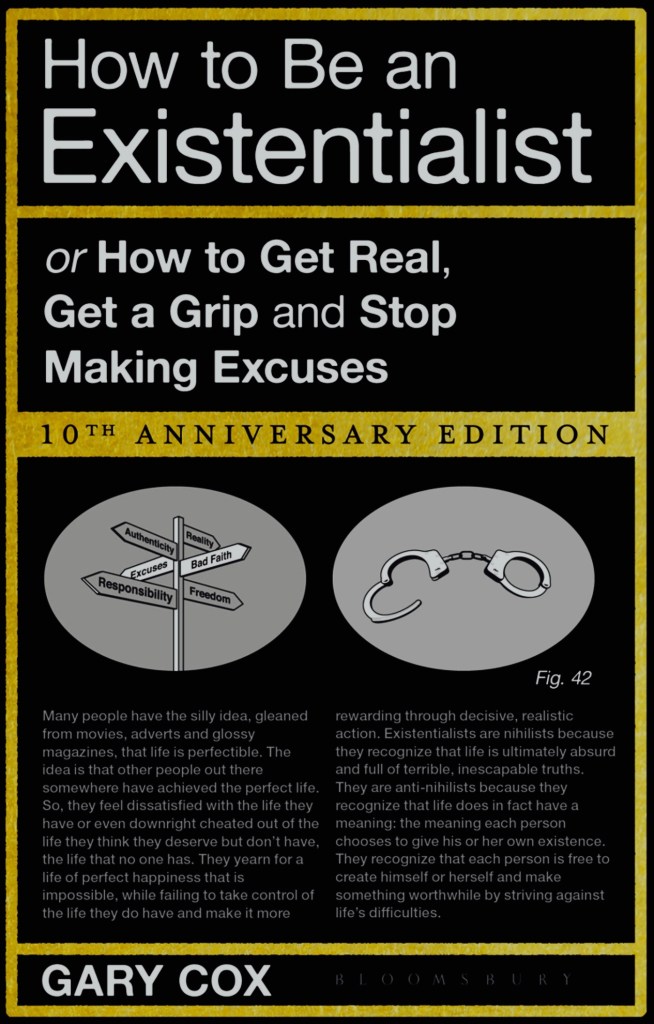
And this is a key aspect of Existentialism, as Gary Cox sets out in How to be an Existentialist’, because although it takes a body to have one, the mind is what defines us. Indeed understanding the nature and peculiarity of consciousness plays a key part in Existentialism.

Cutting to the chase, a key feature of consciousness – I discover – is it is always noticing what’s lacking: what isn’t happening, what is wanted and what the future is keeping from us…

Consciousness is always predisposed to find something lacking because lack is intrinsic to the very meaning of every situation for any particular consciousness. This is why, according to existentialist philosophers, a consciousness, a person, can never be completely satisfied. A person will always interpret a situation in terms of what it lacks for him.

If he is cooking, his meal lacks being cooked. If he is eating, his meal lacks being eaten. If he is half way through a movie the movie lacks an ending so far. If the movie is poor and he does not care about the ending then his situation lacks interest. If he is tired he lacks sleep (tiredness is lack of sleep). If he has just awoken and is ready for the day he lacks the things he hopes to achieve that day and so on and so on.

And if these seem like small things, it gets worse…

In general, a person always lacks the future towards which he is constantly heading, the future which gives meaning to his present actions and beyond which he hopes in vain to be fulfilled and at one with himself.

Ever onward, the endless march of time, towards a future that is presently lacking, an absent future that will fall into the past as soon as it is reached, a past with its own absent future.

It seems that the endless march of time constantly cheats us of what we are, prevents us from becoming one with ourselves, but really, what we are is this endless march forward in time, creatures that can never become one with themselves.

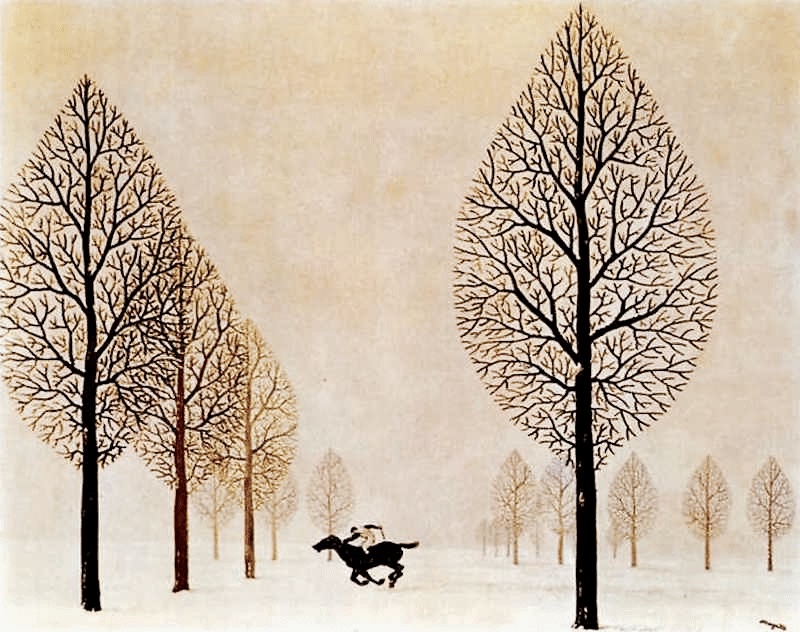
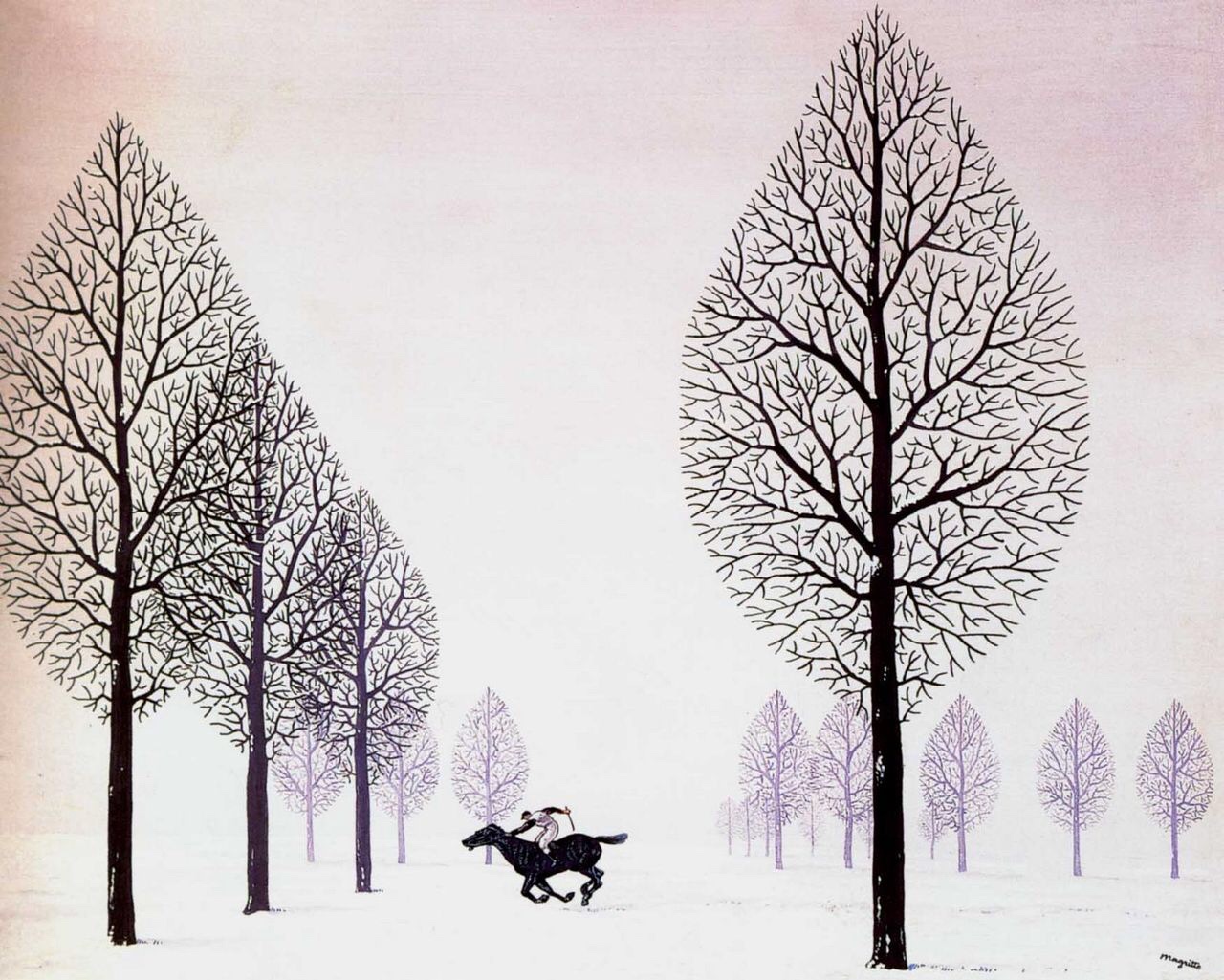
So this is why my jockey is constantly lost… I’m dashing through life seeking myself; doomed never to find me. As indeed are we all.

As Cox puts it:

Existentialism recommends bravely accepting that this is how life is and making the most of it. It recommends building your life on the firm basis of hard, uncomfortable truths rather than the shifting sands of soft, comfortable delusions.

Ironically perhaps, there is also the suggestion that people will actually be happier and relatively more satisfied if they accept what the endless temporal flight of consciousness towards the future implies, namely, that it is alien to the human condition for a person to be completely satisfied and contented for any length of time.

Existentialism offers satisfaction of a stoical kind through the acceptance of the inevitability of a certain amount of dissatisfaction.

And I’m all for stoicism. But returning to the starting point; if it is the restlessness of consciousness that defines, us then Cox points out:

We constantly encounter a world characterized and defined by the motives, intentions and attitudes we choose to have and the evaluations we choose to make.

This is not to say that the world is anything we wish it to be, far from it, but it is to say that there is a very real sense in which the world for each person is a product of the attitude with which he or she approaches it. This realization is, or should be, enormously empowering.

The person who chooses to be positive and confident or, at least, genuinely tries to be positive and confident, will encounter a very different world from the person who chooses to be negative.

So that’s where I’m focusing my consciousness; if you can’t change some of what’s happening around you, focus your mind on what you can.

Itchy and Scratchy

Turns out dopamine isn’t what I thought it was… I thought I was a simple lab rat seeking sugar solution with my many pastimes.

But it turns out dopamine is a motivator not a reward… Dopamine is the itch not the scratch; and that’s why it’s so motivating.

Here’s what Wikipedia has to say:

In popular culture and media, dopamine is usually seen as the main chemical of pleasure, but the current opinion in pharmacology is that dopamine instead confers motivational salience; in other words, dopamine signals the perceived motivational prominence (i.e., the desirability or aversiveness) of an outcome, which in turn propels the organism’s behavior toward or away from achieving that outcome.

And thus dopamine doesn’t bring satisfaction. In fact, I’ve discovered, the opposite – the more you scratch the more it itches. Dopamine powers learning and curiosity; and seems to reward it. But once you’re in a dopamine cycle it just itches and itches and itches.

It’s dopamine which powers all addictions: drugs, gambling and alcohol most notably. But it also fuels any form of compulsive behaviour; wherever your subconscious tells you you need to “feed your need” from marathon running to marathon eating, dopamine is urging you on.

So now I’m starting to understand why my jockey is forever lost

I’ve been chasing dopamine; instead of letting life be its own reward.

Enjoy what’s on your plate…

Plenty of bother at work this week; and I mean plenty… At one point on Friday afternoon I kinda wondered if it was a really well organised prank. People problems, building problems, legal problems, a bereavement – and a taxi outside waiting to take me for another meeting while I was supposed to instantly sort them.

But my new mantra got me through with at least half a smile:

Enjoy what’s on your plate

Once again I’ve turned to Chris Croft for inspiration here – if you look at things the right way they’re all potentially enjoyable…

Here’s what Chris has to say:

This month’s tip is taken from The Inner Game of Tennis by Tim Gallwey which is a great little book, and only 50% about tennis. The bit that I really liked went as follows:

There are three reasons why you might play tennis (or do anything else in life)

Competition: to beat other people. But Tim Gallwey says that this is pointless because there will always be someone better than you so it’s a futile objective. Unless you pick weak opponents so you beat them, but what’s the point of that. So being competitive, trying to prove yourself by being better than other people, is not the right path to go down.

I completely agree with Chris and Tim on this – even in my sporting heyday I often couldn’t see the point. So what’s next?

Mastery: to master the game (or to master selling or management or traffic planning or heart surgery or physiotherapy or growing pumpkins or whatever it is that you do). Again, TG says this is futile – you’ll never master it. Ask anyone who plays golf! Though I did once meet Eddie Lockjaw Davis, one of the best jazz saxophonists in the world, and talk to him, and he said he’d mastered the sax and was bored with it. He’d taken up snooker at the age of 80 to give himself a challenge! So even if you did master it you’d be bored, but anyway, you won’t, (even Federer misses some shots) so forget that!

Mastery has always trapped me more than competition – secretly wanting to be really good (and maybe even wanting other people to see I was really good) at things. But as Chris has written very persuasively in his Big Book of Happiness the more you seek mastery the less you get back from it; it’s the law of diminishing marginal returns.

So what’s left? Just the good stuff:

Enjoyment: to get pleasure from the good shots, even if there aren’t very many! Who cares if you’re not the best, or that you aren’t perfect; every now and then you do a great shot, and that makes it all worthwhile. I must say that as I got better at squash (and I was quite good once!) I found it less and less enjoyable, because I took most shots for granted, I was just irritated by the really hard ones that I couldn’t quite get, on those key points in the game against really tough opponents. Gone were the fun knock-abouts with friends where we just took delight in hitting the ball.

To play for enjoyment means that your self-worth doesn’t come from being really good, or from being better than other people. Playing is not about self-worth at all. Your self worth should be totally independent of how good you are at tennis – or anything else. You can be rubbish at tennis and still be a good person.

And this was the sentence that helped me the most:

So the question is, could you get enjoyment from selling or managing or nursing or refusing planning permission or whatever your job involves?

I think this is the key to enjoying what’s on your plate; stop resenting it, or trying to master it and start enjoying it – even when you’re not very good at it.

As Chris says:

Many people’s plan is to just survive and get through the working days, to earn enough money to live, and then to get happiness from their time outside work – but of course, ideally we would get happiness from both parts of our lives. And happiness at work comes from having both a sense of achievement AND enjoying the process.

So I’m working on savouring my daily plateful of Brussels sprouts; and maybe even starting to like the taste!