Enjoy what’s on your plate…

Plenty of bother at work this week; and I mean plenty… At one point on Friday afternoon I kinda wondered if it was a really well organised prank. People problems, building problems, legal problems, a bereavement – and a taxi outside waiting to take me for another meeting while I was supposed to instantly sort them.

But my new mantra got me through with at least half a smile:

Enjoy what’s on your plate

Once again I’ve turned to Chris Croft for inspiration here – if you look at things the right way they’re all potentially enjoyable…

Here’s what Chris has to say:

This month’s tip is taken from The Inner Game of Tennis by Tim Gallwey which is a great little book, and only 50% about tennis. The bit that I really liked went as follows:

There are three reasons why you might play tennis (or do anything else in life)

Competition: to beat other people. But Tim Gallwey says that this is pointless because there will always be someone better than you so it’s a futile objective. Unless you pick weak opponents so you beat them, but what’s the point of that. So being competitive, trying to prove yourself by being better than other people, is not the right path to go down.

I completely agree with Chris and Tim on this – even in my sporting heyday I often couldn’t see the point. So what’s next?

Mastery: to master the game (or to master selling or management or traffic planning or heart surgery or physiotherapy or growing pumpkins or whatever it is that you do). Again, TG says this is futile – you’ll never master it. Ask anyone who plays golf! Though I did once meet Eddie Lockjaw Davis, one of the best jazz saxophonists in the world, and talk to him, and he said he’d mastered the sax and was bored with it. He’d taken up snooker at the age of 80 to give himself a challenge! So even if you did master it you’d be bored, but anyway, you won’t, (even Federer misses some shots) so forget that!

Mastery has always trapped me more than competition – secretly wanting to be really good (and maybe even wanting other people to see I was really good) at things. But as Chris has written very persuasively in his Big Book of Happiness the more you seek mastery the less you get back from it; it’s the law of diminishing marginal returns.

So what’s left? Just the good stuff:

Enjoyment: to get pleasure from the good shots, even if there aren’t very many! Who cares if you’re not the best, or that you aren’t perfect; every now and then you do a great shot, and that makes it all worthwhile. I must say that as I got better at squash (and I was quite good once!) I found it less and less enjoyable, because I took most shots for granted, I was just irritated by the really hard ones that I couldn’t quite get, on those key points in the game against really tough opponents. Gone were the fun knock-abouts with friends where we just took delight in hitting the ball.

To play for enjoyment means that your self-worth doesn’t come from being really good, or from being better than other people. Playing is not about self-worth at all. Your self worth should be totally independent of how good you are at tennis – or anything else. You can be rubbish at tennis and still be a good person.

And this was the sentence that helped me the most:

So the question is, could you get enjoyment from selling or managing or nursing or refusing planning permission or whatever your job involves?

I think this is the key to enjoying what’s on your plate; stop resenting it, or trying to master it and start enjoying it – even when you’re not very good at it.

As Chris says:

Many people’s plan is to just survive and get through the working days, to earn enough money to live, and then to get happiness from their time outside work – but of course, ideally we would get happiness from both parts of our lives. And happiness at work comes from having both a sense of achievement AND enjoying the process.

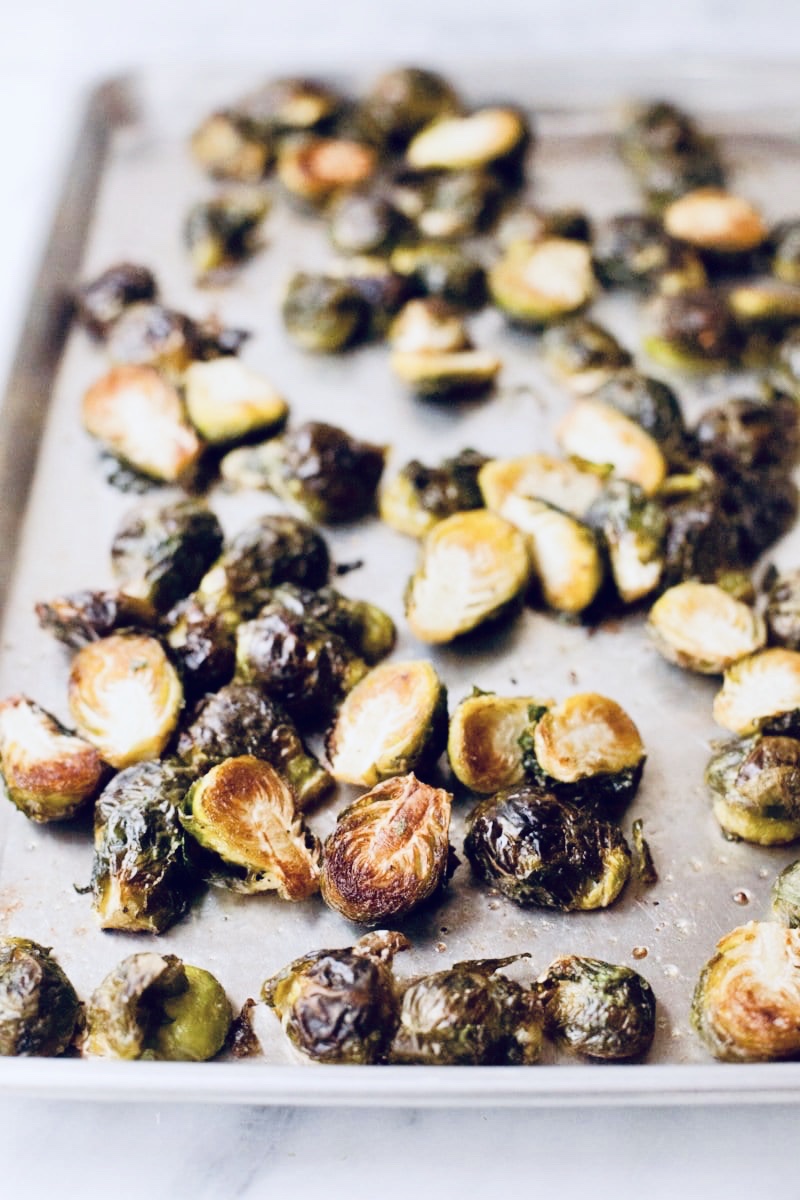
So I’m working on savouring my daily plateful of Brussels sprouts; and maybe even starting to like the taste!

Beyond Treachery

An old friend sent me this card for my birthday last week; he asked me what I thought of it…

Here’s what I said:

Age and kindness will triumph over youth and ambition old friend.

I’m up to my neck in my new job, but strangely have come to realise I have lost my fear.

Many years ago you helped me; with an exercise which taught me I had treachery in me but also had compassion, care and kindness. You helped me tip over the right way (and I’ve seen so many who haven’t) and for that I owe you everything.

And I do.

Crystallised Fruits

A rather marvellous angle on life came by email a few weeks ago…

Click image for original article

I’ve shared it with half a dozen people; and in passing nice to remember (even as the world seems to barrel towards hell in a handcart) at no other time in history could you have got this knowledge – via a friend of a friend, across an ocean and the English Channel, and then on to me – in but a handful of days….

There is still much to be thankful for in the modern world.

So what’s the story?

In 1999, Carole Holahan and Charles Holahan, psychologists at the University of Texas, published an influential paper that looked at hundreds of older adults who early in life had been identified as highly gifted.

The Holahans’ conclusion: “Learning at a younger age of intellectual giftedness was related to … less favorable psychological well-being at age eighty.”

But why?

The Holahans surmise that the children identified as gifted might have made intellectual ability more central to their self-appraisal, creating “unrealistic expectations for success” and causing them to fail to “take into account the many other life influences on success and recognition.”

And this is compounded by:

…abundant evidence [which] suggests that the waning of ability in people of high accomplishment is especially brutal psychologically.

Just think of professional sportspeople….

Consider professional athletes, many of whom struggle profoundly after their sports career ends.

Tragic examples abound, involving depression, addiction, or suicide; unhappiness in retired athletes may even be the norm, at least temporarily.

This is nicely summed up by Alex Dias Ribeiro, a former Formula 1 driver:

“Unhappy is he who depends on success to be happy,”

This is sooo right…

“For such a person, the end of a successful career is the end of the line.”

“His destiny is to die of bitterness or to search for more success in other careers and to go on living from success to success until he falls dead.”

“In this case, there will not be life after success.”

The author Arthur C Brooks calls this the ‘Principle of Psychoprofessional Gravitation’:

The idea that the agony of professional oblivion is directly related to the height of professional prestige previously achieved, and to one’s emotional attachment to that prestige. 

I think I suffered a bit of this in my current job… From self-appointed ‘brain of Britain’ to hard pressed General Factotum in one simple apparently duff career move.

Still the great advantage of life is time.

There’s lots of time if you use it well. Time to think and time to learn. I’ve learnt a lot; and finally – having left my rather unhappy job last week – I’ve had some time to think on a happy family holiday.

And I return to this article again…

One thing I’ve learned working at a top university, is everyone is constantly competing to demonstrate what the article says British psychologist Raymond Cattell defined (in the early 1940s) as fluid intelligence:

The ability to reason, analyze, and solve novel problems—what we commonly think of as raw intellectual horsepower.

It is highest relatively early in adulthood and diminishes starting in one’s 30s and 40s.

Cattell’s work suggests a smarter focus for the second half of one’s working (and actual) life is ‘crystallised intelligence’:

Crystallized intelligence is the ability to use knowledge gained in the past.

Think of it as possessing a vast library and understanding how to use it. It is the essence of wisdom.

Because crystallized intelligence relies on an accumulating stock of knowledge, it tends to increase through one’s 40s, and does not diminish until very late in life.

And herein lies the answer to the later career – let go of being the sharpest, smartest and fastest; and develop wisdom instead.

Brooks continues:

The antidote to worldly temptations is Vanaprastha whose name comes from two Sanskrit words meaning “retiring” and “into the forest.”

This is the stage, usually starting around age 50, in which we purposefully focus less on professional ambition, and become more and more devoted to spirituality, service, and wisdom.

This doesn’t mean that you need to stop working when you turn 50—something few people can afford to do—only that your life goals should adjust.

And how?

Vanaprastha is a time for study and training for the last stage of life, Sannyasa, which should be totally dedicated to the fruits of enlightenment.

As we age, we should resist the conventional lures of success in order to focus on more transcendentally important things.

This suggests leaving behind:

Résumé virtues which are professional and oriented toward earthly success. They require comparison with others.

And making the benchmark ‘Eulogy virtues’ which…

…are ethical and spiritual, and require no comparison.

Your eulogy virtues are what you would want people to talk about at your funeral.

As in:

“He was kind and deeply spiritual”

not 

“He made senior vice president at an astonishingly young age and had a lot of frequent-flier miles

And if this is the goal of the third phase of lifeI’ve made some progress.

In my leaving dos from the end of the 1990s through the 2000s people might well have said: ‘He made Director at an astonishingly young age and had a lot of frequent-flier miles.’

But at my most recent leaving do last Thursday, I signed off by thanking a wonderfully diverse audience (which wholly represented the community I am proud to have been part of) for helping me to become: “a kinder, gentler and better person.”

And thanks to them; I have.

These are the crystallised fruits of the challenging but ultimately rewarding last three and a half years.

I’m now happy to turn the page.

FIDO

I recommended them to a work colleague as ‘among the very best £4s I’ve ever spent’; all round top banana Chris Croft’s ‘Assertiveness MP3s‘ are pure gold.

So I wrote to Chris to tell him:

At my grand age it’s kind of embarrassing to lack the conceptual apparatus to fix one of your deep-seated weaknesses; but as you say these things are improved by understanding, application, repetition and changing your internal narratives. Your Assertiveness tape is a revelation! Thank you for what you do Chris – it’s terrific.

He kindly wrote back

What a great message – thanks John!

One of Chris’s top tips is when you get something wrong or make a mistake (which we all do, all the time) then FIDO is your new best friend.

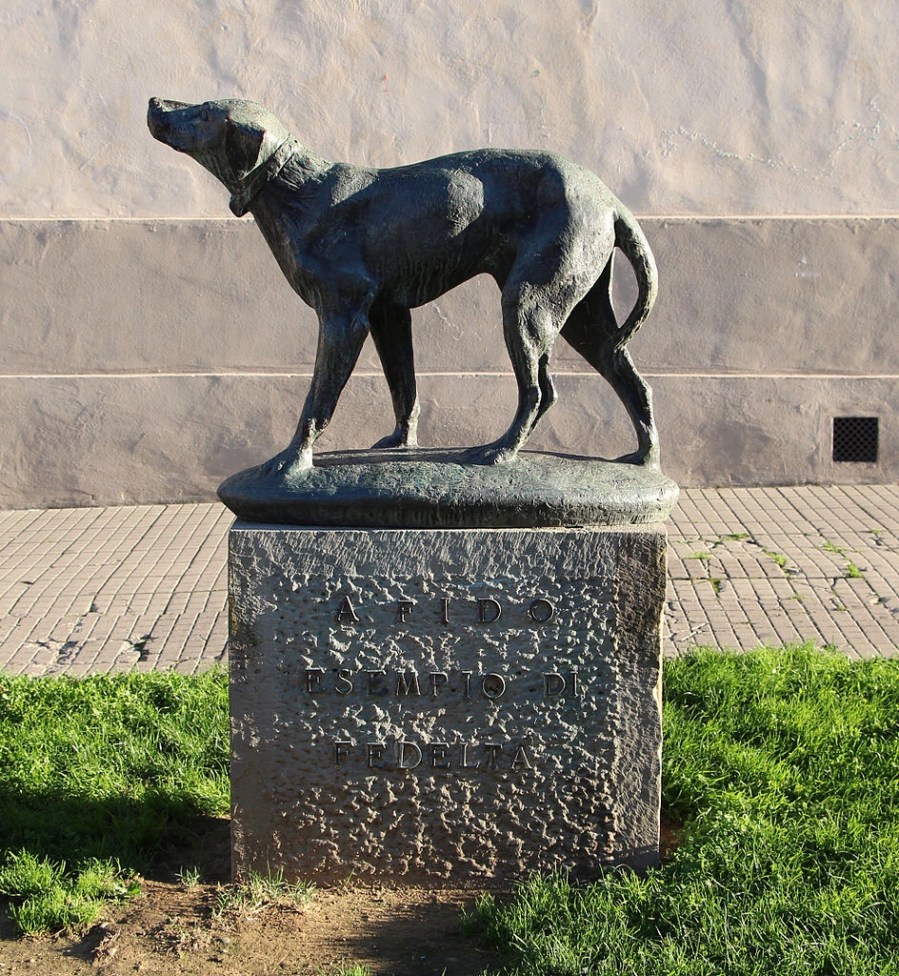
Not the famous Italian dog but the simple acronym:

Forget It and Drive On.

As Chris himself points out, ‘Learn from it’ might be better than ‘Forget it’ but LIDO isn’t quite as good as FIDO. For my part I thought I might like ‘Move On’ more than ‘Drive On’ – a bit less ‘bulldozing’ – but LIMO is hopeless…

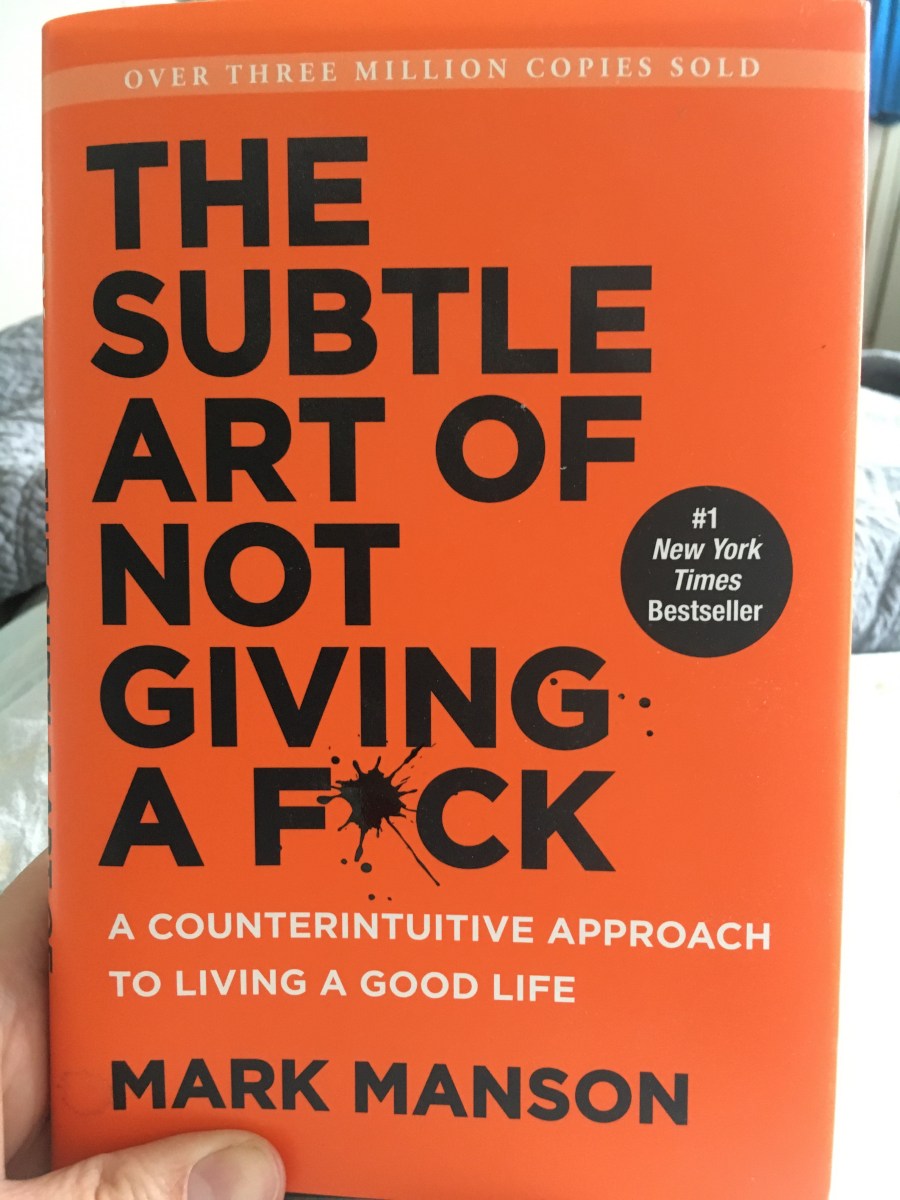
But the pièce de résistance fell into place this week, thanks to my belated opening of a Christmas gift from a very great friend…

It’s a bit sweary as the title suggests, but Mark Manson is certainly onto something… in a nutshell if we give a f#ck about too many things then we’re not giving enough of a f#ck about the things that matter. Simple.

So now, I have the version of FIDO which works for me. Forget ‘learning from it’ – I think about stuff to much already… The mongrel version of FIDO which has become my trusty companion this week, is the one which plays to my Northern roots and stops rumination dead in its tracks:

F#ck It and Drive On.

Conceptually nudging ‘drive’ into the cheery form of ‘barrelling’ or ‘bowling along’ through life – it’s working like a charm!

P.S.

Here are some of Chris’s very handy ‘mantras’ which he sent through last month:

“During my assertiveness training day I have various catch-phrases, or mantras, and I hope that people will pick up on at least one of them and keep it in mind when they are dealing with difficult situations. Here is a list of all of the ones that I personally use (with brief explanations):

“Nobody can push me into the ‘not OK’ box”

We all have a tendency to move from being OK about ourselves to being not OK, and if you are not OK about yourself then you will find it more difficult to interact productively with others. Being OK doesn’t mean “better than the other person” – just OK with yourself. And other people will sometimes try to push you into the not OK box, when they try to make you feel guilty or accuse you of being selfish when you are standing up for yourself and your own rights. Or if you’ve made a mistake, it doesn’t mean you’re a bad person. And it’s not up to anyone else to decide whether you are a good person, it’s up to you.

“We teach people how to treat us”

If you let people treat you badly they will keep on doing it. And even in small cases, for example the boss who can’t delegate or who solves people’s problems for them, will be brought more and more problems to solve. So if you keep on being treated badly, especially if it’s by more than one person, then ask yourself if there is something you are doing to encourage them.

“It’s never too late to go back”

If you are taken by surprise, maybe by a verbal attack or perhaps a request for something, and you give in, and you are kicking yourself afterwards thining “I should never agreed to that” or “I should never have let him get away with that” or “I know what I should have said, if only I’d been a bit quicker” then remember, you can always go back and say “I’ve been thinking about what you said earlier, and I’m not happy with it / I’m going to change my mind etc”. It’s great to know that you have as long as you need in order to think of a suitable reply.

“I don’t have to justify how I feel”

I joke that I regret teaching my wife this one, but the truth is that I think everyone should use this phrase. If you don’t want to do something and you are being pressure with “But why not??” then this can be a good response. You are entitled to your feelings, and that’s an end to it.”

Of Kings

Man or woman, royal or republican, political or organisational – anyone who leads or seeks to should reflect on this…

Josef Pieper once again makes the truth limpid – in order for there to be justice, there must be authority; but when that authority is vested in a person, if they are bad there is nothing that can stop injustice.

This perhaps explains the state of the world today – there aren’t too many ‘just rulers’ about…

Of course it’s not easy:

The lesson here is: political nous and worldly wisdom i.e. ‘prudentia‘ and ‘temperantia‘ (self management) might get you there; but if you take a position of responsibility ‘guarding justice’ is your job.