Equals and Similars

Aristotle has some interesting things to say about society and man as a social animal. In summary, man is by nature social. Intelligence and virtue are our best qualities. And, justice is the minimum common bond which keeps us from savagery.

The state is by nature clearly prior to the family and to the individual, since the whole is of necessity prior to the part; for example, if the whole body be destroyed, there will be no foot or hand.

The proof that the state is a creation of nature and prior to the individual is that the individual, when isolated, is not self-sufficing; and therefore he is like a part in relation to the whole. He who is unable to live in society, or who has no need because he is sufficient for himself, must be either a beast or a god: he is no part of a state.

A social instinct is implanted in all men by nature. For man, when perfected, is the best of animals, but, when separated from law and justice, he is the worst of all; since he is equipped at birth with arms, meant to be used by intelligence and virtue, which he may use for the worst ends.

Wherefore, if he have not virtue, he is the most unholy and the most savage of animals, and the most full of lust and gluttony. Justice is the bond of men in states, for the administration of justice, which is the determination of what is just, is the principle of order in political society.

Aristotle also makes the same case for moderation and the ‘golden mean’ in social structures which he makes at the personal level in his Nicomanichean Ethics. In Book IV Part XI of ‘Politics the unlikely heroes of the Aristotelian state are the oft underappreciated middle classes.

In all states there are three elements: one class is very rich, another very poor and a third in a mean. Moderation and the mean are best, and therefore it will clearly be best to possess the gifts of fortune in moderation. But he who greatly excels in beauty, strength, birth, or wealth, or on the other hand who is very poor, or very weak, or very much disgraced, finds it difficult to follow rational principle.

Those who have too much of the goods of fortune, strength, wealth, friends, and the like, are neither willing nor able to submit to authority. The evil begins at home; for when they are boys, by reason of the luxury in which they are brought up, they never learn, even at school, the habit of obedience. On the other hand, the very poor, who are in the opposite extreme, are too degraded. So that the one class cannot obey, and can only rule despotically; the other knows not how to command and must be ruled like slaves.

Thus arises a city, not of freemen, but of masters and slaves, the one despising, the other envying; and nothing can be more fatal to friendship and good fellowship in states than this: for good fellowship springs from friendship; when men are at enmity with one another, they would rather not even share the same path. But a city ought to be composed, as far as possible, of equals and similars; and these are generally the middle classes.

It is manifest that the best political community is formed by citizens of the middle class, and that those states are likely to be well administered in which the middle class is large, and stronger if possible than both the other classes, or at any rate than either singly; for the addition of a middle class turns the scale, and prevents either of the extremes from being dominant. Great then is the good fortune of a state in which the citizens have a moderate and sufficient property.

The case for fairness and equality at the heart of good governance in 350BC. We can lament the absence of women, the somewhat florid descriptors and the injunction that the ‘degraded’ poor can only be ruled like slaves. But… justice, more ‘equals and similars’, citizens bound by ‘good fellowship’ and fewer rich and poor strikes me as a pretty good prescription for the city, the state and the workplace.

A pious hope maybe, and Aristotle explores a book full of less ideal alternatives. But just because it’s idealistic doesn’t mean it’s wrong. As Herbert McCabe points out in ‘On Aquinas: ‘There is a fashion at the moment among those who believe in the market economy for what Aristotle would regard as treating citizens as though they were foreigners’.

I’m all for the market. If democracy is the least worst form of rule, then the market is the least worst form of resource allocation. But some social justice, humanity, fellow-feeling and friendship is part of any flourishing person, workplace or state.

Perhaps if we were fractionally less worried about conspicuous consumption, salary and status we might get closer to Aristotle’s ideal polis. But fellow-feeling is more than sharing the spoils. It’s also a state of mind. Citizenship, like friendship, requires us to think of other people as fellow ‘ends’, not just means to our own ends. Here’s to more ‘equals and similars’.

Bees

http://www.flickr.com/photos/autanex/I was talking to a very good friend yesterday about bees. It came up in a digression about the very different ways some people find to live a life.

He described the case of a foal, born prematurely, who had imprinted on the people who’d nurtured it. Spurning other horses, the foal considered itself eminently human and preferred the company of people. A problem for it and them.

More remarkable was the solution – a horse-whispering woman – who makes a living going round the country brokering misguided premature foals back into the world of horses. She eases their separation from the two-legged world back to four.

In exchange, I told him about my conversation with a nomadic beekeeper this spring. Bee keeping, it appears, is all about titivating, then tempering, the hive’s desire to swarm. A healthy, happy, busy hive is a productive hive. But a productive hive is also an unstable one.

Experienced workers get itchy feet and start looking for new opportunities. Young upstart queens start getting restive, fancying their own realms. The hive is dripping with honey, but disaster threatens – 60% of the hive swarming off with a new queen – leaving a remnant hive which will take a year to produce again. No honey for the autumn pot.

Separating queens, creating sub-hives, clipping wings are all recognised measures. But the more the beekeeper gambles, the more risk that several queens buzz off. Or worse, the entire hive ‘absconds’ in the vernacular. Ouch. My nomadic beekeeper had about five queens on the go, in three sub-hives, all itching to swarm and pumping honey like a Texas gusher. He lives his beekeeping on the edge.

In olden days they worried less. Beekeepers trusted to chance and mother nature. Wikipedia offers the wisdom of a gentler era:

Old fashioned laissez-faire beekeeping depended upon the capture of swarms to replenish beekeeper colonies and early swarms were especially valued. An old English poem says:

A swarm of bees in May is worth a load of hay;
A swarm of bees in June is worth a silver spoon;
But a swarm of bees in July isn’t worth a fly.

The world of bees has moved on from the buzz and burr of rural idyll. Much like the world of work, it’s all more organised now. Productivity and efficiency are to the fore not serendipity and chance.

My friend and I agreed, with bees – as in working life – keeping the hive busy and productive is a fine art. Swarming costs you honey and money. Disturbing the hive gets you stung. One of my golden rules for work, is never whack too many beehives at once.

There is evidence, the nomadic beekeeper told me, that honey bees followed humans out of Africa. Who was following whom and who got more from it I wonder? Bees are eusocial – they work together. Humans are social and selfish simultaneously, only very careful beekeeping keeps a human hive happy. There’s a lot we can learn from bees.

Xerxes

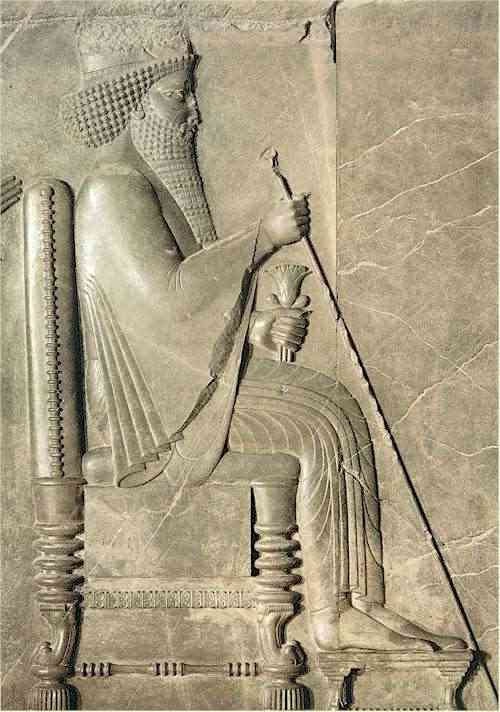
Xerxes – controversially portrayed as a narcissistic androgynous giant in the blood-spattered film 300 – broke with Persian tradition and laid waste to allies and enemies with enormous forces, before losing interest, losing ground and retiring to lotus eating and luxury. Or so some say.

His patina of invincibility was chipped by Leonidas’s legendary 300 Spartans’ suicidal defiance at the ‘hot gates’ of Thermopylae. A Persian General said of them: “Ye Gods, Mardonius, what men have you brought us to fight against? Men that fight not for gold, but for glory.” Spartans sought their immortality in glorious death.

In film and folklore Xerxes was a god amongst men before succumbing to human frailties. Is Xerxes a myth, a legend or history? Probably a bit of all three. A reading of Robert Graves’ Greek Myths suggests most ancient history, legend and mythology is in fact a bit of all three.

But a tale from Montaigne’s suggests that even as Xerxes set out to conquer all, he saw, in the same instant, the limits to his dominance:

Montaigne XXXVII

Artabanus coming by surprise once upon his nephew Xerxes, chid him for the sudden alteration of his countenance. He was considering the immeasurable greatness of his forces passing over the Hellespont for the Grecian expedition: he was first seized with a palpitation of joy, to see so many millions of men under his command, and this appeared in the gaiety of his looks: but his thoughts at the same instant suggesting to him that of so many lives, within a century at most, there would not be one left, he presently knit his brows and grew sad, even to tears.

Greek myths tell us that power and glory are always transient. Even the most powerful among us are mayflies in historical, let alone geological time. Xerxes is a reminder that men cannot be gods. We have at best three score and ten, whether we are millions or 300 men. It behoves us to use our time well.

Broadband

Our home broadband has been on the blink this week. You really miss it when it’s not there. Perhaps worse is when it comes and goes – one minute you’re surfing gaily, the next you’re beached with a ‘no network’ message.

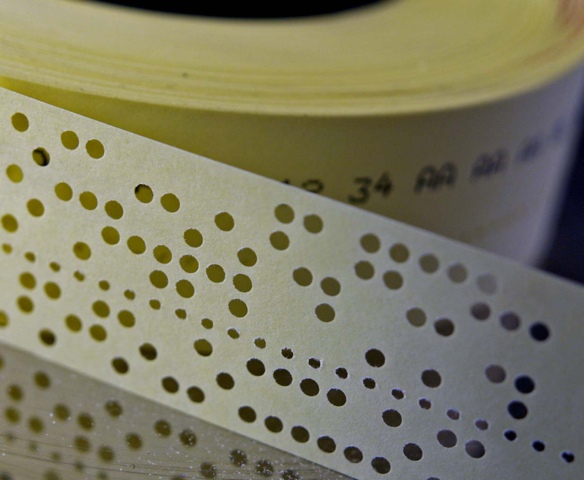
Csikszentmihalyi points out that, although impressive by electronic standards, the amount of data our minds can process simultaneously is surprisingly small. More punched tape than broadband. Two people talking to us at once or, say, riding a bike and whistling a song, just about exhausts our real time mental processing capacity. Any more and we lose attention and get distracted, flustered or confused.

I noticed it one day this week in the office. One minute I was churning out flowing prose, the next someone started talking in my earshot and I was distracted. I slowed to trickle – like someone was hogging my wifi. The talker left, bandwidth returned, and so did flowing prose. It was like flipping a switch.

Things, events, people and basic navigation are all basically different data and signals crowding in or cluttering up our cognitive bandwidth. This makes directing our consciousness and limited mental energy hard.

And it’s especially hard because life can easily just happen to us. Events and other people can readily soak up all the bandwidth we have. And if we do decide to use that precious resource on directed thought and action, we do so against a background of almost overwhelming distraction and diversions.

All life is, is the continual stream of sensory data, words, pictures, thoughts and ideas streaming through that narrow mental bandwidth. All we are, is the accumulated store of that data in the limited hard drives of our brains and to some extent those of others. It makes you think – until someone starts talking in your earshot and the mental connection is interrupted.

But given mental broadband is always there I’ve discovered I can redirect it when I catch myself wasting or underusing it. At work this week while being gently bored by a presenter on pan-European data collection standards, I contemplated the extraordinary beauty of a large tree – spare broadband successfully redeployed into joyful contemplation.

More experimental was testing optimising ‘flow’ by doing two different things simultaneously, and well. Combining loudly whistling the Marseillaise with cycling to work smoothly and safely through London traffic perfectly occupied my mental broadband. And in a heartily enjoyable way. Vive la France.

Our mental broadband has surprisingly limited peak capacity. But the compensation is it is ‘always on’. You can waste it or have it used for you, but you can also use it well. I found this week being more careful in how I deploy my personal ‘punched tape’ makes a big difference. Focusing its use on doing one or two things at a time really well – and exploiting every minute of it – whether I’m on my own, or with others, has removed a good deal of routine boredom and irritation from my week. Replacing that with moments of joy, satisfaction and genuine happiness is broadband well spent.

Waste not, want not.

Laughter

As I wrote the other week, I now know the cognitive cost of self-control is ‘ego depletion’. In Wired’s less technical terms, acts of self-control ‘piss the ego off’ and attract us to angry thoughts, words and deeds.

‘Ego depletion’ has sometimes caused me to undo my good works with an ‘unnecessary’ withering remark or ‘unduly’ bleak assessment. But whilst these may seem ‘unnecessary’ or ‘undue’ in the eyes of others – and damaging certainly – experience, and now evidence, show a ‘depleted ego’ demands its redress. Is there a better way? This week, I discovered, that laughter works just as well as scything remarks in topping up the cognitive cost of self-control.

I was in an absolutely packed three day management meeting in Madrid. Travel, time differences, lots of people, lots of subjects, lots of personalities and inevitably a certain amount of self-control required to navigate with aplomb. Surely the perfect tee up for one of my incongruous blasts. But this week I didn’t do it.

Of course I was tempted. Tired, hot, periodically irritated and regularly in receipt of the ‘gift’ of feedback, a good put down or an acerbic ‘reality check’ was sorely tempting for a sore ego. But I didn’t do it. Instead, I applied what I have learned in recent months and years: watch my energy, leave other people’s stuff alone if it doesn’t really concern me, avoid tangling unnecessarily. Best of all though, I stumbled upon some humour.

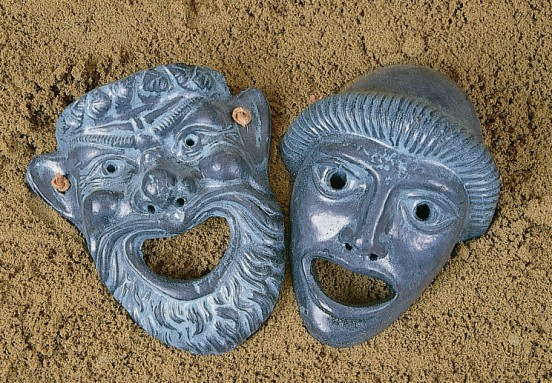
Humour in big meetings is a delicate balance. People are often more ready to laugh ‘at’ you than ‘with’ you. As Aristotle rightly points out there is a fine line between ‘boor’ and ‘buffoon’. But a winning smile and an amusing turn of phrase was sometimes all it took to lift the mood when the whole room was just as ‘ego depleted’ as I was.

The net result? I left with the job done – feeling tired, but cheerful – and with smiling goodbyes all round. Much better than angry with myself, diffident and apologetic for unnecessary barbs.

In sum, a moment of laughter tops up a depleted ego far more effectively than a verbal headbut – however tempting…