Corporate Punishment iv) Too much to say

It is a truism that no-one is more interested in what we have to say than ourselves. On the contrary, it is a common misapprehension that the more you say the more influential you are being. It ain’t necessarily so. As so often in life, less is often more.

As the great Roman stoic Seneca said:

It is a great thing to know the season for speech and the season for silence.

Enough said.

Smiling

Against the grain today I put on a smiling face. In so doing I added measurably to the sum of human happiness. So simple, yet sometimes so hard. Why don’t we all do it more?

I can’t take all the credit. I was kickstarted by two people – one I know well, one I don’t. After a shirty start and shouting at each other, my son and I made it to nursery on a cold, grey, damp morning. He was glum, I was in a bit of a rush. As I turned to leave he asked for a cuddle and I knelt down and gave him a big all body hug. We smiled. He was ok, I was ok. The cascade of smiles began. 

I smiled at my daughter in the schoolyard and at the teachers who smiled back. I chose a smiley stripy shirt for work and then whistled Christmas tunes through the drizzle on my bike in. I went to buy a coffee and as I waited the friendly young foreigner behind the counter gave me a winning smile and asked me how I was. It was such a winning smile, I gave him a winning smile back and exchanged jovial small talk about the coming snow and all the customers and servers joined in. We all smiled.

I walked round the corner to work whistling ‘Walking in a winter wonderland’. Once in the office I smiled at the security guards and receptionists and walked past the lifts to the seven flights of stairs I hack up every morning. I decided to whistle ‘Walking in a winter wonderland’ as I climbed the stairs to see if I could a) not be embarrassed or cowed by reproachful looks into glumness and b) get a smile out of the random selection of people I might pass.

Tricky start. First up I bumped into a chap who hasn’t made eye contact with me for 6 weeks since my new organisational strategy consigned his section and personal passion to frozen assets and deep cuts. He’s furious with me, and how ever much I’ve tried he won’t acknowledge me if we pass in the building. The whistling got him though. He looked, I captured his curious and unsuspecting gaze and flashed him a winning smile and a cheery salutation. He couldn’t resist smiling back and finally saying hello.

Next I whistled past another urgent faced, rushing, anxious looking senior colleague. He was equally surprised and switched from frowning to smiling. I passed another person I don’t know who also by the alchemy of Christmas went from neutral to smiling within nine whistled notes ‘Walk-ing in a win-ter won-der-land’. 

By the fourth flight of stairs my whistling was getting a bit uneven as I ran out of breath. By the fifth I gave up. On the sixth I bumped into another colleague and told him what I’d been up to. He was both bemused and amused. But it got him smiling. Onto the seventh flight and into my office and I was full of good cheer. The day started well, I performed well, did some important things and remained cheerful throughout. 

I ended the day with a woman I work with who can be challenging and confrontational. She is also a person of genuine conviction and intelligence. We were on the topic of making an impact and being true to yourself whilst speaking the truth to power. I told her that whilst being far from the finished product myself on this, sometimes a lot hinges on how you decide to ‘be’. If you decide to be high energy you can bring energy, if you decide to be aggressive you can scare people, if you decide to be warm you can attract, if you decide to be cold you can chill. 

We are all affected by how others are ‘being’ too but to some degree we have a choice about how we are. She had been open, supportive, thoughtful and measured when we met in an important meeting earlier in the day. She had got much of what she wanted without confrontation or a furrowed brow. As I said to her, when I was asked, my main memory of her in the meeting was relaxed and open with a smooth forehead, high eyebrows and a smile. We had all warmed to her. Maybe I had helped a little as I gave her a big encouraging smile when she came in the room.

If so, it had all started with a big hug from a small boy and a smile from a complete stranger. Smiling, it’s powerful stuff.

Corporate Punishment iii) Ducking and diving

I used to work in UK Government. Quite rightly it is the lot of government in democratic societies to be scrutinised and held to account. The negative side effect is it tends to create a climate of fear of saying anything and a tendency to obfuscate and hide things.

This is not unreasonable. Most political careers end in the 36 hour media storm of three ‘news cycles’: discovery, pursuit and resignation. “S/he has my full support” is the sure sign it’s coming to the end.

What costs UK politicians their jobs? Scandal? Affairs? Corruption? Incompetence? Bad luck? More often than not none of these, more than indirectly.

What costs most of them their jobs in modern times is ‘rapid rebuttal’. 24/7 media pressure forces a hasty and strident statement which then turns out to be factually wrong or doesn’t pass the common-sense test. Confidence in honesty and competence vanishes and the end comes in being shown to have misled or misspoken in front of parliament or the public.

Public servants always want to avoid giving precise facts and figures, not least because they are so hard to get right. So when the Minister or Political Adviser gets their Q&A on a tricky subject, invariably the killer question either has been omitted or has blather and obfuscation as the answer.

So what to do when you are asked a direct question about a difficult thing – for which you are accountable – to which you know the answer but wish you didn’t, or worse don’t know the answer but feel you should? Lie, make it up, bluster, waffle or blurt?

The answer lies in ‘ring-craft’ as the BBC’s Nick Robinson calls it. Successful politicians like boxers know how to jab, cover and move. They know how to say what they know and what they don’t in a way that makes sense, sounds in control but doesn’t overreach. It is an art not a science, involving luck and chutzpah as well as craft.

But having seen it close up (both when it goes right and wrong) I have learnt that sometimes in working life, as in politics, you just have to take a deep breath, say what you know, and what you don’t, and invite people to trust you and accept that.

As a Russian proverb says: With lies you may get ahead in the world – but you can never go back. Or the other way round: a lie may take care of the present, but it has no future.

Concealing, avoiding, dissembling, not answering, obfuscating or misleading makes things worse. And they make you feel worse.

I’ve found quite a few times in the last few years that sometimes you can’t avoid the punch. So better to stand your ground and roll with it than run away and hide.

Cosmopolitanism

last week, in the middle of an all-day management board full of metrics, deficits, claw backs and targets I popped out to talk to 59 fiercely bright teenagers from 59 different countries on a Global Citizenship programme.

As the bright faces from many places surged into the room, I was coming to terms with the fact that the projector was bust and my well crafted presentation on geopolitics and culture was in tatters. Ho hum. So I went for Plan B which was speak from the heart. I opened with the founding articles of UNESCO’s constitution from 1945:

“Since wars begin in the minds of men it is in the minds of men that the defences of peace must be constructed. Ignorance of each others ways and lives has been a common cause throughout the history of mankind of suspicion and mistrust [which] have all to often broken into war… And that the wide diffusion of culture and the education of humanity… are indispensable to the dignity of man and constitute a sacred duty which all nations must fulfil in a spirit of mutual assistance and concern.”

As said to them, I am a firm believer in ‘founding moments’. It takes great people, but also special circumstances to commit to a different and better way.

I fielded questions about my organisation’s work in education and culture in India, Burma, Aghanistan, Kyrgistan, China and Iran. I talked about what other countries want from the UK and are prepared to work with us on, which varies widely according to the regime, religious beliefs and customs of different countries.

The last question though was a tricky one. “What values do you espouse when you work in other countries and how do you guard against cultural imperialism?” A year ago I’d have struggled with that.

I used to be torn between recognising that if you carry too much ideological baggage or confront cultural differences you get ignored or thrown out, but by the same token you have to stand for something otherwise you feel compromised and weak. I felt that Human Rights were probably where you draw the line, but beyond that I wasn’t sure.

Then I heard Antony Appiah on a Philosophy Bites podcast talking about Cosmopolitanism and it gave me the missing piece in my jigsaw. To paraphrase Wikipedia:

Appiah says Cosmopolitanism is “universality plus difference”, accepting that all of us are fundamentally the same, but we are also all different. He says universality takes precedence over difference and therefore that different cultures are respected “not because cultures matter in themselves, but because people matter, and culture matters to people.” Therefore cultural differences are to be respected in so far as they are not harmful to people and do not conflict with our universal concern for every human’s life and well-being.

When I heard that podcast, some key things slotted into place for me.

So as I said to the 59 young future Global Citizens, I now believe our people should travel light when it comes to values and be interested and curious about difference – even difference we don’t find attractive or acceptable. The Universal Declaration of Human Rights should be stitched into the lining of our jackets, not printed on our tee shirts.

If one of our people finds themselves in a situation where they feel their human rights, or those of another, are being compromised they should feel able to leave. They should be confident the organisation would support them in that. But we are here to engage with difference not shy away from it, we should feel able to say what we each believe and how things are where we come from, but we are not there to singlehandedly confront and change the beliefs of others to be more like ours.

My daughter and I regularly read “We are all born free”, Amnesty International’s super children’s version of the Universal Declaration of Human Rights. She chooses it these days not me.

The 30 Articles, simply put, unarguable, complete and evocatively illustrated. A six year old can largely understand them. And a 42 year old can feel pride in humanity’s occasional capacity to transcend its divisions and write and commit itself to something of lasting value.

I think Cosmopolitanism, with the protection of Human Rights as a floor, is the right answer to a world of cultural difference.

Corporate Punishment ii) Absolute Clarity

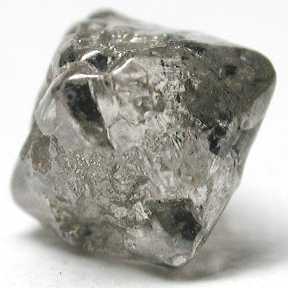
Absolute clarity is as rare in the workplace as diamonds are in nature. Like diamonds it usually takes too long and requires too much heat and pressure. When difficult choices are in the air the clarion call for ‘absolute clarity’ is usually not far behind.

In the right place, and measure, clarity of word and deed are virtues. At the wrong time and posed as a prerequisite for support or action ‘absolute clarity’ is a often a smokescreen or a diversion. As our chairman pointed out a few months ago most people want absolute clarity on how they are going to be measured and but clearly don’t want to be measured absolutely.

So how much clarity should we shoot for? The scholar J.A. Smith, in his 1930’s introduction to Aristotle’s ethics, writes:

Such knowledge is that which in its consumate form we find in great statesmen, enabling them to organise and administer their states and regulate by law the life of the citizens to their advantage and happiness, but it is the same kind of knowledge which on a smaller scale secures success in the management of the family or of private life.

It is characteristic of such knowledge that it should be deficient in “exactness,” in precision of statement, and closeness of logical concatenation. We must not look for a mathematics of conduct.

In most 21st century organisations, as in the administration of states and the management of families, there is no absolute clarity on what to do, what really matters, what good looks like or what’s wanted.

Diamonds are the wrong form of carbon to search for – the quick pencil sketch of graphite is what most people and organisations need most of the time.