Amiet, Bruegel and Christmas

An unprecedentedly mild December set me searching for snowy scenes… in the lull between the twin peaks of festive excess, which are Christmas and New Year’s Eve.

The chance to spin my wheels is a rare one; but I have put it to good use: a splendid Lego Millennium Falcon is built for my son, turkey soup has been slurped by all and I have a birthday jigsaw belatedly on the go. 

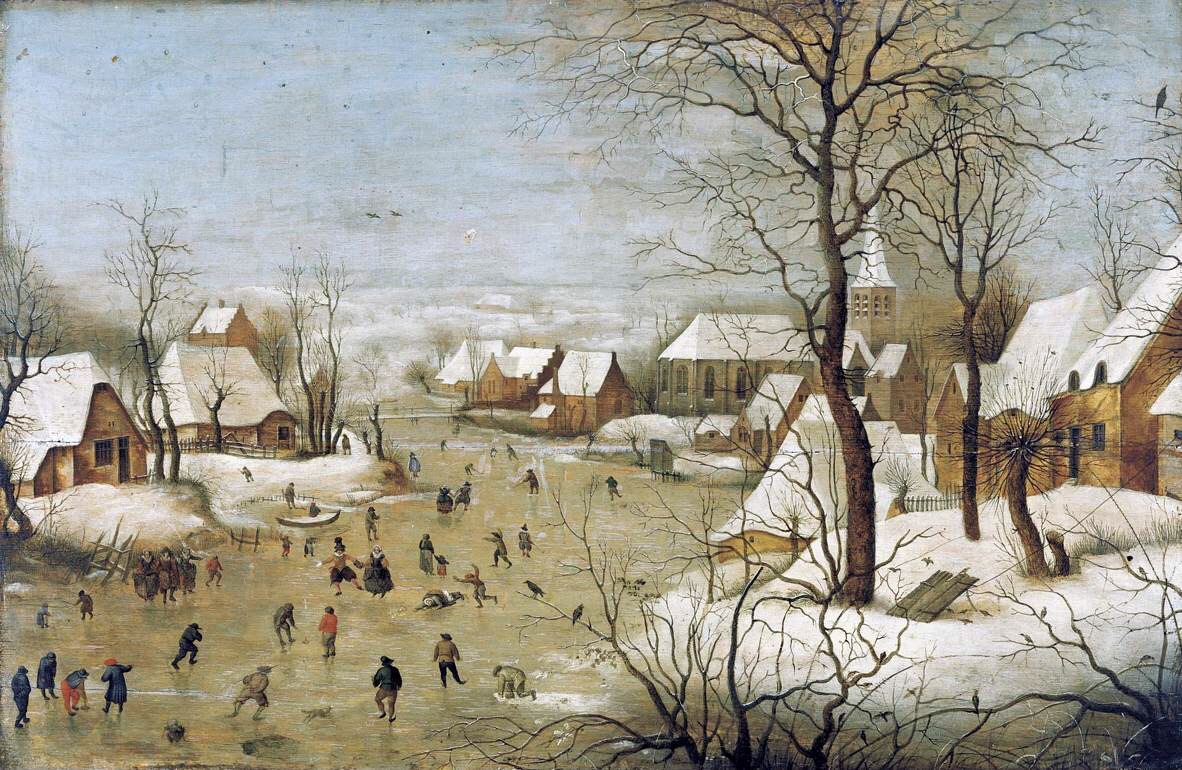
But the post-Christmas peace will be short lived. Soon I will be pressed into activity and jollity, like the skaters in the younger Bruegel’s “Bird Trap”.

   
And once that is done, it will be back to work, fitting more people into less space in the manner of his father’s “Census at Bethlehem”.

  
So I’m enjoying my rare day of solitude. This expanse of white is by Swiss painter Cuno Amiet. It’s his 1904 “Snowy Landscape” discovered on the ever wonderful DailyArt App

  
The tiny figure looks lost. But on closer inspection he (although it could be a she) seems to have a sense of purpose about them. 

The chance to have a mind as blank as Amiet’s snows is a treat indeed – as is cooking up leftovers and piecing together my New York skyline jigsaw in glorious, if temporary solitude.

Still, returning to Brueghel’s “Bird Trap”, no-one would choose an entirely solitary life… As Aristotle famously said.

  
The thin string to the tiny dark window is a reminder that neither poor nor alone, I’m very lucky to have food, friends and family all around at Christmas.

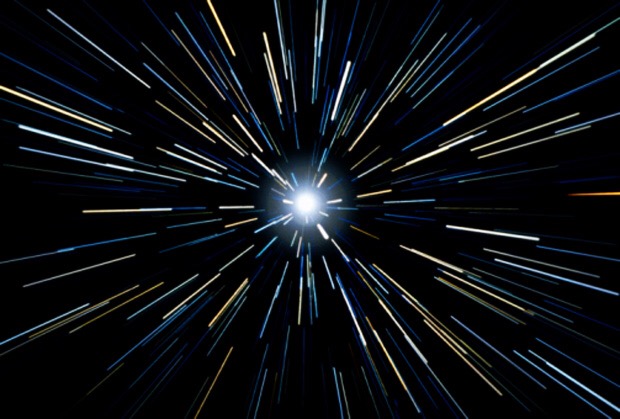
Warp Speed

  
I have been working at a zillion miles an hour this week. An 11 hour day thrown in on Wednesday and still in the office well past 7pm on Friday. 

Loads of people work long hours but it’s about intensity too; emotional and mental effort. And I gave it all this week. 

It can be exhilarating – you feel like you’re zooming along. But smart it ain’t. There’s nothing like working at ‘warp speed’ for making small errors, big mistakes and cocking things up. 

Note to self: I need to turn off the hyperdrive this weekend, and choose a different tempo next week… Too much exhilaration leads to rapid exhaustion; steady as she goes.

Wood for Trees

click for the detail

I’m not a huge one for detail. Not that I don’t notice things; just that I’m more interested in the bigger picture and the human dynamic these days.

It turns out my psychometric profile (in the jargon) always has one big question in mind: 

Will this work?

So I’m mostly only interested in the details which guide the answer to that question: is this a good idea, is it do-able, are people likely to go for it, can I get my bit of it done?

That means I tend to want to break big problems down into smaller ones; ‘chunking up’ (also in the jargon). 

So what is murderous for me?  

Impractical idealists, detail-minded questioners and incessant talkers… I need time and space to think and I like people who take the time to listen – as my finest friend did this week.

As the old song goeseverybody’s talkin at me’ at the moment. But the good news is, I cope better with it these days than I once did. I’m better at seeing what matters; and what I just need live with.

Which brings me onto my remarkable factiod of this week – why is the night sky dark? 

If the universe is infinite and full of an infinite number of stars, the night sky should be saturated with starlight. But it isn’t…  Roger Barlow explains all on The Conversation

Imagine you are deep in a forest. All around you there are trees. Wherever you look, you are looking at a tree. Maybe a big tree close up or a bunch of small trees further away. 

Surely it should be the same with stars. We’re deep in the universe and whatever direction we look in, there ought to be stars there – billions and billions and billions of them. You would have thought that they’d fill the whole night sky, with the more distant ones fainter but more numerous.

The reason the night sky isn’t just a blaze of light is because the universe isn’t infinite and static. If it were, if the stars went on forever, and if they had been there forever in time, we would see a bright night sky. The fact that we don’t tells us something very fundamental about the universe we live in.

A limit to the universe may seem a natural explanation – if you were in a forest and you could see a gap in the trees, for example, you might surmise that you were near the edge. But it’s dark on all sides of us, which would mean not just that the universe is bounded, but that we’re in the middle of it, which is pretty implausible.

Alternatively, the universe could be limited in time, meaning that light from far-away stars hasn’t had time to reach us yet.

But actually the explanation is neither of these. Light from the far-away stars gets fainter because the universe is expanding.

Edwin Hubble discovered in 1929 that distant galaxies and stars are travelling away from us. He also found that the furthest galaxies are travelling away from us at the fastest rate – which does make sense: over the lifespan of the universe, faster galaxies will have travelled further.

And this affects how we see them. Light from these distant, fast-moving galaxies and stars is shifted to longer wavelengths by the Doppler effect. In the case of these stars, the effect shifts visible light into invisible (to the human eye) infra-red and radio waves, essentially making them disappear. 

The blackness of the night sky is direct evidence of an expanding universe.

Fascinating – a fine example of seeing the wood for the trees. 


Deep Time


Reading Neil MacGregor’s A History of the World in 100 objects, on chapter 91 I came across the concept of ‘deep time’. And deeply troubling it must have been in the 1800s; as people began to come to terms with it.

‘Deep time’, I discover, was the dawning recognition that the world was much much older than people had thought – and far less constant. Prior to ‘deep time’ the world was assumed to be capricious (hence gods) but unchanging (hence the need to pacify them).

The geneticist Steve Jones (who I’ve been fortunate to spend some time with) is quoted thus: 

The biggest transformation since the Enlightenment has been a shift in our attitude to time, the feeling time is effectively infinite, both the time that’s gone and the time that’s to come. It’s worth remembering that the summit of Everest, not long ago in the context of deep time, was at the bottom of the ocean; and some of the best fossils of whales are actually found high in the Himalayas. 

Deep time threw everything up in the air – origins, purpose and our place not just in the world; but in those unfathomably vast aeons of time and the unimaginably vast expanse of the universe. We went from the centre of everything to tiny, transient and trivial.

Faced with this reality I’ve often cheered myself up with the thought that bits of me were formed in stars. And I read somewhere once, we all have some molecules in us which were once in Julius Caesar and Napoleon. 

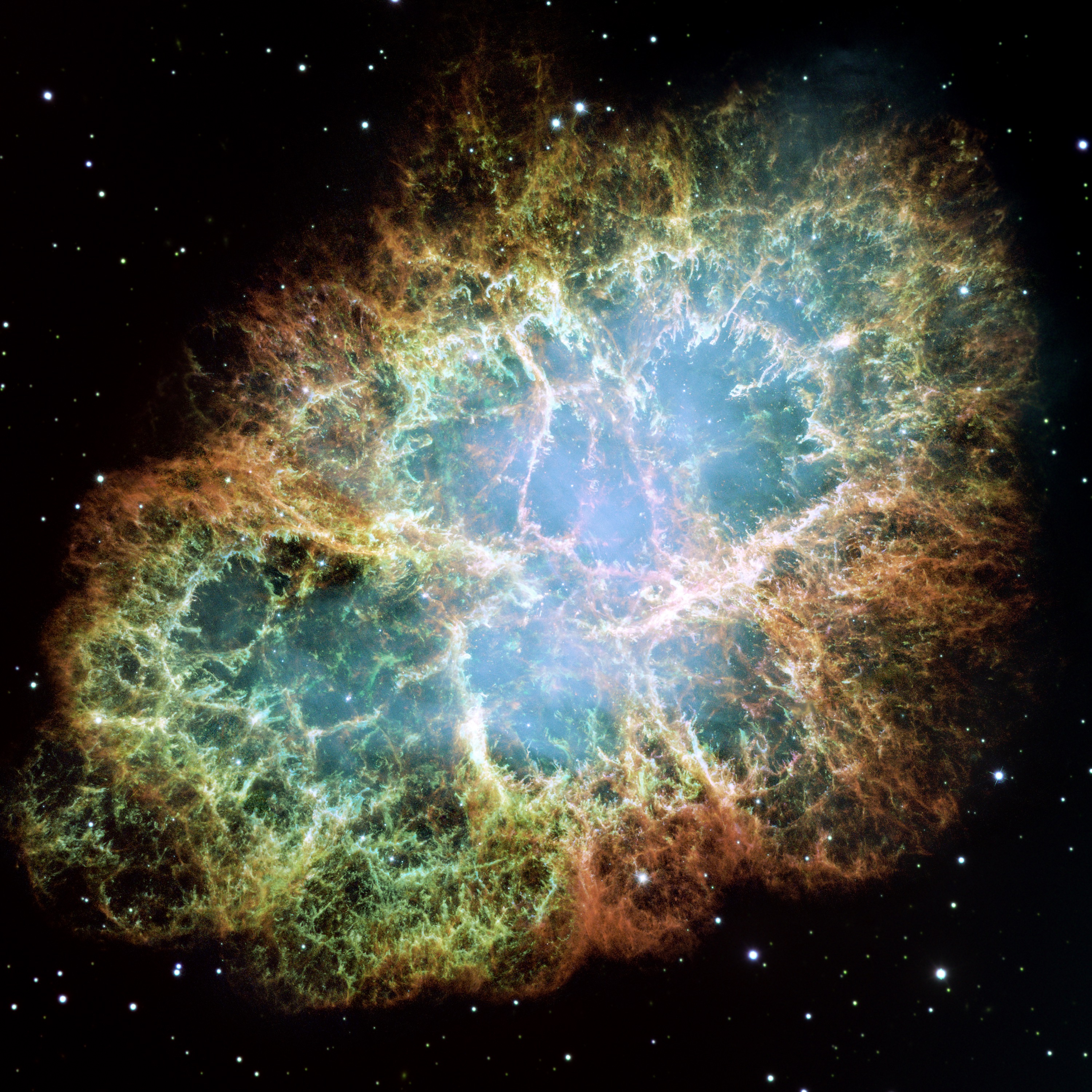
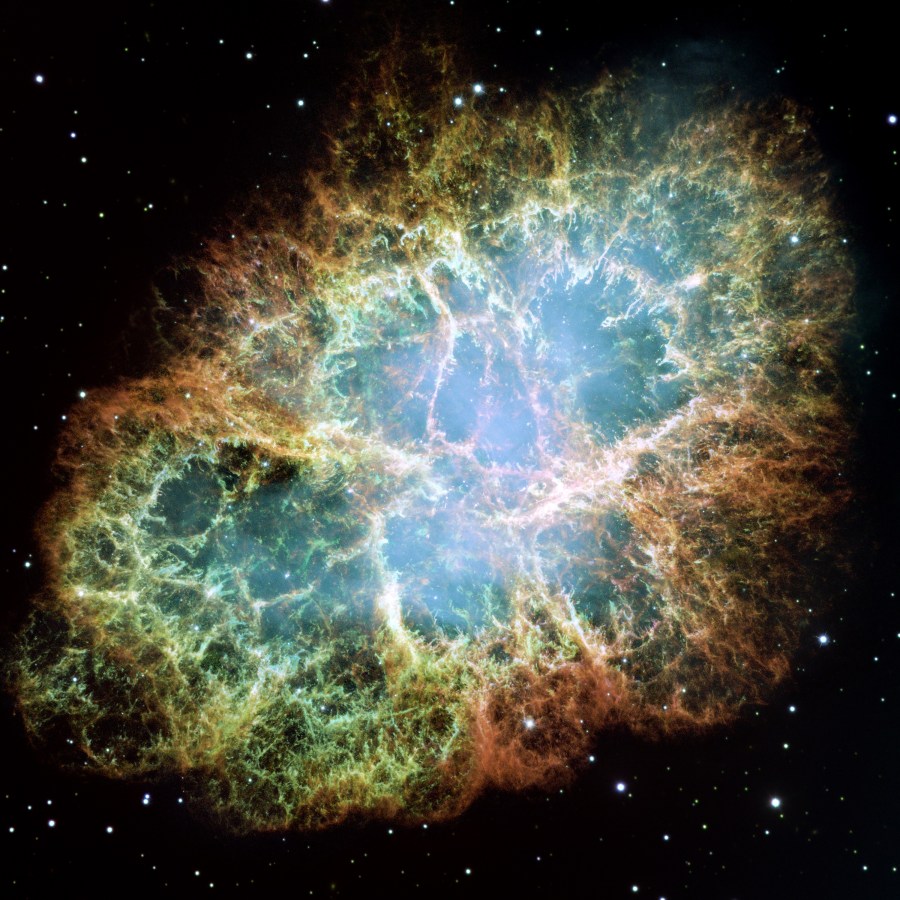
Nice therefore to read an entire feature in the New Scientist today, predicated on exactly this; the calcium atom formed in a star which is now in our bodies, the water in our blood which was once in a dinosaur etc. But the one which sparked my imagination was Stephen Battersby’s story of the iron ion formed in a supernova. 

I pick up the iron nucleus’s journey here, as it is spat out from the periphery of a large black hole: 

By the time our iron nucleus leaves this maelstrom, it has an energy of about 8 joules, millions of times greater than anything Earth’s Large Hadron Collider can provide. Now at about 99.9999999999999999 per cent of the speed of light. It is flung out of its native galaxy into the emptiness of intergalactic space.

As the iron nucleus wanders between galaxies, pulled this way and that by magnetic fields, its view of the universe is a strange one. At this ludicrous speed, the effects of relativity compress faint starlight from all directions into a single point dead ahead. Relativity also does strange things to time. While the nucleus is travelling, the universe around it ages by 200 million years. In another distant galaxy, Earth’s sun completes one lazy orbit of the Milky Way, dinosaurs proliferate, continents split and rejoin. But to the speeding nucleus, the whole trip takes about 10 weeks.

On the last day of its intergalactic holiday, our traveller finally approaches the Milky Way’s messy spiral. It heads towards a type G2 dwarf star, and a planet where the dinosaurs are now long dead. According to onboard time, the iron nucleus passes Pluto just 16 microseconds before it reaches Earth. When it arrives here we call it an ultra-high-energy cosmic ray.

The wispy gases of our upper atmosphere present a barrier far more challenging than anything it has encountered so far. The iron nucleus hits a nucleus of nitrogen, and the extreme energy of the collision not only obliterates both, but creates a blast of pions and muons and other subatomic particles, each with enough energy to do the same again to another nucleus, generating a shower of ionising radiation that cascades down through the atmosphere. 

Some of these particle will hit an airliner, slightly increasing the radiation dose of passengers and crew. Some may help trigger the formation of water droplets in a cloud – perhaps even help spark a lightning bolt. Some will find their way into living cells, and one will tweak an animal’s genes, spurring on the slow march of evolution. But it is very likely that nobody will even notice as the atmosphere scatters the ashes of an exceptional traveller that once flirted with a black hole in the faraway Virgo Cluster.

Remarkable. When I had the chance in 2011 to spend a couple of hours with Sergei Krikalev (at that time the cosmonaut who had spent the most time in space) he told me you typically see eight to ten scintillations in your eyes every minute in orbit – little flashes in your vision – which are the cosmic rays punching through your eyeballs.

But this story of an iron nucleus would surely seem as far fetched to a person in 1815, as the things they believed then may sound to us now. A reminder that deep time for us, is only 200 years old – just a blink (or twinkle) of the eye for a cosmic ray.
Looping

  
I’ve been repeatedly turning over a few tricky challenges in my head. Talking helps, but I realised this week the answer is to stop talking and get biking…

Since I started my new job I’ve been cycling much less. Complex logistics, earlier starts, different buildings, unpredictable start and end points. It all adds up to getting the bus. But that needs to change.

I realised this week that one of the things I’m missing the most, is the answers to difficult situations floating into my head 20 mins into cycling into work…


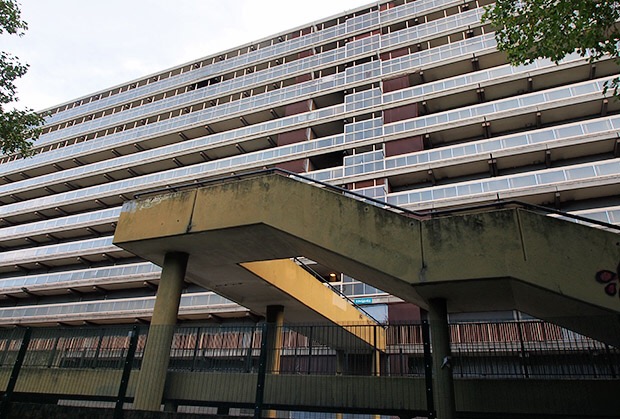
It always happens on this same corner too – which used to be an awful high rise (as above) then derelict and is now a huge building site. 

Hardly inspiring. But whatever the state of that corner it’s always the place inspiration comes. 

It’s clearly a freewheeling thing. Because it’s a certain time into biking a very familiar route my mind obviously goes into neutral – and goes neural. I can’t count the number of good ideas I’ve had on that corner. 

So if I want to stop looping on the same complex problem, the answer is – get on my bike. I’ll be doing so from Monday.