Austerity Bites

20120223-200453.jpg

When consumption ist verboten
And thrift the prevailing notion
The impulse to buy
Needs must, goodbye.
Instead, re-find and reuse
Rediscover making do.
So I’m mending instead of spending.
Austerity the incentive
To be creative and inventive.
But I do kinda miss
Consumer spending bliss.

Times is hard and money’s tight. Perhaps for the first time in my adult life I’m facing up to a future where, looking forward, our household income will likely be flat or fall. It plays with your head this kind of thing.

Of course compared to many I’ve nothing to complain about. But we have all been raised on the notion that, in the words of the ’90s anthem: ‘Things can only get better‘.

Well of course they can. And it’s a failure of imagination to seek happiness in ‘things’. But as I said to the missus today, I quite fancy a new pair of shoes, but I feel I shouldn’t.

This is how recessions work – they knock your confidence. Last week I was enjoying inventing new ways to save money. This week I’m sad ‘cos I simply fancy some new stuff.

No more browsing Amazon buying gadgets for kitchen and home. No more warm winter coats – why do I like buying warm winter coats? It’s recycle and re-use, repair and re-wear. Harrumph. I’ve had enough of austerity this week.

Relevant Complexity 3) Classical Music

20120218-102359.jpg

For the second time in as many weeks, my testy mood has been dramatically improved by the prompt application of ‘relevant complexity’. Taken to the point of some irritation by relentlessly noisy and restless kids, a dose of classical music in the ear lifted my humour immensely.

Above the fracas, I found solace – iPod on – listening to a collection of classical greats on ‘shuffle’ mode. One came on I ‘kind of’ recognised, but suddenly found myself very much liking. So I googled it – it is Saint-Saens Symphony No 3; aka his ‘Organ’ symphony.

Pursuing my quarry, I googled Saint-Saens. Poor man. Recognised as a prodigy and polymath, he is damned with the faint praise of ‘not having up with anything genuinely new’. Just a synthesiser of the best of others and somewhat ‘derivative’. Oh dear.

I was briefly tempted to back off him. But I enjoyed his ‘Carnival of the Animals’ – at the wobbly performance in which my daughter was a ‘balletic bird’ last year. So I stiffened my resolve: ‘So what if he wasn’t original’, he’s improved my Sunday mood, so let’s stick with him.

Next stop a classical music website to see which of the myriad versions of Symphony No 3 on iTunes might be worth a few quid. Who? Er who else but Charles Munch, of course, composing the Boston Symphony Orchestra in 1957. Fat chance of finding that, I thought. But sure enough – and not too pricey – the original RCA recording is in the iTunes store. So I bought it.

First major shock – it crackles throughout. Clearly recorded on vinyl, it’s a thumping rendition, but it crackles and pops like our old wooden Marconi record player once did. Bit of a shock to the ‘Digitally remastered’ system, but I warmed to it. RCA really should buy a new record deck though.

Next I googled the ‘story’ behind the composition and instead stumbled across a full length video of a US college orchestra playing it. So I had a watch…

By now an aficionado of Symphony No 3, I know: it should not be shorter than 35 minutes, nor exceed 40. The best bit, from whence the organ magisterially enters the stage, is about 7 1/2 to 8 minutes from the end.

And watching it on my iPhone I discovered an innovative thing Saint-Saens does get some credit for – some cutting-edge ‘four handed’ piano playing. The beautiful tinkly piano which follows the organ is achieved by two people playing the same ‘old Joanna’ at once. Stunning.

Not since my son’s favourite – Tom and Jerry playing Edvard Grieg – have so many fingers simultaneously tinkled the ivories in our house. He made me chuckle by recognising Grieg’s Piano Concerto in A minor the other week, announcing – ‘That’s Tom and Jerry!’

So there you have it. From irritation through initiation to ‘relevant complexity’ in less than a day, with some of Csikszentmihalyi’s ‘flow’ en route and even some ‘concerted cultivation’ via Tom and Jerry. The ‘adjacent possible’ is now a trip to the Royal Albert Hall to enjoy Saint-Saens live – or even better Tom and Jerry.

Perhaps for the first time I ‘get’ classical music. Myriad, sounds, stories, instruments, conductors, orchestras, halls, versions, performances and emotions – never mind composers – all brought to life in truly ‘relevant complexity’. No wonder it took my mind off things.

Barge Hauler

20120211-140318.jpg

Work,
Think,
Eat,
Drink,
Wake,
Walk,
Type,
Talk,
Work,
Work,
Work.

As Aristotle once said: “all paid work absorbs and degrades the mind.” I have been working my n#ts off this week – heavy lifting from start to end – and a good deal of it thankless.

We end the week in a much much better place than we started – but the narrow steam of technicolor bandwidth which is my ‘consciousness’ has been totally absorbed in work, work, work.

For the first time in many months, at the weeks end, I can’t recall a single original or worthwhile thought in the last five days, that hasn’t been yoked to the chariot of work. I have been one of Illia Repin’s Barge haulers on the Volga.

Work owes me this week, I am paid a salary for my labour not my soul. Onward.

Pigeon Toed

20120205-122024.jpg

Cat sat
Glancing sideways
Next to pigeon toes
Facing skywards
A scatter of feathers
Betrays the act
The plump bird
Too often at seed
Had not heard
Soft paws
Presage sharp claws
At his final feed.

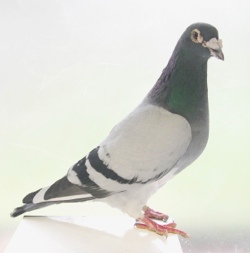
Cleaning the fish tank, my eye was caught by a handsome cat looking over his shoulder at me through the back door. Stone me! Feet up, flat on its back, is the greedy pigeon which spends most of his time in our back garden chomping on scatters of birdseed. It’s a cat eat pigeon world.

Eventually I shooed the tabby off as he was playing with the lifeless body. But the dispatched bird needed dispatching. The missus having toed it and returned indoors, indicated such matters were clearly down to me. A food bag reversed and the pigeon was quickly bagged and binned.

As the kids exclaimed ‘yeuugh’ I was struck by life’s rich pattern. I used to be ‘nesh’ on insects, muck and vermin – dead or alive. I’d probably have dithered with a shovel in years gone by.

Today I just picked it up and bagged it. Last week I enthusiastically stuffed my hand down the drain in pursuit of congealed fat, without so much as a ‘by your leave’. Dealing with a dog, a family home and two kids certainly lessens the standing on ceremony. I find ‘yeuugh’ much less toe curling these days.

Concerted Cultivation

20120204-193837.jpgIt transpires – from considerable research in the USA – that middle class parents’ relentless intervention in their children’s lives: through music lessons, cultural experiences, ferrying them hither and yon and pandering to their every whim, creates a strong ‘sense of entitlement’.

This much we know. But what is less obvious, when you’re getting some lip, is this fits them better for success in institutional settings – from school to the workplace.

So called ‘Concerted Cultivation‘ – aka the pandering, worrying, nurturing and relentless attempts to nurture ‘talent’, ‘gift’, ‘achievement’ and ‘aptitude’ in middle class children – makes them more than just a pain in their parents’ ass. It makes them a pain in everyone’s ass. And this is vital for success in school, university and work. Suitable stamping of feet gets you noticed.

Working class families use a different approach – equally well adapted and just as caring – but different in impact and outcome. Working families apparently favour the so called ‘natural growth‘ route. This encourages independent development, standing on your own two feet, fledging from the nest – and doing what you’re told.

This works well in getting kids into life and into work, but does less well in ensuring that institutions – schools notably, but also workplaces and other institutions – pay attention to them as individuals. This can increase the sense of alienation of working class kids from such institutions, which further exacerbates the effect and further favours the ‘Concertedly Cultivated’.

One very telling example of the difference is making – or not – strong eye contact. ‘Concerted Cultivation’ promotes it, ‘natural growth’ discourages it. If you’re wanting to get your way in public and private institutions, strong eye contact is a mark of confidence. If you’re walking the street in less affluent parts of town it looks dangerously like disrespect. And to a foreman or staff sergeant being looked squarely in the eye suggests confrontation or insubordination

‘Concerted Cultivation’ is much more resource intensive, and less ‘natural’. But, according to the American research, it does fits kids with the tools to be taken seriously by adults and institutions.

I would say my childhood was 50% ‘Concerted Cultivation’ and 50% ‘natural growth’. That would fit with my half and half social class as a child. It worked for me. But we’re ‘Concerted Cultivators’ now in our middle class milieu.

A whiff of science helps me keep up my enthusiasm for ferrying them to activities, downloading maths apps, humouring hissy fits and constantly keeping them busy. I have a pang of guilt at the advantage I’m giving them, but it’s concerted cultivation for my little flowers.