Elemental

The late Herbert McCabe wrote with almost scientific beauty on Aristotle and Aquinas. There is a tightness and precision which bespeaks a lifetime’s reflection and contemplation.

The international physics community has just acknowledged two new superheavy elements – 114 and 116 – which can only be made by man. In his book ‘On Aquinas’, McCabe has fused together all the elements in philosophical symmetry from the two historic heavyweights: Aristotle and Aquinas.

He manages some lighter metaphors though. Describing the difference between following rules and developing virtue he draws on football. Learning the rules of football won’t make you a good player, practice alone makes perfect. Similarly our ‘friends’, in the Aristotelian sense, are our purpose, practice and team-mates. Here’s what he has to say:

From the point of view of moral philosophy the game is friendship (philia) in the sense which Aristotle described it as that relationship by which people are fellow-citizens; and it is more than justice. Justice is the minimum proper relationship with foreigners, but, in addition to this, citizenship demands a concern for the flourishing of your friends, a concern, therefore for their virtues and their concern for my virtues. Friendship is both the aim of all the virtues and also the necessary means by which virtues are cultivated, sustained and developed. Virtues can only be taught by friends. Friendship can only be sustained by virtues.

Past thinkers have discovered all the elements of the ethical periodic table. But McCabe showed there are still elegant and beautiful new ways to bring them together.

Poetry in Motion

A few weeks ago, newly enamoured of poetry, I wrote a short ditty to capture what I think increasingly drives my life. It came out quite easily so I guessed it might be quite close. But then I forgot about it. Sat in traffic in the rain today, the last two lines came back to me unbidden. It has clearly lodged in my subconscious. So here it is:

Pay attention to life with bright eyes and keen ears.
Helped by poets and thinkers, refine hopes; master fears.

Embroider each minute and day of my years
with friendship and love and knowledge and ideas.

And the main credits are: for line 1) Montaigne and Aristotle; line 2) Aristotle, Kay, Csikszentmihalyi, Nietzsche, Homer, Armitage, Aquinas, McCabe, Socrates, Stoics, Sceptics; line 3) Me latterly; and line 4) Aristotle, Aquinas, my Friends in Contemplation, my family, reading, writing, work.

I’m not sure I’ll get a poster on the subway for these lines of rhyme, but they are pretty much where Eudaimonia lies for me I think.

Poppies

On holiday in France, I started reading Herbert McCabe on St Thomas Aquinas. I’d heard Sir Anthony Kenny in a ‘Philosophy Bites’ podcast describing Aquinas as deserving as much attention from we moderns as Aquinas himself paid to Aristotle in his day – a great medieval foundation on which to build.

On a prominent bookshelf, in the holiday home we were staying in, Aquinas merited two volumes – Aquinas I and II – in the leather bound ‘Britannica’s Great Books of the Western World’. Only one other philosopher got two whole volumes… you guessed it – Aristotle. Good references then.

I’m too early into Aquinas to know how much is him and how much is McCabe building on him. But reading McCabe’s account, a whole series of philosophical concepts and ideas which I ‘learned’ at University are now a lot clearer to me.

Souls, existence and being are all brought to life, but also the significance of language. I never really got why modern philosophers were so hung up on language. Yes it’s an important skill, yes it codifies our world, but presenting it like maths is to science – underpinning everything we are, think and can know of the world – seemed to overrate ‘words’ to my undergraduate mind.

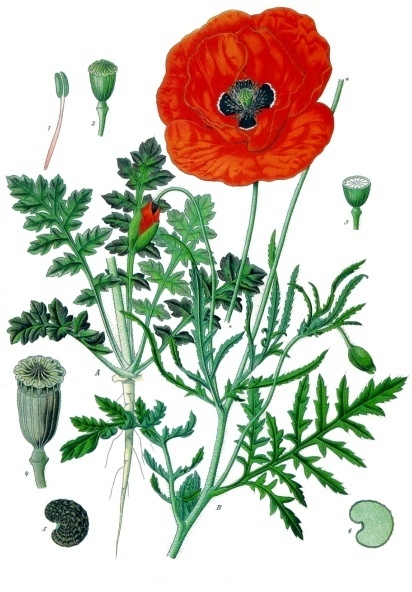
Take ‘redness’ I can accept your idea of red might overlap with mine, or be subtly different or be missing altogether if you’re colour blind. I can further accept my dog or a leopard might see it differently again, and a plant not at all. But as a good post enlightenment ‘atomist’, I felt ‘redness’ was ‘real’ not subjective. Whatever jingling of photons against molecules it is, ‘red’ for me was the name for a real ‘observable’ characteristic of the handsome poppies dotted in the wheatfields of Charente-Maritime.

I’m attracted by McCabe’s account that the big difference between a car and a cheetah, is one is made of parts, the other is only comprehensible as a whole. One can be taken apart and put back together again, the other can’t. One can exist uniquely as the only one of it’s kind, the other requires mates, progenitors and offspring to come to exist and continue to truly exist.

And so it is with humans. What we call ‘red’ is the product of millions of years of evolution and thousands of years of language – in an unbroken physical, linguistic and cultural chain. This unbroken chain can be ‘atomised’ into its constituent parts – which certainly helps us to grapple with what is and isn’t ‘red’, but that doesn’t really capture the phenomenon or the ‘phenomenology’.

There is no ‘red’ without humans to see it and a shared human language to describe it. We can describe the photons bouncing off the lattice of the petal, hitting the retina and sparking the neurones. Using language we can think hard about it and describe it to others. But before there was language to describe it, think it and name it there was no ‘red’. There were plants but no poppies.

What I call a poppy, Montaigne would have recognised as a pavot, Aquinas as a papaver and Aristotle as a παπαρούνα. Same sensory apparatus, languages from the same family tree, many common cultural references. Different words, similar – although never exactly the same – human experience: ‘redness’.

Being part of that unbroken chain of evolution, languages, knowledge and ideas is far richer than photons bouncing off a lattice. It’s good to look at the parts, but as Aquinas reminds us, it is the whole which is the special bit.

Blake’s Proverbs

William Blakes’ Proverbs of Hell are a bit like Jenny Holzer’s Truisms – some you get some you don’t, some resonate some clang. Still thinking about some of the things which I think constitute the good life, four of his proverbs capture something:

When thou seest an Eagle thou sees a portion of Genius, lift up thy head!

What is now proved was once only imagin’d

One thought fills immensity

The bird a nest, the spider a web, man friendship

Why these four? First I’ve noticed that ‘noticing’ enriches life immensely. One simple trick I’ve stumbled upon is to look up. It generally lifts the spirits. Today I looked up, sat in slow traffic, and saw a beautiful Victorian clock and frontage high above an otherwise grim discount store. There is a little spray of golden flowers and thistles on top of Big Ben which glints in the sun when I cycle past in a morning. I’ve noticed most old buildings have something special adorning their top storey. Look up and there’s light, clouds, planes, Eagles – you get the picture.

Second I’m reading the Greek myths at the moment and it is staggering, as with ancient philosophy and science, how much we knew then of people and their foibles, but how little we knew of science and how the world works. We all carry today an amazing storehouse of knowledge and ideas just because of the era we live in. It would have amazed the ancients.

How lucky we are. But despite all that knowledge there is still so much to learn and discover that one thought can still fill immensity. I learned yesterday we’ve only just discovered that dogs like cats don’t ladle water when they slop it up, they form a tube with their tongues and draw it up though pressure – it takes three laps to create a column of water in the dog’s tongue which connects water to mouth. Amazing. Not sure our old dog ever mastered it given the soggy mess he always made on the kitchen floor.

Finally friends. Aristotle triages them into three types: transactional, fun and friends in contemplation. The third are the very best, but, as I once heard Desmond Tutu say, there is no human without other humans – friends and other people are our human web.

Look up, imagine, think and talk with friends – four principles which, I think, work just as well today as in Aristotle or Blake’s days.

Poetry in Motion

I’ve just finished Csikszentmihalyi’s ‘Flow’. There are things to criticise. Some points – the time we waste in front of TV notably – are right but he makes them repetitively. His style occasionally grates. But, in my humble opinion, it is an outstanding book. My Bayesian brain infers he is likely a pretty outstanding man.

There are many themes to pull out, ideas to take forward, good advice and thought provoking evidence. My simple summary is – just read it. I’ve given ‘Flow’ its own link in the sidebar to the right.

Two personal things I’ll draw out. First Csikszentmihilyi’s advice to read a piece of poetry every day. I’ve never much cared for poetry. But, as he says, I’ve discovered a poem is a simple and rewarding pleasure. It doesn’t take much. Just five minutes and two or three poems at bedtime and mood and life are subtlety and magically enhanced. I told my partner. She’s taken with it too. And now we both have books of poetry on the go. My advice – just do it.

The second personal thing was my curious desire to get the book over with. Mainly, I think, so I could get on with all the things I now want to read as a result of reading the book. But also because I ever-so-slightly feared Csikszentmihalyi might barrel off the rails and disappoint me at the end.

Many potentially great books have been marred by a lame ending. I worried about this one. Tantalisingly the penultimate chapter was pretty good – synthesis, some emergent structure and integration of themes. So, as I said to to a particular friend, I was anxious that the last chapter would be a major disappointment. He said ‘Don’t read it, write your own final chapter’. Good advice, but a somewhat daunting challenge, so I read it instead, and I’m glad I did.

No easy answers therein, but a validation of my own thesis, that the good life requires both thought and action – Aristotle and Achilles. Csikszentmihilyi also recommends the thinkers and writers of history and antiquity as invaluable guides. I increasingly agree. But his final challenge is a tough one: to learn to master oneself and then get beyond the self to find an overarching meaning for our lives and tune into and live vividly in the full ‘flow’ of the real world. Easy then.

Discussing this on Monday with another friend, we concluded life takes the balance of a Nureyev: to balance internal with external, self with others, the world within with the world without, skill with challenge, what we achieve in life with what we would want to be remembered for.

Stoic, Sceptic, Epicurean, Existentialist, pick your school of philosophy, they are all scratching the same basic itch: how much to stick your neck out and risk your mental and physical health in the hurly burly of the real world.

Finding ‘meaning’ for Csikszentmihalyi or a ‘telos’ for Aristotle is the tough one. For Aristotle’s harp player it’s playing the harp well. For me the meaning of life is getting clearer, but it’s reassuring to know there are philosophers and poets to help me on my way.