Happy Christmas

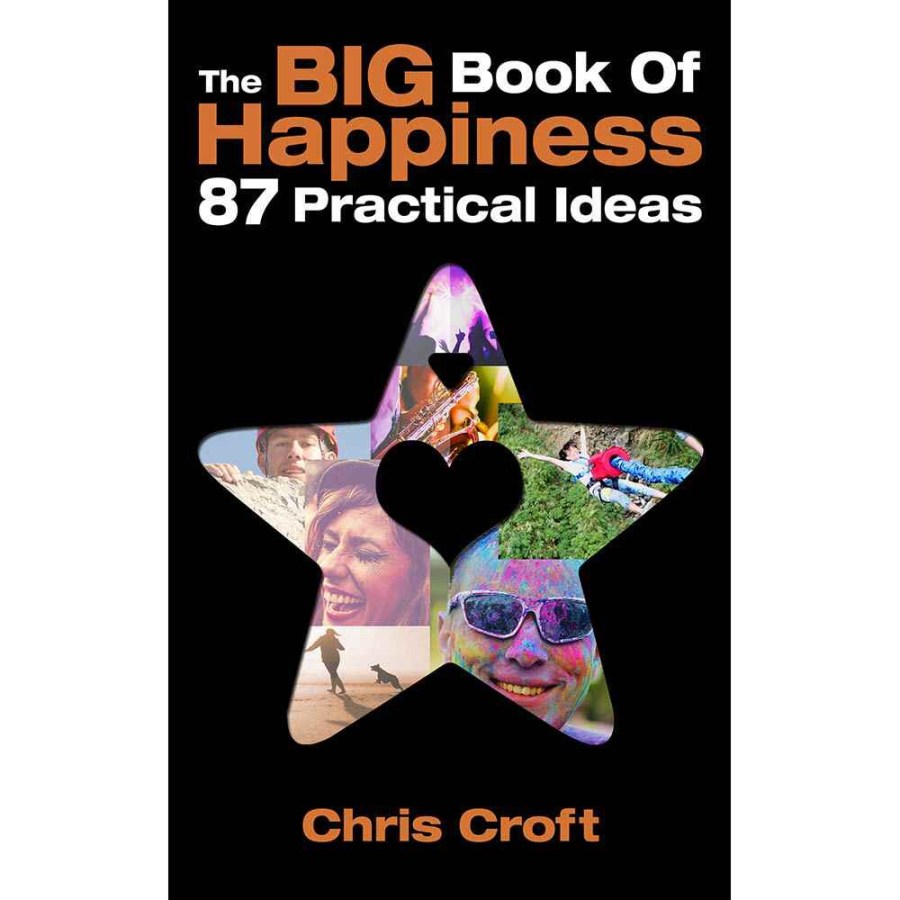
I’ve had a Happy Christmas and a joyful start to 2017; not thanks to Santa, but a dead sensible British bloke who has written a book I’d recommend to anyone.

‘The Big Book of Happiness 87 Practical Ideas’ is a no-nonsense guide to how to live.

The point of it all, self limiting beliefs and behaviours, getting organised, writing down and pursuing your goals – and the value of dabbling in things. It’s a cracker.

If you read nothing else this year read this… If Aristotle were around today, it’s the book he’d write.

Concrete or Casuistry?

img_1472

casuistry (kazjʊɪstri) noun: the resolving of moral problems by the application of theoretical rules.

As I continue my voyage through Dietrich Bonhoeffer’s Ethics, I also continue to be astonished by the man. Limpid paragraphs of dense and pure meaning, sweeping historical context – and tub thumping Christianity. A heady mix.

But the page which stuck with me this week describes the challenges of Christian ethics; but also the constant challenge of modern organisational life:

“The attempt to define that which is good once and for all has always ended in failure. Either the proposition was asserted in such general and formal terms that it retained no significance as regards its contents, or else one tried to include in it and elaborate the whole immense range of conceivable contents, and thus say in advance what would be good in every single case; this led to a casuistic system so unmanageable that it could satisfy the demands neither of general validity nor of concreteness.”

Pretty much every strategy exercise or major organisational change programme I’ve ever worked on has wrestled with this. As Bonhoeffer puts it, the conflict between the ‘good’ and the ‘real’.

Bonhoeffer argues for concrete not casuistry. Not a bad place to go, not least given how bad things were in his times. But I go with Aristotle’s ‘golden mean’; the ‘good’ is always somewhere in the difficult and constantly contested place in between.


Office 2016


Further proof this week (were it needed) that not thinking about things, actually helps you think about things…

After ten days off for Christmas; scarcely thinking at all about work, I arrived in the office on Monday a little dazed and confused. A colleague asked with a smile if I had any blinding new insights to share? I could only answer slightly sheepishly “Nope”

But then, thanks to the miracle of the empty mind, I scribbled with a scratchy pen, on a couple of discarded misprinted sheets of A3 off the printer: the entire scope of my job; and the purpose for me at work for 2016. 

It had all became clear, because I hadn’t been thinking about it…

Later that same day (at bedtime to be precise) the few remaining work-related knots in my head, were smoothed out by a simple but super article in ‘Philosopy Now‘ by Peter Adamson. 

Adamson reminds us that Aristotle gave us the clinching argument against “the proposition that the good life lies acquisition of wealth.” 

He continues: 

Whatever else we say about the happy life, happiness is surely something we deserve for its own sake. You don’t seek to become happy for some further goal. 

Money by contrast, is not something that can sensibly be desired simply for itself. It is valued only for what we can acquire with it, such as security, pleasures and the opportunity to show virtue. 

Therefore a life that seeks to pile up wealth with no other end in view is incoherent.

He continues 

Aristotle has a similarly persuasive case to make against the life devoted to honor: we wish to be honored not just for any old reason, but because we deserve to be honored. 

At most, then, honour comes as a kind of bonus on top of what we really want, which is to be or to have achieved something worthy of the honour.  

Out of the contenders for a happy life, that leaves the life of virtue. And virtue is complemented by pleasure, because the virtuous person takes pleasure in being virtuous; and by honor too, at least if one’s fellow citizens apportion honor rightly.

Of course Aristotle was nothing if not also practical: 

Although Aristotle insisted that the good life is the virtuous life, he cautioned that we need money as well. You can hardly hope to be virtuous without money, if only because generosity is a virtue: you need wealth to give it away.

Common sense also tells you that such things as health, a flourishing family, and friends, belong to the good life, and Aristotle wasn’t against common sense on this score. 

But it’s Adamson’s conclusion which is the clincher:

In these days, when whole countries are faced by economic disaster, ancient advice remains useful: accept money and use it wisely when it comes, but do not sacrifice virtue to get it – and remember that there are things in life compared to which money, in any currency, has zero value.

In sum, don’t seek money or honour for their own sakes; and if they come as a by-product of hard work and a good character, use them wisely.

A timely reminder for 2016 from Adamson that Aristotle’s Ethics are a more than decent guide to working (as well as wider) life.



Ladybirds

  
After a wonderful week of goodbyes, this morning, I feel my ladybird has begun to peep its head out from the proverbial matchbox (see my leaving card above); to see a bigger world and a brighter future.

I’ve been working in or adjacent to government for nearly 15 years. And while Aristotle felt politics to be the highest of human endeavours, a quick scan through these quotes of his pretty much covers the many pitfalls.

  
Yesterday I crossed a new bridge to work – Waterloo instead of Westminster; and spent the afternoon at a ‘freshers fair’ watching excited new students sign up for everything from touch frisbee to Russian Club. My new university life came to life.

And today the sun is shining. It’s all change – but a good one I feel sure.

Sacks and Seneca


A very autumnal feel to this week; in lots of different ways. It’s back to school for all of us: big school for one; a new class for the other; and very soon a whole new place of work for me.

As the kids accelerate forwards, I’ve been mostly looking back this week; at eight years of corporate memory. I’m methodically archiving, filing and mostly deleting my electronic back catalogue. No-one else is going to be that interested. Little that has been done before works exactly the same way again. 

But what sticks – looking at the better part of a decade of pronouncements, presentations, reviews, restructures and change programmes – is that many things have got a whole lot better; but the fundamental issues have hardly changed at all. 

And perhaps that’s the lesson, as I move onto the next; and next week clock up another year closer to 50… most of the big things in human affairs stay pretty much the same over the sweep of history.

A wise associate of mine, sent me the later life and closing thoughts of Oliver Sacks yesterday, from the New York Times; here:

The joy of old age (no kidding).

And 

My own life 

I replied:

“These are incredibly moving. This is how I want to live my older years and then ‘rise, satisfied, from the banquet of life’ as Seneca had it. This is the most important and defining thing of all – how we face death and then make the most of life.”

Easier said than done of course – and shame on me; the ‘banquet of life’ is Aristotle’s quote: 

“It is best to rise from life as from a banquet, neither thirsty nor drunken.”

But Seneca’s reflections ‘on the shortness of life’, precised here, are timeless too:

 Why do we complain of Nature? She has shown herself kindly; life, if you know how to use it, is long. 

But one man is possessed by an avarice that is insatiable, another by a toilsome devotion to tasks that are useless; one man is besotted with wine, another is paralyzed by sloth; one man is exhausted by an ambition that always hangs upon the decision of others, another, driven on by the greed of the trader, is led over all lands and all seas by the hope of gain; some are tormented by a passion for war and are always either bent upon inflicting danger upon others or concerned about their own; some there are who are worn out by voluntary servitude in a thankless attendance upon the great; many are kept busy either in the pursuit of other men’s fortune or in complaining of their own; many, following no fixed aim, shifting and inconstant and dissatisfied, are plunged by their fickleness into plans that are ever new; some have no fixed principle by which to direct their course, but Fate takes them unawares while they loll and yawn—so surely does it happen that I cannot doubt the truth of that utterance which the greatest of poets delivered with all the seeming of an oracle: “The part of life we really live is small.” For all the rest of existence is not life, but merely time. 

Ask about the men whose names are known by heart, and you will see that these are the marks that distinguish them: A cultivates B and B cultivates C; no one is his own master. And then certain men show the most senseless indignation—they complain of the insolence of their superiors, because they were too busy to see them when they wished an audience! But can anyone have the hardihood to complain of the pride of another when he himself has no time to attend to himself? After all, no matter who you are, the great man does sometimes look toward you even if his face is insolent, he does sometimes condescend to listen to your words, he permits you to appear at his side; but you never deign to look upon yourself, to give ear to yourself. There is no reason, therefore, to count anyone in debt for such services, seeing that, when you performed them, you had no wish for another’s company, but could not endure your own.   

Wise words.