Stamps

I’ve written before on the topic of ‘flow’, children and embroidering life with rich experience – large and small. And we managed all four this morning, thanks to a cheap packet of world stamps.

The agile, and occasionally restless, mind of my now seven-year old daughter was completely and delightfully absorbed in sifting stamps from España, Nederland, Polski and the long forgotten Deutsche Democratik Republik.

Some of these stamps were around when I was her age. And the fiddly licky hinges haven’t changed either. Throw in a cheap album and she was completely absorbed in finding countries, licking hinges and sticking in stamps – despite her brother’s periodic attentions.

We learnt some geopolitics – there are 200 odd countries to find, different political systems from democracies to dictatorships and some memorable symbols and landmarks – from the Statue of Liberty, to St Martin from Czechoslovakia on his snowy white horse.

And all for a tenner. Stamps trumped her Nintendo for prolonged attention and ‘flow’ and we learned some things too. Cards, chess, stamps, books – the old favourites are still the best for kids sometimes.

Poetry in Motion

I’ve just finished Csikszentmihalyi’s ‘Flow’. There are things to criticise. Some points – the time we waste in front of TV notably – are right but he makes them repetitively. His style occasionally grates. But, in my humble opinion, it is an outstanding book. My Bayesian brain infers he is likely a pretty outstanding man.

There are many themes to pull out, ideas to take forward, good advice and thought provoking evidence. My simple summary is – just read it. I’ve given ‘Flow’ its own link in the sidebar to the right.

Two personal things I’ll draw out. First Csikszentmihilyi’s advice to read a piece of poetry every day. I’ve never much cared for poetry. But, as he says, I’ve discovered a poem is a simple and rewarding pleasure. It doesn’t take much. Just five minutes and two or three poems at bedtime and mood and life are subtlety and magically enhanced. I told my partner. She’s taken with it too. And now we both have books of poetry on the go. My advice – just do it.

The second personal thing was my curious desire to get the book over with. Mainly, I think, so I could get on with all the things I now want to read as a result of reading the book. But also because I ever-so-slightly feared Csikszentmihalyi might barrel off the rails and disappoint me at the end.

Many potentially great books have been marred by a lame ending. I worried about this one. Tantalisingly the penultimate chapter was pretty good – synthesis, some emergent structure and integration of themes. So, as I said to to a particular friend, I was anxious that the last chapter would be a major disappointment. He said ‘Don’t read it, write your own final chapter’. Good advice, but a somewhat daunting challenge, so I read it instead, and I’m glad I did.

No easy answers therein, but a validation of my own thesis, that the good life requires both thought and action – Aristotle and Achilles. Csikszentmihilyi also recommends the thinkers and writers of history and antiquity as invaluable guides. I increasingly agree. But his final challenge is a tough one: to learn to master oneself and then get beyond the self to find an overarching meaning for our lives and tune into and live vividly in the full ‘flow’ of the real world. Easy then.

Discussing this on Monday with another friend, we concluded life takes the balance of a Nureyev: to balance internal with external, self with others, the world within with the world without, skill with challenge, what we achieve in life with what we would want to be remembered for.

Stoic, Sceptic, Epicurean, Existentialist, pick your school of philosophy, they are all scratching the same basic itch: how much to stick your neck out and risk your mental and physical health in the hurly burly of the real world.

Finding ‘meaning’ for Csikszentmihalyi or a ‘telos’ for Aristotle is the tough one. For Aristotle’s harp player it’s playing the harp well. For me the meaning of life is getting clearer, but it’s reassuring to know there are philosophers and poets to help me on my way.

Sinister

20110515-080333.jpgI’ve always been more dextra than sinistre. Right-handed, very right-footed and very left-brained. But I worry for my son. With no left foot he’ll never make the England football team. Plus he’d stand a better chance of becoming a test batsman or bowler if he was a ‘cack hander’.

So a few weeks back I resolved to only dribble and kick footballs left-footedly to set him an example. I’ve also started brushing my teeth with my left hand. I’m slowly becoming quite accomplished.

Still, I was roundly beaten in a trial of strength at left handed handwriting by my daughter. She very much has the upper left hand.

When I told a friend about left-handed tooth-brushing, he smiled. Transpires he’s a left-hander. But he owned up to standing on one leg while brushing his teeth – very good for balance. Ronald Reagan famously said he always put his socks on balancing on one foot to keep him young.

This morning I brushed left-handed, balanced left-footed and burst out laughing as I did my teeth. A perfect example of the joy of ‘flow’ – being immersed in an engaging challenge, however small. Certainly nothing sinister about that.

Broadband

Our home broadband has been on the blink this week. You really miss it when it’s not there. Perhaps worse is when it comes and goes – one minute you’re surfing gaily, the next you’re beached with a ‘no network’ message.

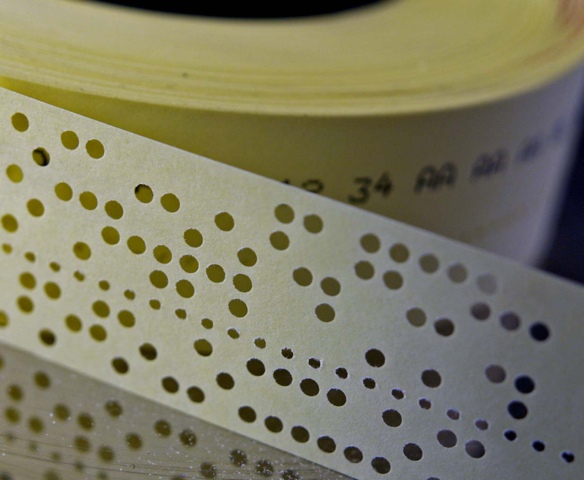
Csikszentmihalyi points out that, although impressive by electronic standards, the amount of data our minds can process simultaneously is surprisingly small. More punched tape than broadband. Two people talking to us at once or, say, riding a bike and whistling a song, just about exhausts our real time mental processing capacity. Any more and we lose attention and get distracted, flustered or confused.

I noticed it one day this week in the office. One minute I was churning out flowing prose, the next someone started talking in my earshot and I was distracted. I slowed to trickle – like someone was hogging my wifi. The talker left, bandwidth returned, and so did flowing prose. It was like flipping a switch.

Things, events, people and basic navigation are all basically different data and signals crowding in or cluttering up our cognitive bandwidth. This makes directing our consciousness and limited mental energy hard.

And it’s especially hard because life can easily just happen to us. Events and other people can readily soak up all the bandwidth we have. And if we do decide to use that precious resource on directed thought and action, we do so against a background of almost overwhelming distraction and diversions.

All life is, is the continual stream of sensory data, words, pictures, thoughts and ideas streaming through that narrow mental bandwidth. All we are, is the accumulated store of that data in the limited hard drives of our brains and to some extent those of others. It makes you think – until someone starts talking in your earshot and the mental connection is interrupted.

But given mental broadband is always there I’ve discovered I can redirect it when I catch myself wasting or underusing it. At work this week while being gently bored by a presenter on pan-European data collection standards, I contemplated the extraordinary beauty of a large tree – spare broadband successfully redeployed into joyful contemplation.

More experimental was testing optimising ‘flow’ by doing two different things simultaneously, and well. Combining loudly whistling the Marseillaise with cycling to work smoothly and safely through London traffic perfectly occupied my mental broadband. And in a heartily enjoyable way. Vive la France.

Our mental broadband has surprisingly limited peak capacity. But the compensation is it is ‘always on’. You can waste it or have it used for you, but you can also use it well. I found this week being more careful in how I deploy my personal ‘punched tape’ makes a big difference. Focusing its use on doing one or two things at a time really well – and exploiting every minute of it – whether I’m on my own, or with others, has removed a good deal of routine boredom and irritation from my week. Replacing that with moments of joy, satisfaction and genuine happiness is broadband well spent.

Waste not, want not.

Immersion

Concentrating on boiling a ham on the hob yesterday, I was reminded of a key aspect of ‘flow’ – immersion. ‘Flow’ is ceasing to be self-conscious or unduly conscious of others and becoming thoroughly immersed in the task or activity.

When you look at it this way, a number of things we usually consider important in enjoyable achievement turn out not to be – notably the immediate judgement and appreciation of others. Also, a variety of things we consider dull can suddenly become a joy.

Take hoovering the house. Usually a chore, and one I resent. I enter into it – if at all – with little a priori enthusiasm. I have, however, discovered it passes more easily with an iPod, headphones and music.

Surprising then to discover last weekend during a particularly energetic and virtuoso vacuum – as I removed the ‘T head’ to more precisely target the skirting boards in the kitchen – I was in full ‘flow’. It was an absorbing task, in which my goal was evident, feedback clear (disappearing crumbs and detritus) and my mental energy was fully absorbed (in music and coordinated physical effort). Stone me, it’s that simple I realised.

I was talking to another parent yesterday about how this applies to kids, sports and music. The art is perhaps in helping a child to become completely immersed in the ‘process’ of playing football or the piano to the point they cease to be self-conscious or unduly conscious of you and your anxiety/impatience/projection of your own hopes and fears (delete as applicable).

A lot of what we do with children and activities is the opposite. We make them concentrate on us, keep pushing them on – before they’ve had time to master or enjoy developing skills – and most of all we distract them with incentives and threats. The art of ‘flow’ is to let them lose themselves in what they are doing and forget we’re there – not focus them on extrinsic rewards or punishments.

More immersion perhaps means less coercion. And letting go a bit and getting lost in what they’re doing makes parenting ‘flow’ more easily too.